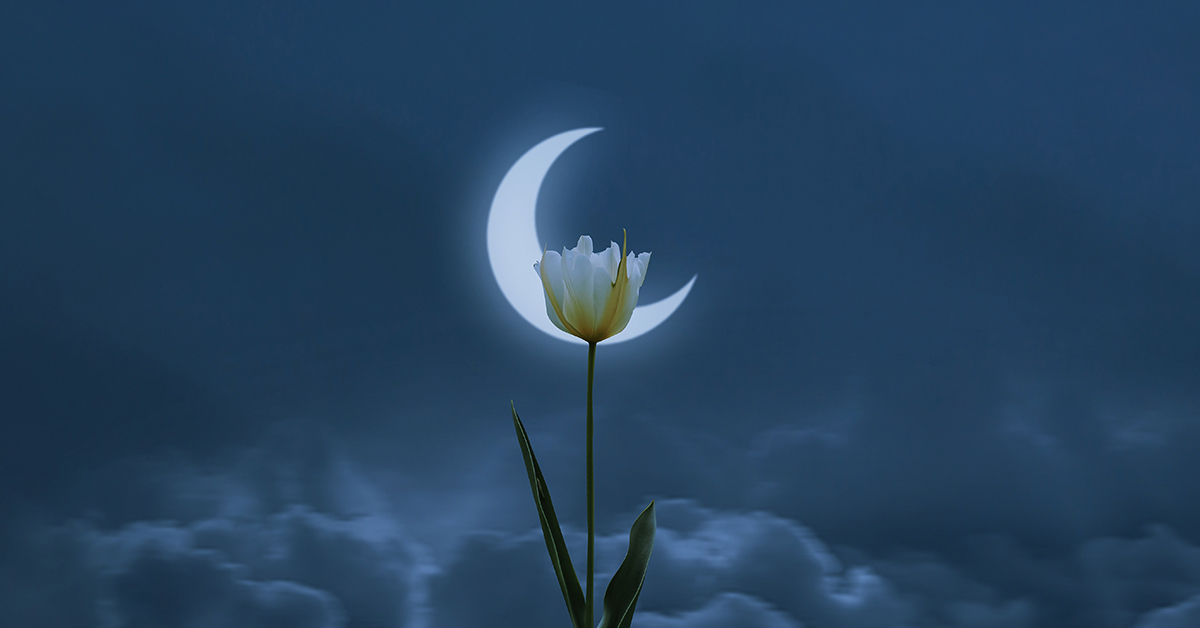

Most gardens are designed for daylight hours. Which is fine — except that summer evenings are arguably the best time to actually be outside. The heat breaks, the light goes golden, and then everything gets dark and you’re left staring at a garden you can’t see.
A moon garden solves that. It’s a planting scheme built specifically to be experienced at night — pale flowers that catch and hold whatever light is available, silvery foliage that seems to glow on its own, and fragrant blooms that hold back their best scents until after dark. The result is a garden that genuinely rewards evening time in a way that most plantings just don’t.
This is also one of the more achievable garden projects out there. You don’t need a full redesign. A corner, a border, a container grouping — a moon garden can be as small or as ambitious as you want it to be.
What Makes a Moon Garden Work
The concept is simple: plants that are visible and interesting in low light, at dusk, and by moonlight. In practice, that means focusing on three things.
White and pale-colored flowers. White reflects whatever light is available — moonlight, ambient light from the house, a string of outdoor lights. A white flower at dusk is visible in a way that a red or purple one just isn’t. This is the most important design principle of a moon garden, and it should drive most of your plant choices.
Silver and gray foliage. Plants with silvery, fuzzy, or pale leaves do something remarkable in evening light — they seem to emit a soft glow rather than simply reflect it. Lamb’s ear, artemisia, dusty miller, and Russian sage are workhorses in moon garden design for exactly this reason.
Evening and night fragrance. Many plants time their scent release for evening — when their moth pollinators are active. This is arguably the most underrated element of a moon garden. Sitting outside in the dark with jasmine and nicotiana on the air is a completely different experience from a daytime garden visit.
Best Plants for a Moon Garden
Night-Blooming and Evening Flowers
Moonflower (Ipomoea alba) is the obvious anchor plant. It’s a fast-growing vine that covers a trellis or arbor in a single season, opening its large, fragrant white trumpets at dusk and holding them until morning. If you have a fence, pergola, or any vertical structure near where you sit in the evenings, this is the plant to grow on it. Our complete moonflower growing guide covers everything from seed to bloom.
Evening primrose (Oenothera biennis) opens its soft yellow flowers in the late afternoon, releases a honey-sweet fragrance, and fades by morning. It’s biennial, so it takes two seasons to bloom from seed, but it self-sows freely and will reliably return once established.
Nicotiana (Nicotiana alata) — flowering tobacco — is one of the most practical moon garden plants. It’s easy to grow from seed, blooms all summer, comes in white varieties with a jasmine-like scent that intensifies at night, and works in beds, borders, or containers. ‘Jasmine’ and ‘Grandiflora’ are good choices for fragrance.
Four o’clocks (Mirabilis jalapa) earn their name by opening in the late afternoon and staying open through the night. They come in white, pink, and magenta, and the tubular flowers attract sphinx moths — which are, frankly, worth growing plants for all on their own.
Night-blooming jasmine (Cestrum nocturnum) is harder to source but worth hunting down if you’re in a warm enough climate. The fragrance it puts out at night is extraordinary — almost absurdly strong. Grow it in a container if you’re in Zone 7 or below so you can bring it inside over winter.
Daytime Flowers That Read Well at Night
Not everything in a moon garden needs to bloom at night. White-flowering perennials and annuals that bloom during the day still catch the light beautifully at dusk.
- White Shasta daisies — clean, classic, and luminous in low light
- White cosmos — airy and graceful, they move in a breeze and catch the last of the evening light
- White phlox — fragrant and reliable, blooms mid to late summer
- White Japanese anemones — perfect for a fall moon garden, floating and elegant on slender stems
- White coneflowers (Echinacea purpurea ‘White Swan’ or ‘PowWow White’) — sturdy, pollinator-friendly, and their pale petals hold up well as the light fades
For a deep dive on plants that perform in low light conditions, our guide to 12 beautiful flowers that bloom at night has options worth adding to your list.
The Foliage Layer
This is what separates a moon garden that looks intentional from one that just happens to have white flowers in it. Silver and gray foliage fills in the structure and gives the whole planting a coherent luminous quality even when nothing is in bloom.
- Lamb’s ear (Stachys byzantina) — incredibly silvery, soft, low-growing, practically glows
- Dusty miller — classic edging plant with deeply cut silver-white foliage
- Artemisia ‘Silver Mound’ or ‘Powis Castle’ — both have feathery silver-gray foliage and work well as soft mounding shapes between flowering plants
- Russian sage — not silver exactly, but the lavender-blue flowers and pale silvery stems read beautifully in dusk light, and it’s one of the best low-maintenance perennials you can grow
How to Design a Moon Garden
You don’t need a separate dedicated bed, though that’s certainly an option. A moon garden can be as simple as one curved border viewed from your patio or deck in the evenings. The key is that you’re designing for a specific viewpoint at a specific time of day — which is actually a useful creative constraint.
Think about your sightlines. Where do you sit in the evenings? Design the moon garden to face that spot. Taller plants go at the back, silvery foliage and lower white flowers come forward.
Create some vertical interest. A trellis or arbor with moonflower climbing it gives the garden a focal point and some structural height. Even a simple obelisk covered in white sweet autumn clematis works.
Group plants in odd numbers. Three lamb’s ears, five nicotiana, seven white cosmos — odd-number groupings look more natural and give the planting some visual weight rather than one-of-everything spottiness.
Add a seating element. A moon garden without somewhere to sit is wasted. Even a simple bench or a couple of chairs placed facing the planting makes the whole thing make sense.
A Few Practical Notes
Most white and pale-flowered plants perform best in full sun during the day — they’re storing up for their evening show, essentially. Don’t assume moon garden plants want shade just because they’re at their best at night.
Fragrant plants are often more reliably fragrant when they’re slightly stressed — not drought-stressed, but not over-fertilized either. Heavy nitrogen pushes leaf growth at the expense of flower production and fragrance. Go easy on the fertilizer with nicotiana, evening primrose, and four o’clocks.
If you want to attract moths — which are spectacular to watch moving through a moon garden at dusk — plant for them the same way you’d plant for bees. White, tubular, fragrant flowers are what hawkmoths and sphinx moths want. Moonflower, nicotiana, evening primrose, and four o’clocks will bring them in. Moths are significant pollinators and often overlooked in conversations about creating pollinator-friendly spaces.
Where to Start
Pick one spot. A small bed, one side of a fence, a container grouping on a patio. Plant moonflower on something it can climb, add a few nicotiana, fill in with white cosmos and some lamb’s ear along the edges. That’s already a moon garden — simple, inexpensive, and genuinely beautiful by 8pm on a July evening.
If you want to go deeper into specific plant choices, the 13 flowers perfect for a moon garden and the fall moon garden plants guide are both worth bookmarking for planning season.
Start small, see what you love, and expand from there. Moon gardens tend to become an obsession once you’ve spent one summer evening actually sitting inside one.
FAQ
What is a moon garden? A moon garden is a garden designed to be experienced at night or in low light — typically featuring white and pale-colored flowers, silver foliage, and plants with evening fragrance. The idea is to create a space that’s interesting and beautiful after dark, when most gardens simply disappear.
What flowers are best for a moon garden? The top performers are moonflower, white nicotiana, evening primrose, four o’clocks, and night-blooming jasmine for evening bloomers and fragrance. For daytime white flowers that also read well at dusk: white cosmos, white phlox, Shasta daisies, white coneflowers, and Japanese anemones.
Does a moon garden need to be in shade? No — most moon garden plants actually need full sun. They bloom at night, but they need daytime sun to thrive. Choose a sunny location and design for evening viewing.
What foliage plants work in a moon garden? Lamb’s ear, dusty miller, artemisia, and Russian sage are the best for their silvery-gray color that glows in low light. Hostas with white-variegated foliage also work well in shadier moon garden spots.
Can I make a moon garden in containers? Absolutely. A few large pots with moonflower on a small trellis, white nicotiana, and lamb’s ear cascading over the edge is a complete moon garden setup for a balcony or patio.
Is a moon garden hard to maintain? Not particularly. Many moon garden staples — cosmos, nicotiana, artemisia — are low-maintenance by nature. The main upkeep is deadheading to keep flowering going, and replacing annuals each spring.