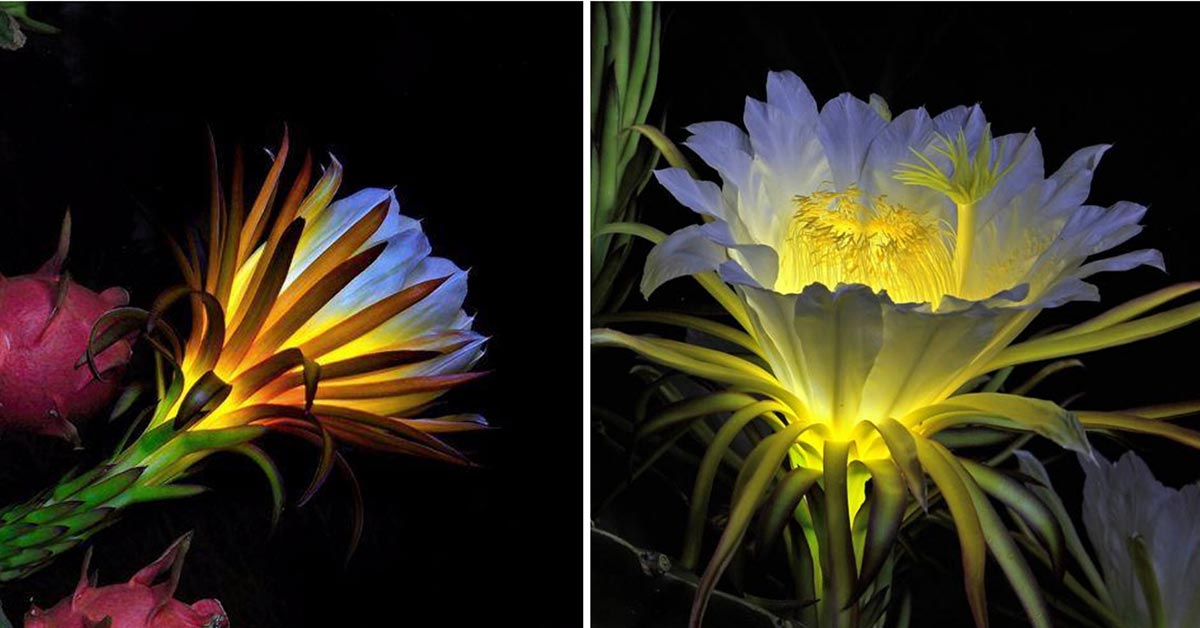

If you’ve ever grown a dragon fruit plant and then watched in mild despair as a gorgeous, basketball-sized flower opened at 10pm, glowed magnificently until 4am, and then quietly closed forever — you already understand the central challenge of growing pitaya. The bloom is the most spectacular thing the plant does, and it’s over by breakfast.
Understanding the pitaya flower isn’t just botanical curiosity. It’s the key to actually getting fruit. Everything about the flowering biology — when it opens, how long it lasts, what pollinates it, whether your variety can pollinate itself — directly determines your harvest. Get this wrong and you’ll have a very dramatic climbing cactus that produces nothing edible.
What Is the Pitaya Flower?
The pitaya flower (produced by Hylocereus undatus and related species) is one of the largest flowers in the cactus family. According to the NC State Extension Plant Toolbox, the blooms can reach up to 14 inches long and 12 inches wide — a genuinely enormous flower that looks almost artificial when you first see one opening in the dark. The petals are bright white, the stamens a golden yellow, and the fragrance is sweet and unmistakable, something like a cross between vanilla and jasmine.
The scientific name of the plant reflects the flower’s habits beautifully. Selenicereus comes from the Greek word for “moon” — a direct nod to its nocturnal flowering. In Spanish-speaking regions, the plant is sometimes called “reina de la noche,” queen of the night.
The flower emerges from along the edges of the cactus stems, growing from a bud that takes anywhere from 20 to 30 days to develop before the single night of bloom. The bud starts small and oval, elongating gradually until it reaches full size in the day or two before opening.
The Flowering Timeline: One Night Only
This is the part that surprises most first-time growers. The pitaya flower is nocturnal and ephemeral. UF/IFAS Extension Florida describes the blooms as nocturnal and bell-shaped, opening in the evening, with some cultivars remaining open into the early morning hours before closing permanently.
The full sequence looks roughly like this:
- Sunset to 9pm: The bud begins to unfurl, outer sepals loosening
- 9pm to midnight: Full bloom — maximum fragrance, stamens and stigma fully exposed
- 4am to 8am: The flower begins to close and wilt; it will not reopen
- Within a day or two: Unpollinated flowers yellow and drop; pollinated flowers begin swelling into fruit
That’s your window. Eight hours, roughly. In a home garden without natural bat or moth pollinators, those eight hours pass very quickly and often silently, with no pollination happening at all — which is why hand pollination is so important and why timing matters so much.
Pollination: The Part Most Growers Miss
In their native habitat in Central and South America, pitaya flowers are pollinated by bats and large moths, which are drawn to the nocturnal timing and the strong fragrance. UF/IFAS Extension notes that moth and bat pollination has not been commonly observed in cultivation outside of native ranges, making hand pollination the reliable path to fruit for most gardeners.
Hand pollination is straightforward. Using a small paintbrush or simply your finger, collect pollen from the golden stamens of one flower and apply it to the sticky stigma (the central column) of another flower — or even the same flower if you’re working with a self-fertile variety. Do this in the evening or early morning while the flower is fully open. The texture of a receptive stigma is slightly sticky; you’ll be able to see the pollen transfer.
The critical question is whether your variety is self-fertile or requires cross-pollination. Many common cultivars of Hylocereus undatus are self-incompatible — meaning they need pollen from a different genetic variety to set fruit. UF/IFAS Extension recommends planting two or three different genetic types (not the same clone) to ensure cross-pollination happens. If you have only one plant and it’s a self-incompatible variety, you can hand-pollinate until dawn and get nothing.
Self-fertile varieties do exist — ‘American Beauty’, ‘Voodoo Child’, and ‘Delight’ are among those known for self-compatibility — and for gardeners with limited space, starting with a self-fertile variety is the sensible move.
When Pitaya Flowers Bloom
The flowering season runs from late spring through summer into early fall, with each plant cycling through multiple flushes — up to six or seven bloom cycles in a season under good conditions, with each flush producing multiple flowers simultaneously. A mature, well-established plant in a warm climate can produce dozens of flowers across a full season.
Triggering bloom requires a dry period in winter and early spring, which stimulates the plant before the growing season starts. If you’re growing pitaya in a container that stays consistently watered year-round, this dry dormancy period is something you’ll need to consciously provide. Reduce watering significantly in winter, let the plant experience some stress, and bloom induction follows more reliably when warmer weather returns.
Full sun is essential. Dragon fruit needs at least 6 to 8 hours of direct sunlight daily to bloom well, and plants kept in insufficient light will grow vigorously but flower reluctantly — if at all.
Growing Pitaya for Its Flowers (and Fruit)
Dragon fruit is a climbing epiphytic cactus, and it needs structural support — a sturdy post, trellis, or arbor. The San Diego Zoo notes that the plant has the largest flowers in the cactus family, which gives you a sense of what you’re working with — this is not a subtle plant.
For soil, it wants excellent drainage. A cactus mix with added perlite, or the kind of airy bark-and-perlite blend used for orchids, works well for container growing. Root rot from waterlogged soil is the most common way to lose a dragon fruit plant. Water deeply, then allow the top 1 to 2 inches to dry before watering again.
The pitaya flower, while dramatic when it’s open, is also the signal that your care is working. A plant that blooms is a plant that’s happy with its light, its support structure, and its watering regime.
If you’re drawn to night-blooming plants more broadly, our guide to 12 beautiful flowers that bloom at night covers the full range of options, including close relatives like the night-blooming cereus. And for anyone planning a garden specifically designed for evening enjoyment, flowers perfect for a moon garden pairs beautifully with pitaya as a centerpiece.
What Happens After the Flower
A successfully pollinated pitaya flower transforms into fruit in 30 to 50 days — a relatively fast turnaround for something that looked like it just arrived from another planet. The swollen base of the flower begins expanding, the scales become more pronounced, and the skin shifts from green to that distinctive vivid pink, red, or yellow depending on the variety.
An unpollinated flower shrivels and drops within a day or two. If you’re watching closely (and at this point, you probably are), the difference between a pollinated and unpollinated flower is visible within 48 hours — the pollinated base stays firm and green; the failed flower yellows rapidly.
The pitaya flower is one of the more remarkable things you can grow in a garden, even if you never get a single fruit from it. Watching one open on a summer night — that enormous white bloom appearing almost as if on a schedule, filling the air with fragrance, and gone by morning — is the kind of gardening experience that doesn’t come from anything ordinary.
Plan your first viewing for a summer evening. Set a reminder on your phone when you see a bud approaching full size. And have a paintbrush ready.
FAQ
How long does a pitaya flower last? One night. The flower opens in the evening, reaches full bloom between 9pm and midnight, and begins closing permanently by 4am to 8am. Some cultivars may remain partially open until early morning, but the bloom is essentially over at dawn.
Do pitaya flowers smell? Yes — strongly. The fragrance is sweet and exotic, often compared to vanilla or jasmine, and is most intense during the peak of the bloom in the late evening. The scent is part of how the plant attracts its natural nocturnal pollinators.
How do I hand pollinate dragon fruit? Use a small paintbrush or your finger to transfer pollen from the golden stamens of one open flower to the sticky stigma (central column) of another flower. Do this between sunset and early morning while the flower is fully open. Collect pollen from a different genetic variety if your plant is self-incompatible.
Why isn’t my dragon fruit flowering? The most common reasons are insufficient light (needs 6 to 8 hours of direct sun daily), lack of a dry dormancy period in winter, or a plant that’s too young. Dragon fruit typically begins blooming when stems are mature — usually after a year or two of vigorous growth on an established support structure.
Can dragon fruit self-pollinate? Some varieties can; many cannot. Hylocereus undatus commonly sold in nurseries tends toward self-incompatibility, meaning you need pollen from a different genetic variety for reliable fruit set. If you have space for only one plant, look specifically for cultivars labeled as self-fertile.
Are pitaya flowers edible? Yes. The flower buds (before they open) are used as a culinary ingredient in parts of China and Southeast Asia, typically in soups. The open flowers are also edible, though their fleeting life makes harvesting them somewhat of a philosophical choice.