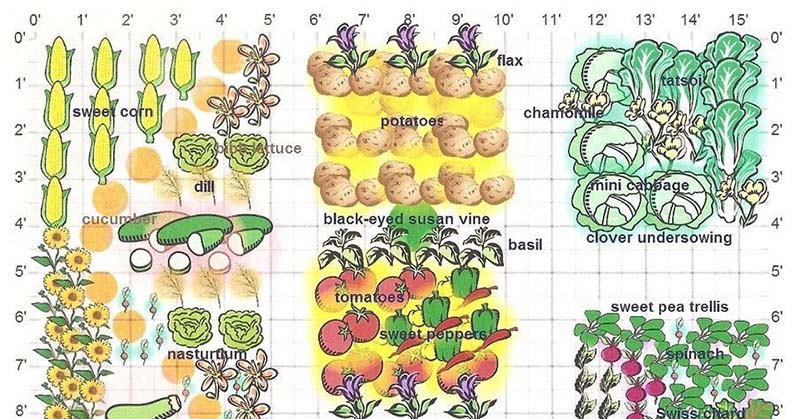

Companion planting gets a lot of good press, and most of it is deserved. Growing basil near tomatoes, beans near corn, marigolds around just about everything – these pairings hold up in real gardens, season after season. But the flip side of companion planting gets less attention: the combinations that quietly undermine your harvest, the plants whose roots or chemistry actively work against their neighbors, and the plain mismatches where two crops want completely different things from the same patch of soil.
Some of these bad pairings have real science behind them. Others are based on decades of field observation where the pattern is consistent even if the mechanism isn’t fully mapped. A few are more practical than chemical – two heavy feeders competing for the same nutrients, or a fast-growing plant that shades out something slower before it can establish. In every case, knowing which combinations to avoid can save you a season’s worth of frustration before you’ve even put a seed in the ground.
There’s also a misconception worth addressing upfront: bad companion planting doesn’t always show up as dramatic plant death. More often, you get slower growth, lower yield, more disease pressure, or a crop that never quite gets going. You pull it at the end of the season, scratch your head, and wonder what went wrong. Sometimes the answer was a few feet away.
1. Tomatoes and Potatoes
This one has hard science behind it, and it’s one of the most consequential pairings to get wrong. Tomatoes and potatoes are both members of the Solanaceae (nightshade) family, which means they’re susceptible to many of the same diseases. The most serious of these is late blight, caused by the pathogen Phytophthora infestans. According to UMN Extension, Phytophthora infestans is a water mold, and late blight of potato was responsible for the Irish potato famine of the late 1840s.
Late blight favors cool (60°F to 70°F), damp conditions. When you plant tomatoes and potatoes in the same bed or in close proximity, you’re essentially building a bridge for the disease to move between two hosts. Under cool, wet conditions, P. infestans can infect and produce thousands of spores per lesion in less than five days, and those spores become airborne easily, resulting in rapid spread. If blight hits one crop in your garden, the other is at much higher risk than it would be if they were separated or, better yet, not in the same zone at all.
Avoid planting tomatoes on sites that were previously in potatoes or close to potatoes. That’s not just a same-season recommendation – if late blight has touched your soil in a previous year, rotating the full nightshade family out of that bed for two to three seasons is the more cautious approach. For home gardeners, rotating crops, spacing plants for airflow, and keeping potatoes well away from tomatoes are the most reliable lines of defense. If your garden is small and space is tight, this is the pairing most worth keeping separated by as much distance as you can manage.
2. Fennel and Almost Everything
Fennel is genuinely useful – in the kitchen and in the garden, where it attracts hoverflies, parasitic wasps, and swallowtail caterpillars. Grow it if you want it. But grow it away from everything else, because it is one of the most consistently allelopathic plants in the home garden.
Allelopathy is the process by which a plant releases chemical compounds that suppress the growth of nearby plants. Fennel releases anethole and fenchone into the surrounding soil – compounds that suppress seed germination and stunt the growth of most neighboring plants. Its roots produce allelopathic chemicals that can inhibit the growth of many nearby vegetables, so it’s best planted away from most common crops, especially beans, tomatoes, and most herbs, which may struggle if planted too close.
The practical list of plants to keep away from fennel is long. Tomatoes, peppers, eggplants, potatoes, bush beans, pole beans, kohlrabi, broccoli, cauliflower, cabbage, kale, and lettuce are all poor neighbors for fennel. Carrots, dill, and coriander are also problematic, because although they’re umbellifers like fennel, they can cross-pollinate or fail to mature properly in fennel’s presence. If you’ve grown fennel in a bed previously, the soil effect can persist for two to three growing seasons after fennel is removed, so avoid planting sensitive crops in that space for the following two years. The practical fix is simple: grow fennel in its own container, placed well away from your vegetable beds. The allelochemicals remain within the pot’s root zone, so container-grown fennel poses essentially no risk to neighboring plants.
3. Black Walnut Trees and Nightshades
If you have a black walnut tree on your property, your vegetable garden placement matters more than you might think. According to Wisconsin Horticulture Extension, black walnut trees (Juglans nigra) produce a toxic substance called juglone that prevents many plants from growing under or near them. Penn State Extension reports that experimental studies have shown juglone inhibits plant respiration, depriving sensitive plants of needed energy for cell division as well as water and nutrient uptake.
Vegetables such as tomato, potato, eggplant, and pepper are particularly sensitive to juglone and may be stunted, develop yellow or brown twisted leaves, exhibit wilting of some or all plant parts, and die over time. The zone of effect is wider than most gardeners realize: the toxic effects of a mature black walnut tree can extend 50 to 80 feet from the trunk, with the greatest toxicity occurring within the tree’s dripline.
A note on the research, though. WSU Extension’s fact sheet on black walnut allelopathy points out that inconsistent results have been the persistent problem in juglone research – for every report of toxicity in a tested species, another report may find little to no effect. Variables like soil drainage, microbial activity, and soil type all influence how much juglone accumulates and how readily it moves. But the pattern of observed damage to nightshades near black walnuts is consistent enough across extension services nationwide that keeping your tomatoes and peppers well away from any black walnut – and certainly out of its dripline – is the sensible call. Penn State Extension also notes that juglone toxicity may persist for years after a tree is removed, so don’t rush to replant nightshades in soil where a walnut was recently taken down.
4. Onions and Garlic Near Beans and Peas
This is one of the more widely repeated companion planting cautions, and there’s consistent observational support for it, even if the exact mechanism isn’t always clear. Garlic and onions are believed to interfere with the growth of beans and peas, but seem to be compatible with most other garden plants.
One practical angle that experienced growers point to: it’s not purely chemical. Some say onions stunt the growth of bush beans, but more accurately, the two don’t grow well together because of different watering needs. While both thrive with ample moisture early in the season, once the onion tops mature and fall over, gardeners typically stop watering to allow the bulbs to cure – but beans benefit from consistent moisture during most of their growing period. So even if you’re skeptical of the allelopathic angle, the conflicting management needs alone make this a combination worth avoiding. The sulfur compounds in pungent garlic bulbs can also stunt the growth of pea plants when the two are grown in close quarters.
The fix is easy: keep your alliums – onions, garlic, chives, leeks – in their own section of the garden, away from legumes. Both groups are valuable crops. They just want different neighbors.
5. Brassicas and Nightshades
Brassicas (the cabbage family: broccoli, kale, cauliflower, kohlrabi, Brussels sprouts) and nightshades (tomatoes, peppers, eggplant) have a reputation for not getting along, and there’s enough grower experience behind this to take seriously. Brassicas such as broccoli and cabbage can stunt the growth of nightshades such as tomatoes and peppers.
Part of this is competition. Both groups include heavy feeders that pull significant nutrients from the soil. Plant them side by side and you’re setting up a competition neither will win cleanly. Beyond nutrient competition, brassicas and nightshades attract overlapping pest populations. If you’re trying to manage cabbage loopers, aphids, or flea beetles on one group, having the other group right next to them gives those pest populations more footholds and more opportunities to build.
There’s also a seasonal mismatch that makes this pairing impractical in most climates. Brassicas prefer cool weather and are typically planted in early spring or fall. Nightshades want warmth and go in after last frost. If you tried to share a bed, you’d be managing two crops with completely different temperature windows and irrigation needs. Kale prefers cool weather and becomes especially prone to aphids during the heat, while peppers love the heat and can’t handle temperatures below 50°F. Keep these families in separate beds and rotate them into each other’s spots in alternating years rather than growing them side by side.
6. Mint in Any Vegetable Bed
This one isn’t about chemistry – it’s about behavior. Mint is a genuinely useful herb. It smells good, it can deter certain pests, and it attracts beneficial insects when it flowers. The problem is what it does to everything around it once it’s established.
Despite its pleasant scent and pest-repelling qualities, mint is an aggressive spreader – best contained in a pot, raised bed, or along pathways well away from your vegetables. If you plant mint directly in a vegetable bed, it will move. It spreads via underground runners called rhizomes, and by the time you notice it crowding out your other plants, it’s already well established. Pulling it is harder than it sounds. You can miss even a small piece of root and have it come back stronger.
You don’t have to give up mint. Grow it in a container and set the container near your beds – the fragrance still reaches, and beneficial insects will still find the flowers. If you have raised beds, you can grow mint in the pathways or along the margins of your garden where it can’t creep in. What you want to avoid is planting it directly in the soil where you also have vegetables, because it will eventually become the main occupant. For more on which herbs and plants work well together versus against each other, the 26 companion planting pairs guide is a useful reference for building beds that cooperate rather than compete.
7. Sunflowers Near Potatoes and Beans
Sunflowers look fantastic at the garden’s edge, and they earn their place by attracting pollinators and providing habitat. But they have allelopathic properties that many home gardeners don’t know about, and certain crops – potatoes and beans especially – are more vulnerable to those effects.
Sunflower seedlings grow much faster than many companions and can shade out sun-loving crops before they have a chance to establish. The chemicals within the seed hulls left behind by birds can also inhibit the growth of surrounding plants – a form of allelopathy that continues even after the sunflower itself is done for the season. The sunflower allelopathy question is similar to black walnut in that the evidence from garden observation tends to be more consistent than what controlled research has pinned down. What you’ll find is that beans and potatoes grown close to sunflowers often underperform compared to those grown in the open.
Sunflowers appear to affect beans and potatoes most noticeably with these allelopathic compounds. The practical approach: grow your sunflowers at the edges of your plot or along a fence line, not woven into or alongside rows of legumes or potatoes. They still provide all the habitat and pollinator benefits from there, and the incompatible crops stay out of the zone of influence. If you’ve ever had a bean row that just never quite produced despite decent soil and regular water, think about where the sunflowers were that year.
8. Cucumbers and Sage
This is a less obvious pairing but one worth knowing, particularly for herb gardeners who like to mix vegetables and herbs in the same bed. Cucumbers don’t appear to respond well to sage planted nearby. Sage is an especially fragrant herb with a long history of culinary use – but its essential oils can interfere with the growth of cucumbers when the two are in close contact.
The mechanism is less documented than fennel’s allelopathy or juglone toxicity, but the pattern shows up reliably enough in grower experience to treat it as a practical guideline. Cucumbers tend not to take well to the company of strongly aromatic herbs such as sage. The broader lesson here is that strongly aromatic Mediterranean herbs – sage, rosemary, and to a lesser extent lavender – tend to prefer drier conditions and may chemically interfere with moisture-loving vegetables planted alongside them. Sage does well near brassicas and root vegetables, and it pairs reasonably with rosemary, cabbage, and carrots where it deters insects that damage those crops, so it has its companions. Cucumbers just aren’t among them.
9. Kale and Cabbage Grown Together
Planting multiple members of the brassica family side by side seems logical until you think about what they all want from the soil. Kale and cabbage, along with broccoli, cauliflower, Brussels sprouts, and kohlrabi, are all heavy feeders pulling many of the same nutrients – and their pest profiles overlap almost entirely.
The principle is a simple one that extends across the whole brassica family: don’t crowd plants that use the same nutrients. When you pack same-family plants together, nutrient depletion concentrates in one area, and pest populations find a more target-rich environment. Cabbage worms, aphids, flea beetles, and harlequin bugs move readily between brassica family members – put all your brassicas in one dense block and an infestation that starts in one plant can sweep through everything within days.
Planting the same family members of vegetables in the same garden spot season after season wears out the soil and invites pest buildup, and the same logic applies to crowding them together within a single season. Space your brassicas generously and rotate them to different beds each year rather than grouping all the cabbage-family vegetables together. If you want to maximize your brassica output, spreading them across the garden and interplanting with herbs or alliums gives each plant better nutrient access and makes pest management considerably easier.
10. Fennel and Dill
These two herbs look similar, both belong to the same plant family (Apiaceae), and they seem to make sense together on paper. In the garden, though, they’re a pairing to avoid – and for a different reason than you might expect.
When fennel and dill flower close to each other, their pollen mixes and you end up with seeds that taste like neither one properly. If you save seeds – or if you’re letting either plant self-seed for next year – this cross-pollination can quietly degrade the quality of both crops. You harvest what you think is dill and find it tastes muddy or unfamiliar. The same can happen to fennel seeds.
Although dill and fennel are both umbellifers, they can cross-pollinate or fail to mature properly when grown in close proximity. The two plants also compete for similar resources in the soil, which can reduce vigor in both. Grow dill near cucumbers, carrots, or cabbage – where it earns its keep as a pest-repellent herb. Fennel belongs at the garden’s edge, in its own container or isolated bed, away from both vegetables and other members of its family.
11. Strawberries and Brassicas
Strawberries are perennial, which complicates their companion relationships – once established, they’re sharing space with whatever you plant nearby for years, not just one season. Brassicas are one of the combinations to avoid near a strawberry bed.
Brassicas are incompatible with strawberries because they attract many of the same kinds of pests. Both groups are targeted by slugs, aphids, and several caterpillar species that will move freely between the two. There’s also a nutrient competition angle: brassicas are among the most nutrient-demanding crops in the garden, and placing them near strawberry beds means they’re competing with a perennial crop that can’t easily be moved if it starts to struggle.
The deeper problem is planning. Strawberries are a long-term commitment in the garden – they’ll occupy a bed for three to five years if you let them run. Everything you plant near them for that whole period matters. Brassicas are typically heavy feeders grown as annuals, and they’re best placed in beds where you have full rotation control. Rotating brassicas into a strawberry bed or right up against one doesn’t give you the flexibility you need to manage either crop well.
12. Squash or Pumpkins and Potatoes
This pairing runs into problems on two fronts: competition and physical interference. Both squash and potatoes are aggressive growers, but they approach that aggression very differently. Potatoes are heavy feeders, pulling significant amounts of nitrogen, phosphorus, and potassium from the soil. Plant squash or zucchini alongside them and you’re setting up a race for nutrients that both will lose.
The physical side of the problem is equally real. Squash and pumpkins spread via vines that can extend well beyond the original plant. Winter squash tends to ramble far beyond its planting spot, and the broad leaves and fast-growing vines are also prone to shading out anything planted too close. Potatoes planted in the path of a spreading squash vine end up shaded out at exactly the time they need full sun to bulk up their tubers underground. You also lose easy access to the potato bed for hilling – a task that can’t be skipped if you want a decent crop.
Potatoes do not thrive alongside cucumbers, tomatoes, squash, or pumpkins. If you’re working with a smaller plot, keep your potato rows in open, unobstructed ground with clear space around them. Give your squash and pumpkins the far end of the bed or a separate section where their vines can run without encroaching on other crops. Both will produce better for the separation.
How to Put This Into Practice This Week
Most of these pairings can be avoided simply by thinking about plant families and their needs before you plant rather than after. Draw your beds out on paper first, group plants by family so you can rotate them cleanly, and put the allelopathic outliers – fennel, black walnut (if it’s on your property), sunflowers – at the edges where they do their good work without interfering with your harvest.
This week, walk your garden and look for any of the combinations above. If you’ve got tomatoes and potatoes in the same raised bed, they’re not going to thank you for it – especially in a wet summer. If your fennel is planted in open soil anywhere near vegetables, pot it up or move it to an isolated corner. If mint has already crept into a bed, dig it out now before it gets any further established – get the roots, not just the tops.
If you’re planning your beds for the coming season, draw the nightshades in one zone, the brassicas in another, and leave fennel off the map entirely until you have a container dedicated to it. Check where your sunflowers ended up last year relative to your bean rows, and shift them to a fence line or garden edge this time. Small adjustments at the planning stage are always easier than trying to correct a bad pairing mid-season, when both crops have already paid the price.
Read More: 14 Tips for Growing Perfect Tomatoes
AI Disclaimer: This article was created with the assistance of AI tools and reviewed by a human editor.