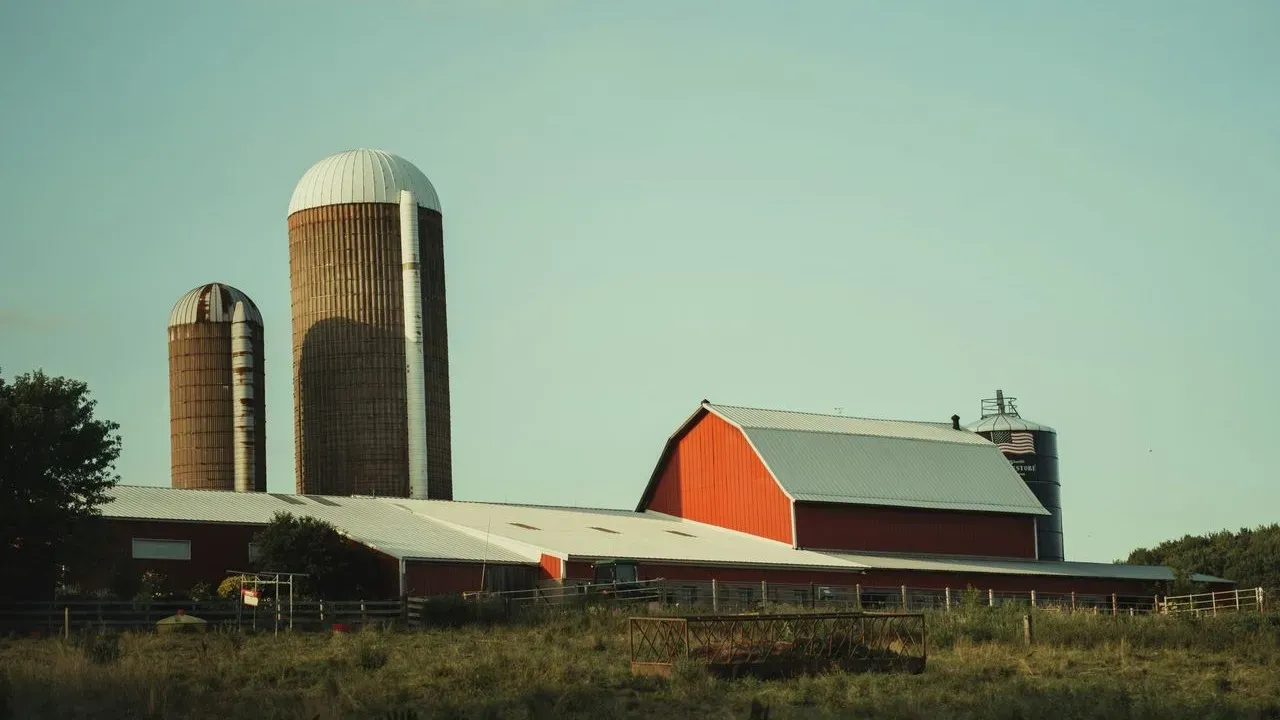

Iowa’s Republican nominee for governor built his campaign on sharp criticism of corporate agriculture and its health effects. Yet records show he spent years directing operations for a Koch-funded group that backed policies friendly to the same industry. That contrast now sits at the center of his bid to lead a state where farming shapes both the economy and public health.
From Koch operative to MAHA candidate
Zach Lahn directed the Montana chapter of Americans for Prosperity starting in 2014. The group, backed by the Koch family, fought Medicaid expansion and supported candidates aligned with large agribusiness interests. Koch Ag & Energy Solutions remains one of four firms that control three-quarters of the U.S. fertilizer market, a concentration critics link to higher costs for farmers.
Lahn later co-founded a private school in Kansas with Annie Koch, wife of Chase Koch. The couple married after both divorced their previous spouses. Lahn acquired the family farm in Belle Plaine, Iowa, in 2014 but did not register to vote in the state until October 2024, just meeting the residency rule for governor. He launched his campaign from the farmhouse porch in late 2025.
Platform built on food safety and antitrust
Lahn has called for breaking up what he describes as agribusiness cartels and taxing Wall Street hedge funds that invest in farmland. He links rising cancer rates in Iowa to pesticide use, especially glyphosate, and promises to fight liability shields that protect chemical companies. His positions align with MAHA priorities on regenerative practices and reduced chemical inputs.
These stances helped him defeat a Trump-endorsed incumbent in the Republican primary. MAHA Action and MAHA PAC provided early support, including get-out-the-vote efforts. A major donor tied to the movement contributed $25,000. Lahn has also pledged to remove mRNA COVID vaccines from the market and end school vaccine mandates.
Iowa’s pollution and consolidation pressures
The state ranks second nationally in cancer rates, with the rate still climbing in only three states. Agricultural runoff from corn, soy, and hog operations contaminates drinking water across much of Iowa. Farmers receive less than 15 cents of every consumer food dollar after input costs controlled by a handful of suppliers.
Out-of-state investors now own increasing shares of Iowa farmland. Fertilizer prices have risen further amid global supply strains. These conditions affect both long-term residents and newer operators who rely on the same concentrated markets Lahn now targets.
Claim versus record on the campaign trail
| Public Claim | Earlier Record |
|---|---|
| Critic of agribusiness monopolies | Directed Koch advocacy group that backed industry-friendly candidates |
| Regenerative farmer focused on local land | Acquired Iowa farm while maintaining Kansas ties; registered to vote in Iowa in 2024 |
| Outsider called by God to run | Experienced political operative with national Republican and Koch network connections |
Democrats highlight the timeline and past affiliations. Some Iowa farmers question whether Lahn will challenge federal policies on tariffs and program cuts that also squeeze rural economies. His general-election opponent leads by roughly six points in recent polling.
MAHA voters as a swing bloc
MAHA supporters helped deliver the 2024 presidential outcome yet face mixed results on food and pesticide issues since. Lahn’s candidacy tests whether the movement can translate its national profile into state-level wins in farm states. Success would require holding together voters who share his regulatory skepticism while addressing practical concerns over input costs and market access.
The outcome in November will show how far the tension between Lahn’s history and his current message travels with Iowa voters.
AI Disclaimer: This article was created with the assistance of AI tools and reviewed by a human editor.