
Most kitchens are planned around the weekly grocery run. Food arrives in packaging, goes into a cupboard or refrigerator, and gets eaten within days. A vegetable garden follows no such schedule. It can yield nothing for months, then deliver a flood of potatoes in a single afternoon. A ([1])guide on storing homegrown food makes the case that a few deliberate design choices can keep that harvest from going to waste.
Bringing back the old pantry
The traditional larder worked because it was the coldest and darkest part of the house. It usually sat on a north-facing wall, had a vent to the outside, and held a stone or slate shelf that kept the chill overnight. Vegetables stored there for months because the conditions suited them.
A modern kitchen is warm, bright and sealed, so it offers none of that. Much of the effect can be recreated with one well-chosen cabinet. A tall unit on an outside wall, positioned away from the oven, dishwasher and heating pipes, is the best candidate. Leaving it uninsulated and adding a small vent to the outdoors, where the wall allows, lets it run noticeably cooler than the rest of the room through autumn and winter. Slatted shelves matter as well, because air needs to circulate and solid shelves trap damp underneath whatever sits on them.
Each crop wants different conditions
Potatoes need darkness, cool air and dry conditions. Paper sacks or burlap are better than plastic, which holds moisture and can cause rot. Light turns potatoes green, and the green parts are not safe to eat, so the darkest shelf of the cold cupboard is the right spot.
Onions and garlic need similar conditions with more airflow. Hanging them in mesh nets from a rail or a row of hooks near the top of the cupboard helps them stay firm for months.
Apples are less forgiving. They need cool, slightly damp storage and space between fruits, since a single rotting apple can spoil the rest. Single-layer trays, with the fruit not quite touching, work far better than a deep bowl. Checking the trays every couple of weeks for soft spots catches problems early.
- A tall, uninsulated cabinet on an outside wall, with a vent and slatted shelves, recreates the cool conditions of an old larder.
- A solid timber countertop beside the stove handles boiling pans and vinegar, and it can be sanded and re-oiled.
- A deep single-bowl sink with a pull-out spray tap helps rinse soil from roots without a seam for grit to collect in.
- Deep drawers rated for heavy loads suit full preserve jars better than wall cupboards.
- A chest freezer can hold roughly three times as much as a built-in drawer freezer, at a lower price.
Roots, squash and the preserving table
Carrots, beetroot and parsnips go soft within about two weeks if they are washed and left in a cupboard. Packed unwashed in slightly damp sand inside a crate, they can keep for months. A pull-out crate at the bottom of the cold cupboard, deep enough for a few inches of sand, makes this practical.
Squash and pumpkins prefer warmth and dryness, so they belong on an open kitchen shelf rather than in the cold cupboard. For longer storage, moving them to a cool, dry spot after roughly two weeks is recommended.
Preserving is hard on surfaces. Jam and chutney involve boiling pans, hot jars and a good deal of vinegar, which can mark quartz, blister laminate and stain marble. Solid timber takes that treatment well. A run long enough to hold a dozen jars at once is a practical target.
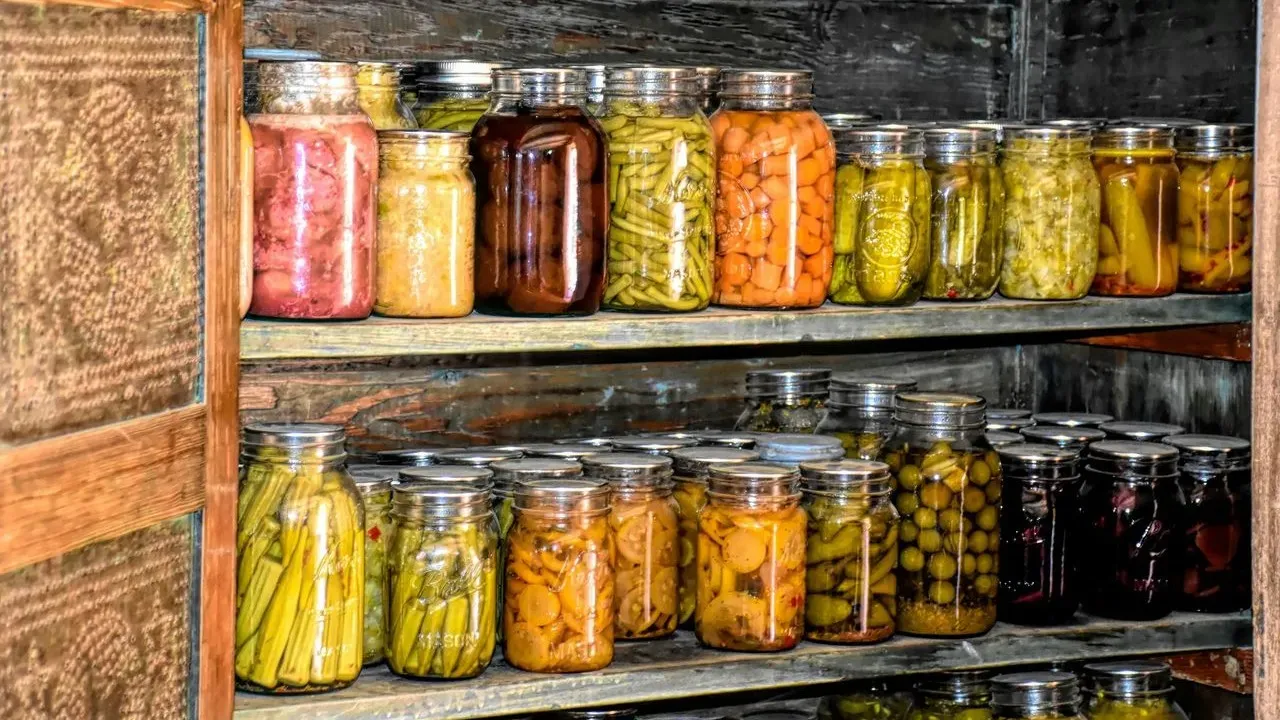
A year of preserving can produce somewhere between 50 and 80 jars, which need more than three feet of shelving. Full jars are heavy, so deep drawers rated for the load are a better home than wall cabinets. Labeling the lids rather than the sides helps, since the lids are what you see when a drawer opens.
Freezing and planning before the cabinets are ordered
Much of a glut ends up frozen, and most kitchens have a freezer sized for a few ready meals. A chest freezer in a garage or laundry room can hold far more and costs less to buy. Keep the kitchen freezer for everyday food and send blanched vegetables to the larger unit.
Most of these fixes are inexpensive when they are designed in from the start and costly when added later. A vent through an outside wall is a small task during installation but a messy one a year on. Drawers built to carry around 90 pounds also need sturdier cabinet frames than standard ones.
If a new kitchen is on the horizon, tell the designer at the outset that you grow your own food. The cold cupboard, timber worktop, deep sink and heavy drawers are simplest to include before anything is ordered.
AI Disclaimer: This article was created with the assistance of AI tools and reviewed by a human editor.