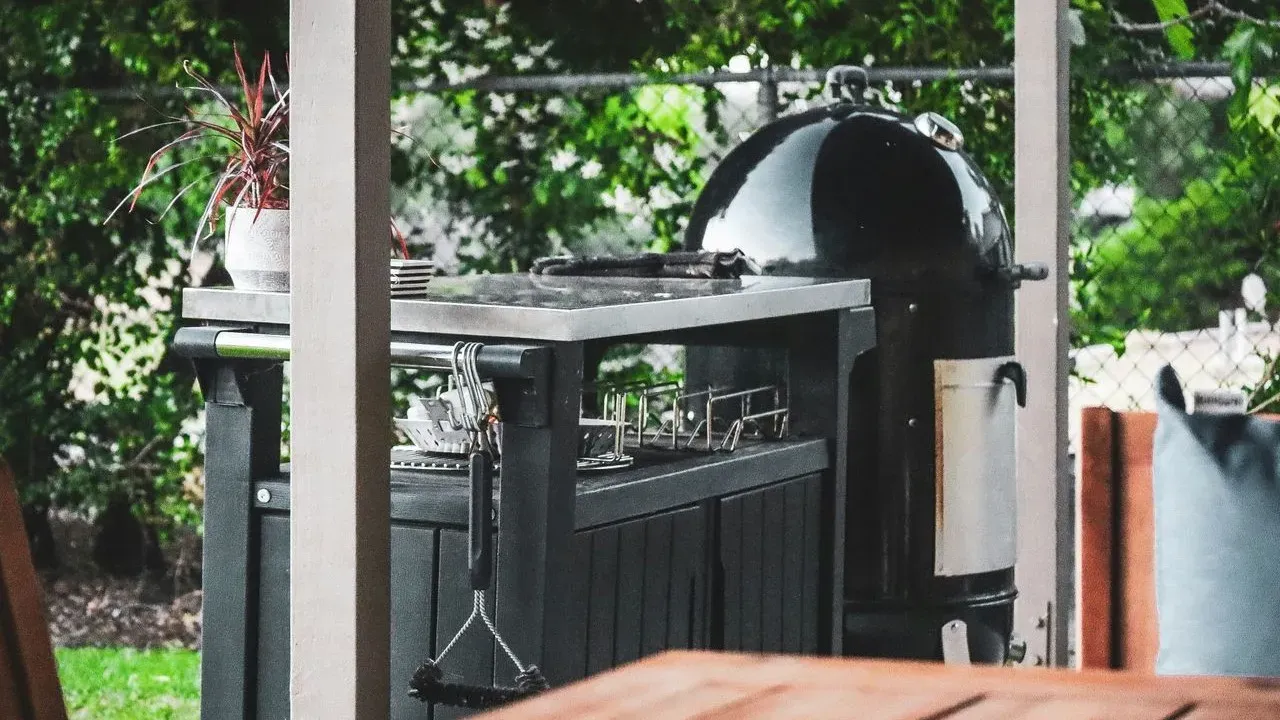

Even modest patios and small gardens can support a complete outdoor cooking setup when the layout prioritizes efficiency over size. Thoughtful choices in configuration, materials, and storage turn limited square footage into a practical space for preparing meals and hosting guests. The approach draws on modular units and built-in features that keep everything within reach without crowding the area ([1]).
Start With a Streamlined Layout
A compact footprint works best when the design stays simple and linear. Straight runs along a wall or fence use the boundary as a natural backstop, while corner placements create an L-shape that fits neatly into awkward angles. Narrow prep zones with integrated storage further reduce clutter and keep the workflow smooth during cooking sessions. These arrangements avoid the sprawl that can make a small yard feel smaller. They also leave room for seating or circulation paths so guests can move comfortably around the cooking area.
Choose Components That Fit the Space
The heart of any outdoor kitchen remains the cooking appliance, yet success depends on balancing it with supporting elements. A built-in grill sized for the available area pairs well with a side burner for sauces and a modest work surface for prep. Storage drawers and utility sections then complete the station without adding bulk. Planning these pieces together ensures the final arrangement feels cohesive rather than piecemeal. The result supports both quick weeknight meals and longer gatherings without requiring extra room.
Build In Weather-Resistant Storage
Clutter quickly undermines even the most attractive outdoor kitchen, so dedicated storage becomes essential. Weatherproof cabinets protect utensils and supplies from rain and sun, while pull-out drawers keep tools organized and accessible. Hidden bins for waste and recycling maintain a tidy appearance, and open shelves hold frequently used items within arm’s reach. These features keep the workspace functional across seasons. They also reduce the need for constant tidying, letting the focus stay on cooking and conversation.
Select Materials Built to Last
Outdoor installations face constant exposure to moisture, temperature swings, and sunlight. Stainless steel cabinets and appliances resist corrosion, while stone or concrete countertops provide durable work surfaces that age gracefully. Treated timber accents add warmth without sacrificing longevity, and protective finishes on all surfaces cut down on seasonal maintenance. Durable choices protect the investment and preserve the clean look that makes the space inviting. They also support year-round use rather than limiting the kitchen to fair-weather months.
Extend the Area for Guests
A small patio gains extra value when the kitchen doubles as an entertaining zone. A countertop that serves both prep and serving needs, or a compact dining set tucked nearby, turns the cooking station into a social hub. Bar-style seating along one edge further maximizes the footprint without blocking movement. These multi-purpose additions let hosts prepare food and interact with guests in the same spot. The overall effect creates a welcoming outdoor room that feels larger than its actual dimensions suggest. With careful attention to layout, components, storage, and materials, compact outdoor kitchens deliver the same satisfaction as larger setups. The focus remains on practical choices that support daily use and occasional gatherings, proving that available space matters less than how it is arranged.
AI Disclaimer: This article was created with the assistance of AI tools and reviewed by a human editor.