

Yes, It’s Actually a Documented Phenomenon

The experience of watching a partner drift off effortlessly isn’t just your imagination working overtime. On average, men do tend to fall asleep a little faster than women, though the gap is small and varies widely from person to person. Research published in peer-reviewed sleep science journals backs this up consistently.
Actigraphic recordings have shown that men sleep later but fall asleep faster, and also show shorter sleep duration and more sleep fragmentation than women. So while men may knock out quicker, the story of who sleeps “better” overall is more complicated than it first appears.
Hormones Play a Surprisingly Large Role
One of the major factors is hormonal fluctuation. Unlike men, whose sleep-related hormone patterns are generally more stable, women may experience changes linked to menstrual cycles, perimenopause, and menopause that can affect sleep depth, increase nighttime awakenings, and disrupt rest.
Testosterone and cortisol display well-defined daily peaks in males, with testosterone declining more gradually than cortisol, while estrogen and progesterone in females exhibit dynamic patterns tied to the menstrual cycle rather than strong circadian rhythms. That hormonal instability makes a consistent sleep onset much harder for many women to achieve night after night.
The Gender Sleep Gap Is Real and Well-Named
This is commonly referred to as the gender sleep gap, where women are less likely to get enough quality sleep than men. The gap is often attributed to women taking on more of the domestic work of the household as well as professional work, on top of the primary caregiving role.
Research has found that women rate their sleep quality lower than men’s and report more fluctuations in their quality of sleep, corresponding to changes throughout the menstrual cycle. This isn’t a minor complaint. It reflects a measurable, physiological reality tracked by sleep researchers around the world.
Mental Load Keeps the Brain in “On” Mode
Mental health can also play a role. Higher rates of anxiety and depression among women represent another factor that may influence sleep quality. Stress, racing thoughts, and emotional overload can make it harder to transition into restful sleep and may contribute to waking during the night.
Another issue is what is often described as the mental load associated with caregiving. Some experts suggest that women are more in tune with how they’re feeling and more sensitive to problems with their sleep. One theory is that women tend to ruminate more than men do, worrying and thinking about what happened during the day and finding it harder to let things go.
Insomnia Doesn’t Affect Both Sexes Equally
Lower sleep quality is associated with anxiety and depressive disorders, which are twice as common in women as in men. Women are also more likely than men to be diagnosed with insomnia, although the reasons are not entirely clear.
Hormone changes can lead to higher rates of insomnia and conditions such as restless leg syndrome, making it more difficult for women to wind down. Conversely, men are more frequently affected by sleep conditions that result in increased sleepiness, such as sleep apnea. Sleep apnea, ironically, can cause someone to fall asleep faster precisely because their body is chronically sleep-deprived.
Biology Goes Even Deeper Than We Knew
Females sleep less, wake up more often, and get less restorative sleep than males, according to a study published in the journal Scientific Reports. The findings shed new light on what may underlie sleep differences in men and women and could have broad implications for biomedical research.
Senior author Rachel Rowe of CU Boulder noted that while sleep differences in humans are often attributed to lifestyle factors and caregiving roles, the results suggest that biological factors may play a more substantial role in driving these sleep differences than previously recognized. That’s a significant shift in how scientists are now framing the conversation.
Your Chronotypes May Simply Not Match
Men tend to be later chronotypes, preferring to go to bed and wake up later than women. This may lead to social jet lag, where their circadian rhythm doesn’t align with social demands like work. They also have less consistent rest-activity schedules than women on a day-to-day basis.
While there are weak positive correlations for sleep duration and daily activity between couples, an inverse correlation has been observed for chronotype. One spouse’s chronotype can potentially induce the opposite preference in their partner. Sharing a bed with someone whose natural rhythm is the opposite of yours adds another invisible layer of friction to falling asleep.
Sharing a Bed Actually Changes Your Sleep Architecture

Under the co-sleep condition, couples showed significantly higher percentages of REM sleep compared to sleeping alone, and REM sleep in the presence of a partner was significantly less fragmented. So while one partner might be awake stewing, both are likely getting better-quality deep sleep than they would alone.
Women spent significantly more time asleep than men in co-sleeping studies, though women also reported the partner as the cause of disturbance more than men did. It’s a somewhat contradictory picture, but it reflects just how differently each partner can experience the same shared bed.
The Relationship Itself Influences Who Falls Asleep When
Research has found a moderate correlation between better couple relationship quality and better overall sleep quality, as well as longer sleep duration. The emotional temperature of a relationship doesn’t stay at the door when the lights go out.
Increased partner conflict is associated with poorer overall sleep quality, and greater partner conflict significantly correlates with longer actigraphy-based sleep latency and more wake episodes. Put simply, unresolved tension between partners shows up physically in how long it takes either person to fall asleep. Research also suggests that women’s reports of marital quality are more consequential for both partners’ sleep, emphasizing the importance of considering gendered processes and interpersonal dynamics.
What You Can Actually Do About It
The good news is that sleep onset latency, the time it takes to fall asleep, is not entirely fixed. It’s not just biology. Lifestyle, stress, and habits play a bigger role than gender alone. Evening routines, phone use, room temperature, and even when you eat all sit within your control.
Diary-based research among young adults shows that partnered sexual activity culminating in orgasm is linked to reduced sleep latency and improved subjective sleep quality. Large surveys on affective touch find that positive tactile interactions such as hugs, massages, and intimate contact are perceived to hasten sleep onset and enhance overall sleep satisfaction. Sometimes the simplest interventions work surprisingly well.
The Takeaway
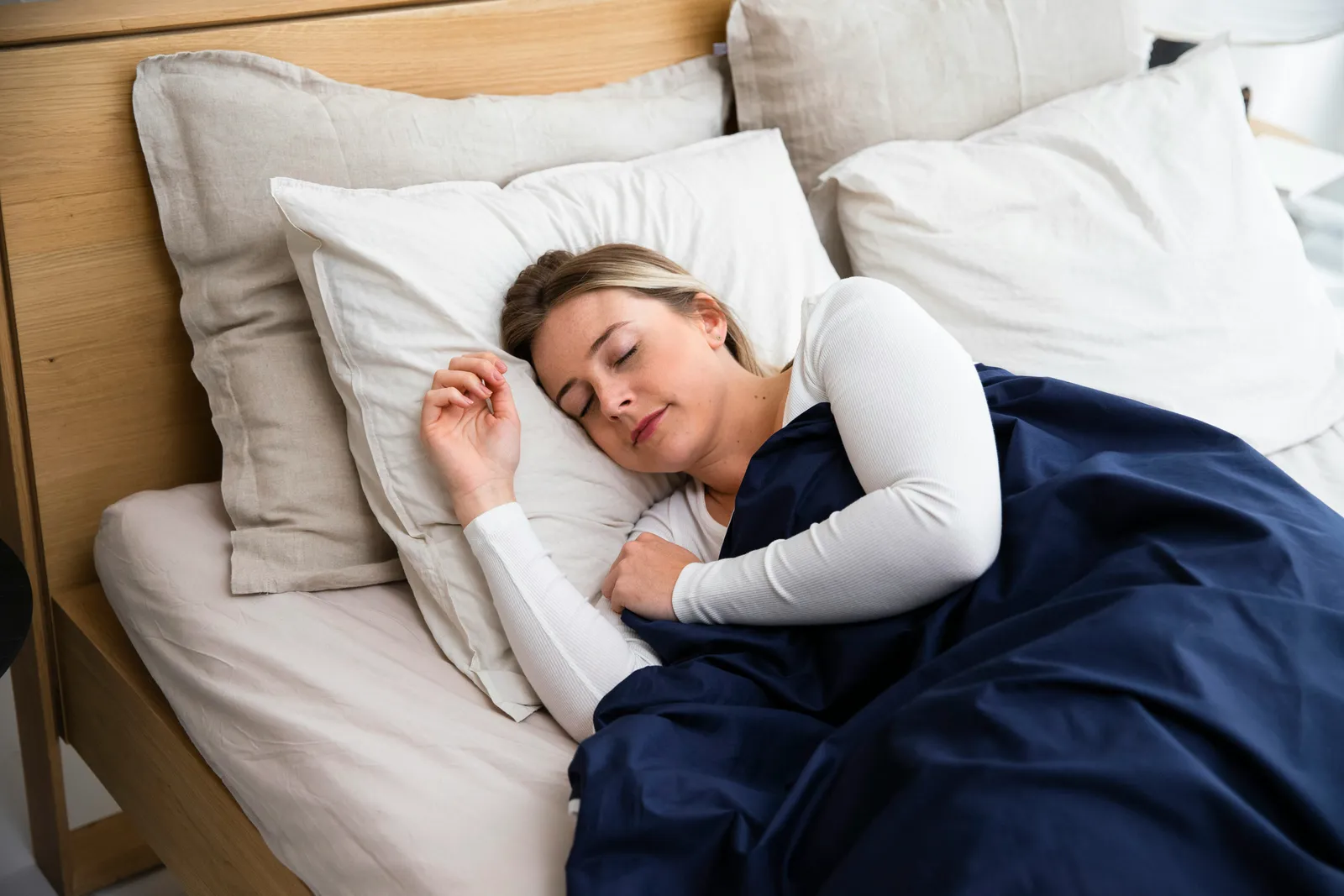
The gap between your sleep onset and your partner’s is rarely about one person being lazy or stressed for no reason. It’s a layered mix of biology, hormones, mental load, relationship dynamics, and circadian wiring that science is only now beginning to fully map. Recognizing and comprehending sex differences in sleep and circadian rhythms is essential for tailoring approaches and treatment strategies for sleep disorders and associated mental health conditions.
Rather than watching the ceiling in quiet frustration, it’s worth knowing that your difficulty falling asleep almost certainly has a real, explainable cause. Understanding that cause is the first, most useful step toward actually doing something about it.
AI Disclaimer: This article was created with the assistance of AI tools and reviewed by a human editor.