
What “Travel Edema” Actually Means
Travel-related swelling, known medically as edema, describes the accumulation of excess fluid within body tissues. During long-haul flights, this condition frequently manifests as tight, heavy, or puffy sensations in the feet and ankles.
Gravity causes fluids to pool in the lower extremities, which is why swelling often shows up most noticeably in the ankles, feet, and toes. The condition has a specific name too: dependent edema, so called because the fluid collects in the parts of your body that are “dependent” on gravity.
Swollen feet are a common complaint among air travelers that can cause significant pain and discomfort. Generally, your feet will swell a half size to a full shoe size bigger than normal. While the problem usually goes away on its own once you’re on the ground, it’s worth knowing what causes feet to swell.
Sitting Still Is the Core Problem

The most likely reason for foot swelling is sitting for a long time without moving during a flight. Sitting with the feet on the floor for a long time causes blood to pool in the leg veins. The position of the legs while seated also increases pressure in the leg veins. This plays a role in swelling by causing fluid to leave the blood and move into the surrounding soft tissues.
Your calf muscles act like a pump when you walk, helping squeeze the veins and push blood back to your heart. Without that movement, blood and fluid can collect in your lower legs.
When you sit for extended periods, especially in a cramped airplane seat and often with your legs crossed, the circulation through your lower body slows down. The muscles in your legs play a significant role in helping to pump blood back to your heart, so when you’re seated and relatively immobile, these muscles are not contracting as they usually would when you’re walking or moving around. This can lead to blood pooling in the lower extremities, particularly the feet and ankles.
Cabin Pressure Works Against Your Circulation
When you fly, the cabin is pressurized to mimic an altitude of around 6,000 to 8,000 feet. This environment can lead to mild dehydration and lower oxygen levels in the blood, which slows down circulation.
Cabin pressure at cruising altitude is equivalent to standing on a 6,000 to 8,000 foot mountain. At that pressure, your blood vessels expand slightly, and fluid moves out of your bloodstream and into your tissue more easily.
The low cabin pressure can keep your blood from moving as quickly as it normally would and cause fluid to build up in your feet. That same pressure can work against the already-formidable force of gravity to keep fluid in your feet instead of circulating properly. These two forces combining is part of what makes an airplane uniquely bad for feet compared to other forms of travel.
Dry Cabin Air and the Dehydration Loop

The air inside an airplane is significantly drier than what we experience on the ground, with humidity levels often dropping to around 10 to 20 percent. This low humidity can cause dehydration, which actually leads to your body retaining more water as it tries to compensate for the lack of fluid intake during air travel. This fluid retention can manifest as swelling in various parts of the body, including the feet and ankles.
When you are dehydrated, your body may retain fluid as a protective response. This can make swelling worse. It’s a counterintuitive loop: the drier the air, the more your body holds onto whatever water it has left.
Drinking alcohol or caffeine during the flight can increase dehydration. While dehydration alone doesn’t directly cause swelling in healthy people, it can be compounded with long periods of sitting and limited movement.
Salty Food Makes It Worse
Salt intake is known to increase fluid retention, which could cause painful swelling of the feet and legs. Notoriously, airplane food has a lot of sodium added to it, which may increase the chances of your feet and ankles swelling.
Popular travel snacks, such as chips, crackers and nuts, are often packed with sodium. Food served on board the plane is typically just as sodium-filled due to the preservatives required to keep the food fresh as well as seasoning to increase taste. A sudden increase in sodium intake can cause you to retain water, thus causing your feet to also swell.
This isn’t about one bag of pretzels ruining your flight. It’s about the cumulative effect of a high-sodium pre-flight meal, salty snacks mid-flight, and a drink or two combining at the exact moment your body is least equipped to manage fluid balance efficiently.
Flight Length Changes the Risk Equation
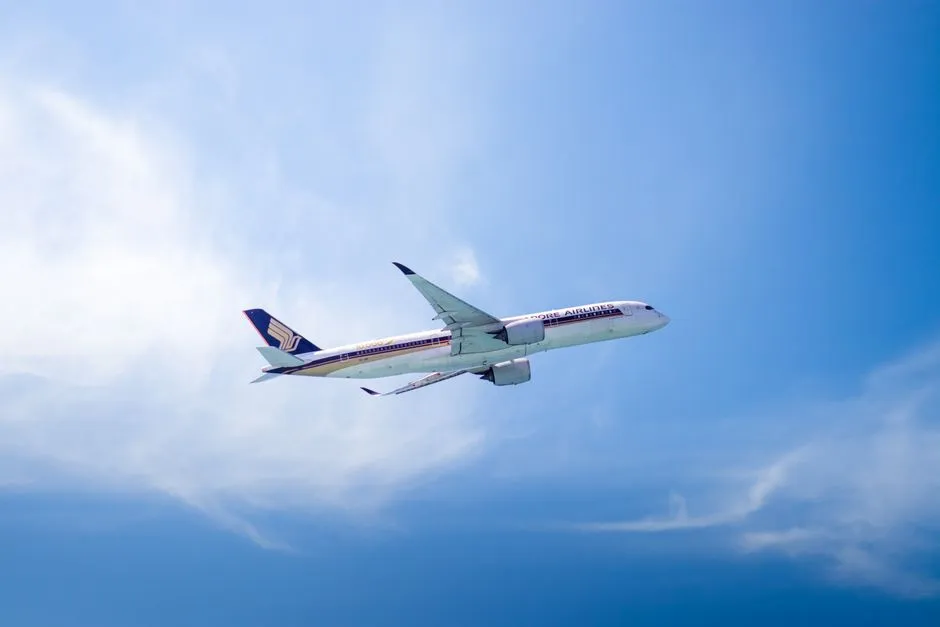
The risk of swelling increases with flight length, and while it’s usually harmless and resolves on its own within a day or two, it can be more than just an inconvenience.
Long-haul flights, especially those over four hours, increase this risk. The longer you sit, the more likely fluid will build up. It’s a fairly linear relationship. Short hops under two hours rarely produce dramatic swelling. Twelve-hour transcontinental routes are a different story entirely.
The CDC warns that travelers who take journeys of four hours or longer, by plane but also in cars, buses, or trains, have an increased risk of blood clots and DVT. Duration, more than almost any other single factor, determines how serious the situation can become.
When Swelling Signals Something Serious: DVT

A dangerous blood clot called deep vein thrombosis (DVT) sometimes causes leg swelling. The risk of getting DVT on an airplane is very low for healthy people, especially on flights that last under four hours. In general, the chance of getting DVT starts to rise on flights over 12 hours.
A long-haul flight makes venous thromboembolism (VTE) from one and a half to four times more likely, according to a review of research in the Cochrane Database of Systematic Reviews. At the same time, those dangerous blood clots are rare. A research review in the Journal of Internal Medicine estimated there are 4.8 cases of severe pulmonary embolism per million flights longer than 12 hours. The risk of DVT within four weeks of a flight of at least four hours was 1 in 4,600 flights.
If swelling appears suddenly, affects only one leg, or is paired with pain, redness, or shortness of breath, it could signal a more serious issue, such as a blood clot. One-sided swelling in particular is a red flag that deserves medical attention promptly.
Who Is More Vulnerable to In-Flight Swelling
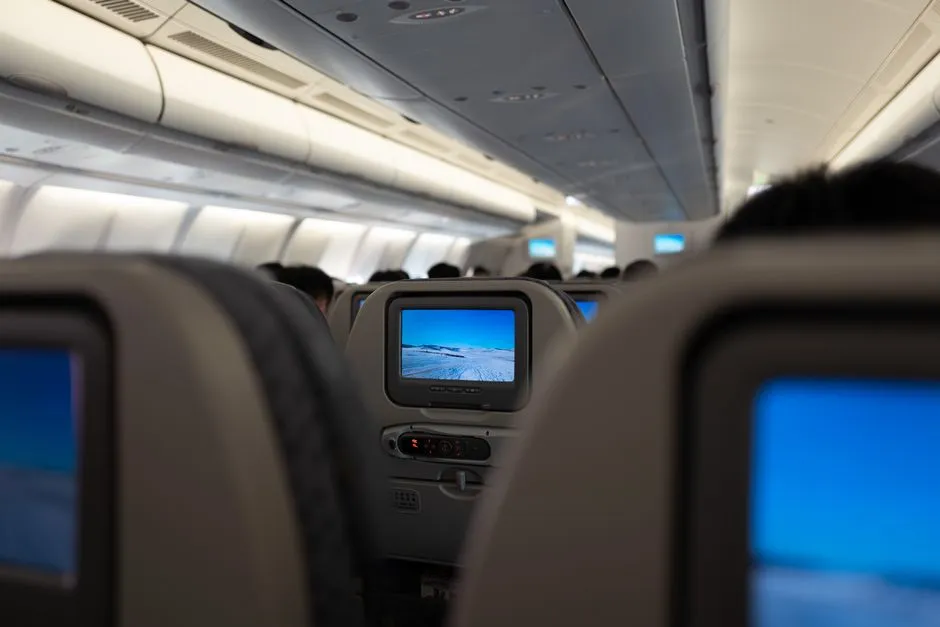
For individuals with underlying medical conditions such as varicose veins, venous insufficiency, lymphedema, or a history of blood clots, this fluid retention can signal a more serious issue.
People who are older, smoke, have obesity, or have a family history of severe clots are at higher risk of VTE, as are people who have previously had such clots. For these travelers, the standard advice to “walk around a bit” may simply not be enough.
Between 75 and nearly all people who developed travel-related VTE had at least one preexisting risk factor; roughly one in five had five or more risk factors, according to the CDC Yellow Book 2024. This strongly suggests that knowing your own risk profile before a long flight is genuinely worth the conversation with your doctor.
Compression Socks: What the Evidence Actually Says

A Cochrane review looked at data from 2,918 people in 12 randomized clinical trials. It found high-certainty evidence that wearing compression stockings reduced the risk of symptomless DVT when traveling on a flight of more than four hours.
In pooled trials covering 2,637 people, roughly 1 in 1,000 low-risk passengers who wore compression stockings developed a symptomless DVT, compared with 10 in 1,000 for those who didn’t wear stockings. In people with additional risk factors, stockings reduced risk from 30 cases per 1,000 down to 3 per 1,000.
American Society of Hematology guidelines do not recommend compression socks for low-risk travelers on short flights and recommend socks on longer flights only for people at high risk of blood clots. Still, for anyone prone to discomfort on longer routes, the evidence for at least some benefit is reasonably solid.
Practical Ways to Reduce Swelling Mid-Flight
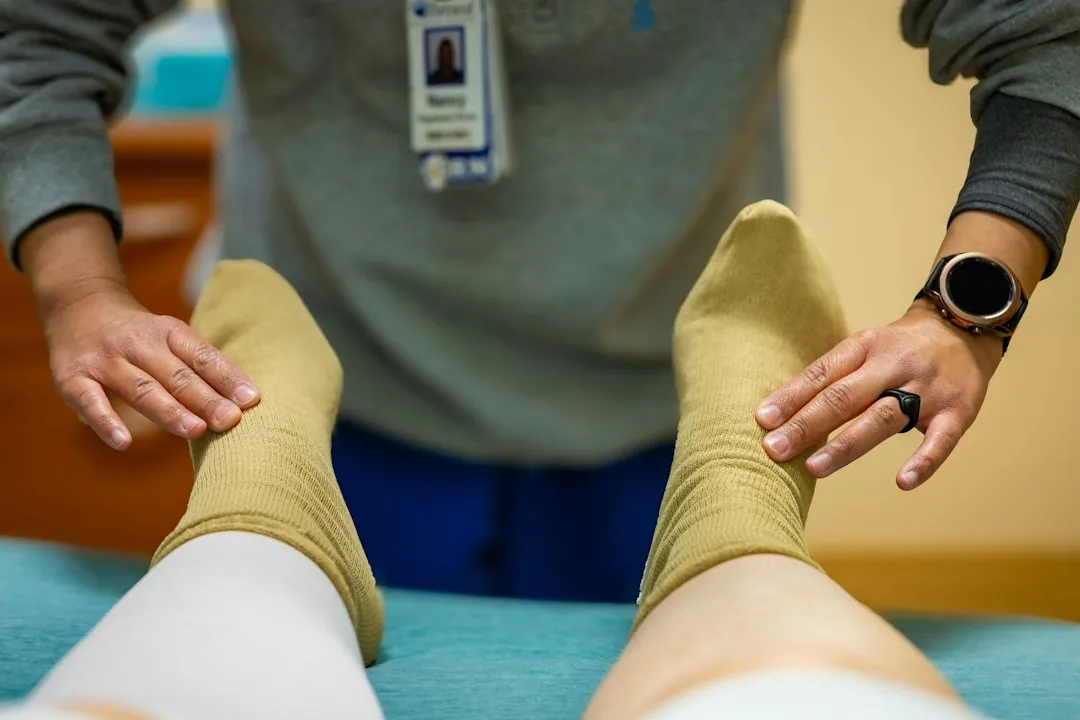
You can reduce foot and leg swelling, and lower your risk of blood clots, by wearing compression stockings on a long flight. Beyond that, the mechanics are straightforward: keeping blood moving is the goal.
Keeping moving and staying hydrated can also reduce risk. Getting up at least once every couple of hours, rotating your ankles while seated, flexing your calf muscles periodically, and choosing water over alcohol or soda all make a measurable difference over a long flight.
Oftentimes, the swelling will subside shortly after getting off of the plane and beginning to walk around again. For most healthy travelers, that’s reassuring. The body knows what to do once it’s moving again.
The Takeaway
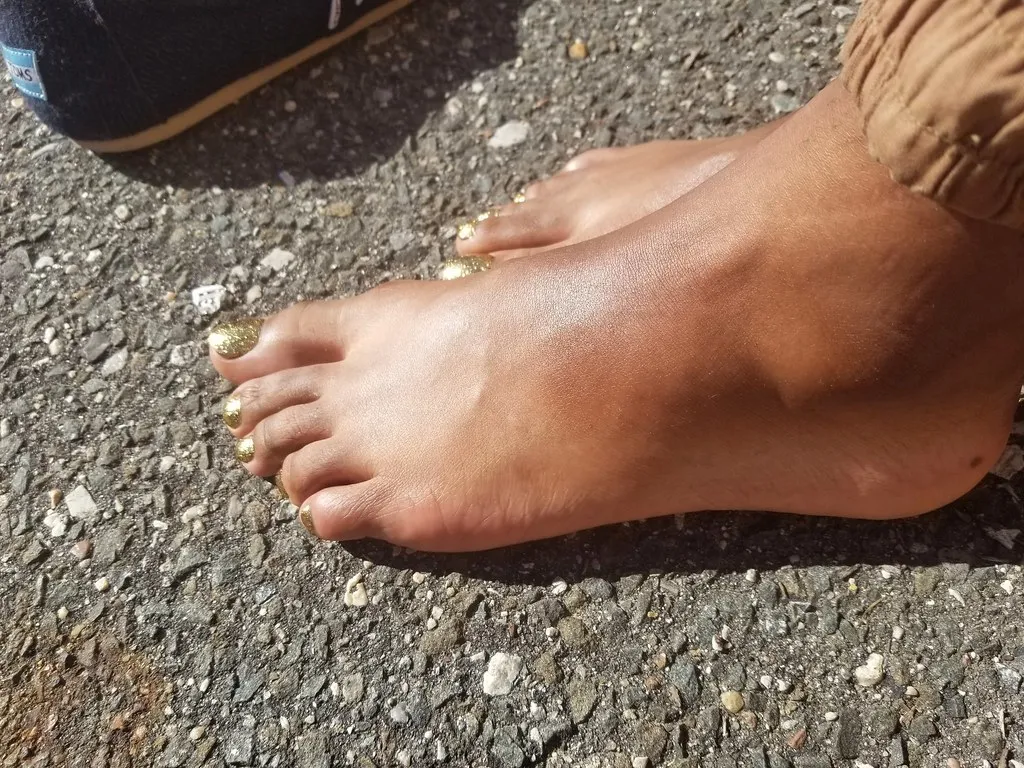
Airplane-related foot swelling is the product of several forces arriving at the same time: gravity, low cabin pressure, dry air, sodium-heavy food, and long stretches of enforced stillness. None of these factors alone would cause dramatic swelling. Together, they create conditions your body genuinely struggles with.
For most people, it stays in the category of uncomfortable rather than dangerous, and resolves within a day of landing. Still, recognizing what’s happening gives you real options to manage it. Staying hydrated, choosing your food wisely, moving when you can, and knowing your own risk factors are all small moves that add up meaningfully over a long flight.
The seat may be cramped and the air may be dry, but understanding the biology makes you a more informed traveler, and your feet will appreciate the effort.
AI Disclaimer: This article was created with the assistance of AI tools and reviewed by a human editor.