

Most people discover this fact as children: no matter how hard you try, tickling just doesn’t work. It’s one of those small, strange experiences that gets shrugged off and forgotten. But the reason behind it turns out to be a genuine window into how the brain monitors itself, predicts the future, and decides what sensations are worth paying attention to.
What looks like a quirky bodily limitation is actually the result of some remarkably sophisticated neuroscience. Researchers have been studying this question seriously for decades, and recent findings are only making it more interesting.
There Are Actually Two Kinds of Tickling

Two distinct forms of tickling exist: knismesis, a mild tingling sensation elicited by gentle touch, and gargalesis, an intense sensation associated with involuntary laughter. The distinction matters more than most people realize. Gargalesis is one of the earliest triggers for laughter in infants, while knismesis functions more like an alert system for the skin.
The scientific terms knismesis and gargalesis were coined in 1897 by psychologists G. Stanley Hall and Arthur Allin, making this a surprisingly old area of inquiry. Knismesis can be self-induced to a great extent, while gargalesis, elicited by faster and stronger tactile stimulation on specific areas such as the torso, the armpits, and the soles of the feet, is difficult to self-induce.
Your Brain Sees It Coming Before You Do
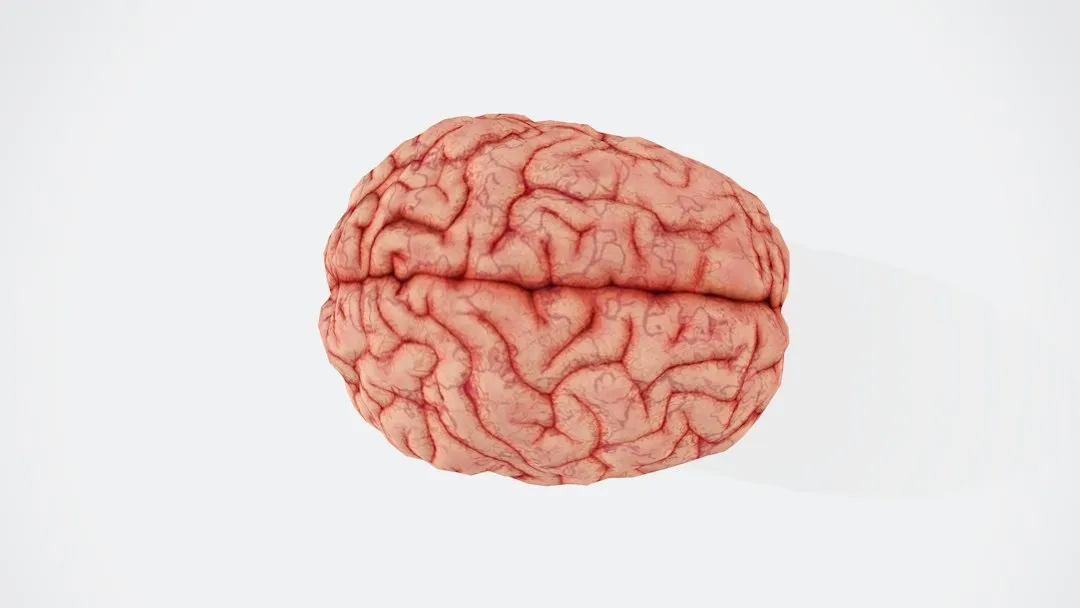
When you move a part of your own body, a part of your brain monitors the movement and anticipates the sensations that it will cause. This is the core of the whole puzzle. The brain is essentially running a split-second simulation of what your hand is about to do, and that preview kills the surprise.
When a movement is self-produced, its sensory consequences can be accurately predicted, and this prediction can be used to attenuate the sensory effects of the movement. In other words, your nervous system is one step ahead of your fingers at all times. The reaction to tickling is a complex mix of anticipation, surprise, social play, and some well-tuned sensory processing.
The Cerebellum Is the Key Player
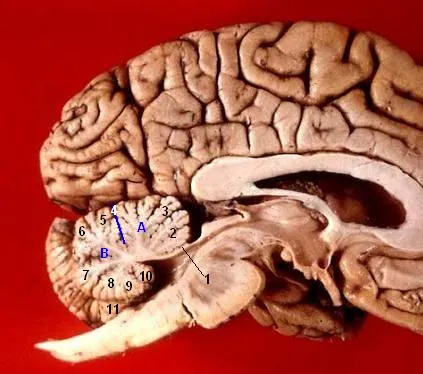
The answer lies at the back of the brain in an area called the cerebellum, which is involved in monitoring movements. Studies at University College London have shown that the cerebellum can predict sensations when your own movement causes them but not when someone else does. When you try to tickle yourself, the cerebellum predicts the sensation and this prediction is used to cancel the response of other brain areas to the tickle.
The cerebellum communicates with other parts of the brain, sending signals about when and where you’re moving and how much pressure you are likely to apply when you touch something. Since your brain has information to execute and sense your own touch, it can reduce activity in the somatosensory cortex: the brain area that responds to pressure and touch. The result is a muted, almost flat sensation where there should be a strong one.
The Somatosensory Cortex Goes Quiet
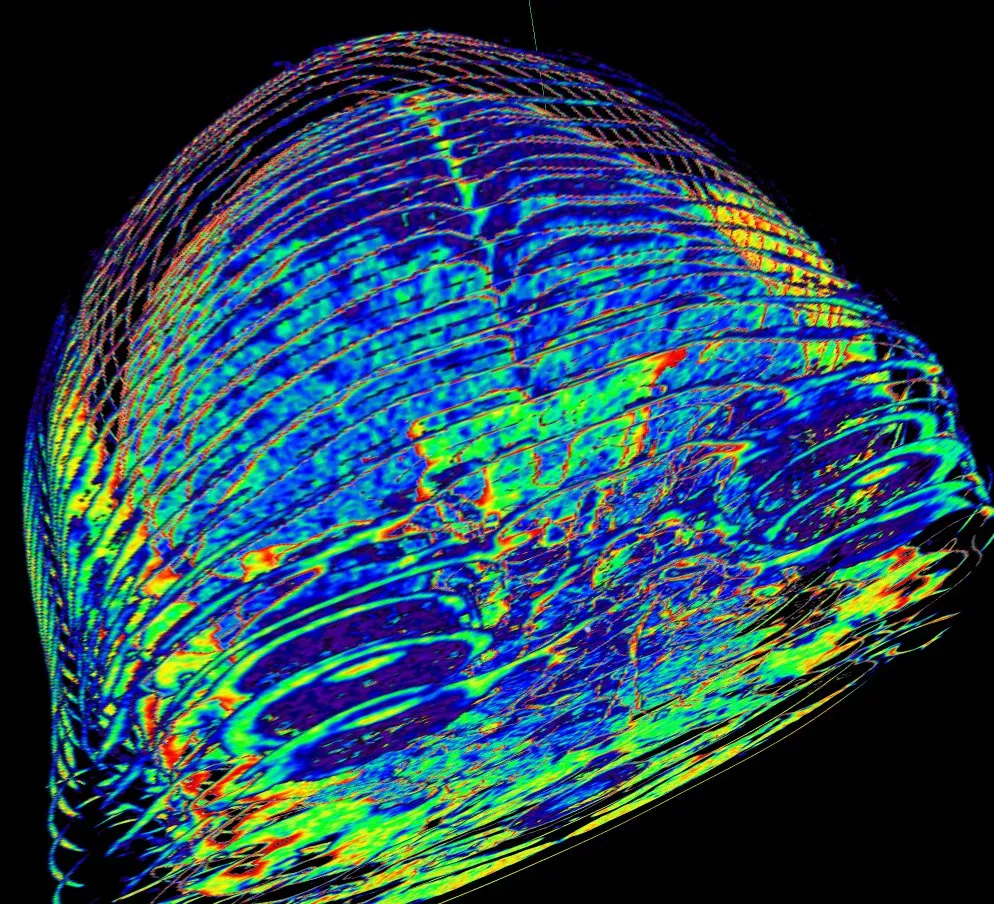
Scientists at University College London used functional brain imaging to compare how people responded to self-tickling and tickling by another person. They found that the somatosensory cortex had a lower response to self-tickling than to external tickling. They also observed activity suggesting that the cerebellum monitors movements and sends signals to suppress the somatosensory response when a touch is self-generated.
When being tickled by someone else, participants’ somatosensory cortex and anterior cingulate cortex light up noticeably. But when they try to tickle themselves, that area stays relatively dull while the cerebellum gets all the action. Two brain regions are involved in processing how tickling feels: the somatosensory cortex processes touch, and the anterior cingulate cortex processes pleasant information.
New Research Confirms the Brain Acts Before You Even Touch
A 2026 study from researchers at Karolinska Institutet and Aarhus University, using magnetoencephalography, showed that self-touch attenuation is preceded by beta-band desynchronization and increased directed connectivity from the cerebellum to the primary somatosensory cortex. This is significant: the suppression begins before the touch even happens.
This study provides the first neural evidence of cerebellar influence on cortical sensory areas before self-touch, and these pre-stimulus effects support forward models of sensorimotor control, shedding new light on how the brain anticipates and modulates upcoming sensory input. Previously, researchers could only measure what happened after the touch. Now they can see the prediction already in motion beforehand.
The Forward Model: Your Brain’s Internal Simulation
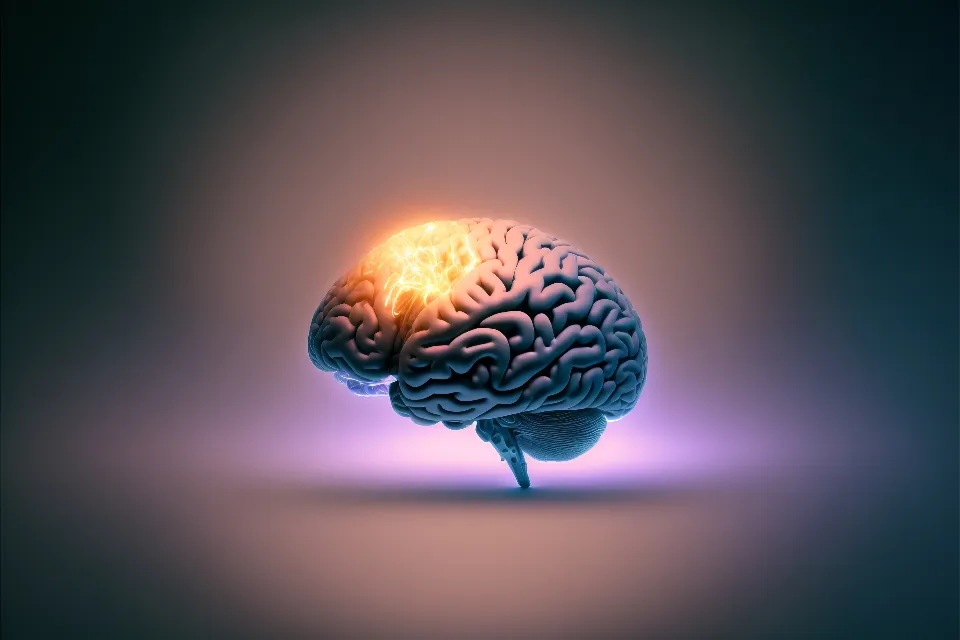
A forward model predicts the sensory consequences of a movement based on the motor command. When a movement is self-produced, its sensory consequences can be accurately predicted, and this prediction can be used to attenuate the sensory effects of the movement. Think of it as an internal draft of reality your brain writes just before you act.
Studies demonstrate that as the discrepancy between predicted and actual sensory feedback increases during self-produced tactile stimulation, there is a concomitant decrease in the level of sensory attenuation and an increase in ticklishness. This explains why using a tool to tickle yourself, or introducing an unexpected delay, can make the sensation feel slightly more real. The prediction becomes less accurate, so the dampening effect weakens.
What Happens When You Try to Trick the Brain

Researchers set out to see if they could fool the brain into allowing self-generated movements to create a tickling sensation. They built a tickling machine that allowed research subjects to deliver a tickling stimulus to themselves by pulling a lever. By adding a time delay or altering the angle of the movement, the sensation became noticeably more ticklish.
As the delay and trajectory rotation between the movement of the left hand and the tactile stimulus on the right palm increased, so did the ticklishness. The brain’s prediction became less reliable, and the suppression broke down. It’s a clever way to demonstrate that it’s the accuracy of prediction, not the touch itself, that determines whether you feel tickled.
Schizophrenia and the Broken Prediction System
Some people with schizophrenia struggle to anticipate the movements and process that makes most of us not ticklish when we try to tickle ourselves. Due to this difficulty, they may produce strong responses when tickling themselves. This is a striking clinical observation. The same mechanism that prevents healthy people from self-tickling appears to be disrupted in certain neurological conditions.
The connection runs deeper than just tickling. Researchers believe that disturbances in the brain’s forward modeling system may contribute to symptoms like auditory hallucinations, where the brain fails to recognize self-generated signals as its own. Ticklishness is a low-level, automatic physiological response, a biological behaviour that we don’t have conscious control over, because if our brain knows what’s coming based on signals about muscle movement, the response is suppressed.
Tickling as a Social and Evolutionary Behavior

Gargalesis is used to provoke laughter in social bonding with other humans. The fact that it requires another person is part of its social design. Heavy tickling in humans has been linked to the emergence of intersubjectivity, as it is aimed at making others laugh, is often asymmetrical (from older to younger subjects), and elicits agent-dependent responses that are pleasant or unpleasant depending on the social bond.
Intraspecific tickling and the related gargalesis response have been reported in humans, chimpanzees, and anecdotally in other great apes. Knismesis, the response to very light touch, is widespread in mammals; one has only to watch a horse twitch its ear or flip its tail at the touch of a fly. So while the laugh-inducing version may be a primate trait, the basic alert system runs across much of the animal kingdom.
Why This Still Puzzles Neuroscience

Gargalesis, or tickle, is one of the most trivial yet enigmatic human behaviors. We do not know how a touch becomes ticklish or why we respond to other people’s tickles but not our own. Despite decades of research, that central question still doesn’t have a complete answer. Philosophers from Socrates to Aristotle and scientists from Galileo to Darwin have studied ticklishness for centuries, and there is still no clear consensus on what it means to be tickled.
Studying ticklishness provides a valuable opportunity to investigate playful emotional experiences from a naturalistic perspective, addressing fundamental yet underrepresented questions in contemporary neuroscience. Far from trivial, ticklishness provides valuable insights into the neural mechanisms underlying complex, context-dependent emotional and social experiences. It also raises a broader point: the body’s simplest, most everyday quirks sometimes sit at the edge of what science can fully explain.
The Takeaway

The reason you can’t tickle yourself comes down to one of the brain’s most elegant abilities: predicting the future. The cerebellum runs a continuous internal model of your body’s movements, and the moment it recognizes that your own hand is the source of a touch, it dials down the response before you even feel it. Surprise, it turns out, is the whole point of tickling.
What makes this more than a curiosity is where the research leads. Understanding how the brain distinguishes “self” from “other” in sensory processing has real implications for conditions like schizophrenia, for the neuroscience of consciousness, and even for how we understand social bonding. A question that starts with something as silly as trying to tickle your own foot ends up somewhere surprisingly deep.
AI Disclaimer: This article was created with the assistance of AI tools and reviewed by a human editor.