

The Numbers: More Common Than You Think

Contagious yawning refers to the tendency of individuals to yawn after seeing, hearing, or even thinking about someone else yawning, and roughly forty to sixty percent of people exhibit this response when exposed to these triggers.
According to one study, the likelihood of yawning increases sixfold after seeing someone else yawn. That’s a dramatic jump for something most people dismiss as trivial.
Contagious yawning affects roughly sixty to seventy percent of people, making it more common than enjoying cilantro but less universal than blinking. Not everyone catches yawns, and that gap is where things get really interesting.
What Exactly Is Happening in Your Brain

Your brain contains specialized neurons that fire both when you perform an action and when you observe someone else performing that same action. These mirror neurons help you understand and predict other people’s behaviors by internally simulating their experiences. When you watch someone yawn, your mirror neurons activate the same brain regions involved in yawning yourself.
This neural mirroring happens automatically and unconsciously. You don’t decide to yawn after seeing someone else do it – your brain essentially catches yawning the way you might catch a cold, through proximity and exposure.
Researchers classify contagious yawning as an echophenomenon: an automatic, involuntary imitation of another person’s behavior, in the same family as contagious laughter and the itch you feel when someone nearby starts scratching.
Mirror Neurons and the fMRI Evidence

Using functional magnetic resonance imaging to assess brain activity during contagious yawning, researchers compared signal-dependent changes in blood oxygen levels when subjects viewed videotapes of yawning faces versus faces with a neutral expression. In response to yawning, subjects showed unilateral activation of their Brodmann’s area 9 portion of the right inferior frontal gyrus, a region of the mirror neuron system.
In this way, two individuals could share physiological and associated emotional states based on perceived motor patterns – one component of empathy, specifically motor empathy, that underlies the development of cognitive empathy.
Mirror neurons might serve as important neural substrates of contagious yawning, and studies found that when people watched yawning videos or heard the sound of yawning, their mirror neurons would activate. The brain doesn’t much care whether the yawn is live, recorded, or merely described in text.
Why Reading About Yawning Works Too

Seeing, hearing, reading, or even just thinking about someone else yawning almost always makes you yawn, too. This is what separates contagious yawning from almost every other reflexive behavior – it can be triggered entirely in the imagination.
It’s an automatic imitation response known as the “chameleon effect,” and mirror neurons may even be activated simply by reading or thinking about a yawn.
The leading idea is that human brains are wired to mirror the people around us, a shortcut that helps us learn skills, coordinate in groups, and read each other’s internal states, and that yawning is such an ancient, automatic behavior that the mirroring slips right past conscious control. Text activates mental simulation, and the brain does the rest.
The Empathy Connection
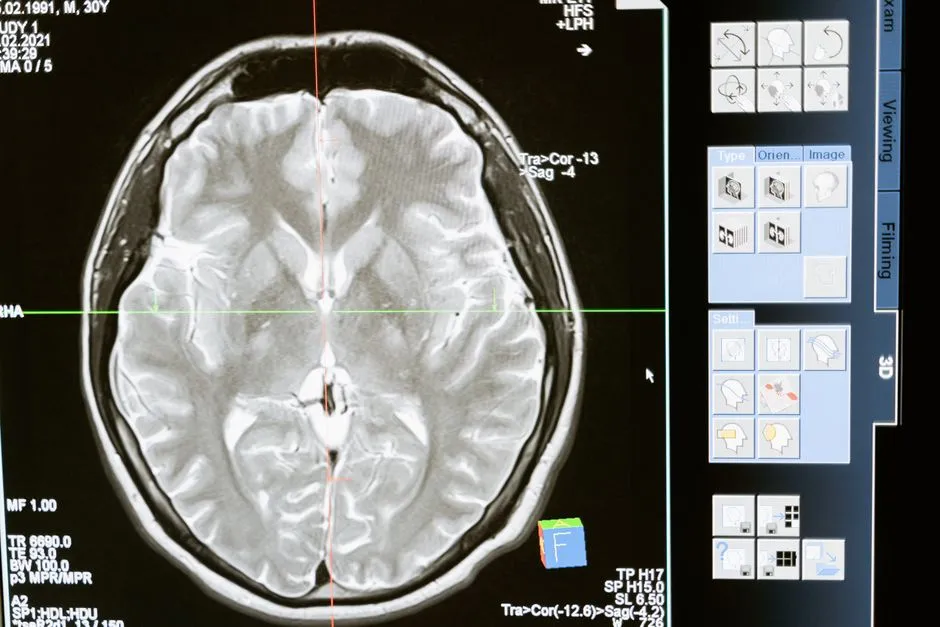
Research using brain imaging technology shows that regions associated with empathy and self-awareness light up during contagious yawning episodes. The stronger someone’s empathy responses generally, the more susceptible they become to catching yawns from others.
Greater mirror neuron suppression was found for yawns than for controls over right motor and premotor areas, particularly for those scoring higher on traits of empathy. The pattern is consistent across multiple study designs.
The exact causes of contagious yawning are still debated, but two leading hypotheses are the nonconscious mimicry hypothesis and the empathic modeling hypothesis, which together suggest that contagious yawning may play a role in enhancing social cohesion, either by mimicking others’ behaviors or by sharing emotions.
Social Bonds Change Everything

One study found contagious yawning is higher for strong social bonds, like friends and family members, than weak ones, like acquaintances and strangers. Who you yawn with turns out to say something about who you’re close to.
Studies suggest that we’re more likely to “catch” a yawn from people we feel close to – friends, family, or coworkers – than from strangers. This has led researchers to believe that contagious yawning might be a subtle way humans and even animals like chimpanzees and dogs mirror one another to strengthen social connections.
Research supports this idea, with studies showing that domesticated dogs yawn more frequently when they observe their owners yawning than when they observe strangers. Emotional closeness shapes the response, even across species.
When Yawning Isn’t Contagious: Psychopathy and Autism

Studies examining contagious yawning in individuals with psychopathic traits reveal significantly reduced susceptibility to yawn contagion. People scoring higher on psychopathy assessments, particularly on the emotional detachment components, show diminished responses to watching others yawn.
Certain neurological disorders that impact social skills may mean someone is less prone to contagious yawning. Research shows people with schizophrenia and autism have lower rates of contagious yawning.
This connection between empathy and yawn contagion isn’t absolute, but it’s consistent enough that researchers have explored using contagious yawning as a potential behavioral marker. It’s a simple, natural test with real clinical implications.
Children Don’t Catch Yawns Until Age Four

According to one 2010 study published by The Royal Society, contagious yawning doesn’t begin at birth. In the study, it wasn’t observed in children until they were around age four or five, when traits such as empathy – experiencing the emotions of others – become more developed.
Studies suggest that contagious yawning in humans and primates emerges around the age of four. The timing tracks closely with when children begin to develop what psychologists call theory of mind, the ability to understand that other people have inner mental states.
This developmental window is telling. It suggests contagious yawning isn’t a primitive reflex but something that builds alongside social awareness, arriving only once the brain is ready to genuinely register other people’s experiences.
Animals That Catch Yawns – and Some That Don’t

Contagious yawning was first observed phylogenetically in primates such as chimpanzees and bonobos, and was later also found in sheep, wolves, dogs, and elephants.
In a study on wild lions in South Africa, researchers found that after being “infected” by others’ yawns, these lions tended to coordinate their movements. This suggests contagious yawning could be especially important in social species such as lions, which must work together to hunt, rear cubs, and defend against interlopers.
A 2024 study found gelada baboons experience contagious yawning even when they just hear other baboons yawning, and they yawn more when the sounds come from members of their own group. The social selectivity of the response, even in baboons, keeps pointing back toward empathy as the underlying driver.
The Evolutionary Purpose: Group Alertness and Synchrony

One hypothesis is that contagious yawning evolved to boost threat detection within groups. More recent research in humans has shown that simply seeing others yawn can improve an individual’s ability to detect threats, further supporting the idea that contagious yawning increases vigilance levels in a group.
Another hypothesis is that contagious yawning evolved to keep groups in sync. Yawns follow a natural circadian rhythm and often signal transitions between activities, so when yawning spreads within a group, it may serve to align activity patterns and behavior.
The mirror neuron system evolved to help early humans coordinate behaviors, understand intentions, and build social bonds through unconscious imitation. Contagious yawning, in this light, isn’t a meaningless quirk. It’s one thread in a much older social fabric.
A Quiet Reflex With a Lot to Say

Few reflexes reveal as much about human connection as this one does. A yawn that spreads across a room, jumps between a dog and its owner, or gets triggered by a line of text isn’t random. It’s the brain quietly doing what it was built to do: pay attention to others, read their states, and respond in kind.
The science is still catching up to the full picture. Researchers remain divided on some mechanisms, and the mirror neuron story has its skeptics. What isn’t in dispute is the pattern itself: the more socially attuned you are, the more likely you are to catch a yawn.
So if you’ve yawned three times reading this article, that might just mean your empathy circuits are working exactly as they should.
AI Disclaimer: This article was created with the assistance of AI tools and reviewed by a human editor.