

Your Body Was Not Built for Kitchen Chairs

Standard kitchen chairs are designed for sitting through a meal, not sitting through an eight-hour workday. Ergonomic furniture in offices was specifically developed to protect employees from musculoskeletal problems, and research shows that employees working in flexible or non-dedicated setups report significantly more furniture-related complaints, including neck, back, and shoulder pain, than those at fixed desks. Kitchen furniture falls well outside the ergonomic range those office designs aim to meet.
Most people underestimate how strongly physical discomfort affects cognitive performance. When your back hurts, your neck is stiff, or your eyes are strained, your brain diverts attention to managing that discomfort, resulting in reduced concentration, more errors, and lower output. The problem compounds quietly over the course of a day before most people notice it.
The Mayo Clinic reports that workers experiencing physical discomfort show a measurably decreased concentration and increased error rates during detailed tasks. Poor posture also restricts blood flow and oxygen delivery to the brain, creating a cascade effect that reduces cognitive function precisely when it is needed most.
The Brain Struggles to Separate “Eat Here” From “Work Here”
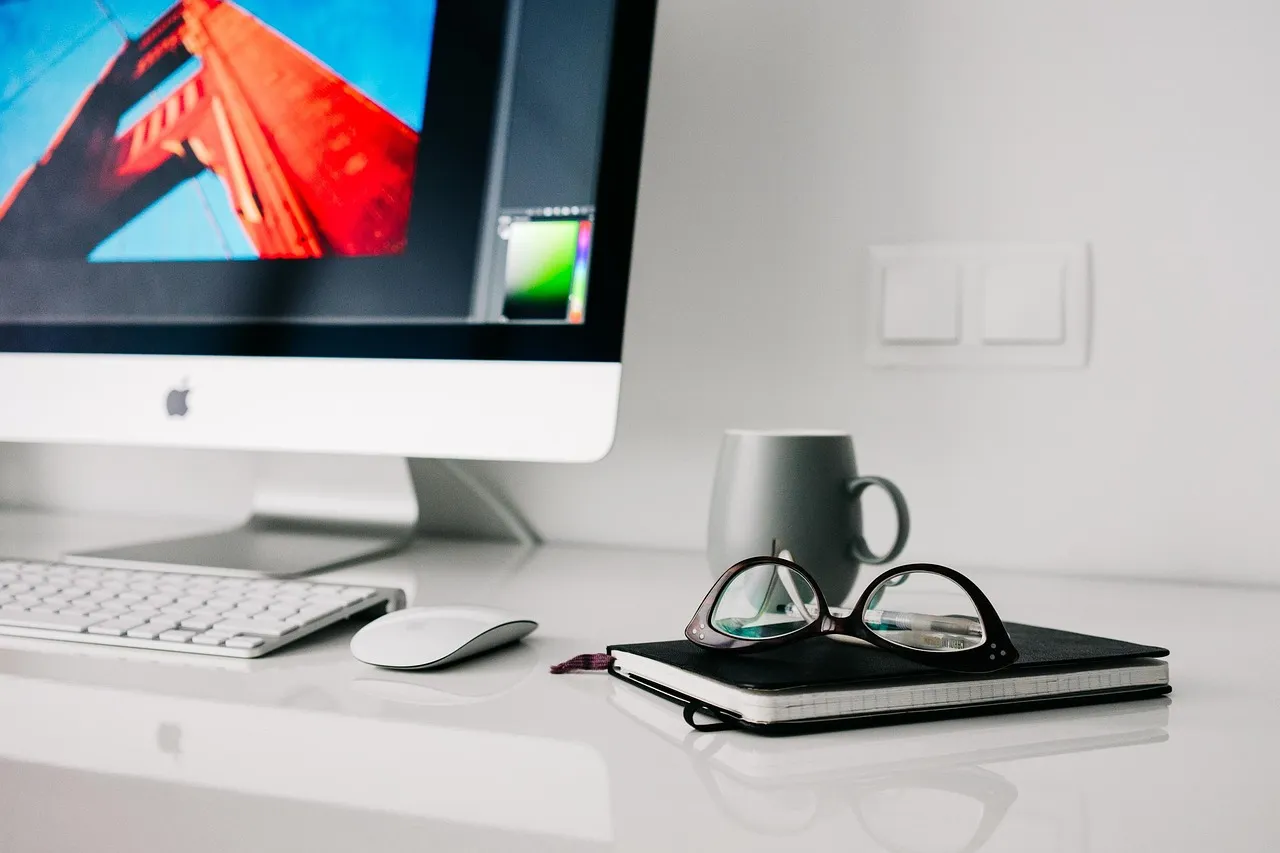
Context matters enormously to how the brain focuses. The kitchen table is one of the most multi-purpose surfaces in any home, used for meals, homework, socializing, and countless domestic tasks. That ambiguity does not disappear when you place a laptop on it.
Ergonomics today is as much about the mind as the spine. Cognitive ergonomics involves designing a workspace that reduces distractions and decision fatigue, allowing the brain to maintain deep focus without the processing burden of a cluttered or contextually confused environment. A kitchen table rarely passes that test.
Research has made it clear that home-workspace characteristics have become more important for employees’ mental health, particularly when working from home is full-time or long-term. Gaining an evidence-based understanding of home workspace design has become essential for current hybrid working practices.
Household Noise Is a Constant Cognitive Tax

The kitchen is typically the acoustic center of any home. Refrigerators hum, deliveries arrive, family members pass through, and background noise bleeds in from nearby rooms. None of that is neutral to concentration.
A scoping review published in Applied Sciences in December 2025, analyzing 41 studies across 18 countries, found that elevated noise levels and insufficient lighting increase stress and fatigue, while inadequate air quality reduces cognitive performance and creativity. Those are not minor inconveniences. They are measurable performance drains.
Distractions from the domestic environment, such as ringing doorbells or children and pets making noise, can interrupt work in ways that compound throughout the day. Beyond shared spaces, several other home workspace characteristics contribute to distraction even when the space appears quiet. The kitchen, as a shared and transient space, concentrates most of those risks in one location.
Interruptions Cost Far More Time Than They Appear To

A quick interruption rarely lasts just a minute. The actual cost is the recovery time, the mental re-entry into focused work, which takes considerably longer than most people expect.
Research by Gloria Mark at UC Irvine found that workers lose over an hour each day just regaining focus after interruptions. In a kitchen-table setup, interruptions are structural, not occasional. The space is designed to be walked through, not worked in.
The productivity impact of working from home depends on several factors, including the types of tasks workers perform, the available technology, the home environment, worker motivation, and management practices. The home environment piece is the one most people treat as fixed when it is actually the most adjustable variable of all.
Natural Light and Air Quality Make a Bigger Difference Than Expected
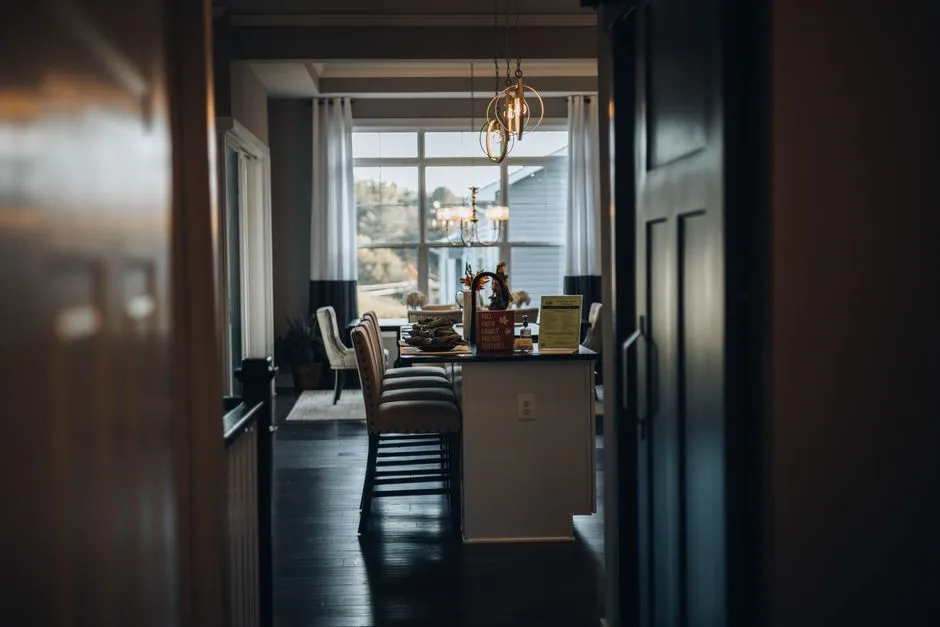
Kitchens are sometimes well-lit and sometimes not. The difference in cognitive output is real either way. Factors like thermal comfort, lighting, air quality, and noise significantly influence the well-being, productivity, and health of teleworkers. Home spaces are often not designed to meet the environmental quality standards of traditional offices, altering indoor conditions in ways that affect performance.
The same research confirms that elevated noise levels and insufficient lighting increase stress and fatigue, while access to natural light, pleasant views, and thermal comfort improves overall satisfaction and productivity. Where a kitchen sits in a home, and which direction it faces, largely determines whether it meets any of those conditions by accident.
Temperature is a frequently ignored ergonomic factor. Kitchens generate heat during cooking and tend to fluctuate more than other rooms, which makes maintaining a consistent, comfortable working temperature harder than it sounds.
The Blurring of Work and Home Life Adds Up

Working at the kitchen table means occupying the same physical space as domestic life without any boundary between the two. That blurring affects mood, stress levels, and the ability to switch off at the end of the day.
Even among remote workers who generally report high satisfaction, burnout has not gone away. A McKinsey study found that roughly one third of employees report feeling burned out regardless of whether they work in an office, from home, or in a hybrid setup. Poor workspace design, specifically the lack of separation from domestic spaces, is one of the contributing factors researchers point to.
COVID-19 obliged employees to work from home even in unsuitable houses, which research suggests reduced mental health in measurable ways. The kitchen table was the most common response to that sudden forced arrangement, and for many people it never changed.
Engagement and Focus Are Structurally Undermined

Focused work requires an environment that supports it. Structure matters as much as location, and the kitchen provides neither the physical nor the psychological structure that sustained concentration requires.
Microsoft’s 2025 Work Trend Index found that employees in structured hybrid arrangements, meaning defined working environments with clear expectations rather than vague flexibility, reported significantly higher focus scores than those in either fully remote or fully in-office setups. The structure, it turns out, matters as much as the location.
Separately, data from NAMI reported in 2025 found that roughly a third of employees felt their productivity suffered in 2024 because of their mental health. Unstructured, boundary-free workspaces make it harder to protect mental health during the workday, and the kitchen table is one of the worst offenders.
Your Professional Presence on Video Calls Takes a Hit

Video calls have become a permanent fixture of working life, and the kitchen is rarely a flattering backdrop. Beyond aesthetics, the visible domestic setting can subtly affect how colleagues and managers perceive someone’s professionalism and readiness.
Harvard Business Review research indicates that remote workers with professional-quality home offices receive more favorable performance evaluations and advancement opportunities compared to those with suboptimal setups. Video call presence, background appearance, and apparent comfort level during virtual meetings influence colleague and supervisor perceptions in measurable ways.
The kitchen introduces background noise, cooking smells that appear as visual distractions, and a general sense of informality that can be hard to counteract. It is a minor factor in isolation, but across dozens of calls each month it accumulates into a consistent pattern of perception.
The Dedicated Workspace Advantage Is Well Documented

The research is fairly clear that a dedicated, ergonomically considered workspace changes outcomes in concrete ways. It does not need to be expensive or elaborate, but it does need to exist as its own space.
A study by the University of Leicester found that ergonomic office designs could increase productivity by up to forty percent. A meta-analysis of 250 case studies by the Washington State Department of Labor and Industries found that businesses implementing ergonomic programs saw a significant increase in productivity, a substantial reduction in employee turnover, and a steep reduction in absenteeism.
Cognitive performance benefits extend beyond physical comfort. Workers with ergonomically optimized setups demonstrate improved concentration, reduced error rates, and better decision-making during complex tasks. The connection between physical comfort and mental performance is well-documented: when the body operates efficiently without pain or strain, more cognitive resources become available for productive work.
Small Changes to Your Setup Can Reverse Most of the Damage
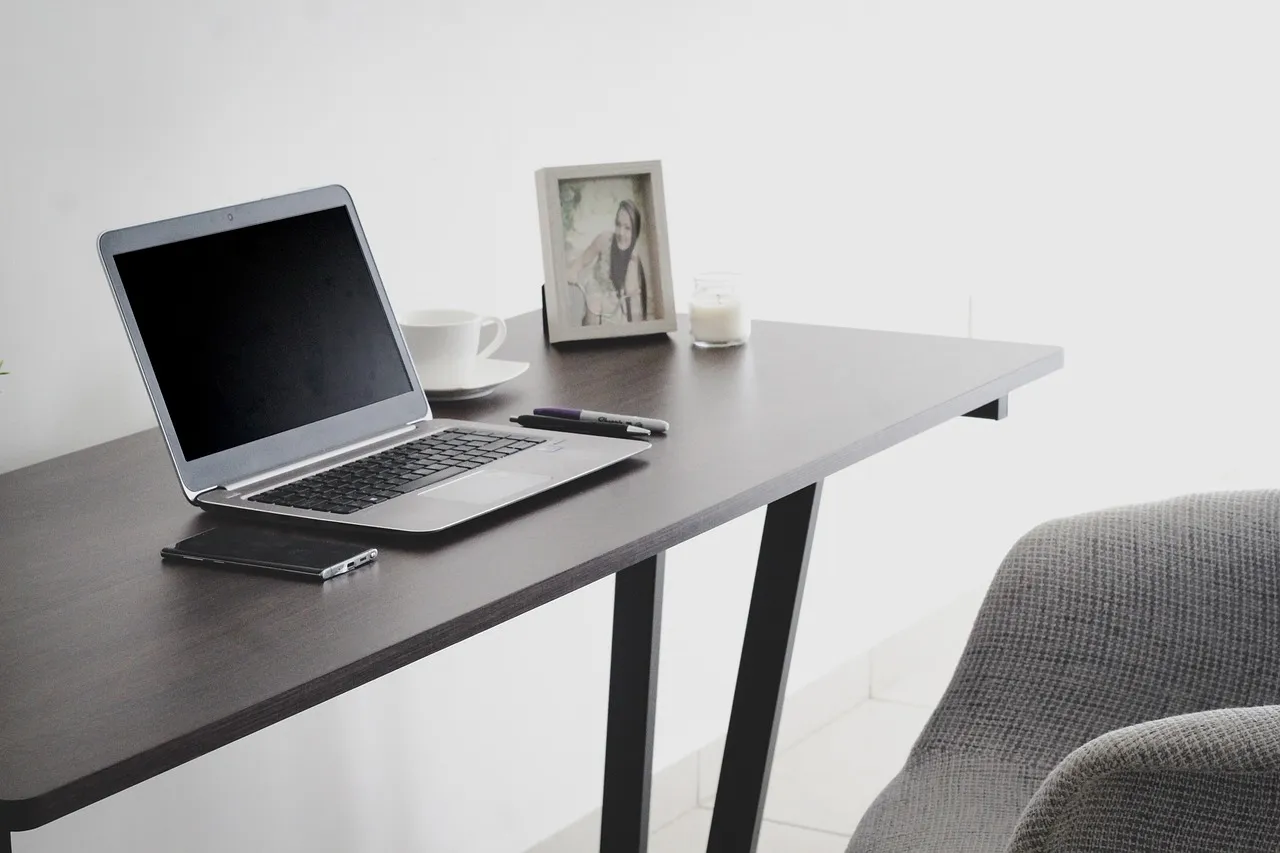
The good news is that none of this requires a home renovation. Moving to a quieter room, adding an external monitor, using a proper chair, and establishing a consistent work location are changes that sit within reach for most remote workers. The gains are not trivial.
Employees in well-structured hybrid and remote arrangements reported an average productivity increase of nearly twenty percent, equivalent to gaining an extra 7.6 hours of productive work each week, nearly a full additional workday. Much of that gain traces back to workspace quality and structure, not just policy.
Physical ergonomics can prevent musculoskeletal strain and visual fatigue by promoting proper workstation setups, posture, and environmental conditions like lighting and temperature. These changes do not require a dedicated office room. A consistent corner of any room, with appropriate furniture and lighting, already outperforms a shared kitchen table by a significant margin.
The Takeaway

The kitchen table became a workspace out of necessity, and for millions of people it never really stopped. That is understandable. What is less understandable, given how much research has accumulated on this topic, is treating the arrangement as permanent without examining its real costs.
Productivity in remote work ultimately depends on the types of tasks performed, the available technology, the home environment, worker motivation, and management practices. Of those factors, the home environment is the one most workers have the most direct control over, and the most consistently overlooked.
The kitchen table does many things well. Sustaining eight hours of focused, healthy, professional work is not one of them. Recognizing that honestly is the first step toward actually fixing it.
AI Disclaimer: This article was created with the assistance of AI tools and reviewed by a human editor.