

Wood Is Hygroscopic – It Breathes With the Air
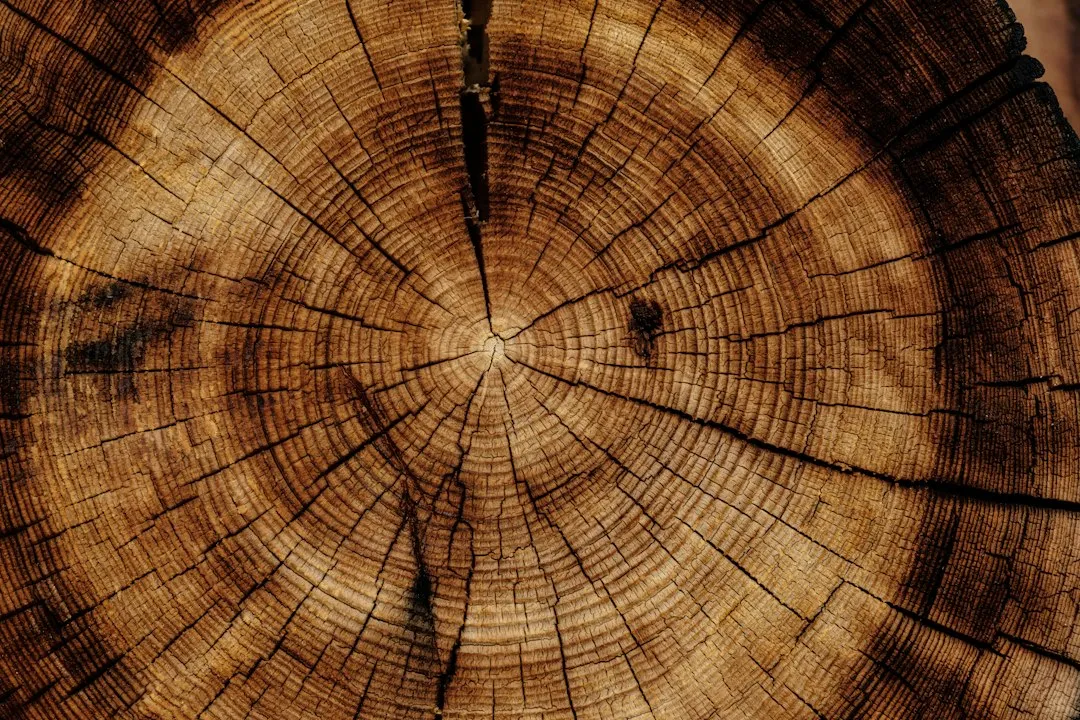
Wood is hygroscopic, meaning it naturally absorbs and releases moisture from the surrounding air. That single property explains almost everything you need to know about why your door behaves differently depending on the season. It is not a flaw in the material. It is how wood is built.
Shrinking and swelling occur as the wood changes moisture content in response to daily as well as seasonal changes in the relative humidity of the atmosphere. When the air is humid, wood adsorbs moisture and swells; when the air is dry, wood loses moisture and shrinks.
Any solid wood or wood component will expand or contract over time with changing moisture and climate conditions, and this exchange of moisture is ongoing. In an uncontrolled environment, wood is a dimensionally unstable material.
The Summer Culprit Is Humidity, Not Heat
The primary culprit behind sticking doors in the summer is not the heat itself, but the moisture the heat carries. Many people assume it is the warm temperature stretching the wood, similar to how metal expands on a hot day. The truth is more nuanced than that.
During the summer, when relative humidity climbs significantly, the wood fibers within a door or door jamb absorb water molecules and swell. The expansion is most pronounced across the grain, meaning the width of a door swells more than its height.
During summer storms, ambient humidity can vault from 50% to over 85% in under an hour, especially near lakes, rivers, or dense tree cover. That kind of rapid shift gives wood little time to adjust gradually, which is why doors can seem to seize up almost overnight.
How Wood Cells Actually Absorb Water
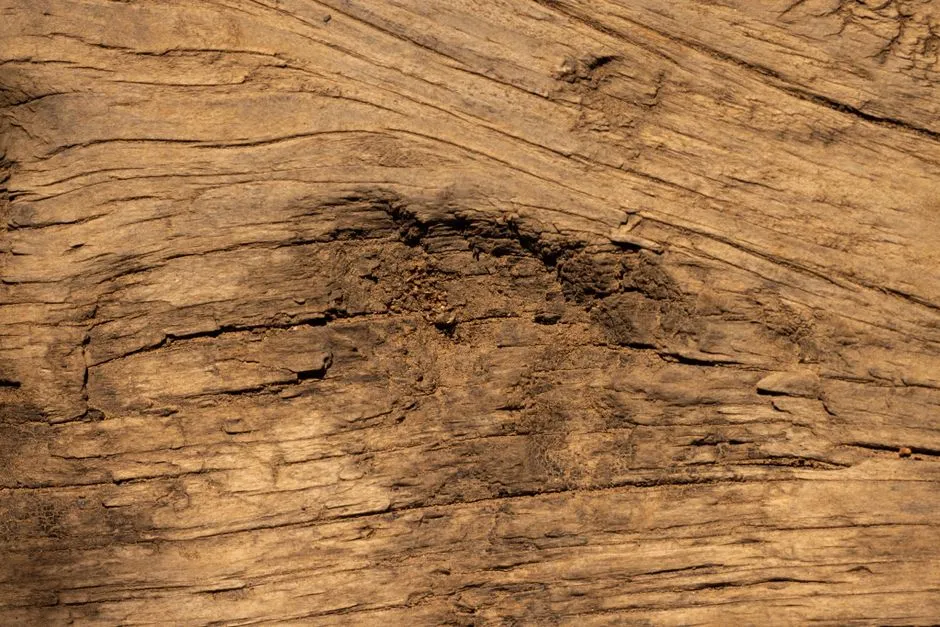
As water enters the cell walls, the fibers swell, causing the entire door to increase in volume, often by several millimeters. This is not surface-level moisture sitting on the wood. It penetrates into the microscopic structure of the material itself.
Once the wood reaches what is called the fiber saturation point, around 26 to 30 percent moisture content, all the free water is gone. Below this threshold, bound water starts leaving the cell walls. At the same time, the wood begins to shrink and expand.
From dry to wet, wood generally swells about 10 percent in the tangential direction, 5 percent in the radial direction, and just 0.1 percent in the longitudinal direction. This is why the width of a door changes dramatically but its height barely shifts at all.
The Clearance Problem: Millimeters Make the Difference

For a standard interior door, the width can expand by several millimeters. This small change eliminates the necessary clearance, often only 1/8 inch, causing the door to rub against the jamb. That is a remarkably thin margin, and it explains why even modest humidity changes produce a noticeably stubborn door.
Wood doors can absorb moisture and expand by up to 2 percent across the grain during humid weather. On a standard 32-inch-wide door, that could translate to more than half an inch of total expansion under extreme conditions, far more than any clearance gap could absorb.
Doors that stick, do not latch properly, or develop visible warping along the edges are all common signs of summer swelling. Warping occurs when one face of the door absorbs moisture faster than the other, creating uneven tension across the panel.
Why Doors Swing Free in Winter
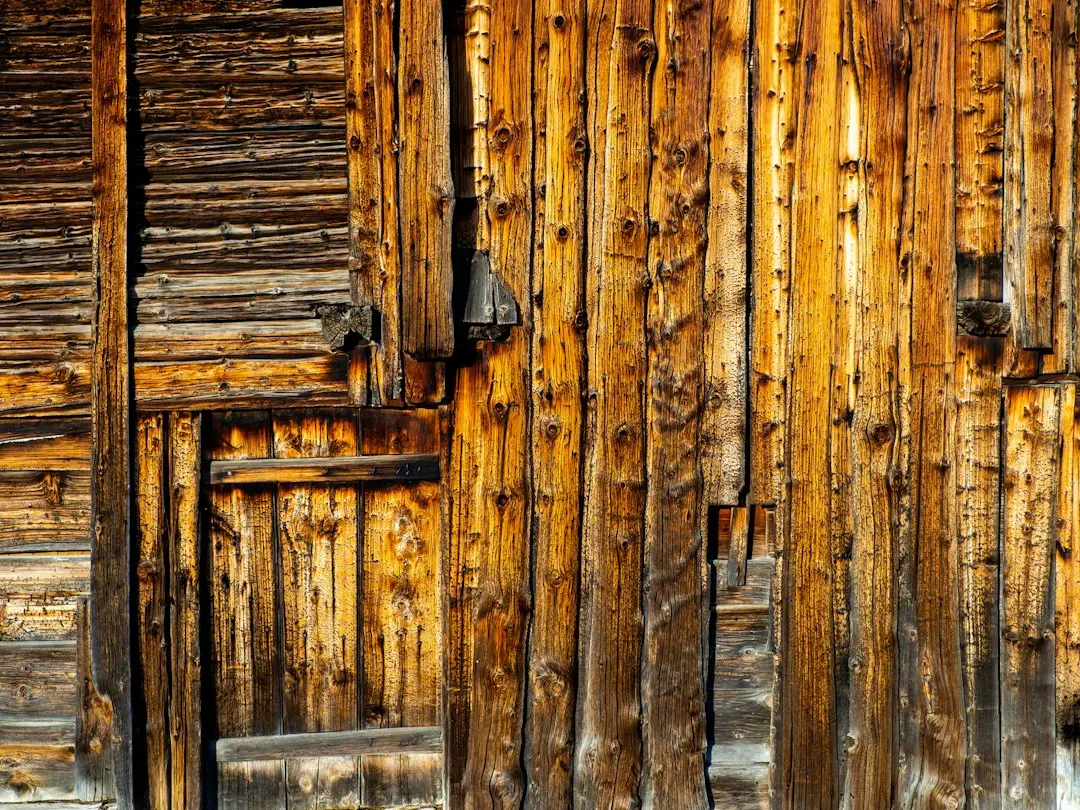
Wood tends to absorb moisture during summer and spring, with higher humidity levels, potentially causing it to swell. Conversely, wood might release moisture in drier winter months, leading to shrinkage. The seasonal swing is the reverse of what summer delivers, and it is just as predictable.
During winter months, indoor relative humidity can drop as low as 20 to 25 percent, especially in heated spaces. Compare that to the average 35 to 50 percent range in spring or fall, and you can see how much stress this seasonal shift creates.
As wood dries, it shrinks across the grain in width and thickness but not along its length. Even small changes in moisture content can lead to noticeable movement in doors, face frames, and drawer fronts. A door that jammed in August may rattle and let in a draft by December simply because it has given back the moisture it gained.
Equilibrium Moisture Content: The Balancing Act
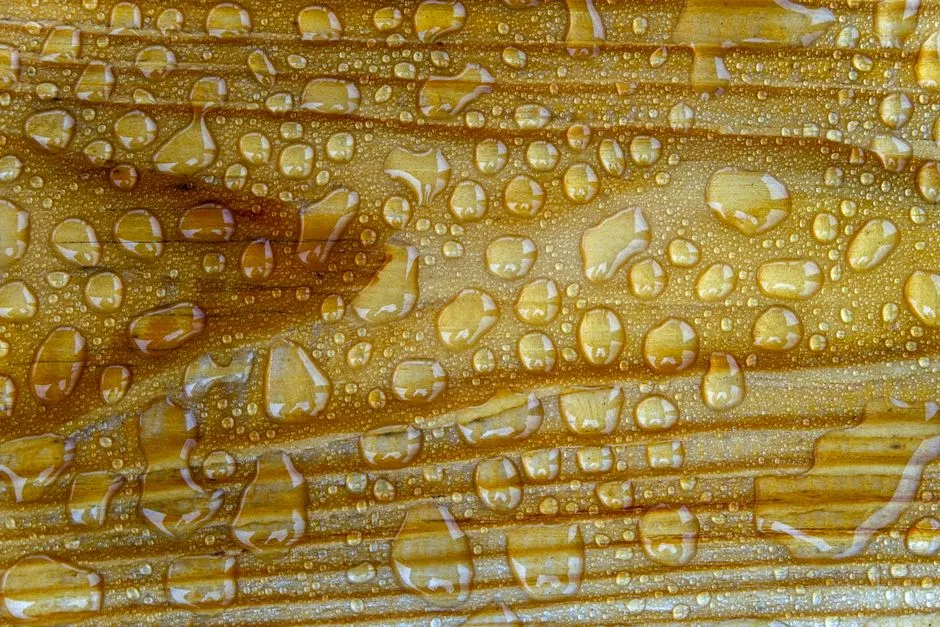
When wood neither gains nor loses moisture, it has reached its equilibrium moisture content, known as EMC. Think of it as the point where the wood and the surrounding air have come to a truce. EMC is the moisture content wood settles at when it stops trading moisture with the surrounding air, for a given temperature and humidity. Wood always drifts toward its EMC, so the humidity of a room effectively decides how much moisture the wood in it will hold.
Most North American homes fluctuate between 25 and 65 percent relative humidity throughout the year. This seasonal swing causes wood moisture content to change by about 6 percent.
Most interior wood components, including floors, cabinets, doors, and furniture, are manufactured and installed at a moisture content that matches roughly 30 to 40 percent relative humidity. At this range, wood stabilizes its EMC at around 6 to 8 percent, which minimizes shrinkage, swelling, cracks, and warping.
Wood Species Matter More Than You Might Think
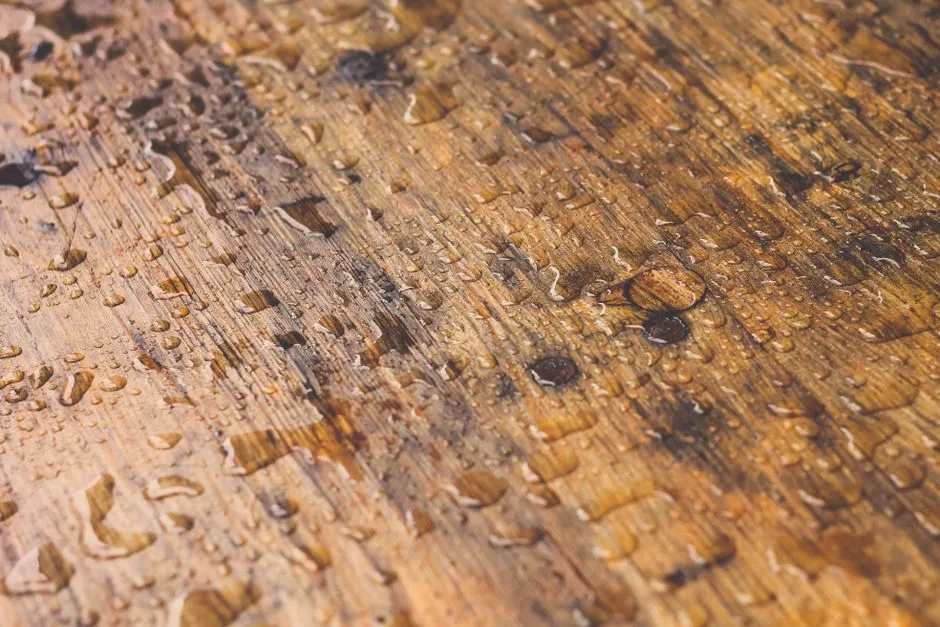
Some wood species are more hygroscopic than others, and the expansion and contraction is more pronounced in certain types. A door crafted from dense hardwood oak will behave differently from one made of pine or a softer species, though neither is fully immune to seasonal movement.
Moisture content changes of only a few percent are sufficient to cause significant shrinking and swelling of wood. In the case of sugar maple, for example, a change of 6 percent in moisture content may result in a dimensional change in a furniture part of about 2.5 percent.
In general, the amount of shrinking and swelling that takes place is directly proportional to moisture content changes in the wood. Wood shrinks and swells the greatest amount in the tangential direction, about half as much in the radial direction, and about 0.1 to 0.2 percent in the longitudinal direction. Knowing this helps explain why some doors move more than others even in identical conditions.
Protective Finishes Help, but They Cannot Fully Stop It
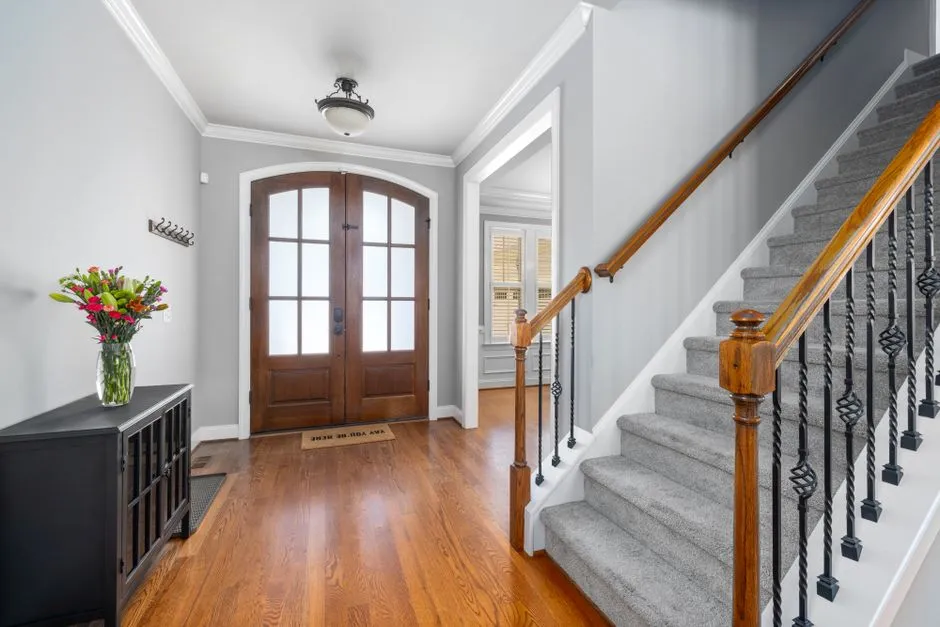
Paint acts as a protective layer for doors and windows, safeguarding them against moisture absorption. If the paint on your doors or windows is chipped, this could expose the underlying material to the humid air and lead to moisture absorption and swelling.
Various finishes and treatments may be used to slow the process of moisture exchange, but in general, they do not stop it. Likewise, air drying and kiln drying the wood do not prevent the wood from subsequently gaining or losing moisture. Sealing is a delay tactic, not a permanent fix. The wood beneath will still respond to its environment over time.
Protective coatings can retard dimensional changes in wood but do not prevent them. Keeping all six faces of a door sealed, including the top and bottom edges that often go unpainted, reduces the rate at which moisture enters and slows the seasonal swing considerably.
Managing Indoor Humidity Is the Most Practical Fix
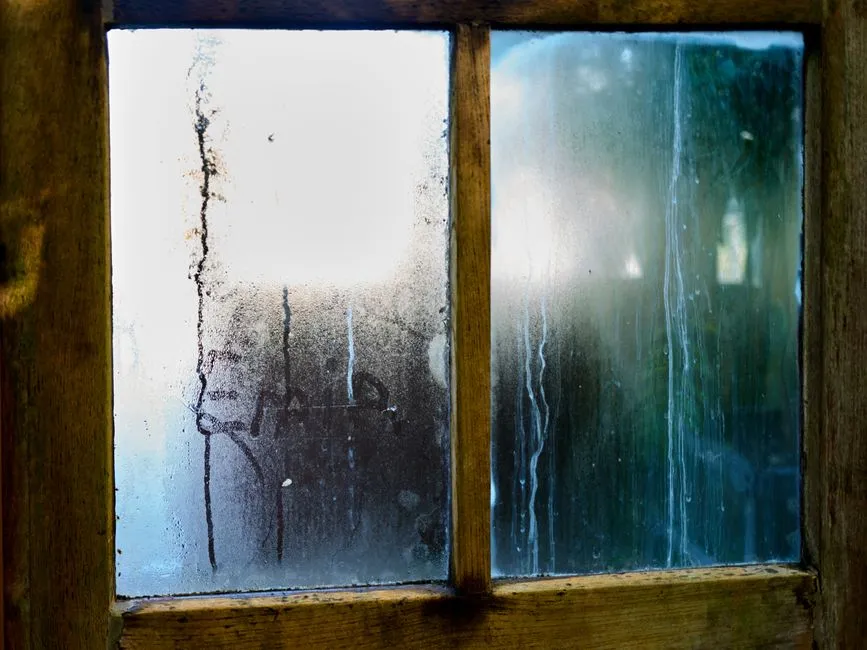
Indoor humidity levels between 30 and 50 percent help stabilize wood moisture content regardless of outdoor conditions. In particularly hot and humid periods, running air conditioning or dehumidifiers prevents excessive moisture absorption by wooden doors.
For normal humidity-driven sticking, the gentlest first step is to manage indoor moisture by running air conditioning or a dehumidifier and ventilating humid rooms like bathrooms, which can reduce swelling enough to free the door. That alone resolves the problem more often than not.
If the door still rubs, the rubbing edge can be lightly sanded or planed to restore the gap, and then sealed or painted, since bare wood absorbs even more moisture and swells more. The key is taking off only a little: plane too much in summer, and the door can end up with a big gap come winter when the wood shrinks back. That last point is worth taking seriously before reaching for a plane or sandpaper.
When to Consider a Non-Wood Alternative

Modern engineered doors resist humidity changes better than solid wood. They use a moisture-resistant core with wood veneer surfaces. For homeowners in particularly humid climates, this can be a practical long-term solution that eliminates the seasonal battle altogether.
Fiberglass and steel doors eliminate wood swelling entirely. They work well for exterior applications where humidity fluctuates most. That said, they lack the thermal and tactile character of solid wood, which remains the preferred choice for many interior applications.
Modern engineered alternatives offer impressive resistance while maintaining the aesthetic appeal of wood. Fiberglass doors with wood grain textures provide the look of natural wood without the susceptibility to swelling. For anyone tired of wrestling with their front door every July, the trade-off is worth weighing honestly.
The Takeaway

A wooden door that sticks in summer and rattles in winter is not failing. It is responding to its environment the way wood always has, and likely always will. The seasonal rhythm is built into the material at a cellular level, governed by moisture dynamics that no finish or treatment can fully override.
Understanding this does not make the stuck door less frustrating. It does, however, make the solution clearer: manage the humidity inside your home, keep all edges sealed, and be cautious about removing too much material in the summer heat. The door will likely behave itself again come autumn.
Wood moves. That is both its limitation and, in a way, its most honest characteristic. Working with it rather than against it is the more sensible long-term strategy.
AI Disclaimer: This article was created with the assistance of AI tools and reviewed by a human editor.