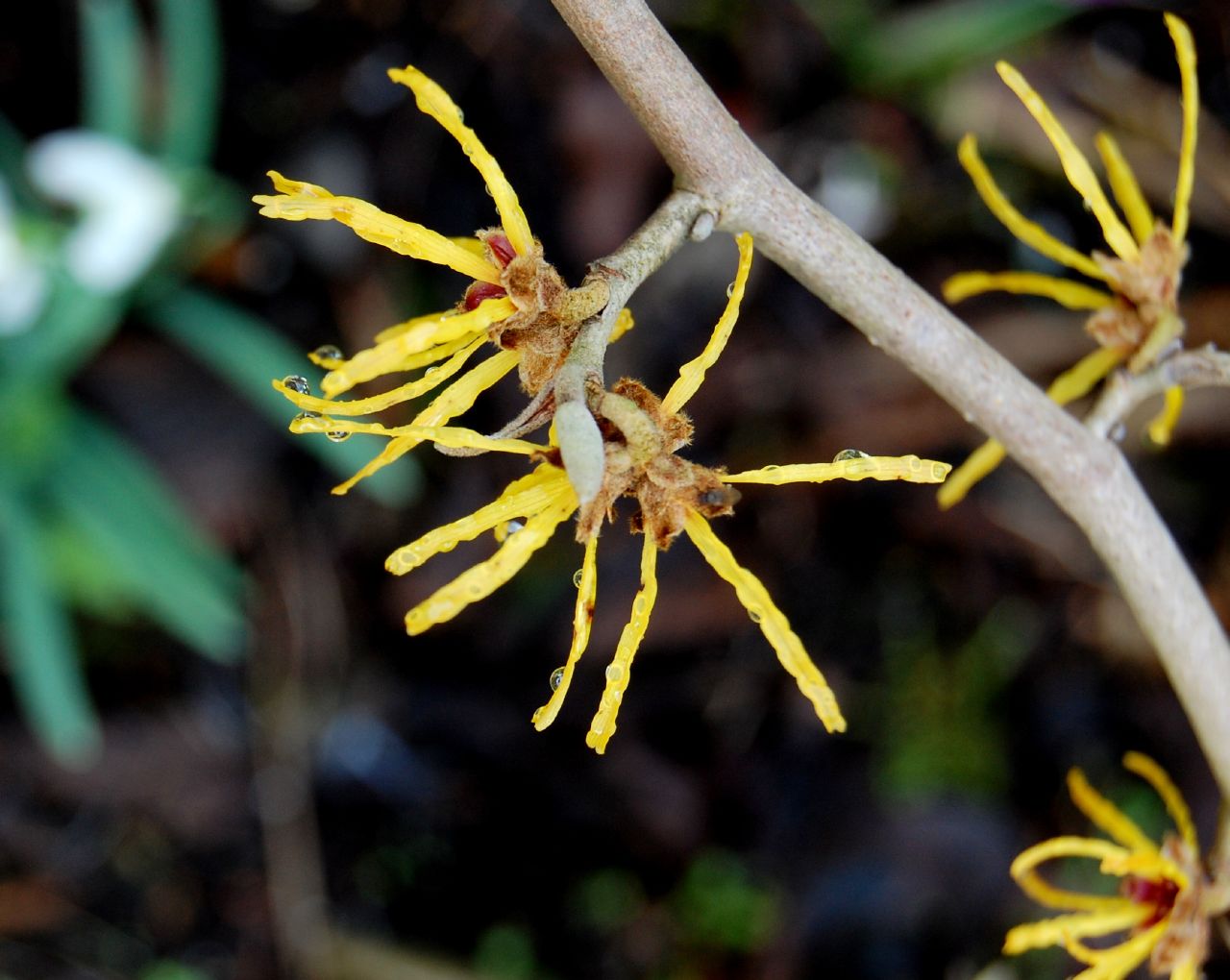

A Plant That Defies the Calendar
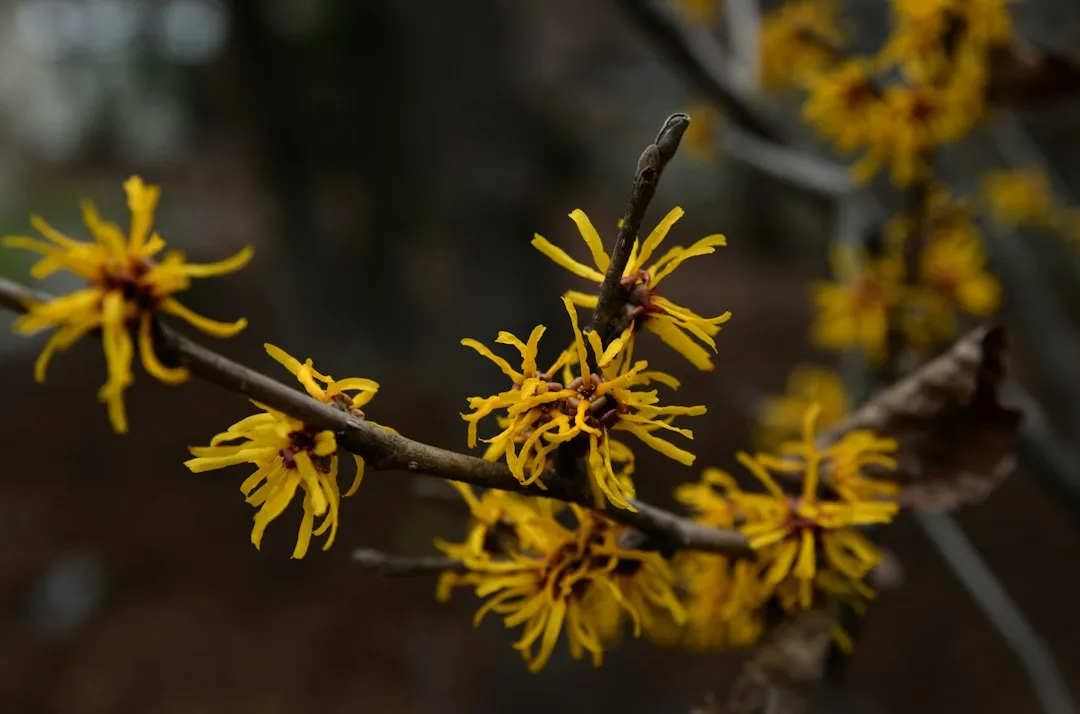
Curiously, witch hazels flower in the extremes of the growing season while most other plants are dormant. There are only a handful of species in the genus, and their bloom windows stretch from late autumn all the way through early spring, depending on which species you’re looking at. There are only five species of witch hazel: one from Japan, one from China, and three from North America.
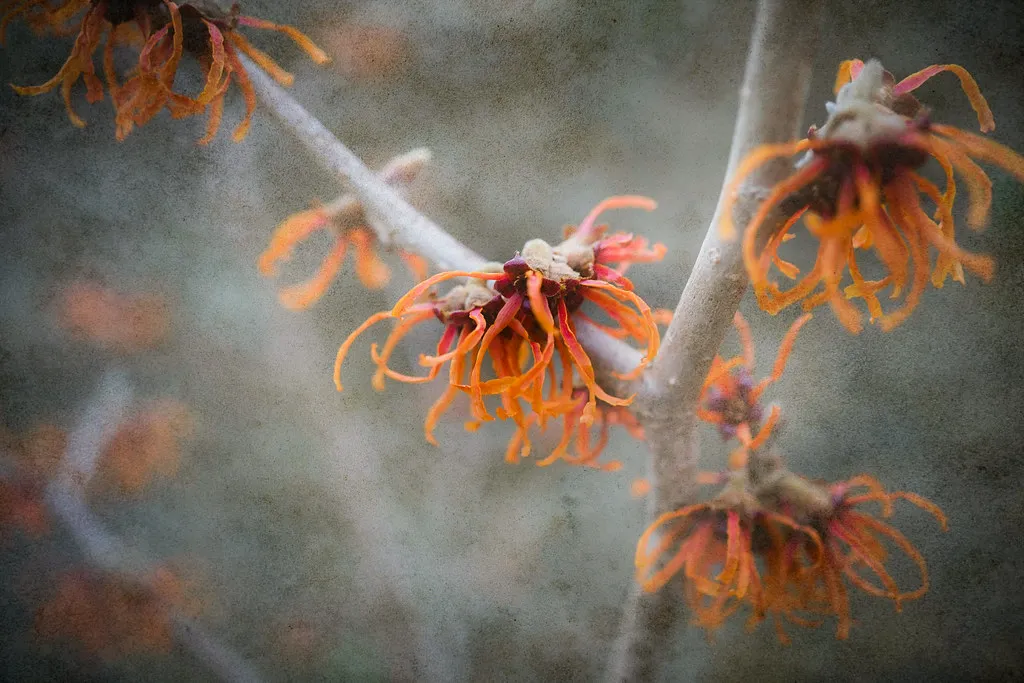
In the northeastern United States, the American witch hazel hits its peak in mid- to late October and can even bloom into early November, while the other four species and their hybrids bloom from late January through March. In January, February, or March, Ozark or spring witch hazels bloom with reddish flowers, even in regions with snow.
The Frost-Proof Flower
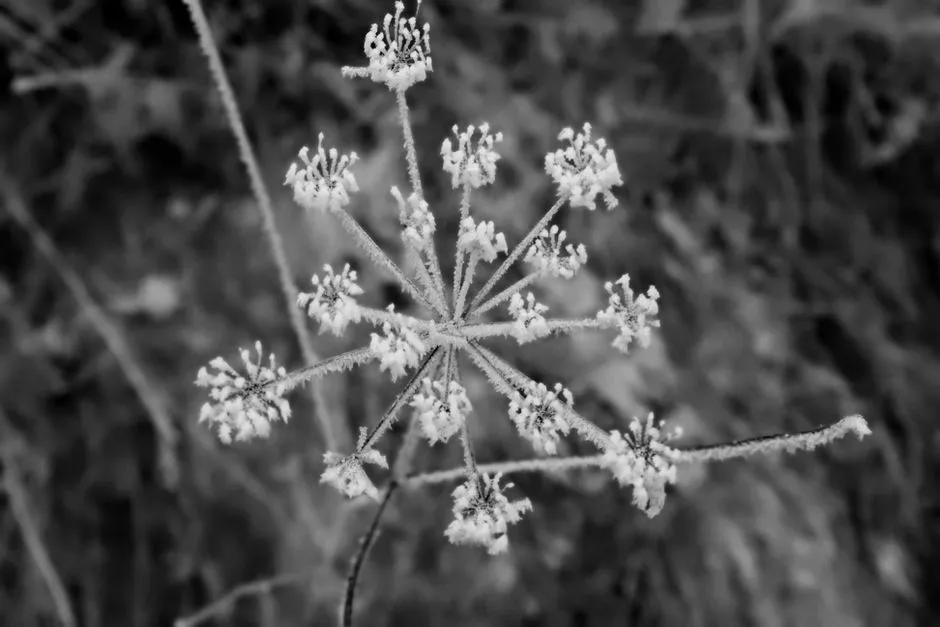
The flowers are frost hardy and well adapted to cool autumn temperatures. The petals curl up when the mercury drops and then unfurl again as temperatures rise, allowing insects to pollinate them. This is not a passive tolerance of cold. It is an active, mechanical response that protects the flower’s reproductive structures while advertising to any passing insect that the shop is still open.
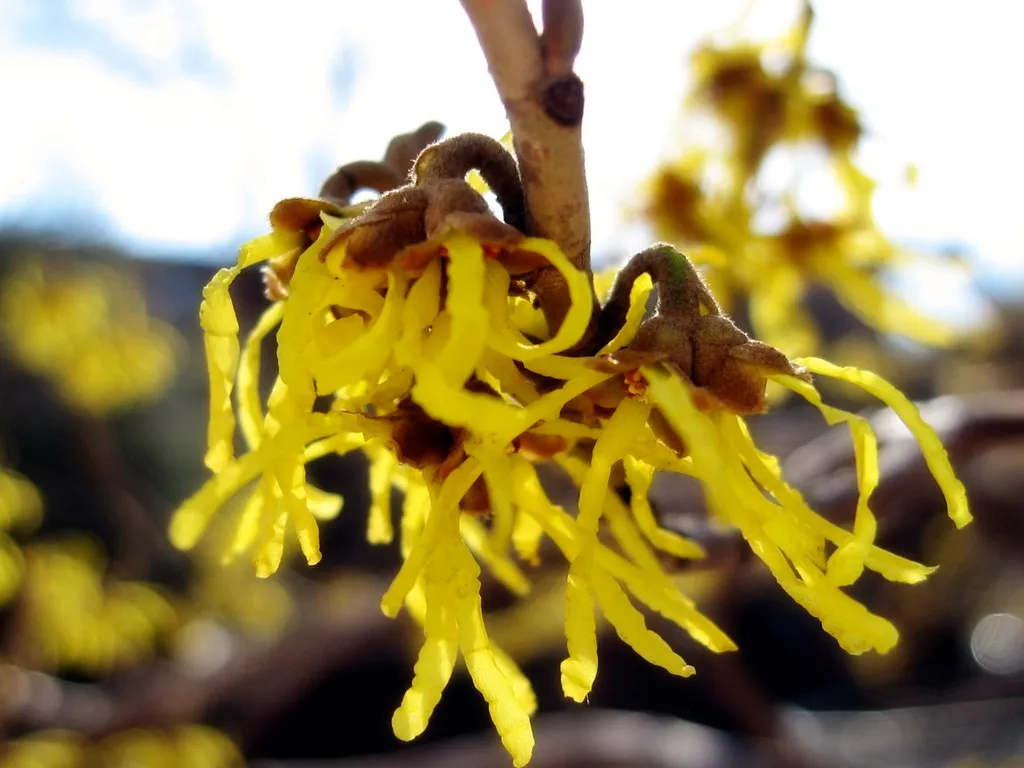
The straplike yellow petals of the fragrant flowers extend on warm days and curl up when temperatures drop near freezing. This show can persist into December even as the snow begins to fall. For a plant trying to attract pollinators during the coldest months, that kind of flexibility is essential.
Why Bloom When Nothing Else Does?
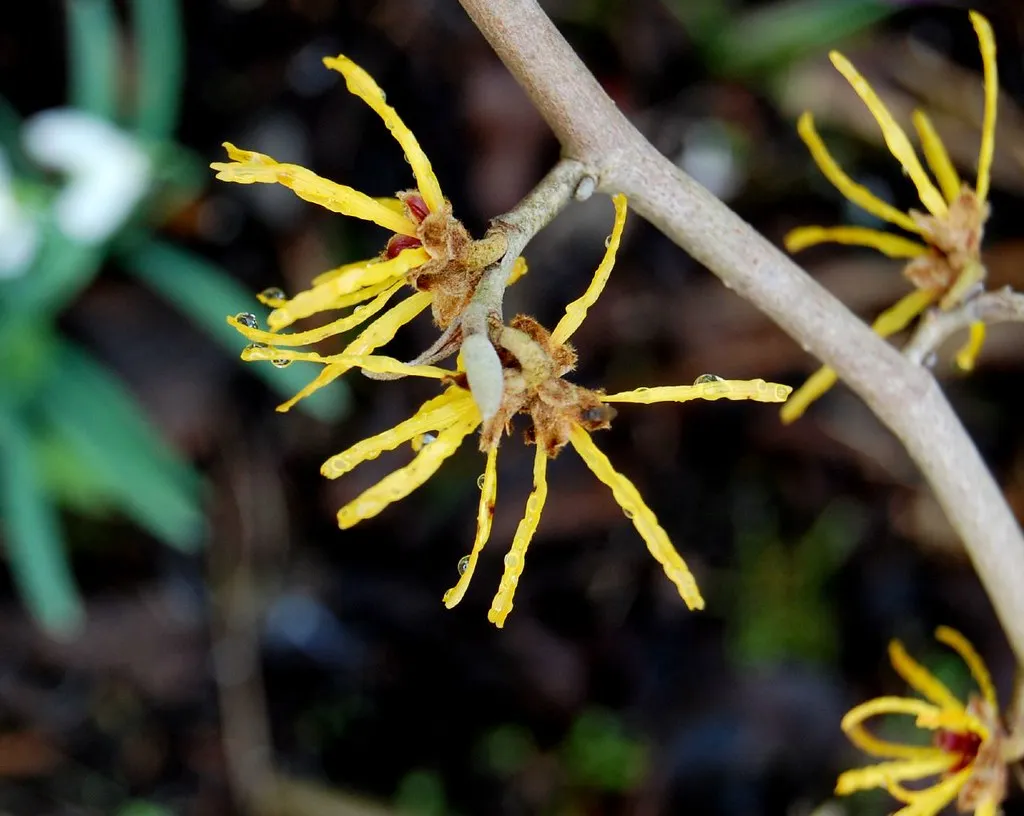
These plants have evolved a brilliant adaptation to ensure their genetics are passed on to the next generation because they flower at a time when there is little to no competition from other plants for pollinators. That is the core logic. By occupying a niche in time rather than space, witch hazel faces almost no rivalry for whatever insects are still active.
Because all other species of Hamamelis flower from late winter to early summer, it may be that Hamamelis virginiana evolved a fall flowering phenology to avoid competition for pollinators with the closely related Hamamelis vernalis. This kind of temporal partitioning is a well-recognized evolutionary strategy, and witch hazel appears to have taken it to an extreme.
Who Actually Pollinates It?
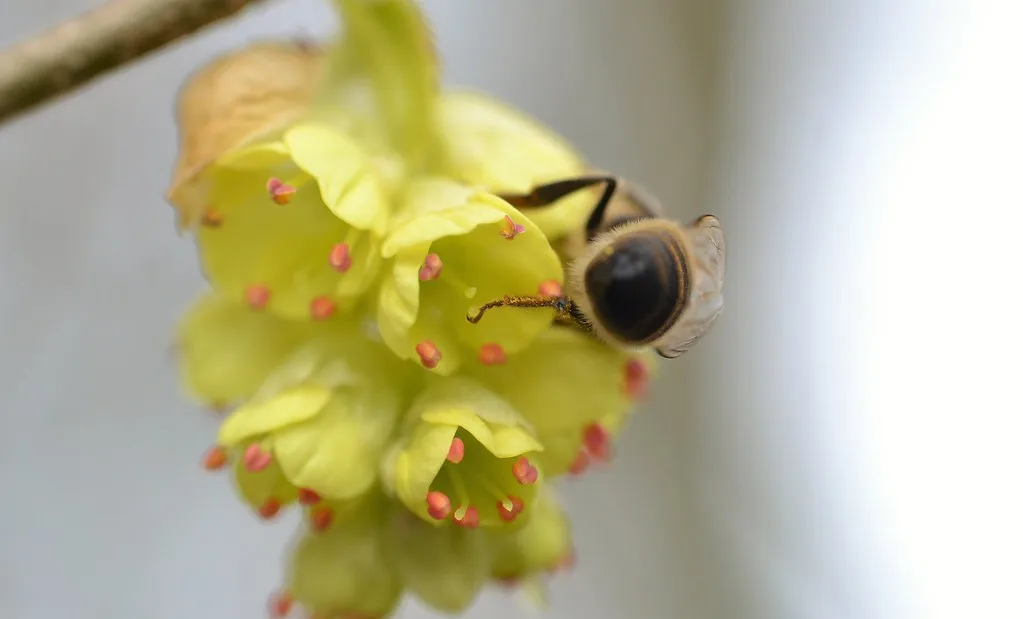
Due to their unusual bloom times, witch hazels were originally thought to be wind pollinated. However, their bright petals, alluring fragrance, and sticky pollen tell a different story. Research has since revealed that witch hazels rely on flies, beetles, wasps, bees, and potentially even moths during a time of the year where is little competition with other plants for pollination.
The flowers are self-fertile and pollination is carried out by small flies and bees, foraging late in the season, along with several species of Eupsilia moths, known as winter moths, which are active on cold nights. Flies were the most common floral visitors, specifically members of the genus Bradysia, but small bees also carried high percentages of Hamamelis pollen.
The Winter Moths: Nature’s Cold-Weather Couriers
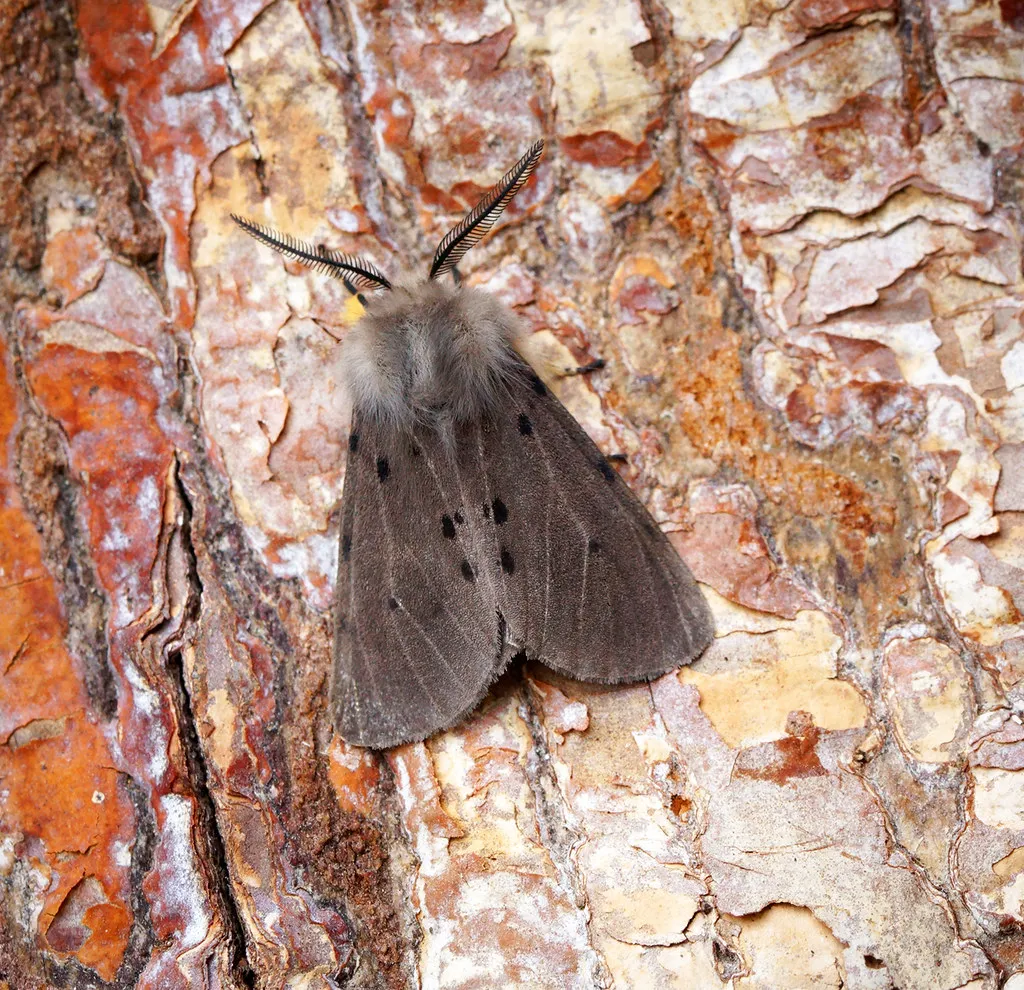
Bernd Heinrich published an article in Scientific American in which he describes Hamamelis being pollinated by a few species of owlet moths, a name given to a group of moths in the family Noctuidae. These moths are active during winter. What makes them capable of flying in near-freezing air is one of the more surprising details in the whole story.
These owlet moths have a remarkable ability to heat themselves by using energy to shiver, raising their body temperatures by as much as 50 degrees in order to fly in search of food. Owlet moths visit the flowers during the evenings on chilly nights. These moths have developed a thermoregulation technique similar to a human behavior: shivering. They essentially warm their flight muscles through rapid vibration before takeoff, allowing them to operate in temperatures that would ground most insects.
A Remarkably Low Fruit Set
Tests of more than 40,000 flowers showed natural fruit set to be less than one percent. That is a striking number, and it reflects the genuine difficulty of finding reliable pollinators in the coldest part of the year. Witch hazel’s late fall blooming period comes with a significant risk. If the weather is too cold or wet while it is blooming, then its pollinators will be unable to fly. The fertilization rate for witch hazel therefore tends to be much lower than for many other plants that bloom earlier in the season.
The flowering time, breeding system, and clumped distribution of plants, likely due in part to limited seed dispersal, combine to yield this remarkably low fruit set. The plant keeps its reproductive odds reasonable by maintaining an extremely long bloom window and producing flowers that stay receptive for extended periods.
Delayed Fertilization: A Biological Pause Button
Once a witch hazel flower is pollinated, the flower essentially hits the pause button on development. The seed won’t start developing until spring. It takes a full year for witch hazel seeds to develop and disperse. After being dormant all winter, they begin developing in the spring. This is one of the more unusual aspects of the plant’s biology.
The pollinated ovary, protected by a persistent calyx, enters a resting state during the winter months. Fertilization of the ovary is delayed until the following spring, usually about the middle of May, which is five to seven months after pollination. The seeds then develop through the warm season and are ready to disperse by the following autumn, just as the plant begins to flower again.
Explosive Seed Dispersal
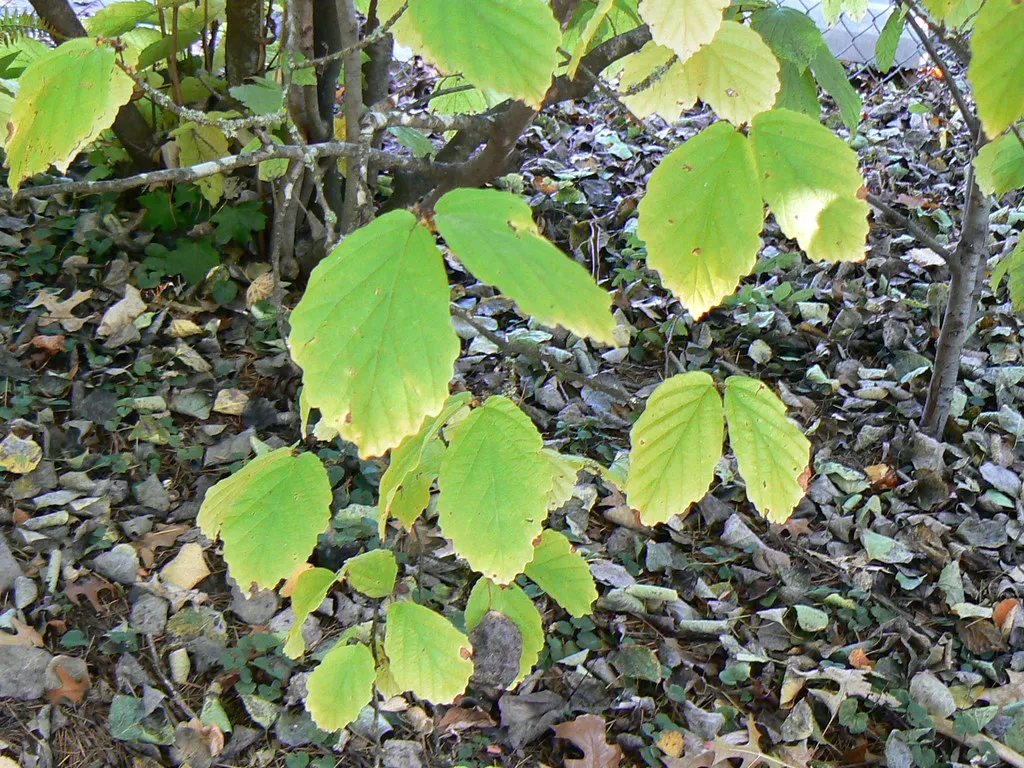
The fruit is a hard woody capsule that splits explosively at the apex at maturity one year after pollination, ejecting the two shiny black seeds up to ten meters distant from the parent plant. This natural mechanism helps the plant disperse its seeds over a wider area, increasing its chances of spreading and thriving in different locations. This explosive seed dispersal is a rare trait among plants and adds to the unique nature of witch hazel.
Witch hazel is unique because it can grow fruit and flowers at the same time. The shaggy spidery flowers hug the stem and co-exist with attractive seed pods that turn a soft brown color as they mature and expel seeds with an explosive pop. Watching both happen simultaneously on a January day is one of those genuinely odd moments in the natural world.
Its Ecological Role in a Bare Landscape
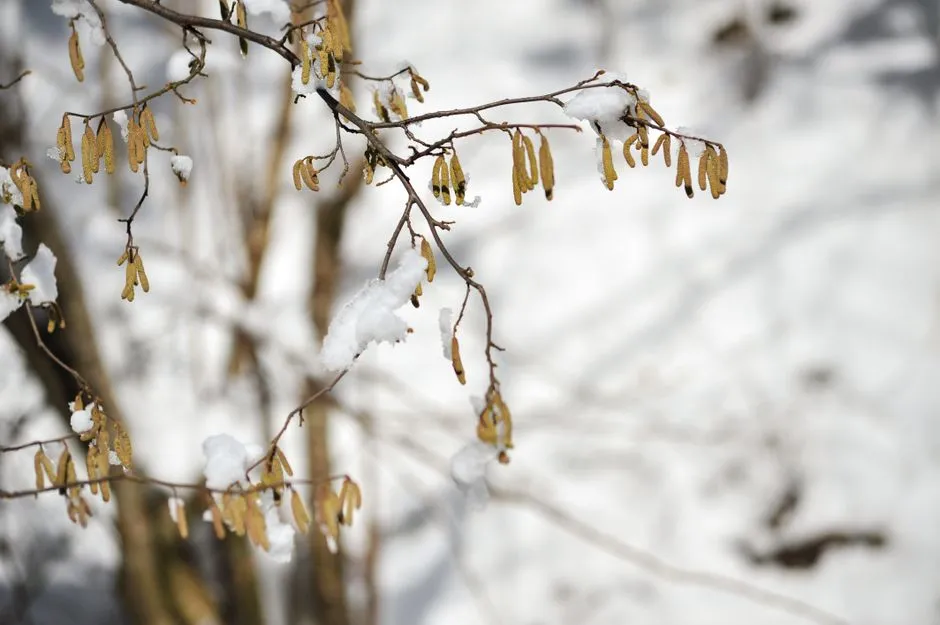
Witch hazel plays an important ecological role by providing one of the latest nectar sources available to pollinators in forests. Its fall-blooming flowers attract native bees, small flies, moths, and other insects at a time when relatively few flowering plants remain available. It is also a host plant for more than 60 moth and butterfly species.
Witch hazel’s flowers are a late-season nectar source for the moths, flies, beetles, and bees that are its pollinators. Birds eat the small brown capsules that are witch hazel fruits. Leaves can be browsed by beaver, and its seeds are consumed by birds and small mammals. Its moderate stature actually lends to its ecological importance. It adds to the structural diversity of a forest by providing wildlife with a layer of vegetation between the forest floor and the canopy.
A Long History of Human Use
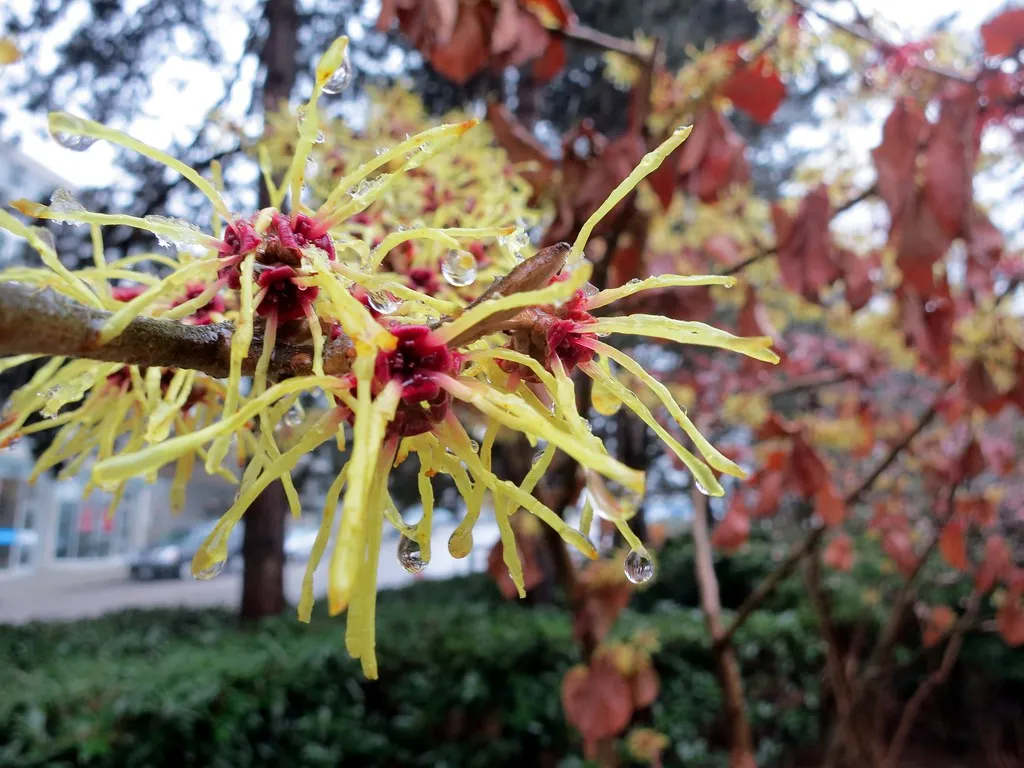
Native Americans derived treatments for a range of ailments from witch hazel, including for colds, eye infections, kidney problems, and hemorrhoids. Some also used witch hazel leaves for tea. Witch hazel produces chemicals called tannins, particularly hamamelitannin. These compounds give the plant its notable astringent properties and likely evolved as a defense against herbivores, but humans have found them remarkably useful.
It is one of only a handful of botanicals approved by the FDA as a drug, and its distilled extracts can still be found on most pharmacy shelves. Extracts derived from twigs, bark, and leaves are used in numerous cosmetic, pharmaceutical, and skincare products marketed as witch hazel. Current research involving witch hazel focuses on pollinator support, native plant conservation, medicinal compounds, woodland restoration, and climate resilience.
What Its Name Actually Means
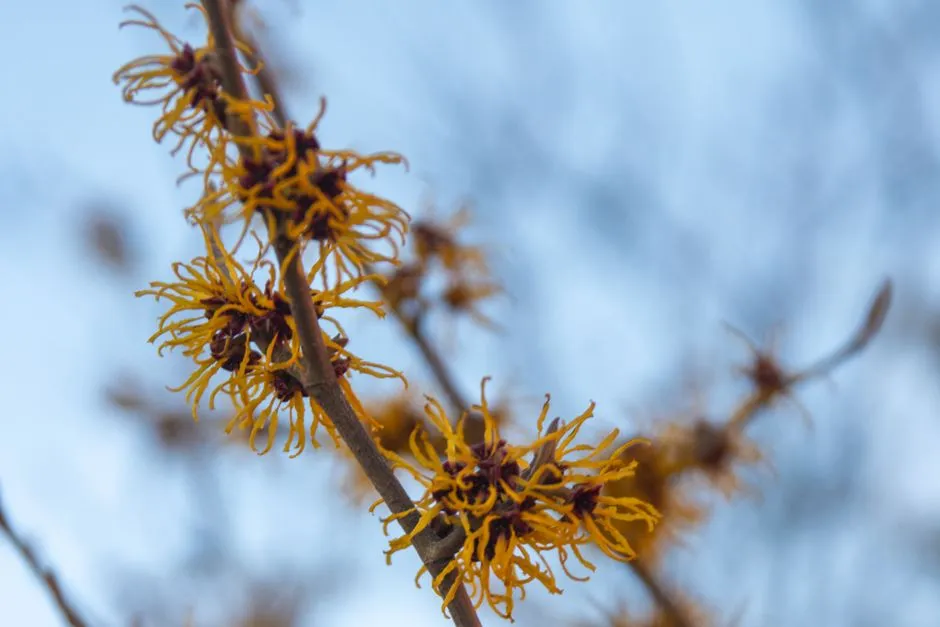
The plant’s common name comes from the Old English word “Wych,” which means “pliable.” The pliable branches of this plant were used for water dowsing, which was a way to find underground water, hence this activity also is known as “water witching.” The name, in other words, has nothing to do with sorcery, even if the sight of flowers on bare branches in January can feel like a small conjuring trick.
Witch hazel has a long and distinguished history, named in 1753 by Linnaeus, the father of taxonomy, the modern system of naming organisms that is used internationally. Witch hazel was one of the first plants chosen for ornamental use in private botanical gardens as early as the seventeenth century. Its reputation has outlasted many trends in horticulture.
The Takeaway
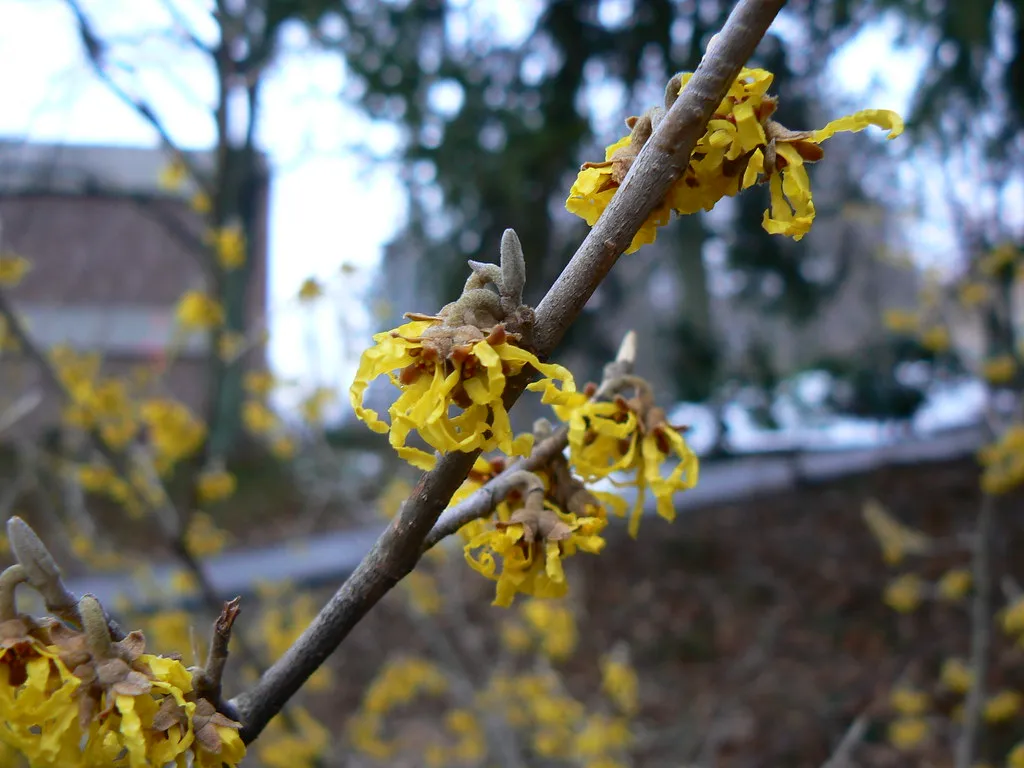
Witch hazel doesn’t bloom in winter by accident. It blooms in winter because winter is exactly where it found its opening: a gap in the calendar with no competition, a handful of cold-hardy pollinators willing to work, and a flower structure built to wait out the worst days and stay receptive through them. The flowers bloom long after most flowering plants have sheltered for the winter, or, as with Hamamelis vernalis, well before most plants burst into bloom in spring.
That persistence is worth paying attention to. In a landscape that rewards earliness and abundance, witch hazel built its survival strategy around scarcity and timing. It’s a plant that chose a harder path and made it work, producing flowers, dispersing seeds explosively, and supporting dozens of wildlife species, all while most of the natural world is still waiting for spring.
AI Disclaimer: This article was created with the assistance of AI tools and reviewed by a human editor.