

Few wedding customs are as universal, and as quietly mysterious, as the placement of a ring on a single specific finger. Most people slide the band on without a second thought, guided by habit and expectation. The real story behind that particular finger, though, stretches back thousands of years and touches on ancient anatomy, romantic myth, religious ritual, and a good deal of human imagination.
It All Started Along the Nile

Around 5,000 years ago, ancient Egypt was the first known culture to exchange rings of love, and those earliest rings were often made from woven reeds or leather. The materials were humble, but the symbolism was anything but. In ancient Egypt, wedding rings were exchanged as symbols of eternity, with the circle representing endless life and love, while the hole in the center symbolized the unknown future a couple would enter together.
At first, these rings were made of reeds or papyrus, but as Egyptian society prospered, lovers turned to leather, bone, and eventually gold, believing that precious metal mirrored the endurance of love itself. It was the Egyptians, too, who first associated the fourth finger of the left hand with romantic commitment, a choice that would echo through civilizations for millennia.
The Vena Amoris: Love’s Most Famous Myth

The Latin name “vena amoris” literally means “vein of love,” and it describes a special blood vein that was once believed to flow directly from the fourth finger of the left hand to the heart, a belief that has been cited in Western cultures as one of the reasons the wedding ring was placed on the fourth finger.
The wedding ring is worn on the fourth finger because ancient Romans believed a single, direct vein, the vena amoris or “vein of love,” connected that specific finger straight to the heart. The idea was deeply poetic, and it gave the act of placing a ring enormous emotional weight. Though anatomically untrue, the idea was too poetic to abandon, and it spread far beyond Egypt’s borders.
What Ancient Scholars Actually Wrote

The earliest known occurrence of the phrase “vena amoris” was from Henry Swinburne, an English ecclesiastical lawyer whose work covering marriage, “A Treatise of Espousal or Matrimonial Contracts,” was published posthumously in 1686. But references to the idea go back much further. Christian philosopher and historian Saint Isidore of Seville, writing in the 7th century, referred to a Roman story telling of a vein connected to the heart and the bond of love.
The Roman writer Macrobius, in his Saturnalia, refers to the connection between the ring finger and the heart but implies it is a nerve rather than a vein, and states that the belief originated in Egypt. These early writers were not careless men. They were working with the best understanding of the human body available to them at the time.
Why Science Eventually Proved It Wrong

This myth dates back to the Medieval Ages. While science now accepts that all blood veins flow to the heart, this was not understood at the time and would not be proven until the 17th century by the physician William Harvey. The discovery changed medicine permanently, but it arrived far too late to dislodge the wedding ring tradition it quietly undermined.
The truth is that every finger has veins that connect to the heart, so there is really nothing that physically differentiates the ring finger from the others. Still, the tradition had already embedded itself so deeply into culture, ceremony, and sentiment that no anatomical correction was going to move it. While the myth of the Vena Amoris was long ago debunked, the practice of wearing rings on the fourth finger of the left hand held up over the years mainly due to tradition.
How the Romans Cemented the Custom
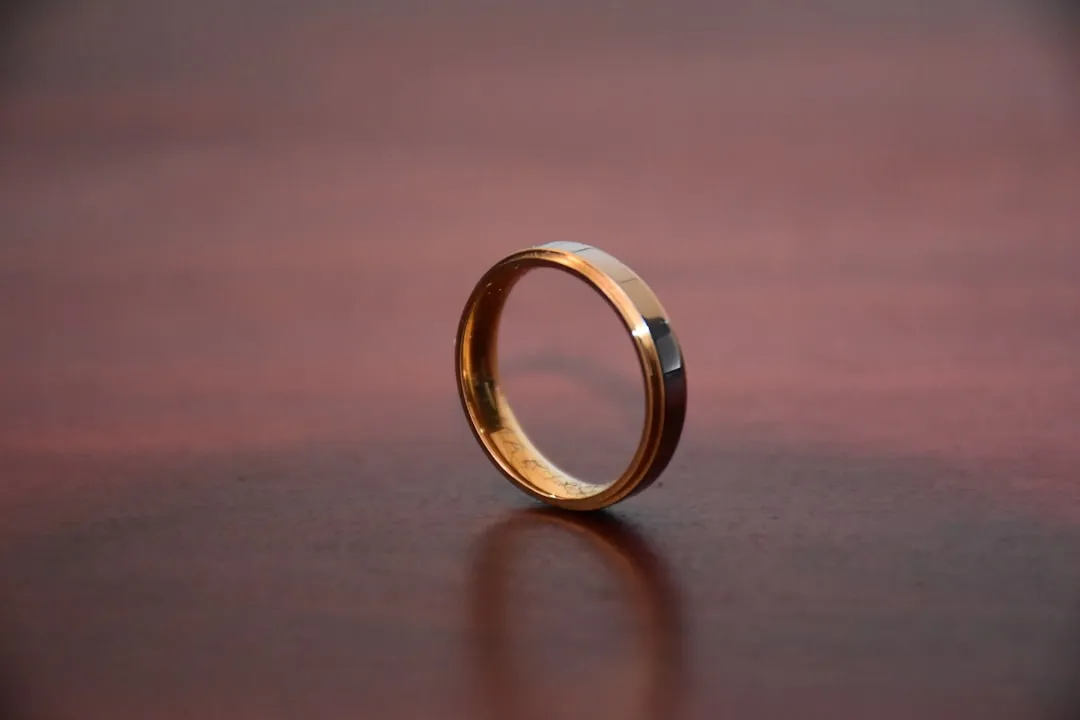
Centuries after the Egyptians established the practice, the Greeks and Romans borrowed and refined the custom. Greek wedding rings often featured Eros or Cupid, while ancient Roman wedding rings carried social and legal weight. The Romans were efficient administrators of culture as much as territory, and they formalized the ring finger in ways that outlasted the empire itself.
By the time of Roman rule, iron and gold bands had replaced the natural materials and sometimes featured key motifs to symbolize that the wife now had control of the household goods. Once the Romans established the left hand’s fourth finger as the traditional ring finger, the practice became deeply embedded in Western culture.
The Role of the Christian Church

When Christianity adopted ring exchanges into marriage ceremonies, priests followed existing Roman customs. During Medieval wedding ceremonies, the officiant would touch the thumb while saying “In the name of the Father,” move to the index finger for “the Son,” the middle finger for “and the Holy Spirit,” then place the ring on the fourth finger while saying “Amen.” This ritual reinforced what had already become standard practice.
The ring finger is also connected to Christian history, as early Christian marriage ceremonies had the ring placed on the fourth finger of the left hand. The church gave the custom a sacred dimension that secular tradition alone could not have provided. Over generations, the religious ceremony and the cultural habit became inseparable.
King Edward VI and the English Decree

In the 16th century, England’s King Edward VI declared that all couples must wear their wedding rings on the fourth finger of the left hand. Before this royal edict, the situation was considerably less tidy. Before the king’s decree, most couples wore their wedding rings on the thumb or middle finger of the left hand.
In the 16th century, King Edward VI by edict made the left hand ring finger the official choice for the wedding band. Prior to this, wedding bands in England had been worn on the thumb, and the Gauls and Britons wore rings of betrothal on the middle finger. Royal authority, in this case, helped lock in a custom that many people still follow today without knowing it was ever mandated.
A Practical Reason Too: The Least Busy Finger

Practical factors also played a role. The fourth finger is one of the least-used fingers in daily tasks, meaning rings worn there are less likely to be damaged. This is not a romantic explanation, admittedly, but it is a sensible one. Anyone who has accidentally scratched a band against a hard surface knows how real this concern is.
The fourth finger also has a natural limitation: it cannot fully extend independently of the other fingers without assistance from the hand. This slight structural dependency made it, in practical terms, one of the safer fingers to keep a precious metal band protected from rough daily use. Sentiment and practicality, for once, lined up neatly.
The World Does Not All Agree

In Russia, Poland, Greece, Ukraine, Bulgaria, Serbia, and other Orthodox Christian nations, wedding rings are traditionally worn on the right hand’s fourth finger. This practice stems from Orthodox Christian religious traditions where the right hand is considered the “hand of blessing.”
Over 200 million people worldwide follow this right-hand tradition, representing a significant alternative to Western customs. The Latin word for “right,” dexter, is the root of “dexterity” and was historically associated with skill and honor, while the word for “left,” sinister, carried darker connotations. These linguistic shadows shaped centuries of tradition, especially across Central and Eastern Europe.
In Germany and Austria, some couples wear their engagement ring on the left hand, then switch it to the right hand after marriage, symbolizing the transition from engagement to wedded life. Wearing wedding rings on the right hand is also common in Latin American countries like Cuba, Peru, Venezuela, and Colombia, thanks to Spanish colonial heritage and indigenous customs.
Where the Tradition Stands Today
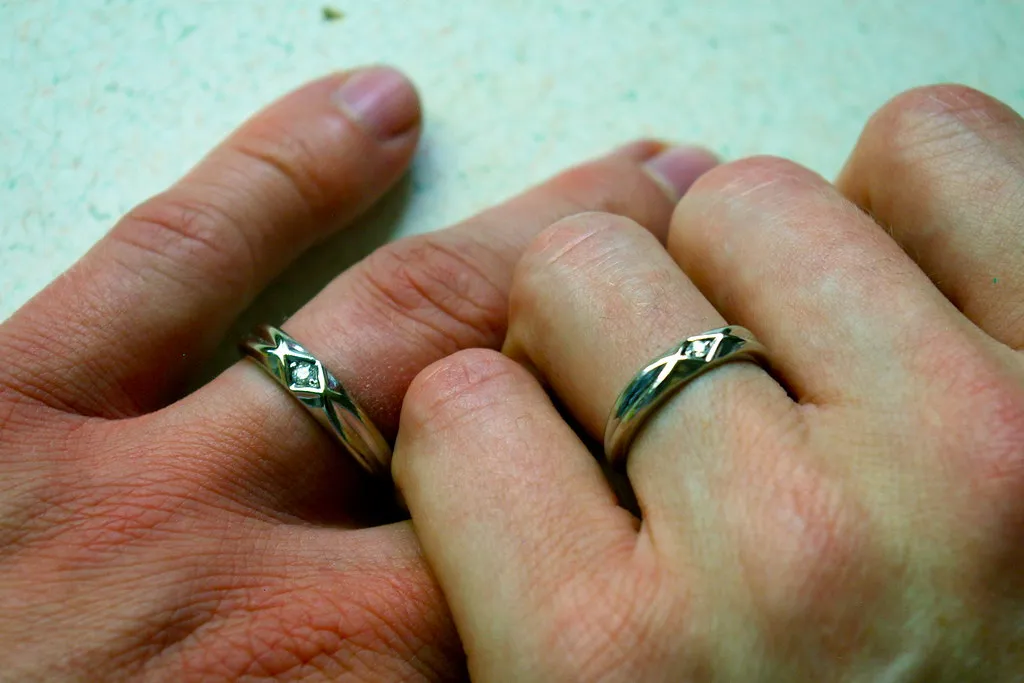
Your wedding ring finger does not have to be on your left hand. While tradition singles out the left ring finger as the ideal option, modern trends allow couples to pick and choose how to wear their rings, and it is perfectly acceptable to wear a wedding ring or engagement ring on either hand and any finger.
The vena amoris myth gave the West its wedding ring tradition, other cultures built their own conventions around the same idea, and modern wearers are increasingly choosing rings based on personal style rather than strict symbolism. Despite scientific debunking, the vena amoris myth persists in modern romantic symbolism, particularly in jewelry marketing and popular culture.
The Quiet Power of a Beautiful Idea
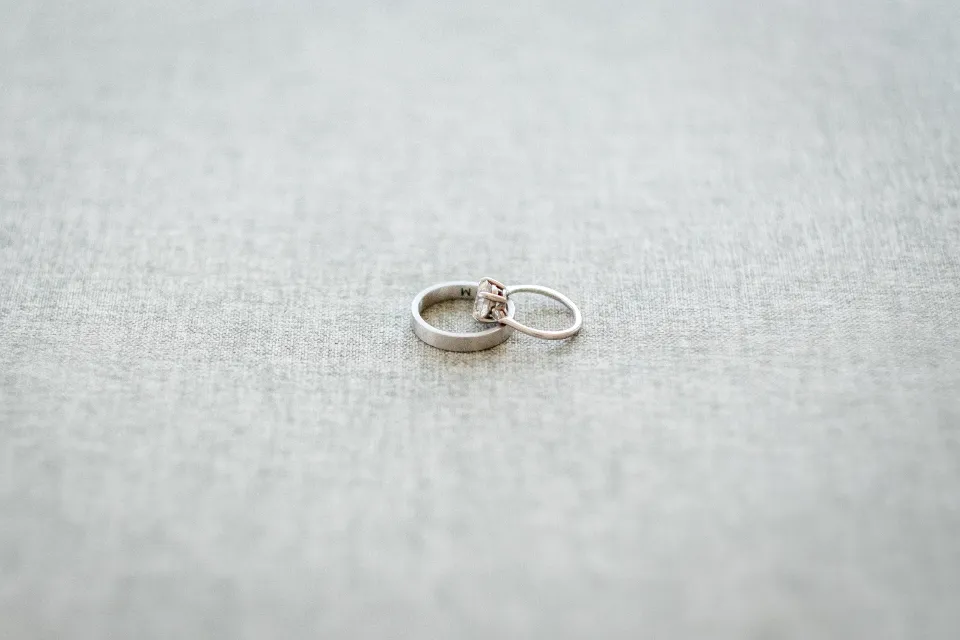
What this tradition reveals, more than anything, is how durable a good story can be. The vena amoris was never anatomically real, and anyone who studied medicine after the 17th century knew it. Yet couples kept placing rings on that fourth finger, century after century, across cultures that had no direct connection to ancient Rome or Egypt.
There is something telling in that persistence. The belief that love has a direct line to the heart, expressed through a small circle of metal on a specific finger, proved more compelling than the correction. Traditions with that kind of staying power are rarely just about the original reason. They survive because each generation finds its own meaning in the gesture. The finger matters less, in the end, than the intention behind the ring placed on it.
AI Disclaimer: This article was created with the assistance of AI tools and reviewed by a human editor.