

Most people notice it without ever thinking too hard about it. You walk across your yard on a cool morning, and there it is: that far corner near the fence feels noticeably colder than the rest of the space, almost like a different season is happening just a few feet away. It’s not your imagination, and it’s not random.
The science behind this is surprisingly well-established, rooted in physics, atmospheric behavior, and how the built structures around your yard quietly shape the air you walk through every day. Understanding why it happens tells you something real about the place you live.
Your Yard Has Its Own Climate System
Small-scale climate differences that exist across even a single backyard are called microclimates. The concept sounds exotic, but the reality is mundane and everywhere. Weather and its synthesis, climate, can vary on a much smaller scale, with major differences occurring within a county, a neighborhood, or even a single yard or garden.
The official USDA hardiness zone for your zip code is based on regional averages, but your yard is not average. It has corners that stay warmer in winter, spots that frost two weeks earlier than the rest of the property, and areas that dry out fast versus areas that stay wet long after rain stops. Each of these variations responds to forces most of us never consciously register.
Cold Air Behaves Like a Slow, Heavy Liquid
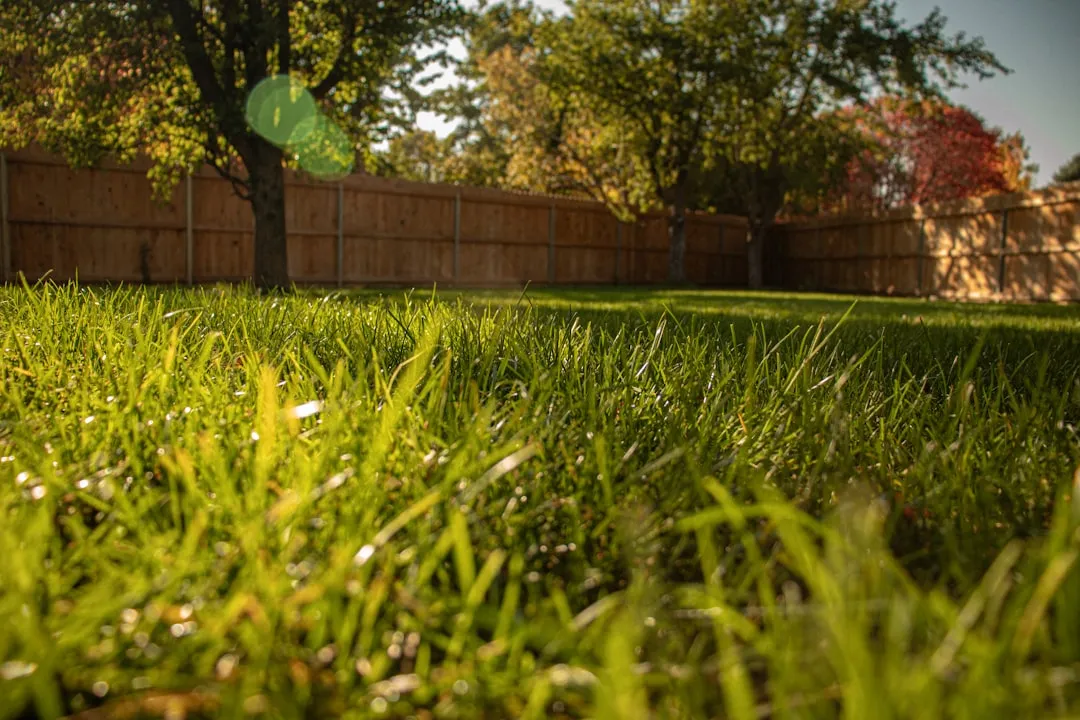
Cold air is denser than warm air and will flow downhill like molasses. This single physical fact explains a huge portion of what you observe in your yard on still mornings. It’s not wind that drives the effect. It’s gravity.
Cold air is denser than warm air, and because of external energy and wind currents, the air can have different temperature layers vertically or horizontally. Cold air sinks, flowing downhill to the lowest available point, where it accumulates until dispersed by heat or wind. In a yard with any kind of fence or wall at the boundary, that lowest available point is exactly the corner.
The Frost Hollow Effect in Miniature

Gravity pulls cold dense air downhill. The cold air in a valley has nowhere to go and sits there, while the cold air from the higher ground flows down toward the valley. This leaves higher ground with warmer air and adds another layer of cold air to the lower area, sandwiching it in. Your yard replicates this process on a smaller scale every single night.
Frost hollows are most extreme when there is something blocking the cold air from continuing its journey, such as an embankment or other sharp upturn in the gradient. A wooden fence or block wall at the perimeter of your property serves exactly this function. Frost pockets are where cold air accumulates and is trapped in a pool of colder temperatures than the surrounding land, sometimes also called “frost hollows” or “cold pools,” and they can be quite a bit colder.
Fences and Walls Trap Air, Not Just Wind

Dense plantings or tight corners between sheds and fences can trap cold air. This is the structural reality behind the corner chill most homeowners feel. The fence does not just block wind. It stops cold air from draining away.
The cold air sometimes collects behind barriers across the slope such as fences or hedges. Making gaps in the barrier can allow the air to drain away and alleviate a frost pocket. That detail matters practically: a solid fence creates a cold trap, while a slatted or open fence allows the air to keep moving. Cold air moves downhill like a silent avalanche, pooling wherever it cannot escape.
Corners Get More Exposure to Radiative Cooling

On clear nights, the ground loses heat directly to the sky through a process called radiative cooling. The ground radiates thermal energy upward as infrared radiation, and surfaces exposed to open sky cool down far faster than sheltered ones. A sky-facing surface emitting longwave radiation through the atmospheric window can preserve its temperature below ambient under a clear nocturnal sky.
Under clear or cloudy skies, tested surfaces exhibited temperatures between one and six degrees Celsius below ambient air, while under rainy skies, the effect almost completely disappeared. Corners of yards, particularly those that are open overhead and sheltered only at the sides by fences, combine maximum sky exposure with minimum airflow. That combination accelerates the cooling substantially on still, clear nights.
Shade History Matters More Than Most People Think
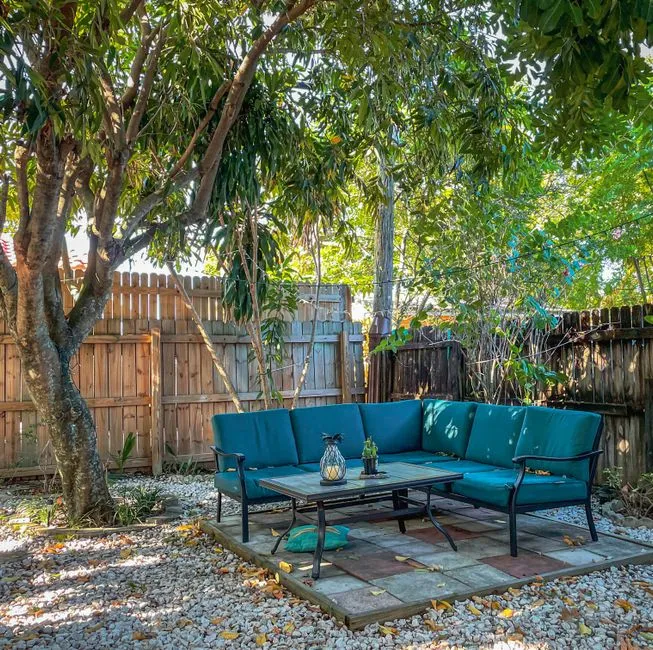
Shaded areas stay cooler throughout the day because the ground has not been heated by the sun. This makes for more effective nighttime cooling, allowing the area to stay cooler on average than non-shaded areas. A corner that spends most of the afternoon in the shadow of a fence or nearby structure simply starts the night colder.
A structure such as a house, fence, shed, or high wall will cast shade and lower temperatures on its east, north, and west-facing sides at varying times of the day. South- and west-facing aspects are usually warm and sunny, while east- and north-facing aspects are colder and shadier. Corners sitting in the shadow of a north-facing fence are among the coldest spots in any yard for exactly this reason.
Soil Moisture Amplifies the Temperature Difference
A low-lying area will remain wetter than a border at the top of a slope, and some parts of the garden may be sheltered while others are exposed. Corners that collect water from the rest of the yard stay moist longer, and wet soil behaves differently from dry soil when it comes to temperature. Moist ground releases heat more slowly by day but also radiates it away more effectively overnight.
The cooling rates at basin areas were two times higher in comparison to the magnitudes observed within slope areas. This considerable temperature gradient in the basin may be partly due to the transport of cold air drainage into the basin from the slope. In your yard, the corner acts like that basin: it receives cold air from the rest of the space and then holds it, especially when the soil is damp and the night is clear.
Topography Inside the Yard Still Counts

Topographic differences within your yard or garden can make notable changes. Low spots can accumulate cold air and be more prone to frost, similar to valleys. Even a very slight depression of a few inches is enough to direct cold air toward a particular area. No field campaigns have focused on spatial differences inside very shallow cold-air pools that are only a few metres deep. The effect is real even at tiny scales.
Depressions, dips, or even slight hollows can become frost magnets. A tall hedge, fence, or wall can also block airflow, trapping cold air in one section while leaving another side untouched. If your corner also happens to sit at the lowest point of a mild slope in the lawn, the two effects reinforce each other noticeably.
Ecological Research Confirms the Scale of the Effect

There is compelling evidence from studies across the globe that cold-air pooling impacts plant communities and species distributions, making these decoupled microclimate areas potentially important microrefugia for species under climate warming. The same physical mechanism that shapes forest composition in mountain ranges plays out in backyards across the country.
Cold-air pooling is an important topoclimatic process that creates temperature inversions with the coldest air at the lowest elevations. Incomplete understanding of sub-canopy spatiotemporal cold-air pooling dynamics and associated ecological impacts hinders predictions and conservation actions. Research from US Forest Service studies across New England has confirmed that frequent and strong temperature inversions occur across seasons and in some locations are most frequent during the daytime, likely affecting forest composition. The scale differs but the principle is identical.
What You Can Actually Do About It

One simple approach is to encourage better airflow. Trimming hedges, removing solid barriers, or creating gentle slopes allows cold air to drain away instead of pooling. Planting more frost-tolerant varieties in these trouble spots while saving delicate species for higher, warmer ground is also effective.
A stone wall can act like a heat battery, absorbing warmth during the day and releasing it at night. Pathways, patios, and gravel beds also help regulate temperature by storing solar energy. Placing heat-retaining materials near a cold corner can partially offset the drainage effect, though the airflow fix tends to produce more reliable results. Walking your property on still, clear mornings in late spring and early fall, and noting where frost appears first and last after a cold night, reveals exactly where cold air has settled.
The Bigger Picture: Your Yard as a Weather System
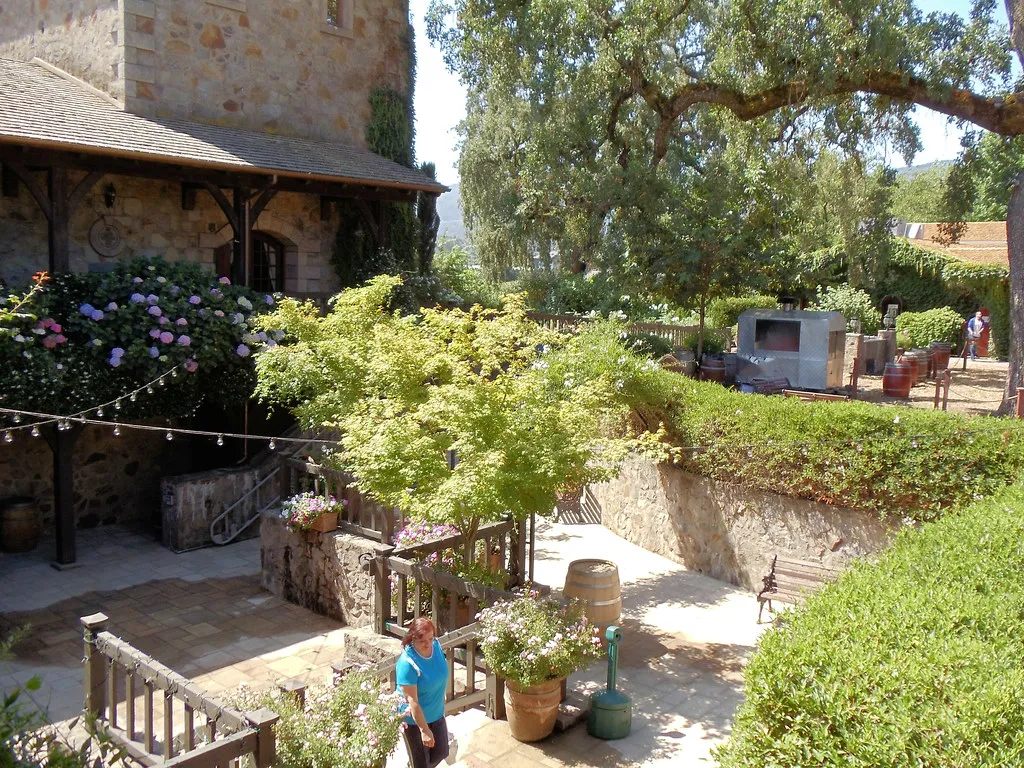
Almost every yard has microclimates, which are areas with differing weather conditions brought about by natural or manmade factors. The cold corner is simply the most noticeable expression of a process that’s running everywhere, all the time. It’s not a flaw. It’s physics.
Once you understand the mechanism, the chill in that far corner stops being a mystery and starts being a map. Understanding microclimates changes where you plant, what you plant, and how much you can push the limits of your zone. The cold corner that kills early-season seedlings every spring is also the same corner where certain cold-hardy plants could thrive with almost no extra care.
Final Thoughts

The temperature difference you feel walking toward the back fence on a November morning is the product of atmospheric physics, local topography, radiant heat loss, and the shape of the structures around you. None of it is random. Local temperatures and vegetation composition are critical drivers of ecosystem processes, and cold-air pooling may act to preserve or alter ecosystem functions even at small scales.
For a gardener or homeowner, this knowledge is genuinely useful. The cold corner is not a problem to ignore or a quirk to dismiss. It’s a microclimate you can work with, shape, or plan around. The yard is not a uniform square of space. It’s a small, layered weather system, and the corner is where all the cold evidence ends up.
AI Disclaimer: This article was created with the assistance of AI tools and reviewed by a human editor.