
Your Body Has to Cool Down Before It Can Sleep

When it comes to sleep, it’s largely about temperature. Sleep researchers know that right before you fall asleep, your body temperature starts to drop, and in the deepest stages of sleep, your body is at its coolest, roughly one to two degrees below normal.
This cooling process starts about two hours before you fall asleep, driven by your circadian rhythm. Research published in a peer-reviewed physiology review shows that the likelihood of entering the first bout of NREM sleep is highest when the rate of body temperature decline is at its steepest.
Body temperature, in this sense, acts as a biological switch for sleep. Falling asleep requires core temperature to drop noticeably, and anything that helps that happen faster works in your favor.
The Foot Is a Natural Heat Radiator
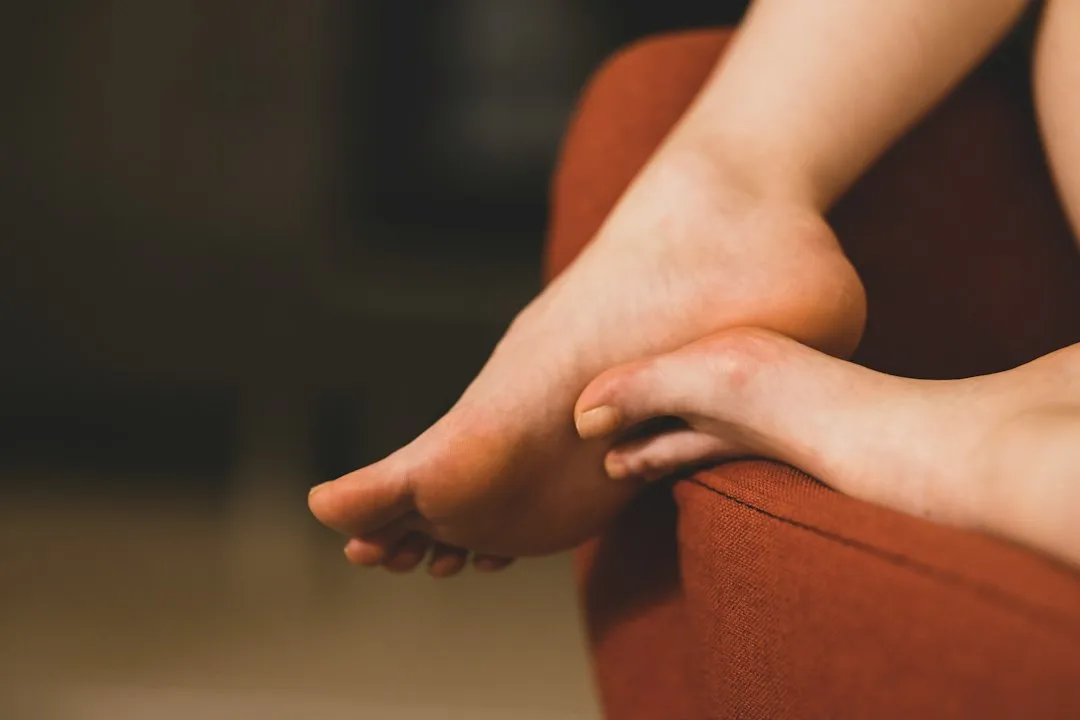
Your feet act as built-in radiators, playing a surprisingly powerful role in regulating body temperature to trigger sleep. Falling asleep isn’t purely a mental state; it’s tightly linked to a drop in core body temperature, a key biological signal that tells the brain it’s time to rest.
Your brain triggers cooling primarily through vasodilation in your extremities, especially your hands and feet. Blood vessels near the skin surface in these areas dilate, allowing warm blood from your core to flow closer to the surface and radiate heat outward.
Aside from being mostly hairless, and therefore more sensitive to temperature changes, feet also hold special vascular structures that make them a natural exit point for body heat.
The Special Blood Vessels That Make It Possible

Like most distal skin areas including the feet, the skin contains many small blood vessels known as arteriovenous anastomoses, or AVAs, which are integral in heat loss. These aren’t ordinary capillaries. They’re specialized structures built specifically for rapid thermal exchange.
The human foot is exceptionally well-equipped for heat exchange. When exposed to cooler air, these vessels dilate, cool the blood quickly, and circulate that cooler blood throughout the body, lowering core temperature faster and more efficiently than keeping everything covered.
The soles of the feet contain these arteriovenous anastomoses, which are direct connections between small arteries and veins that bypass normal capillary beds, shunting blood to venous plexuses close to the skin surface for highly efficient heat exchange.
The Distal-Proximal Temperature Gradient and Sleep Onset
One of the key metrics sleep researchers track is called the distal-proximal temperature gradient, or DPG. The larger this gradient, the faster a person tends to fall asleep. This is precisely why strategies that warm the periphery, like a foot bath before bed, also help.
A study published in the American Journal of Physiology provides evidence that vasodilation of distal skin regions, and the heat loss that comes with it, actively promotes readiness for sleep, a state researchers call sleep propensity.
The selective vasodilation of distal skin regions promotes the rapid onset of sleep and is strongly associated with melatonin secretion. So what your foot is doing under the covers is directly tied to your body’s most important sleep hormone.
Melatonin and Foot Temperature Are Linked
Just before falling asleep, the body temperature drops, promoting the secretion of melatonin, the sleep hormone. This connection runs deeper than many people realize. The hormonal and physical sides of sleep preparation aren’t separate processes; they reinforce each other.
Melatonin release is necessary for sleep, and its production is dependent on both the lack of light and the ability of the body to lower its core body temperature. Helping one process along naturally benefits the other.
As melatonin levels rise in the evening, they contribute to the drop in core body temperature that facilitates sleep. Conversely, as melatonin production decreases in the morning, body temperature begins to rise, promoting wakefulness. The foot-out habit sits right inside this elegant biological loop.
Heavy Blankets Can Work Against You
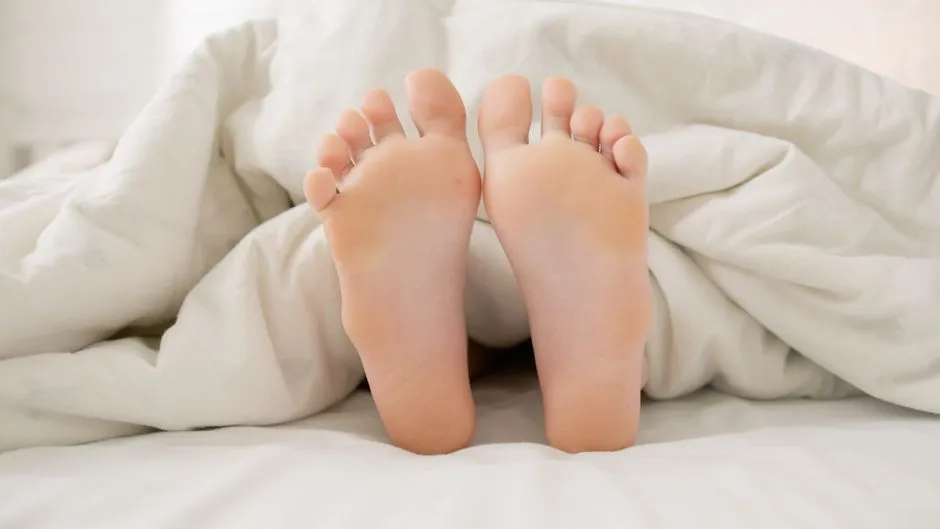
Heavy blankets can trap heat and slow the cooling process, delaying the moment your body reaches the optimal temperature window for drifting off. By letting one foot hang out from under the covers, you create a simple but effective heat-loss pathway.
If you’re snuggled under a warm quilt, sticking your foot out helps speed up the natural process of falling asleep. It’s also easier to fall asleep with one part of your body warm and the other slightly cooler.
This is the practical genius of the habit. You don’t have to sacrifice warmth entirely. One exposed foot can do enough of the thermoregulatory work to get things moving in the right direction, while the rest of your body stays comfortable.
What the Optimal Sleep Temperature Actually Is
The most cited optimal bedroom temperature for adults is between 60 and 67 degrees Fahrenheit, according to the National Sleep Foundation. Most adults find the practical sweet spot sits between 65 and 68 degrees Fahrenheit.
Going to sleep at lower room temperatures can help reduce your body’s core temperature at a faster rate, minimizing the time needed to fall asleep. The foot-out habit works in the same direction, offering a micro-adjustment when the room itself isn’t quite cool enough.
Research shows that people who cool down faster fall asleep faster, and a cooler core directly increases time spent in deep sleep. That’s not a trivial difference. Deep sleep is when the body carries out most of its physical restoration.
Insomnia, Overheating, and Why Some People Need This More Than Others
The foot-out trick is especially helpful for people who struggle with insomnia, tend to overheat at night, or simply want to fall asleep more quickly without medication or complicated routines.
Research published in the American Journal of Physiology showed that for good sleepers, distal skin temperatures including the hands and feet increase when sleep is attempted, reflecting the body’s effort to lose heat from the core via the periphery.
There is evidence that normal thermoregulatory processes can be impacted by food and alcohol consumption before bed, or by hormonal cycles. People whose thermoregulatory function is affected may particularly benefit from a temperature intervention to assist in falling asleep and staying asleep. The exposed foot is one of the simplest such interventions available.
Why One Foot Is Often Enough

When you want to noticeably lower your body temperature without having to be uncovered entirely, exposing even one foot can make all the difference. The vascular density in the foot means a small exposed surface area can move a surprisingly large volume of heat.
Exposing a foot allows excess body heat to dissipate without fully uncovering yourself. This behavior typically occurs during the transition from light to deep sleep, when core body temperature needs to drop for optimal sleep onset.
There’s also a comfort factor at play. Staying mostly covered preserves the psychological security of being wrapped up, while that one free foot handles the physiology. For many people, it strikes the right balance between warmth and cooling.
It Works Differently for Different People

Sleeping with one leg out of the covers is a personal preference, and some find that consistent coverage for both legs can promote uninterrupted and restful sleep instead. People who already sleep cold, or in very cool bedrooms, may not notice any particular benefit.
Optimal sleep temperatures also vary by group. Infants tend to need slightly warmer environments, while adults going through hormonal changes often benefit from cooler conditions. The same variation applies to how much any individual might benefit from the foot-out habit.
The effect is natural, free, and non-invasive. Just a small adjustment in how you position yourself under the blankets can accelerate sleep onset and improve overall sleep quality. Not every sleep intervention needs to be complex or expensive.
The Takeaway
What looks like an odd, half-conscious bedtime fidget is actually your body doing exactly what it’s supposed to do. The foot slipping out from under the covers is a thermoregulatory move, backed by a clear chain of physiology from circadian rhythms and melatonin to arteriovenous blood vessels and core temperature drop.
You don’t need to understand all of that for it to work. But knowing the mechanism makes it easier to use it deliberately, especially on nights when sleep feels elusive. Sometimes the simplest adjustments are the most effective ones, and this particular habit has biology firmly on its side.
AI Disclaimer: This article was created with the assistance of AI tools and reviewed by a human editor.