
A Landmark Study Found People Sleep Less Around the Full Moon
Researchers found that around the full moon, EEG delta activity during NREM sleep, an indicator of deep sleep, decreased by roughly thirty percent, time to fall asleep increased by five minutes, and total sleep duration was reduced by twenty minutes. This came from a study published in the journal Current Biology, and the results surprised even the researchers who carried it out.
Lead researcher Christian Cajochen admitted it took him more than four years to decide to publish the results because he did not believe them himself. The participants in this study had no idea their sleep was being analyzed for lunar effects, which helped eliminate the possibility that expectations were driving the outcome. The study was the first reliable evidence that a lunar rhythm can modulate sleep structure in humans when measured under highly controlled conditions of a circadian laboratory study without time cues.
The Effect Shows Up in Real-World Settings Too, Not Just Labs
A study published in Science Advances found that people fell asleep later and slept for less time overall in the three to five days leading up to a full moon, and the effect was even more pronounced in areas where people had less access to artificial light. This was a much larger, real-world investigation that moved beyond the limitations of a controlled lab setting.
Researchers studied people in three communities in Argentina – one urban, one small rural settlement, and one remote area with no electricity – and also analyzed sleep data from 464 University of Washington students, with all participants wearing sleep-tracking devices for at least one week. Individuals took from thirty to eighty minutes longer to fall asleep during the lead-up to the full moon, and people lost anywhere from twenty minutes to ninety minutes of total sleep on those nights.
Deep Sleep Takes the Biggest Hit
One sleep study analysis found that the full moon was associated with worse sleep across several metrics: participants took five minutes longer to fall asleep, slept for twenty minutes less, took longer to reach REM sleep, experienced a thirty percent reduction in deep sleep, and reported reduced sleep quality. Deep sleep, also known as slow-wave sleep, is the most physically restorative stage of the sleep cycle.
In a cohort of patients undergoing diagnostic polysomnography, full moon was associated with less deep sleep, lower sleep efficiency, and longer REM latency, and this association seemed more pronounced in women than in men. The consistency of the deep sleep finding across multiple independent studies is one of the more compelling threads in this research.
Melatonin Levels Drop During the Full Moon
Researchers found that around the full moon, total sleep duration was reduced by twenty minutes, and these changes were associated with a decrease in subjective sleep quality and diminished endogenous melatonin levels. Melatonin is the hormone the body produces naturally at night to signal that it’s time to sleep, so any suppression of it has direct consequences.
In adults, recent evidence demonstrates that sleep and circadian physiology change across lunar phases, including findings that endogenous melatonin levels are lower near the full moon compared to the new moon. These are among the first data demonstrating that melatonin secretion, a process regulated by the human circadian system, is sensitive to changes in lunar phase. What’s more striking is that melatonin suppression has been observed even when participants are shielded from moonlight, suggesting the connection is not simply about light exposure.
Researchers Suspect an Internal “Circalunar Clock”
Chronobiologist Christian Cajochen suggested his team’s findings could be evidence of a biological “circalunar clock” ticking inside humans, similar to the circadian clock that helps humans and other animals sync their physical and behavioral changes to a 24-hour day-night cycle. This is one of the more fascinating hypotheses in sleep science right now.
Cajochen noted that the circalunar rhythm in humans could be a relic from a past in which the moon synchronized our ancestors’ behaviors for reproduction or other purposes. Other proposed mechanisms behind the purported lunar effects on sleep include the cognitive aspect – a kind of placebo or nocebo reaction – alongside effects of nocturnal illumination on the circadian clock and waking behavior. Researchers are still working to understand which mechanism carries the most weight.
Moonlight Itself Interferes with the Body’s Clock
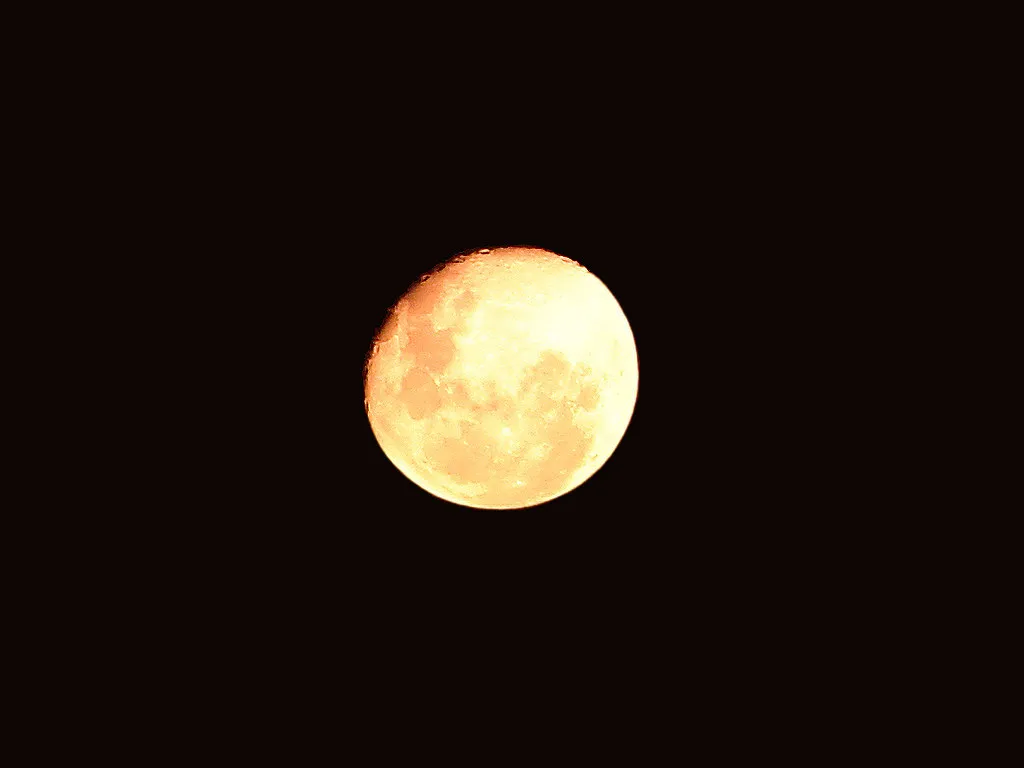
A bright moon in the evening can delay the body’s internal clock, reduce melatonin – the hormone that signals bedtime – and keep the brain more alert. This is the most intuitive explanation for why sleep suffers, and it’s backed by basic chronobiology.
The full moon is up to thirty percent brighter than a quarter moon, and even tiny amounts of moonlight can suppress melatonin production and shift the circadian rhythm. Gravitational forces strong enough to move oceans are far too weak to affect human physiology, and studies of geomagnetic and atmospheric changes during lunar phases have yielded inconsistent results, which makes sleep disruption from nighttime light exposure the most plausible link between the moon and human behavior.
People Without Electric Light Are Affected Most Strongly
Results from the Science Advances study showed that sleep timing is synchronized with the moon cycle across a range of living environments, with participants sleeping less and staying up later on the days before full moon nights, when moonlight is available during the early night, especially in communities with limited or no access to electric light.
This finding carries an important implication for how we interpret the broader research. People living in brightly lit cities are already swimming in artificial light every night, which may dampen whatever additional effect the moon has. The researchers noted it’s possible the full moon makes people more active at night, which is why sleep differences were more pronounced in communities with less access to electricity. In a sense, electric light may be masking a lunar influence that our ancestors felt far more acutely.
The Effect Is Not Equal for Men and Women
A second Swiss study of 47 healthy adults found that participants slept roughly twenty-five minutes less around the full moon, and men seemed more affected than women, sleeping about fifty minutes less overall. The researchers also noticed that participants took thirty minutes longer to reach the REM sleep phase, the dream stage of sleep.
The lunar cycle actually appears to affect men more strongly than women, based on research from Uppsala University, which also confirmed that the lunar cycle affects the duration and quality of sleep with this effect being more pronounced among men. However, other studies have pointed in the opposite direction. One cross-sectional study concluded that full moon was associated with significantly reduced sleep efficiency and proposed that lunar phases may contribute to the complex regulation of sleep, especially in women. The gender question remains genuinely open.
Not All Studies Agree – and That Matters
One large population-based study found no evidence of any relevant lunar effect on sleep parameters, and individuals recorded during a full moon did not report worse subjective sleep quality, with no difference found in objective sleep parameters either. This study involved over two thousand participants and used rigorous home-based polysomnography, so it cannot be easily dismissed.
Scientific research on the lunar effect presents a mixed picture, and the scientific literature on this topic remains contradictory, with some studies affirming a lunar influence while others refute it. This is not necessarily a reason to distrust the field – it’s a reason to keep expectations calibrated. The effect, where it appears, tends to be modest rather than dramatic, and individual sensitivity likely varies considerably.
What You Can Actually Do About It
If you’re someone who genuinely notices worse sleep around the full moon, the practical response doesn’t require anything unusual. Blackout curtains are the most straightforward tool, since they block any moonlight that might be seeping into your room and nudging your melatonin downward. Darkness is the cue that triggers the pineal gland to produce melatonin, while light inhibits its production.
Maintaining a consistent sleep schedule in the days surrounding the full moon may also help buffer against whatever disruption occurs. Our bodies are designed to follow the natural cycle of light and dark, and anything that reinforces that rhythm – regular sleep times, limiting bright screens before bed, keeping the bedroom dark and cool – works in your favor regardless of what the moon is doing. The lunar cycle has been with us for millions of years; the good news is that a few sensible habits are usually enough to take back the night.
The Takeaway
The science on full moon sleep disruption is real enough to take seriously, and uncertain enough to avoid overstating. Multiple peer-reviewed studies across different countries, methodologies, and population groups have found consistent patterns: less deep sleep, later sleep onset, and suppressed melatonin. The effect is real for many people, even if the mechanisms are still being worked out.
What the research ultimately reveals is less about lunar mysticism and more about how sensitive the human sleep system is to light, timing, and biological rhythms we don’t fully understand yet. The moon has been part of our environment for as long as we’ve existed, and it’s entirely plausible that our bodies still carry traces of that ancient relationship. Whether you notice it on any given night probably depends on where you sleep, how you sleep, and perhaps simply on how you’re wired.
AI Disclaimer: This article was created with the assistance of AI tools and reviewed by a human editor.