

It Is More Common Than People Think

Researchers say that the act of talking to yourself, referred to as self-talk or self-directed talk, is a common and normal behavior at any age. It doesn’t emerge out of nowhere in old age. Many people practice it throughout their lives, often without noticing.
Talking to oneself is a common and normal behavior among elderly individuals, aiding in cognitive organization and emotional comfort. As people age, they often engage in self-dialogue, a habit that can serve multiple functions, from cognitive support to emotional relief.
The habit of self-talk may continue into adulthood and is generally not a problem. What changes with age is the frequency, the purpose, and sometimes the visibility of it.
It Helps Regulate Emotions

Research supports the idea that older adults tend to have better emotion regulation than younger adults, particularly with regard to negative emotion. Verbalized self-talk, meaning audible speech when alone, may be an important but understudied emotion regulation strategy in late life, promoting psychological distance through second-person pronouns and structured speech, and providing an opportunity to express negative emotions.
A naturalistic observational study makes an important contribution by capturing self-talk as it occurs in daily life and suggests it may help older adults regulate negative emotions. That is not a small finding. It positions out-loud speech not as a quirk, but as a coping tool.
Some people report using self-talk to help them calm down in periods of negative mental states. Research has found that when people are anxious or stressed, they are more likely to engage in self-talk. That relationship between stress and vocalization appears to intensify somewhat as people get older.
Loneliness Plays a Quiet Role

According to social isolation theory, people who spend more time by themselves are more likely to engage in self-talk. Older adults, statistically, spend more time alone than younger people do. This alone increases the likelihood of spoken self-dialogue.
Older people talk to themselves to seek detachment from problems and analyze their feelings, which is not only harmless, but can also help improve their emotional well-being. When there is no one around to process things with, the self becomes the audience.
At the between-person level, participants who felt lonelier tended to report more cognitive problems, and feeling lonely was also associated with more irritation and interference associated with memory lapses. This creates a cycle where lonelier individuals may lean more heavily on internal and verbal processing to compensate.
It Surfaces Around Interpersonal Tensions

Older adults generally report positive relationship experiences, yet they still encounter interpersonal tensions that can undermine well-being. When faced with such tensions, they often draw on effective strategies that avoid confrontation. Audible self-talk may represent an adaptive strategy that warrants research attention.
Research showed that participants with higher overall interpersonal tensions in their social networks engaged in more frequent audible self-talk over the study period. On days when participants encountered more interpersonal tensions, they exhibited more self-talk.
Encountering more interpersonal tensions was associated with lower positive mood on days with less frequent self-talk, yet this association was attenuated on days with more frequent self-talk. Audible self-talk co-occurs with interpersonal tensions and may be linked to the preservation of positive mood when these tensions arise in late life. In other words, speaking out loud may be doing some of the emotional work that a conversation with another person normally would.
It Helps With Memory and Daily Tasks

Self-talk may help people find mislaid items and understand instructions, among other benefits. For older adults managing more complex medication schedules, appointments, or household logistics, the act of narrating a task out loud is a genuinely practical strategy.
Elderly individuals might verbalize lists or steps in a task to better keep track of their actions. This is less about confusion and more about working with the brain’s natural tendencies rather than against them. Speaking a step out loud anchors it in a way that silent thought sometimes doesn’t.
It is natural for a person to have an internal monologue while engaging with tasks and processing thoughts and emotions. When that internal monologue becomes audible, it doesn’t necessarily signal a problem. Quite often, it signals effort and intention.
The Brain’s Self-Referential Processing Shifts With Age
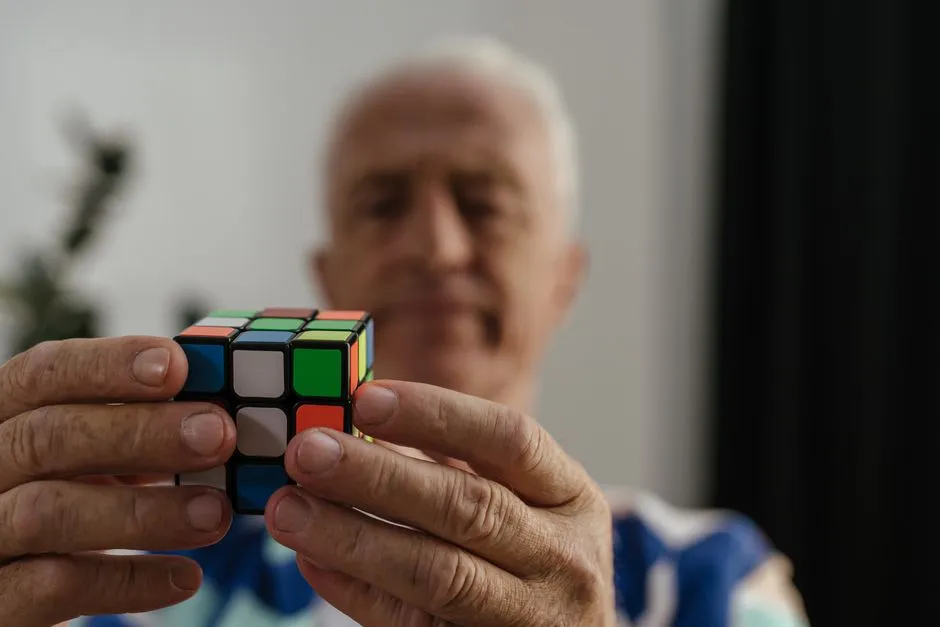
Research on brain aging has largely focused on neurological disorders such as Alzheimer’s disease, mild cognitive impairment, and other forms of cognitive decline. However, relatively few studies have examined how age affects self-knowledge in healthy older adults.
For older adults, the process of self-evaluation as well as self-related information evoked a certain level of emotional arousal. This heightened responsiveness to self-related thoughts may partly explain why internal processes are more likely to become external and spoken with age.
Self-relevant stimuli, such as one’s name or face, are prioritized by the brain, leading to faster responses and enhanced attentional processes. However, most research on the self has focused on groups of young adults, while older groups were rarely recruited for such experiments. That gap is slowly being filled, and what researchers are finding is nuanced.
Socioemotional Selectivity Theory Offers an Explanation

Research supporting socioemotional selectivity theory finds that older adults tend to have better emotion regulation than younger adults, particularly with regard to negative emotion. This theory, developed by psychologist Laura Carstensen, proposes that as people age and time feels more finite, they prioritize emotional meaning over information-gathering.
Verbalized self-talk may promote psychological distance through second-person pronouns and structured speech, and provide an opportunity to express negative emotions. Saying “you can handle this” to yourself, out loud, is a form of that distance-creating mechanism in action.
The key insight is that self-talk in older adults isn’t random chatter. It appears to be emotionally purposeful, shaped by the same psychological priorities that make late life, for many people, emotionally richer than middle age despite its losses.
When Self-Talk May Indicate Something More Serious

Persistent, newly developed, or altered patterns of talking to oneself in the elderly might suggest the onset of dementia-related cognitive impairment. There is a meaningful difference between someone who has always muttered while cooking and someone who suddenly begins speaking to people who are not there.
Consulting health professionals is advisable if self-talk interferes with daily functioning or social interactions, or if it evolves into speaking with non-existent persons or objects. These are the signals that warrant a proper clinical assessment, not just reassurance.
Due to how loneliness affects older people, the psychological problems derived from this issue can lead seniors who feel lonely to completely isolate themselves and even experience psychosis. There are cases where unwanted loneliness can deteriorate the psychological health of older people to the point that they suffer visual and auditory hallucinations causing them to start talking to themselves out loud. That is a more extreme outcome, but it underscores why the social environment surrounding an older adult matters enormously.
Loneliness Itself Is a Cognitive Risk Factor

Research has confirmed that loneliness affects cognitive functioning and self-perception of cognitive efficiency. Self-perceived loneliness may play a role in cognitive decline, and longitudinal studies are needed to further confirm that the rate of perceived loneliness is itself a factor related to the risk of dementia.
Loneliness is a modifiable risk factor for cognitive decline, even at old age. Tackling loneliness is not only beneficial in its own right but can interrupt the downward spiral of loneliness and cognitive decline.
Feeling lonely is associated with an increased risk of all-cause dementia, including Alzheimer’s disease and vascular dementia, and cognitive impairment. When an older adult’s self-talk stems primarily from isolation, the more effective long-term intervention is addressing that isolation directly, not simply monitoring the speech.
It Can Be a Sign of Psychological Resilience

Occasional self-talk, especially when facing challenges, is quite regular. Framing it as resilience rather than decline changes the conversation considerably, both for older adults themselves and for the people around them.
Researchers using the Linguistic Inquiry and Word Count tool have extracted linguistic features from older adults’ self-talk including second-person pronouns, formal and structured language, and emotional tone. The structured nature of that speech suggests it reflects active cognitive processing, not passive confusion.
Research suggests self-talk may help older adults regulate negative emotions. Future research using wearable sensors might capture arousal or allow self-reported experience sampling of unspoken self-talk to tease out when and who uses self-talk to regulate emotions. The science is still catching up to something older adults have quietly been doing for years.
What It All Means in Practice
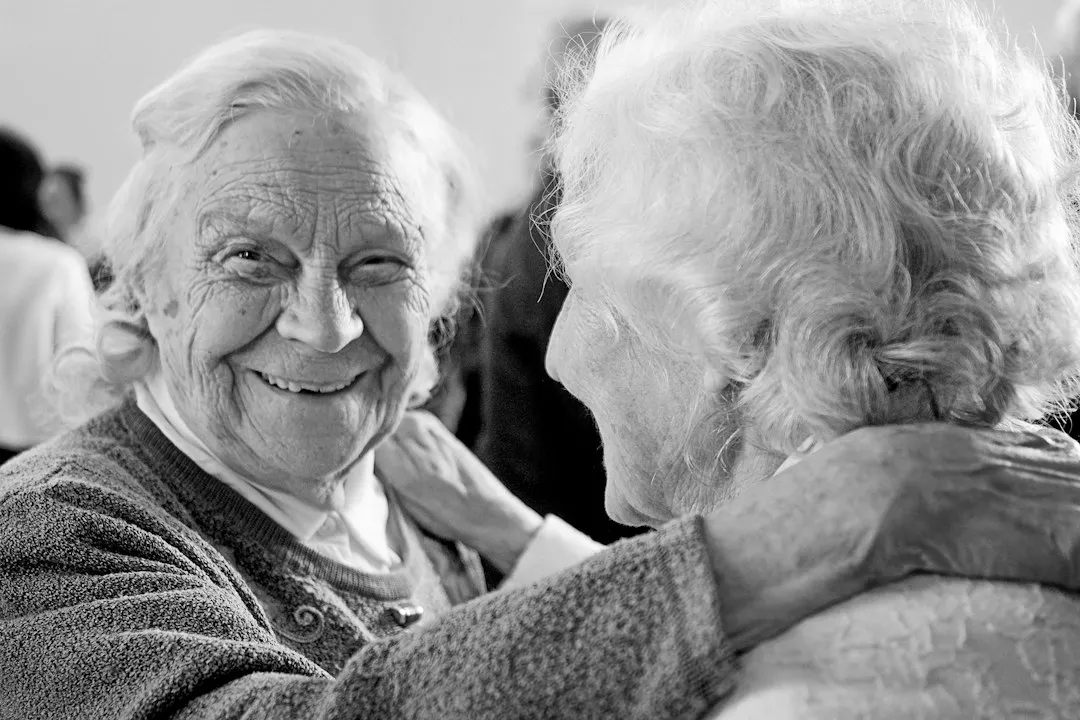
The picture that emerges from recent research is not particularly alarming. Self-talk in older adults tends to be functional, emotionally purposeful, and rooted in the same human need to process experience that exists at any age. What changes with aging is context: more time alone, more accumulated experience to process, and a sharper awareness of what matters emotionally.
Concern is reasonable when patterns change suddenly, when the speech involves non-existent companions, or when daily life is visibly disrupted. In those cases, a physician should be involved. Outside of those flags, an older adult talking to themselves while doing the dishes or working through a decision is doing something recognizably human.
The more useful question might not be “why are they talking to themselves?” but rather “are they getting enough real conversation?” The two things are more connected than they appear.
AI Disclaimer: This article was created with the assistance of AI tools and reviewed by a human editor.