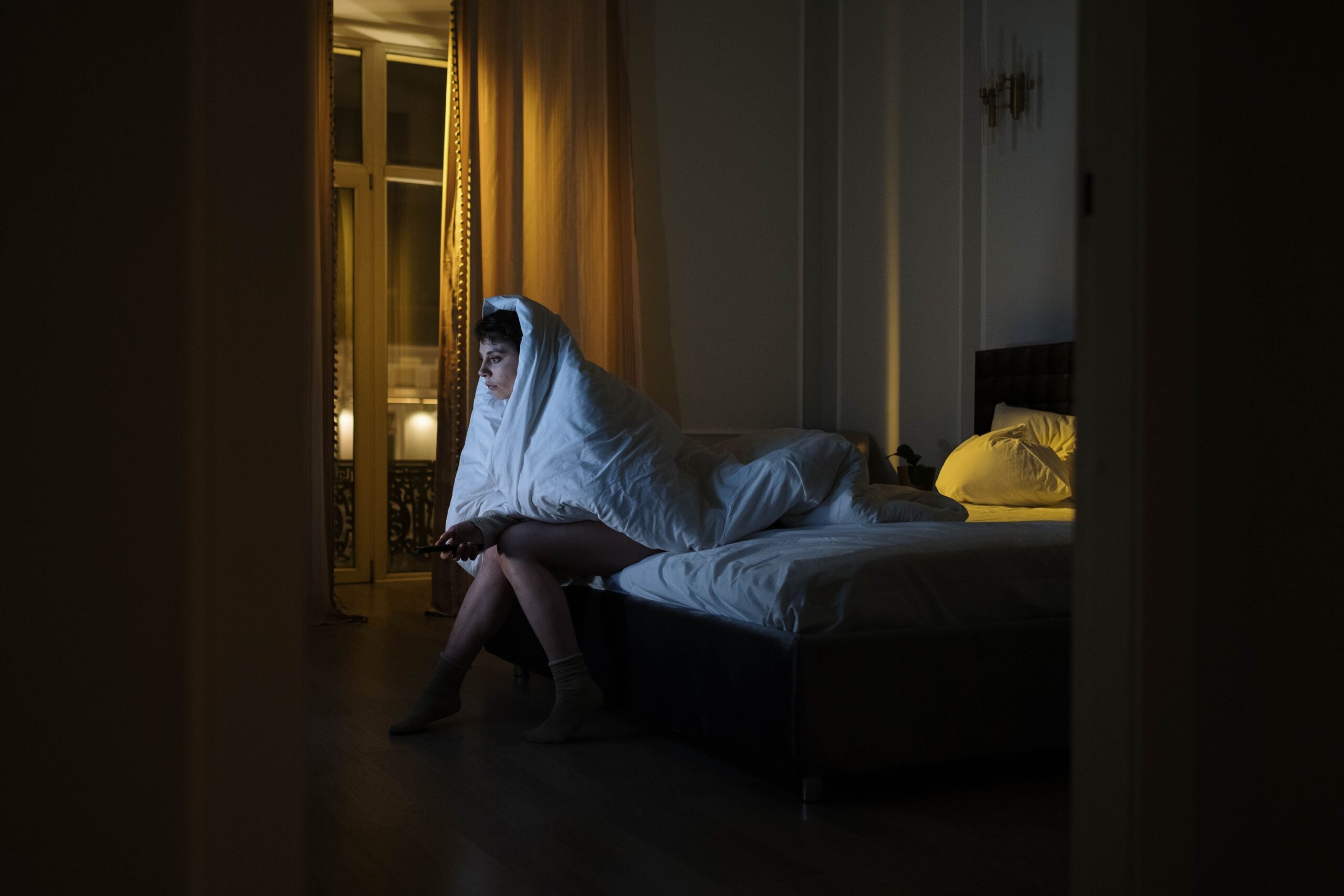

Most people assume the lights-on habit belongs to childhood, something you outgrow alongside a fear of monsters under the bed. The reality for many older adults is more grounded, and more complicated, than that. Sleep changes with age in ways that make a dark, quiet bedroom feel less safe and more isolating than it once did.
The reasons range from physical safety concerns to shifts in perception, anxiety, and even cognitive decline. Understanding what actually drives this behavior makes it easier to find solutions that don’t simply trade one problem for another.
Fear of the Dark Doesn’t Always Stay in Childhood
Research from Benson for Beds found that nearly half of British adults are still afraid of the dark, and this fear measurably affects their sleep quality. That number is a reminder that nyctophobia, or a milder version of it, doesn’t neatly disappear with age. A survey of 1,000 adults found that nearly half, around 47%, are still afraid of the dark, while just under half leave a light on while they sleep to help them cope. For some older adults, the feeling intensifies rather than fades, especially when they begin living alone after decades of sharing a home.
The Very Real Risk of Nighttime Falls
Research shows the bedroom is the single most common location for injurious falls at home, accounting for roughly a quarter of all fall-related injuries among older adults, and for adults over 85, that figure climbs even higher. Most of these falls happen at night, when someone gets up to use the bathroom in the dark. This is not a vague worry. The CDC reports that more than one in four adults aged 65 and older falls each year, and falls cause approximately 3 million emergency department visits annually in the United States.
Roughly half of all men over 50, and nearly 80% over 75, wake at least once per night to urinate, and a systematic review in the Journal of Urology found that nocturia is associated with a significantly higher risk of both falls and fractures in older adults. Keeping a light on is, for many, a sensible response to a documented danger.
Nocturia and the Nightly Walk to the Bathroom
Conditions that cause rushed movement to the bathroom, such as incontinence, may increase the chance of falling, according to the National Institute on Aging. When you add poor vision to the equation, the hallway at 3 a.m. can genuinely become a hazard. Older adults encounter fall accidents while going to the bathroom at night due to low illuminance levels, and they also fear falling due to previous fall histories or visual impairments.
Some leave a lamp or nightlight on not because of psychological fear, but as a practical measure rooted in experience. A prior fall in the dark can make total darkness feel like an unreasonable risk going forward.
How Aging Eyes Change the Experience of Darkness
Age-related ocular alterations, including yellowing and clouding of the lens, reduced pupil size, and fewer photoreceptors, diminish light input to the circadian clock, providing a weaker drive for circadian entrainment. In plain terms, older eyes simply take in less light. What feels like a normally lit room to a 30-year-old may feel noticeably dimmer to someone in their 70s.
Research indicates reduced light sensitivity in older adults compared to younger adults, with direct implications for sleep and circadian rhythms. This reduced sensitivity can make a dark bedroom feel genuinely uncomfortable, not just inconvenient, which pushes some older adults toward keeping a low light on through the night.
Circadian Rhythm Disruption and Sleep Quality
A systematic review and meta-analysis drawing on 252 studies and nearly a million participants from 36 countries found a pooled prevalence of poor sleep health in older adults of roughly 43.7%. Sleep fragmentation, earlier sleep timing, and more frequent nighttime awakenings are all normal parts of aging. Morning bright light exposure consistently improved sleep initiation, while evening dimmed light exposure caused earlier evening sleepiness for older adults.
When sleep is already fragmented, waking in total darkness can feel disorienting in a way it simply didn’t at a younger age. A dim light source provides a visual anchor that helps some people resettle quickly instead of lying awake.
Anxiety, Depression, and the Longer Nights
Research on outdoor artificial light at night consistently finds associations between higher nighttime light exposure and elevated rates of depression and mood disorders in community populations. The relationship between light and mood runs in both directions. If you have anxiety or a fear of the dark, sleeping with the lights on may help you stay calm enough to drift off.
Older adults who live alone, have lost a partner, or face health worries may find that anxiety is highest in the quiet of the night. The light becomes a kind of psychological reassurance, a way of staying connected to wakefulness and safety even while trying to rest.
Dementia, Sundowning, and Nighttime Confusion

Approximately one in four adults over age 65 falls each year, and for those living with dementia, that risk roughly doubles. About a quarter of people with dementia experience significant sleep disturbances, including frequent nighttime awakenings and disorientation, and each additional nighttime awakening increases the odds of a fall by approximately 65%.
Nighttime sundowning episodes account for roughly 28% of severe falls during bed exits. For caregivers and family members, leaving a light on through the night is often less a habit and more a clinical decision. A familiar, softly lit space can reduce the disorientation that accompanies sundowning and make nighttime safer for someone who wakes confused.
The Sleep Quality Trade-Off

Sleeping with the lights on isn’t cost-free from a health standpoint. Sleep research from 2023 on older adults found that habitual exposure to light at night is linked to obesity, high blood pressure, and diabetes. Research published in the Proceedings of the National Academy of Sciences found that sleeping with a standard overhead light on for just one night produced measurable increases in insulin resistance the following morning, at levels comparable to prediabetic thresholds.
Sleeping with the light on can reduce or even stop melatonin production, and blue light exposure in particular can suppress melatonin significantly. This means the comfort gained from a bright light at night may come with real metabolic and hormonal costs, something worth discussing with a physician rather than dismissing.
Lighting Interventions That Actually Help
The good news is that the choice doesn’t have to be between full darkness and a glaring overhead bulb. A pragmatic study found that installing a guiding nightlight for older adults significantly reduced their fear of falling at night, dropping from a mean score of 5.5 to 3.8 on a 10-point scale, while also improving self-rated sleep quality.
Research published in Building and Environment in November 2024 found that higher daytime light exposure correlates with reduced sleep disturbance, and that light color at night is correlated with cognitive performance in older adults. Motion-activated, warm-toned, low-level nightlights along the path to the bathroom appear to offer the safety benefits without the metabolic downsides of brighter, bluer lights left on all night.
Social and Environmental Factors That Reinforce the Habit
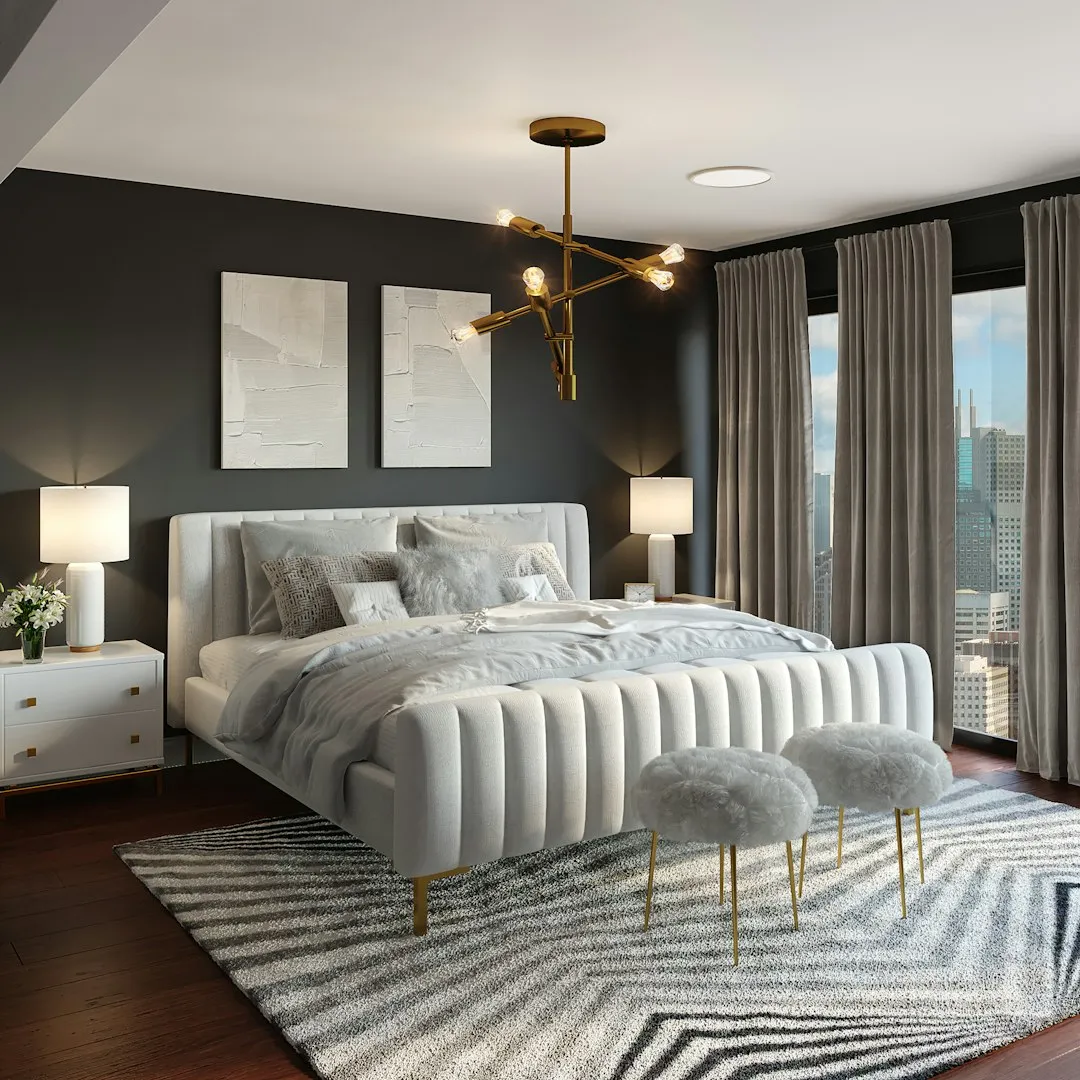
Approximately 12% of older adults report sleeping in a bedroom that is moderately or very bright at night, and while that proportion may seem small, making a room darker is a simple and affordable fix. Yet many don’t. The normal deterioration of vision and the higher risk of falling in the elderly might threaten feelings of safety, hence the desire to keep the room at least dimly lighted at night.
Habit, housing arrangement, and limited mobility all play a role too. Someone who has always slept with a television on, or whose bedroom faces a brightly lit street, may have normalized ambient light across decades. Large-scale research in Japanese elderly populations found consistent links between bedroom light exposure and both metabolic dysfunction and insomnia symptoms in this age group. The environment shapes behavior as much as conscious choice does.
What This Means for Older Adults and Their Families
When an older adult starts sleeping with the lights on, it’s worth asking why before simply accepting or discouraging the behavior. The answer might reveal an unaddressed fear of falling, early cognitive changes, untreated anxiety, or simply a practical response to declining vision. Each of these has its own appropriate path forward.
Research highlights the importance of optimizing lighting conditions in residential environments to promote cognitive performance and sleep quality among older adults. A conversation with a sleep specialist, a geriatrician, or even a home safety assessor can open up options that neither the person nor their family may have considered. The light itself is usually a symptom. The underlying cause is what deserves attention.
Final Thoughts
Sleeping with the lights on isn’t a quirk or a sign of weakness in older adults. It reflects something real: the intersection of aging eyes, changing sleep patterns, genuine fall risk, and sometimes a quiet anxiety that finds no other outlet at night. The habit tends to emerge gradually, without announcement, as the dark starts to feel less neutral than it once did.
The most useful response is curiosity rather than correction. A low-level, warm-toned nightlight along a clear path to the bathroom addresses the most common underlying concern without flooding the room with the kind of light that disrupts melatonin and metabolic health. Small adjustments, made thoughtfully, can close the gap between comfort and safety in a way that works for the whole night, not just the moment of waking.
AI Disclaimer: This article was created with the assistance of AI tools and reviewed by a human editor.