
The Scale of HOA Power in American Neighborhoods

An estimated 78.1 million Americans live in community associations, which now make up roughly 35% of all U.S. housing. That’s not a niche group. It’s a significant slice of the population living under private governance structures that can regulate everything from paint colors to basketball equipment.
HOAs have grown from just 10,000 communities in 1970 to nearly 370,000 in 2024, with projections estimating the number will climb as high as 374,000 by 2025. That growth means a steadily increasing number of households are bound by community rules that most residents never read in full before moving in.
According to a September 2024 survey by home repair and maintenance services company Frontdoor, roughly seven in ten people said they would prefer to purchase a home in a community without an HOA. Yet the same Census data shows HOAs are more common than ever in new construction.
Where the Bans Actually Come From
The reason some HOAs don’t allow basketball hoops comes down to the nuisance factor. Homeowners with kids want to install them, but not all neighbors want to hear the sound of a basketball pounding on the backboard all day long.
While no federal law currently exists for basketball hoops in HOAs, there may be laws at the state or local level. This creates a situation where the rules vary wildly depending on which community association drafted your covenant and when they drafted it.
HOA deed restrictions often specify prohibited installations like permanent basketball hoops, and if the documents state such items are not permitted, the HOA must comply. The problem is that these documents are sometimes decades old, written for circumstances that no longer exist, and rarely revisited in any serious way.
The Noise Argument: Real Concern or Convenient Excuse?
Noise is consistently the core complaint. Homeowners with kids want to install hoops, but not all neighbors want to hear a basketball pounding on a driveway or backboard throughout the day. From a neighbor’s perspective, especially one working from home or caring for a young child during nap time, the complaint isn’t entirely unreasonable.
Some HOA rules try to thread this needle by only allowing the use of portable basketball hoops during certain hours of the day to avoid noise issues. That kind of compromise is sensible on paper, though it tends to generate its own disputes about what counts as “too early” or “too late.”
Communities may establish rules to limit sound levels from backyard activities, with some restricting play to specific hours like 8 AM to 7 PM, and if neighbors complain about excessive bouncing or yelling, the HOA could require noise-dampening measures or even limit overall use.
Aesthetics Over Activity: The Curb Appeal Problem

In at least one documented case, an HOA banned portable hoops claiming they made houses look different from each other, even though there was previously no explicit rule against basketball hoops. This is the aesthetic argument in its bluntest form, and it comes up frequently in HOA disputes.
Some community guidelines acknowledge the tension directly, noting that rules must strike a balance between residents who would rather not see “unsightly” portable equipment and those who would like to use their driveways for recreation, while still recognizing residents should have the right to use portable playground equipment.
Common aesthetic rules include requiring owners to remove hoops when not in use so they don’t affect curb appeal, and mandating that when not in use, hoops must be stored in a way that makes them invisible from the street. This is where the rules get quietly absurd: the hoop is allowed, but only if nobody can see it.
City Ordinances: When the Government Gets Involved
It’s not only HOAs enforcing these restrictions. Local governments have their own jurisdiction over public streets and rights-of-way, and some cities have taken a firm stance.
In Garfield Heights, Ohio, for example, city code states that no person shall place a portable basketball hoop or similar equipment onto any land other than private driveways or backyards, and whoever violates this section is guilty of a misdemeanor of the first degree and subject to confiscation of the equipment.
In Denver, basketball hoops are not permitted in the street anywhere in the city under Denver’s Municipal Code, because a hoop in the street is considered an encumbrance of the right of way and can pose a safety issue. The city even conducts neighborhood inspections and will confiscate anything encumbering the right of way with no notice.
A Real Example: Xenia, Ohio and the Street Play Debate

In Xenia, Ohio, police reminded the public that local laws prohibit children from playing in the street after ordinances went into effect banning basketball hoops on neighborhood streets, as well as using public roadways for games like catch, baseball, or football.
People in the community pushed back hard, saying laws like these stifle kids’ ability to be kids by taking away vital spaces for them to play and socialize. It became a visible flashpoint for a much bigger debate about who public streets are actually for.
One of the ordinances allowed the city to remove equipment like basketball hoops from the road without any notice to the owner, though the items could be returned at the city’s discretion. That level of enforcement authority surprised many residents who had lived with informal street play for years.
The Selective Enforcement Problem

One of the most persistent frustrations around basketball hoop bans isn’t the rule itself. It’s who the rule actually applies to. Selective enforcement is a well-documented issue in HOA governance and it tends to generate real bitterness.
Selective enforcement refers to when the HOA enforces a certain rule but chooses not to enforce it for the entire community, creating obvious inequity among residents. In practice, this often means one family receives a violation letter while a neighbor three doors down has an identical setup without any consequence.
In the Stones Crossing HOA dispute in Indiana, the relevant section of the community guidelines said nothing specifically about basketball hoops, yet the family was still told they were in violation, while the rest of the neighborhood had basketball hoops all over the place. That inconsistency is remarkably common.
When States Push Back: Legislation to Protect Hoops
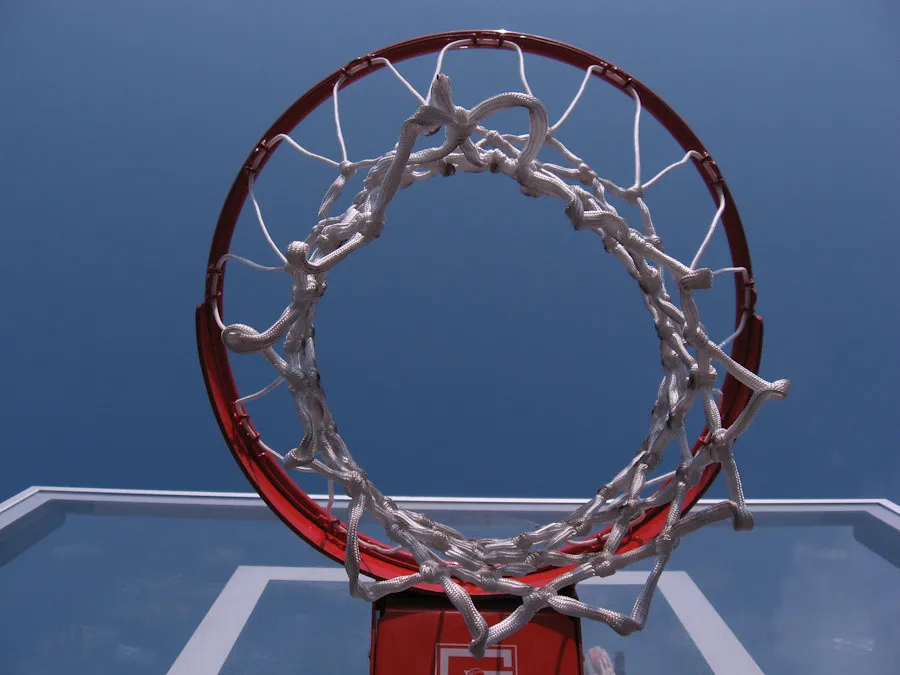
Some state legislators have decided these HOA restrictions go too far, particularly when they effectively restrict children’s outdoor play. Maryland became one of the clearest examples of a state-level response to the issue.
Maryland’s House Bill 1347, approved by the Governor, prohibits unreasonable limitations on the use and placement of a portable basketball apparatus on a homeowner’s property. The bill came directly in response to HOA restrictions that residents and lawmakers found excessive.
Maryland Delegate Kumar Barve introduced the bill after constituents in his district were forced to remove hoops that had stood in their driveways for years with no prior rule against them. It’s one of the more direct examples of a state overriding HOA authority on what many consider a basic quality-of-life issue.
The Liability Angle Nobody Mentions at the HOA Meeting
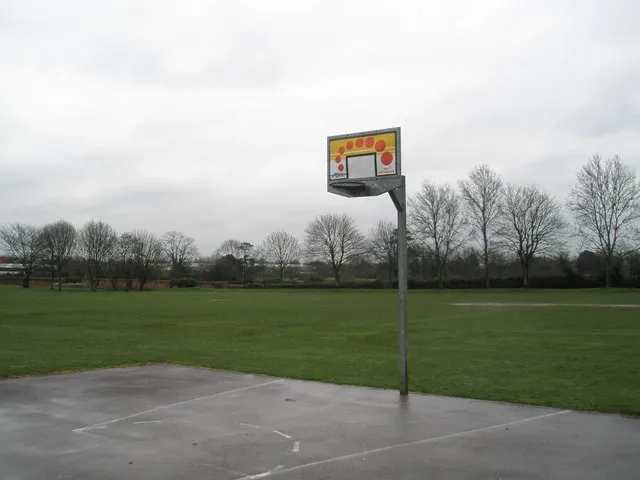
There’s a quieter reason behind many of these restrictions, one that rarely gets stated plainly in community meetings: legal liability. When equipment sits in a street or shared space, the question of who bears responsibility for an accident becomes complicated fast.
Placing a basketball hoop in a public street introduces potential civil liability for homeowners, because liability arises from the risk of accidents and injuries, and if a motorist, cyclist, or pedestrian collides with it, the owner may face legal action for negligence.
Homeowners may also be liable if a hoop falls and damages a vehicle or property, meaning the owner could be held financially responsible. HOAs and municipalities are often aware of these risks, and banning the equipment is sometimes less about aesthetics and more about avoiding being named in a lawsuit.
The Discrimination Question That Makes HOA Lawyers Nervous

Association boards are advised to proceed with caution when passing rules about basketball hoops, because some experts think such rules can be interpreted as discriminatory, similar to pool age restrictions, since banning basketball hoops may be akin to prohibiting kids from playing.
To avoid potential liability, HOA boards should work with an attorney when crafting these rules to ensure they don’t run afoul of the Fair Housing Act or any other applicable laws. The Fair Housing Act is broad enough that exclusionary recreation rules can attract scrutiny, especially if enforcement patterns suggest bias.
Association boards are genuinely advised to proceed with caution, as some legal experts believe these rules carry real discrimination risk, and the parallel to age-based pool restrictions is not a stretch. The line between maintaining a neighborhood’s appearance and restricting who can comfortably live there is thinner than most HOA documents suggest.
The Takeaway

The basketball hoop dispute is a surprisingly accurate window into how neighborhood governance actually works. Rules accumulate. Some are practical. Some are aesthetic. Some were written to address a specific incident twenty years ago and nobody updated them since. Most residents sign off on these documents without reading them, then discover the details only when a letter arrives.
The broader picture shows that this isn’t a fringe issue. With roughly 78 million Americans living under community association rules and new HOAs forming at a steady rate, the number of households navigating these restrictions continues to grow. The basketball hoop is just the most visible symptom of a governance structure that often moves faster than the people it governs.
What nobody mentions at the neighborhood meeting is this: most of these bans weren’t designed to last forever. They were designed for a specific moment, then forgotten. The hoop is still there. The memory of why it was banned is not.
AI Disclaimer: This article was created with the assistance of AI tools and reviewed by a human editor.