
There’s something quietly astonishing about a daisy. Count its petals carefully and you’ll almost always land on 13, 21, or 34. That’s not coincidence. Hidden inside some of the most ordinary flowers in a meadow is a level of numerical precision that engineers might envy.
The connection between flowers and mathematics is real, documented, and genuinely strange in the best possible way. It spans biology, physics, and evolutionary theory, and it raises a question that researchers are still working to fully answer: does nature do math on purpose?
The Fibonacci Sequence: Nature’s Counting System
In the Fibonacci sequence, each number is the sum of the two preceding ones. The sequence starts: 0, 1, 1, 2, 3, 5, 8, 13, 21, 34, 55, 89, 144, and continues indefinitely. It was understood well before the medieval Italian mathematician who gave it its Western name, with scholars like Gopala, Hemachandra, and Virahanka describing related patterns in Indian mathematics much earlier.
The number of petals in a flower consistently follows the Fibonacci sequence. Famous examples include the lily, which has three petals, buttercups with five, chicory with 21, and daisies with 34. Lilies, irises, and trillium have three petals; columbines, buttercups, larkspur, and wild rose have five; delphiniums, bloodroot, and cosmos have eight; corn marigolds have 13; asters have 21; and daisies have 34, 55, or 89. All of these are Fibonacci numbers.
What Is the Golden Ratio and Why Does It Keep Appearing?
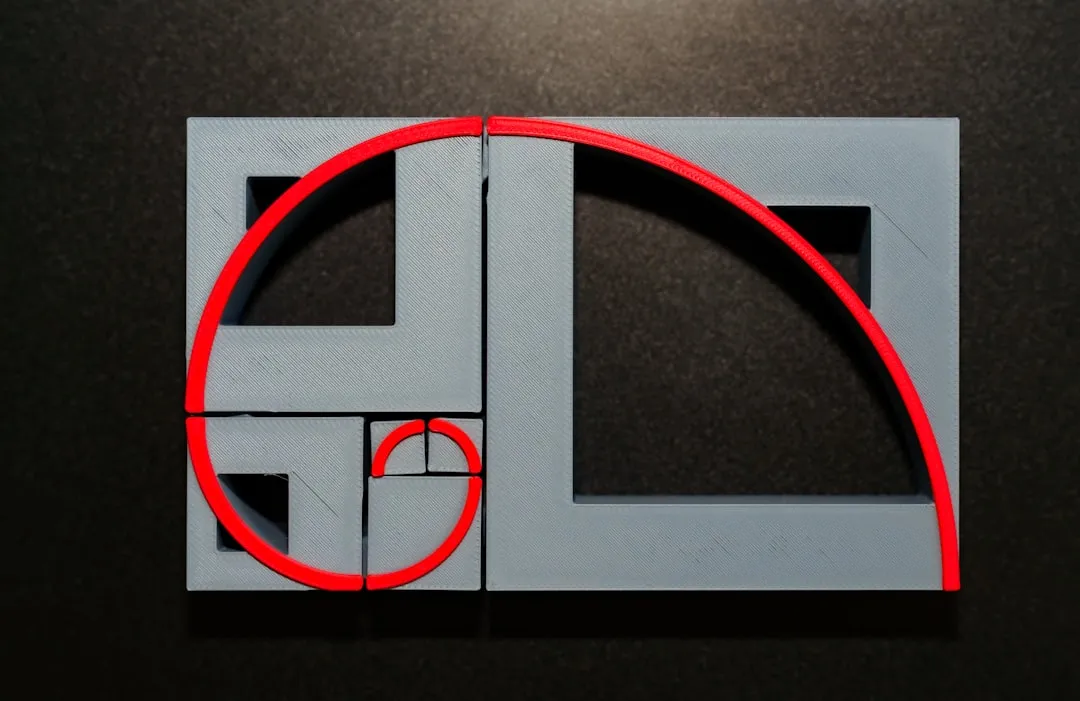
The golden ratio, represented by the Greek letter phi, is a special number approximately equal to 1.618033988749895. It is also known as the divine proportion, the golden mean, or the golden section. It turns up with remarkable consistency across natural structures, art, and architecture.
The development of rose petals follows the Fibonacci spiral and the golden mean. The arrangement of each new set of petals in roses follows a particular mathematical pattern. The new set grows in the spaces between the previous set, creating a spiral arrangement of petals that follows the Fibonacci series. Each new set of petals is the sum of the two preceding sets. The larger the number of Fibonacci sequences in roses, the closer they approach phi, or 1.618.
The Sunflower: A Living Spiral Calculator
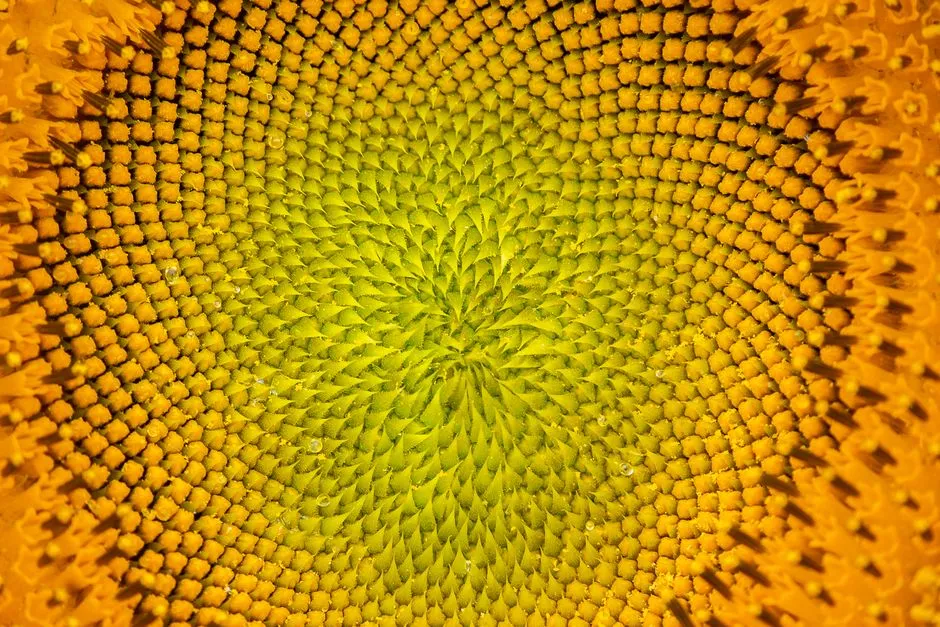
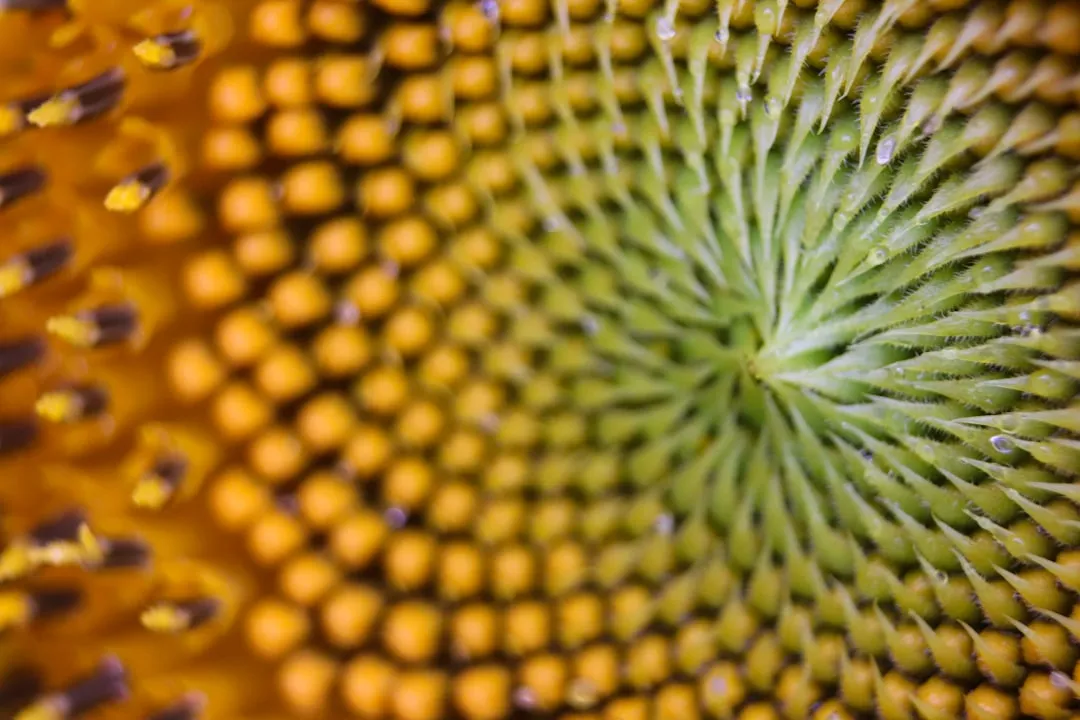
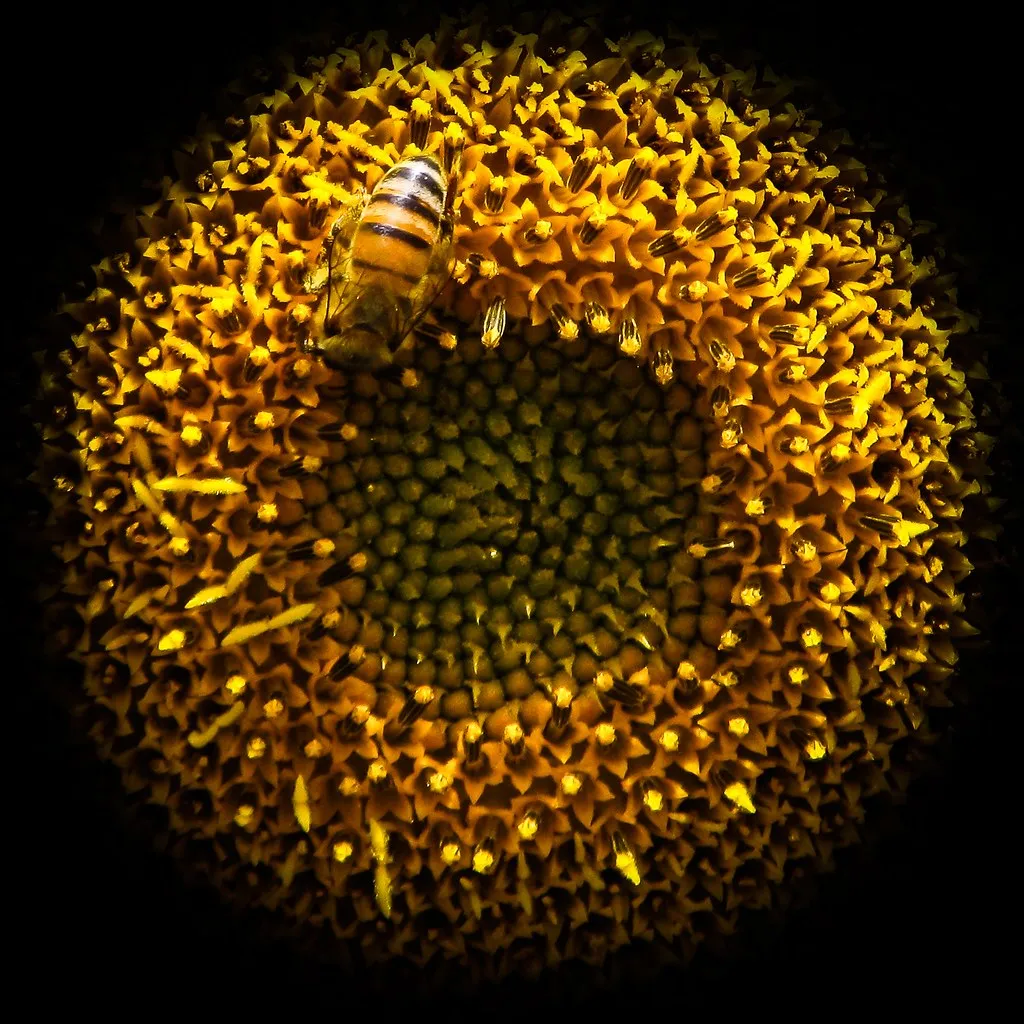
The giant sunflower is one of the most obvious demonstrations of a hidden mathematical rule shaping the patterns of life: the Fibonacci sequence, a set found in everything from pineapples to pine cones. The telltale sign is the number of different seed spirals on the sunflower’s face. Count the clockwise and counterclockwise spirals that reach the outer edge, and you’ll usually find a pair of numbers from the sequence: 34 and 55, or 55 and 89, or, with very large sunflowers, 89 and 144.
Spiral patterns found in sunflowers show 55 spirals spiraling outwards and 34 spirals spiraling inwards in most daisy or sunflower blossoms. It turns out that this results in the most efficient use of space for growing florets. If the florets grew in straight rows from the center, more and more space would become vacant between the rows going outward.
Phyllotaxis: The Science Behind Petal Arrangement

Phyllotaxis is the regular arrangement of leaves or flowers around a plant stem, an example of developmental pattern formation and organogenesis. It is characterized by the divergence angles between the organs, the most common angle being 137.5 degrees, the golden angle.
The quantitative aspects of phyllotaxis have stimulated research at the interface between molecular biology, physics, and mathematics. This work documents a novel patterning mechanism based on active transport of the plant hormone auxin. In other words, the math is built into the chemistry of how a plant grows, not imposed from the outside.
The Golden Angle: 137.5 Degrees of Precision
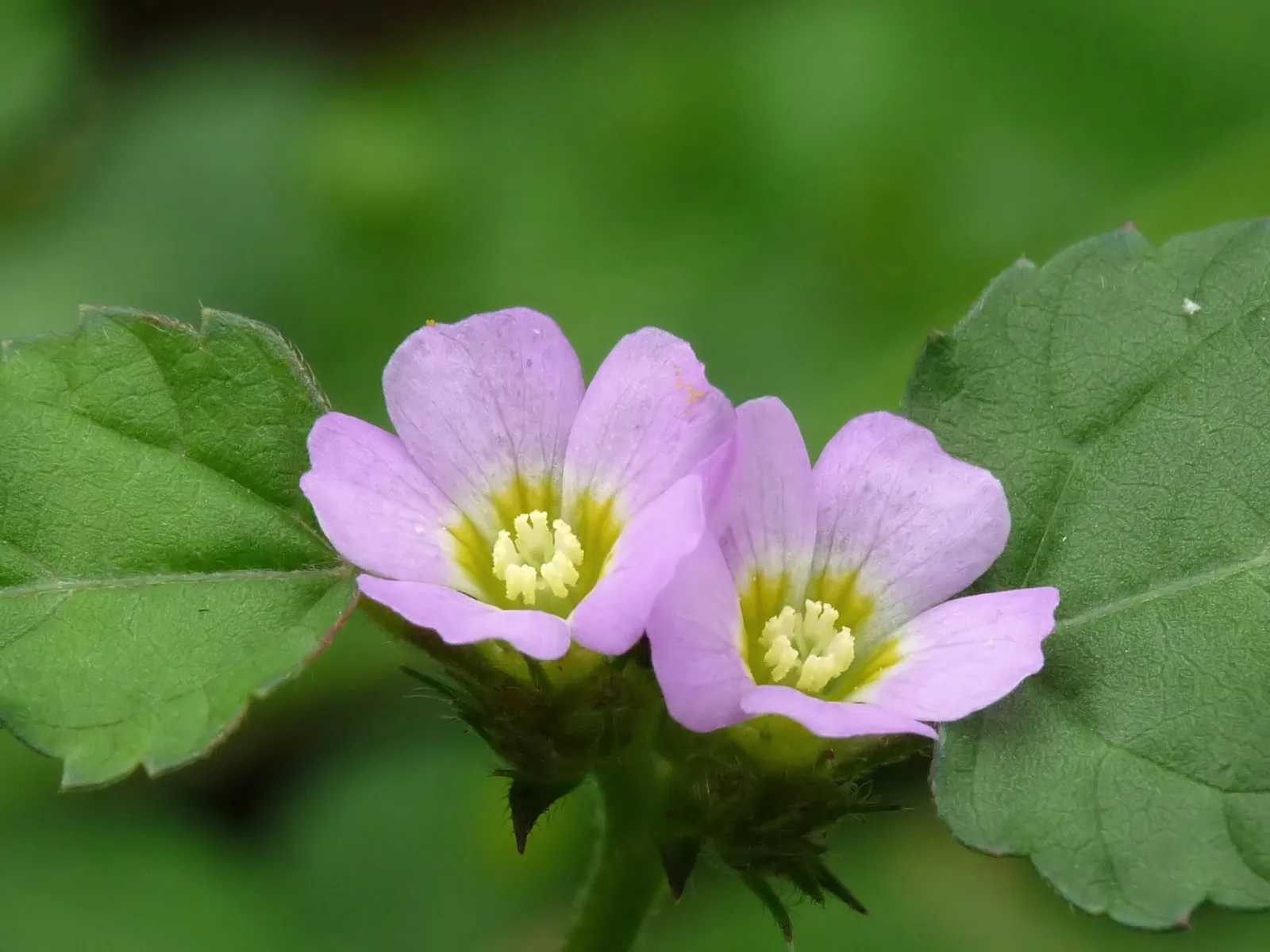
In nature, the growth patterns of plants exhibit a remarkable alignment with mathematical principles, particularly through the adoption of the golden angle, approximately 137.5 degrees. This strategic angle ensures efficient space utilization and optimal exposure, preventing overlap among growing parts.
This angle is the optimal solution to minimize the energy cost of phyllotaxis transition. This model accounts for not only the high precision of the golden angle but also the occurrences of other angles observed in nature. If you divide a circle into a 137.5-degree piece and a 222.5-degree piece, the ratio between the longer arc and the shorter arc is about the same as the golden ratio. The exact angle, measuring about 137.507764 degrees, is called the golden angle.
Why Evolution Settled on These Numbers
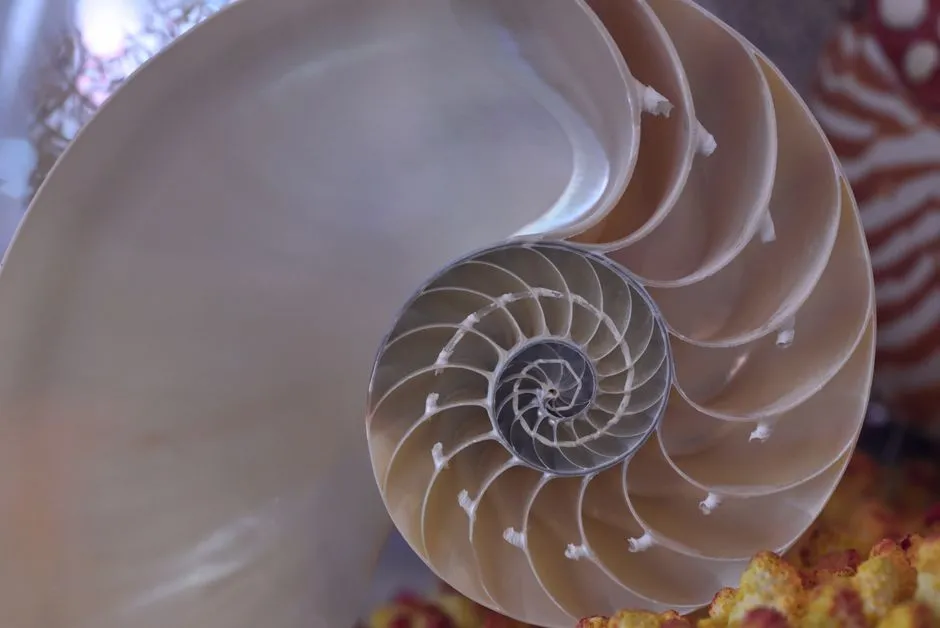
The golden angle is related to the evolutionary pressure of optimal light capture for maximal photosynthetic activity. A model has been established that relates minimal shadowing for the lower leaves to the divergence angle. Plants that arranged their petals and leaves this way simply thrived more than those that did not.
To reduce the cost, the innate divergence angle should be converged toward the golden angle through evolution. This phyllotaxis obeys rules which in the vast majority of higher plants divide the divergence angle of subsequent leaves into regular fractions of the whole circular angle of 360 degrees. The math, in this sense, is the biological survival strategy made visible.
When the Pattern Breaks: Nature’s Honest Fine Print
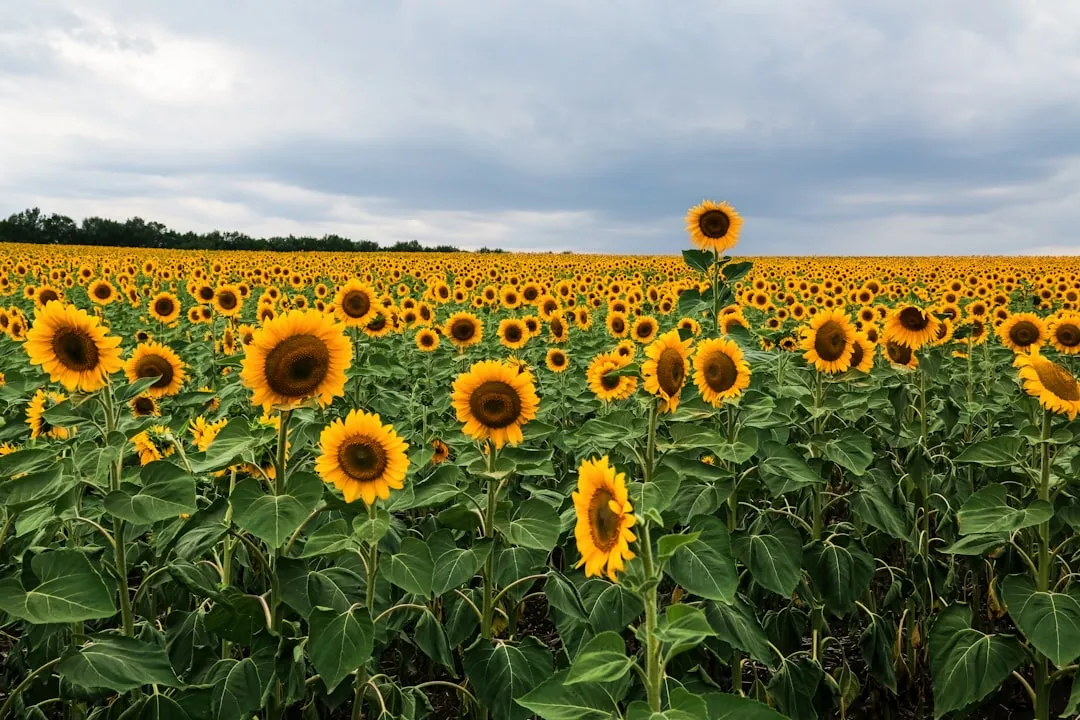
A study published in Royal Society Open Science reports that nearly one in five sunflowers had either non-Fibonacci spiraling patterns or patterns more complicated than previously reported, including near-Fibonacci sequences. This is an important reminder that the pattern, while overwhelmingly dominant, is not a universal law without exception.
In the realm of botany, data show an overwhelming predominance of Fibonacci categories, but researchers urge caution in interpreting this. The fact that a number is a “multiple” of Fibonacci or Lucas numbers can be mathematically trivial. Many composite numbers factor 2, 3, or 5, the small Fibonacci primes, and thus fall into the Fibonacci category by default, even if there is no biological connection to Fibonacci spirals.
Roses and the Spiral That Keeps Folding Inward
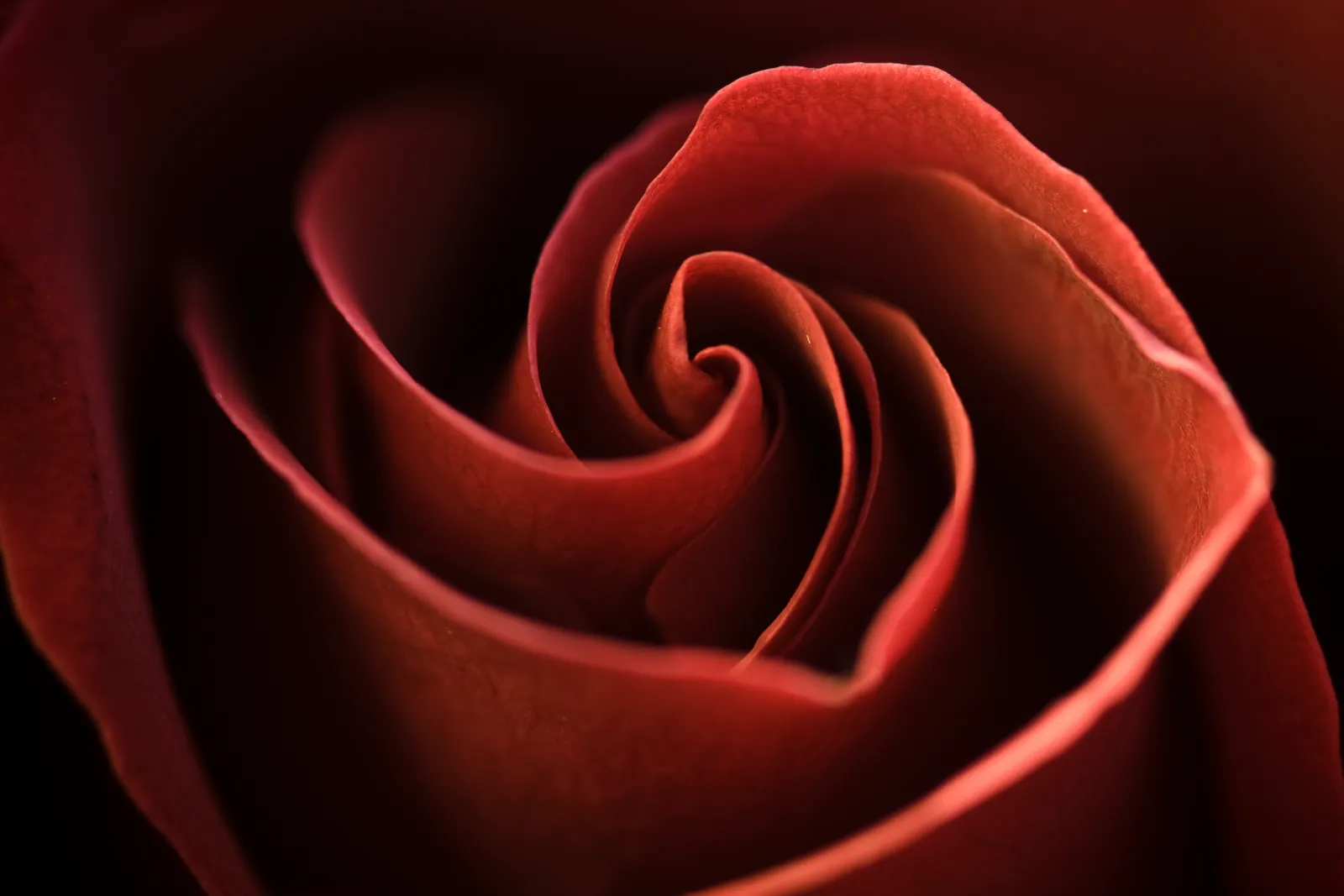
The development of rose petals follows the Fibonacci spiral and the golden mean. The arrangement of each new set of petals follows a particular mathematical pattern. What makes the rose visually striking is partly how this spiral compounds. Each layer wraps around the previous one at precisely the right interval, creating depth and symmetry simultaneously.
The underlying mathematical order in natural growth processes optimizes packing efficiency and light exposure. This principle, rooted in the Fibonacci sequence and the golden ratio, extends to the aesthetic appreciation of forms in nature, where a higher number of Fibonacci sequences in structures like flowers can correlate with greater perceived beauty. A 2024 study published in the European Journal of Applied Sciences by Baez and colleagues confirmed this correlation through qualitative research with observers evaluating floral specimens.
Auxin: The Plant Hormone Doing the Math
The quantitative aspects of phyllotaxis have stimulated research at the interface between molecular biology, physics, and mathematics. Recent molecular work establishes a novel patterning mechanism based on active transport of the plant hormone auxin. Auxin is a growth hormone that moves through plant tissue and essentially signals where the next petal or leaf should sprout.
Phyllotactic patterns are established at a microscopic scale by a process known as meristematic development. For example, the patterns seen in large sunflower heads are actually established when the sunflower’s blossom is only 2 mm in diameter. The entire mathematical architecture of a mature flower is determined before it’s even visible to the human eye.
Petal Count as a Window Into Plant Evolution
The significance of recent studies lies in providing hypothetical evolutionary changes in helical phyllotaxis. It is generally found that a progressive increase in phyllotactic complexity accompanies an increase in size of the axis. A plausible scenario is that evolution proceeds from simple to complex, as seen in plant development.
The approximation of the ratio of consecutive Fibonacci numbers to the golden ratio is a key determinant of visual appeal, suggesting that structures aligning more closely with this irrational number are inherently more pleasing to human perception. This creates an interesting overlap between evolutionary fitness and what humans find beautiful, though the two likely developed for entirely separate reasons.
The Bigger Picture: Mathematics as a Universal Growth Language
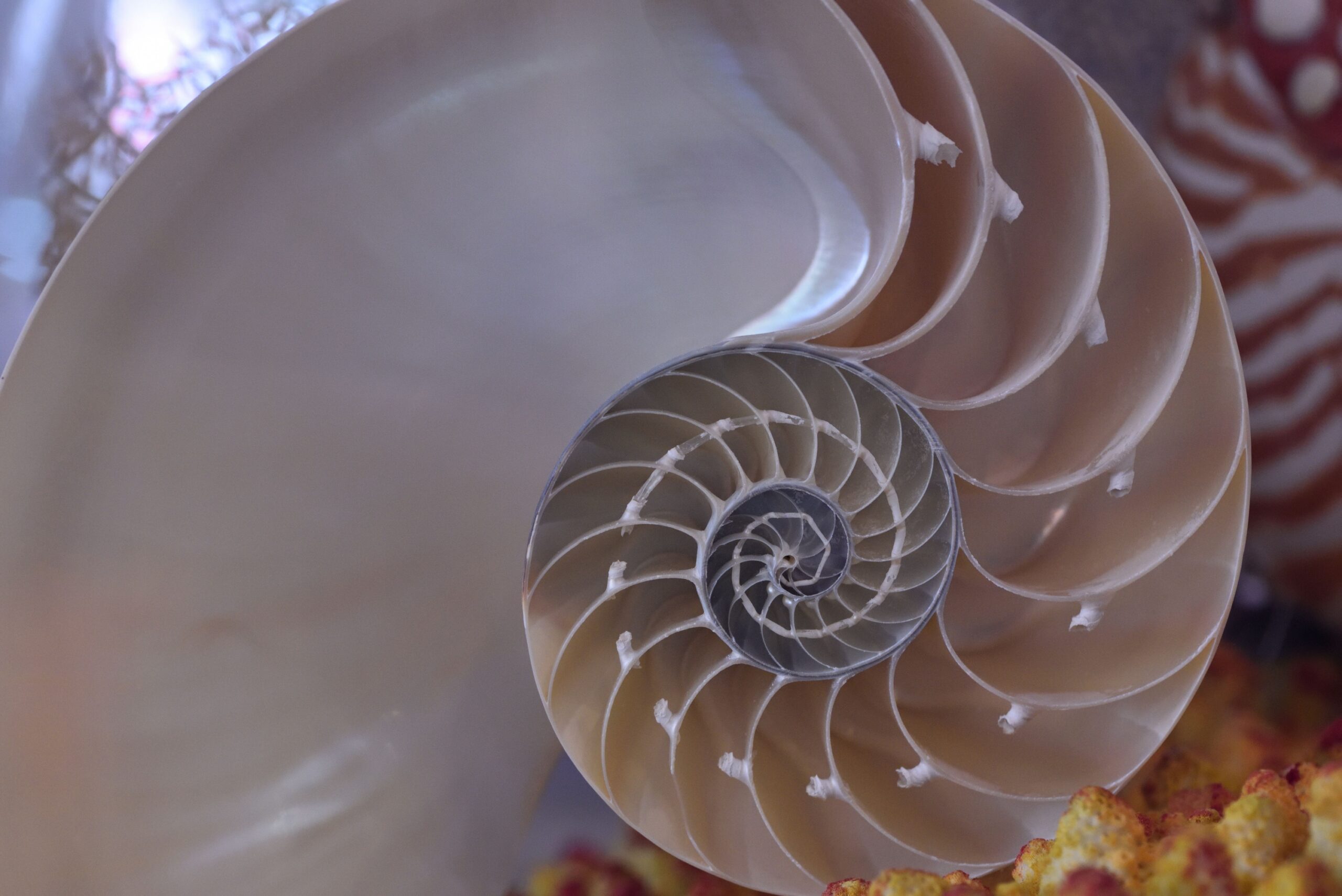
Some mathematical rules can be found in plant growth patterns, one of which is the golden section. The golden section can be observed in branching systems, phyllotaxis, flowers and seeds, and often in the spiral arrangement of plant organs. This sequence is evident in various natural formations, from flower heads to nautilus shells, demonstrating a universal pattern of development. The golden ratio and angle exemplify the intricate link between mathematics and natural growth, highlighting a fundamental computational logic in the natural world.
The existence of Fibonacci numbers in nature and human creations has helped scientists discover the inner order of the universe. The flower doesn’t know it’s doing math. It simply grows according to the rules its genetics and chemistry demand, and those rules, refined over millions of years of evolution, happen to align with some of the most elegant structures in mathematics.
A Quiet Conclusion at the Petal’s Edge
Flowers aren’t trying to be perfect. That’s the strange part. The mathematical precision you see in a sunflower’s face or a rose’s layered petals isn’t decoration. It’s efficiency, expressed in the only language that evolution consistently rewards.
The Fibonacci sequence doesn’t appear in flowers because nature is artistic. It appears because growth under biological and physical constraints, repeated across millions of generations, keeps arriving at the same answer. What we call beauty, the plant simply calls survival. The numbers were always there. We just had to start counting.
AI Disclaimer: This article was created with the assistance of AI tools and reviewed by a human editor.