
On a summer day in 1992, a man emptied a cooler of yellow perch into Lake Mary Ronan in northwest Montana. Two teenagers saw it happen, recorded his license plate, and called in a tip. ([1])That episode is still the only reported case of its kind in the state, yet officials say the practice continues, and the consequences can spread far beyond a single shoreline.
A tip, a reward, and a tougher law
State biologists responded quickly. Montana Fish, Wildlife, and Parks crews captured and killed the perch with nets and poison, but the fish had already survived, multiplied, and established dominance in the lake. Over time they wiped out the native Westslope cutthroat trout and disrupted other parts of the ecosystem.
The two teenagers each received a $500 reward. The man was charged with illegally introducing nonnative fish and paid a small fine. The law has since become much stricter. Intentionally introducing an invasive species into Montana waters is now a felony, carrying up to two years in prison, a fine of as much as $25,000, or both.
Despite that penalty, no one has been charged under the felony provision in Montana, and the 1992 case remains the only one officials have ever publicly documented. Several other states have adopted similar felony rules, but enforcement has been difficult everywhere.
Why the buckets keep appearing
The motive often comes down to preference. Some anglers believe the fish native to Montana, including bull trout, cutthroat trout, and sturgeon, are less enjoyable to catch and less appealing to eat than northern pike and walleye. Both of those species have been illegally introduced to the state’s waters in recent years.
The approach has deep roots. Federal and state wildlife managers began stocking lakes with hatchery-raised fish in the late 1800s, and for decades those decisions reflected what anglers wanted to catch rather than what suited local ecosystems. Montana eventually stopped stocking nonnative fish in most of its streams and rivers in the 1970s, though it still stocks some lakes and reservoirs.
Not every introduction is intentional. Officials say fish typically reach new waters in three ways:
- Deliberate dumping by anglers who want a different fishery
- Overflowing private ponds during storms, which can release fish into nearby rivers or lakes
- Birds that pick up fish and drop them into another body of water
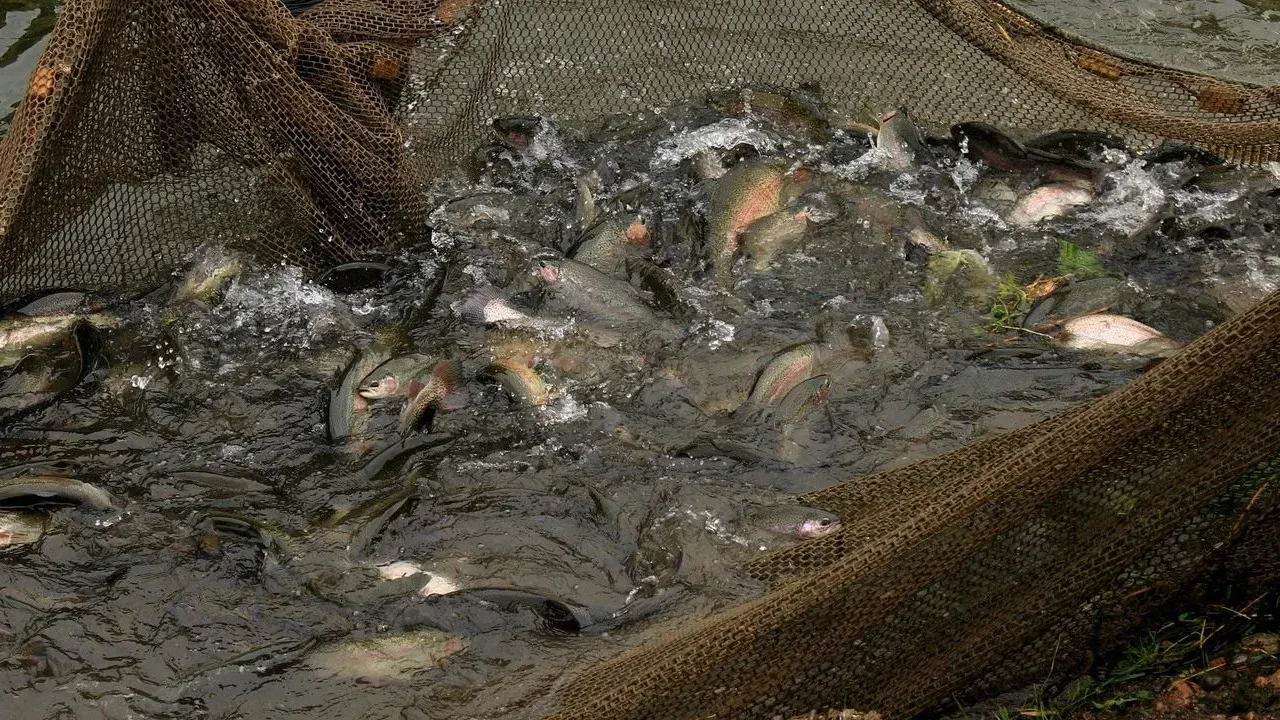
A pond at a hotel near the Thompson River illustrates the risk. Families visiting the hotel scooped fish from the pond with nets, and wildlife officials eventually removed 4,000 goldfish to prevent them from reaching the river and, from there, a nearby lake.
Tracing the culprits from a single fish
Catching someone in the act is rare. Sam Bourret, a fisheries biologist at FWP, has become one of the agency’s main investigators. The Great Falls Tribune dubbed him the “fish detective” after he pioneered a forensic method that analyzes chemical signatures in otoliths, the stone-like ear bones of fish, to estimate where they came from.
Bourret also uses data modeling that considers factors such as elevation and fishing pressure. That work helps identify lakes most at risk of future introductions, allowing agencies to focus their attention where it may matter most. He says many anglers feel frustrated that they cannot stock the fish they want wherever they choose.
“People are mad at us, and they vocally say it,” Bourret said. The frustration is not always the only sign of trouble. Many introductions go unnoticed for years, which is why officials often learn about them only after a surprising catch. “Once a population sets up in a lake, it’s already way too late,” he said.
What a single bucket can set off
Flathead Lake, one of the clearest large lakes in the country, shows how far the effects can extend. Wildlife managers introduced roughly 30 kinds of nonnative fish there, and about a dozen now maintain spawning populations. Today, nonnative fish outnumber the native ones.
Ecologists describe the risk through a chain reaction known as a trophic cascade. Newcomers can compete with native fish for food or eat them directly, which can alter the balance among predators, prey, and the tiny plankton at the base of the food web.
Yellowstone Lake offers a stark example. Cutthroat trout once migrated through the lake and river system, feeding bears, otters, eagles, and pelicans, and carrying nutrients from their waste into the surrounding waterways. After lake trout appeared in the 1990s, likely through an illegal introduction, the cutthroat declined sharply. A National Park Service report estimated that lake trout numbered about 125,000 by 1998 and ate somewhere between 3 and 4 million cutthroat that year. Osprey nest counts also fell from 60 in 2001 to between 3 and 5 during 2008 to 2015.
What matters now: A small illegal release can cost millions of dollars to correct. Montana’s FWP spends millions each year reducing invasive fish populations and boosting native species through hatchery programs, which means funds are diverted from other work.
Searching for a way to stop the buckets
Preventing illegal introductions is extremely difficult. Monitoring thousands of miles of Montana shoreline is not realistic, so FWP and the Confederated Salish and Kootenai Tribes rely heavily on education and signage that warns people not to dump live fish and explains the felony penalty.
Rewards have also been tried. In 2017, FWP and Trout Unlimited offered more than $35,000 for information about the illegal introduction of walleye in Swan Lake, but no one has come forward. The state has also declared open season on invasive brown trout and walleye, requiring anglers who catch them to kill the fish and bring them to an FWP office for study. Biologists are exploring sterile nonnative fish, an approach used in Washington state, that could reduce populations by drawing fertile fish into unproductive spawning efforts.
For the tribes, the stakes extend beyond ecology. Rich Janssen, head of the CSKT’s department of natural resources, described the native fish as part of their heritage. “They’re part of our heritage and our culture, and when they’re gone, they’re gone. It’s like losing our language.” The tribes have restricted fishing for bull trout and cutthroat, except for religious purposes, and they have lifted limits on smallmouth bass and northern pike in tribal waters because those species were illegally introduced and prey on native fish.
Niall Clancy, director of the Fisheries Lab at Salish Kootenai College, offered a measured warning about the limits of prediction. “We don’t want to just be moving things around willy-nilly,” he said. “Because one thing we learned is that we are bad at predicting the impacts.”
Rising water temperatures add another layer of pressure. Flathead Lake is warming as the climate changes, creating more warm pockets for smallmouth bass to spawn in and shrinking the cold-water habitat that bull and cutthroat trout depend on. Whether the lake’s native species can hold their ground will depend on how those pressures interact with human decisions. For now, the question is not only what a single bucket can do, but how many buckets Montana can afford to ignore.
AI Disclaimer: This article was created with the assistance of AI tools and reviewed by a human editor.