
It’s Not a Normal Plant: The Hemiparasite Distinction
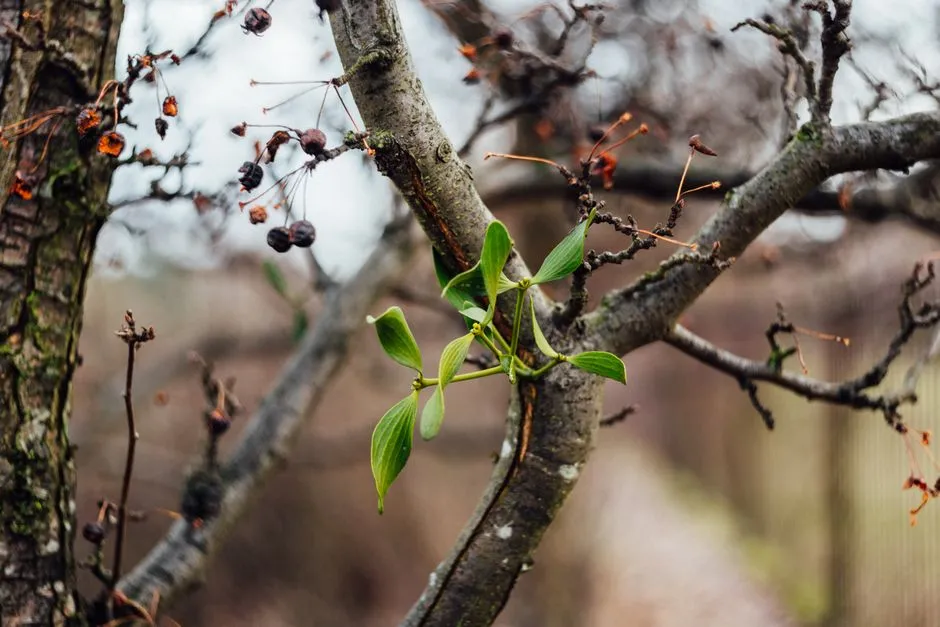
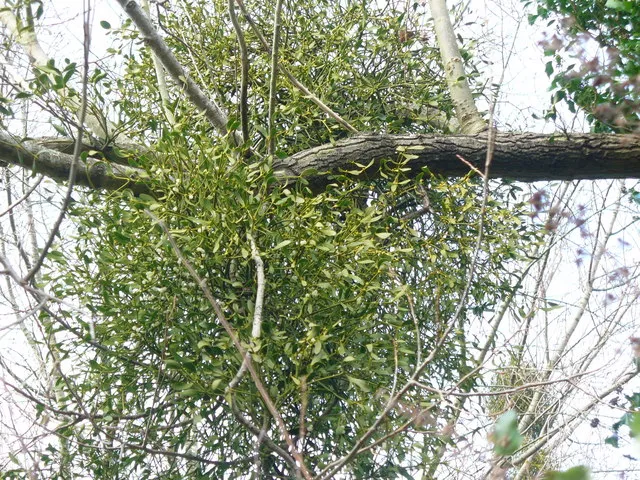
Mistletoe is a semi-parasitic evergreen shrub belonging to the family Viscaceae, with various species that primarily grow on the branches of deciduous trees, forming pendant bushes. That word “semi-parasitic” matters quite a bit here. It means mistletoe isn’t entirely helpless or entirely independent.
It’s a hemiparasite, a plant that attaches to trees and steals water and nutrients while also producing some of its own food through photosynthesis. So unlike a full parasite that takes everything from its host, mistletoe contributes to its own energy budget through its green leaves.
While many plants are parasitic, mistletoes are the only group of woody plants to be obligate aerial parasites and exhibit a range of adaptations associated with their growth form, the most obvious being the complete absence of roots. That’s a genuinely unique position in the plant kingdom.
The Haustoria: A Root That Isn’t a Root
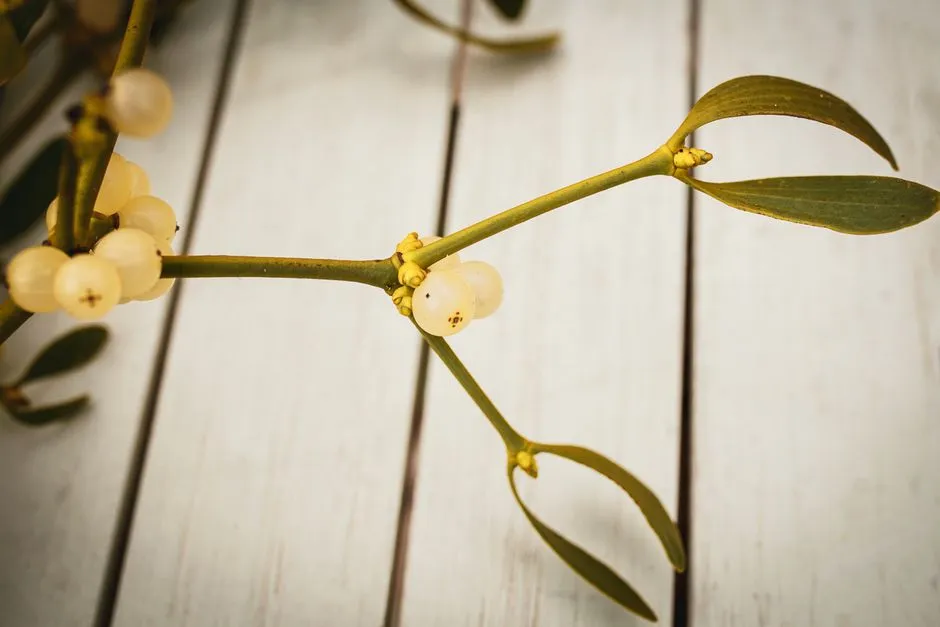
Mistletoes do not have true roots, but are attached to their host by modified roots called haustoria or “sinkers.” Haustoria grow into the branches and extend internally in the tree up to one foot past the site of infection. Haustoria not only anchor the parasite to the branch, but function in the removal of water and nutrients from the tree.
Mistletoes have developed a specialized attachment structure called the haustorium that penetrates the bark of the host and connects to its vascular system, which together with the properties of the adhesive substance viscin represents unique adaptations to anchor themselves securely to host trees from which they draw water and some nutrients.
Mistletoes lack the active uptake of minerals of a typical plant root system and rely upon the haustorium to connect with the host for the essentially one-way flow of photosynthates and nutrients from host to parasite. Think of it less as a root and more as a permanent tap drilled directly into the tree’s plumbing.
How the Seed Finds Its Host Branch
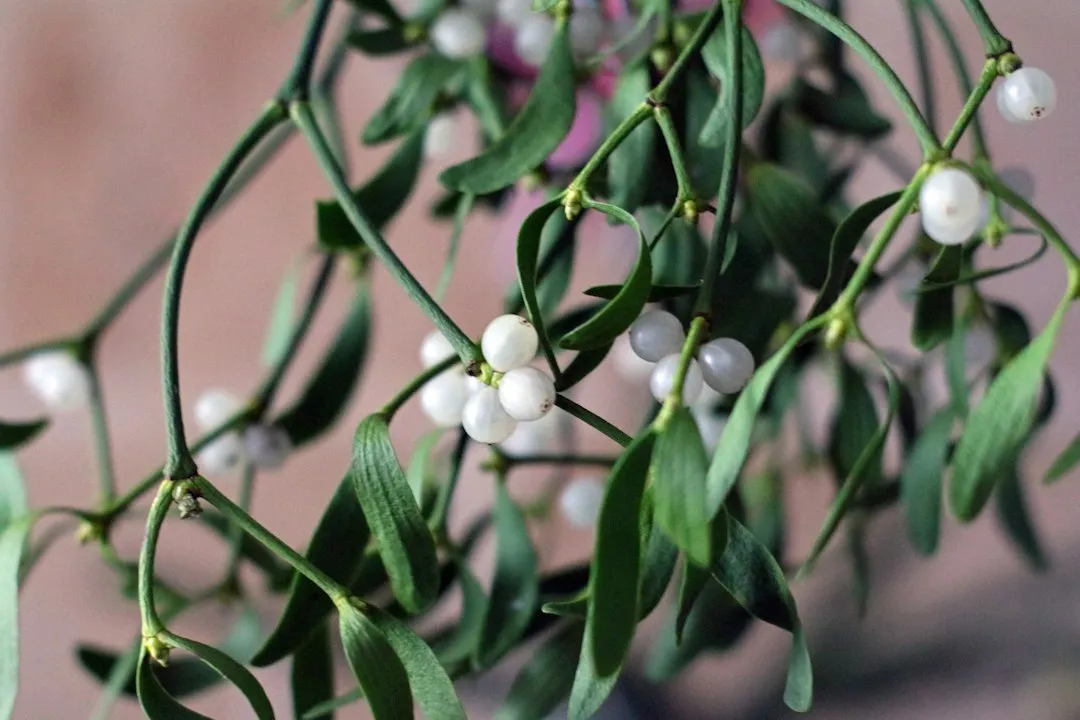
The seed lands on a host plant, often delivered by a bird, and penetrates the bark with a structure that, for a standard plant, would develop into a root. From the moment of germination, the plant’s developmental priority is attachment, not downward growth.
Upon germination, seeds form a hypocotyl that elongates and bends towards the host plant until it forms a holdfast that attaches firmly to the host branch to form the haustorium. This bending toward the host is not random. It’s a directed, targeted process.
Mistletoe seedlings form a strong attachment to the host already at the seedling stage by combining an interlocking mechanism with the hypocotyl, forming a bridge-like structure that strengthens the parasite–host connection. Research published in 2025 confirmed that this mechanical bond forms quickly and strengthens considerably within the first few months.
Viscin: The Sticky Secret to Aerial Life

Each berry contains two to three seeds, which are encased in a sticky pulp. When a bird that has eaten mistletoe wipes its bill on a branch, there is a good chance the sticky pulp and seeds are both spread on the branch. This substance, called viscin, is central to the whole operation.
Viscin is a gel-like material that coats the seed and allows it to adhere immediately to bark on contact. It’s essentially nature’s glue, purpose-built for sticking to wood at height. Some researchers go so far as to suggest the berries contain a substance that encourages birds to wipe their bill soon after they have fed on the berries. Since mistletoe seeds often only grow on the same species of tree on which they were produced, the sooner the bird wipes its bill, the better the chances it will deposit mistletoe seeds on a tree of the same species.
Birds: The Unwitting Delivery System
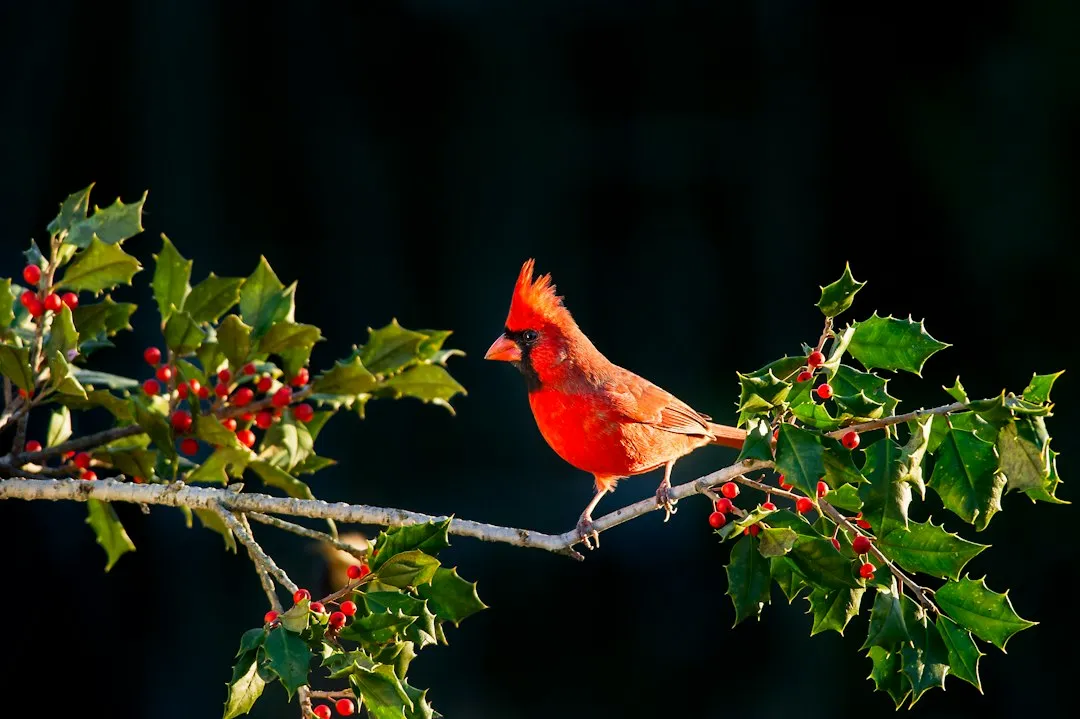
There are some 1,300 species of this evergreen plant worldwide. That extraordinary diversity across so many continents is largely a testament to birds. Without avian partners, mistletoe’s aerial lifestyle would be nearly impossible to sustain across generations.
The berries produced by mistletoe are a valuable food source during winter, when other foods are scarce. Birds eat the berries and later deposit the seeds on tree branches. The timing isn’t incidental. Winter scarcity means birds actively seek out mistletoe fruit, making dispersal highly efficient.
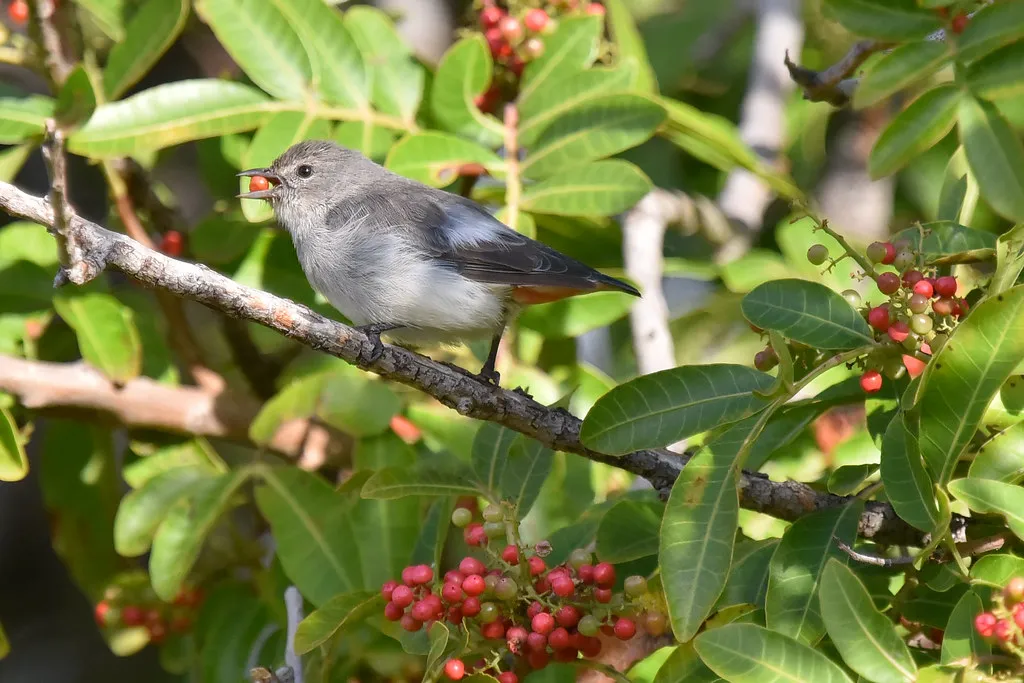
The Mistletoebird is almost entirely dependent on mistletoe berries and is the main disperser of seeds for species like drooping mistletoe. Having such a specialised relationship with mistletoe plants, they have adapted to their diet of mistletoe berries and lack the muscular gizzard of other seed-eating birds, which means they don’t grind their food, as that might damage the mistletoe seed. That level of co-evolution is a sign of a very old partnership.
Why High in the Canopy, Not Low?
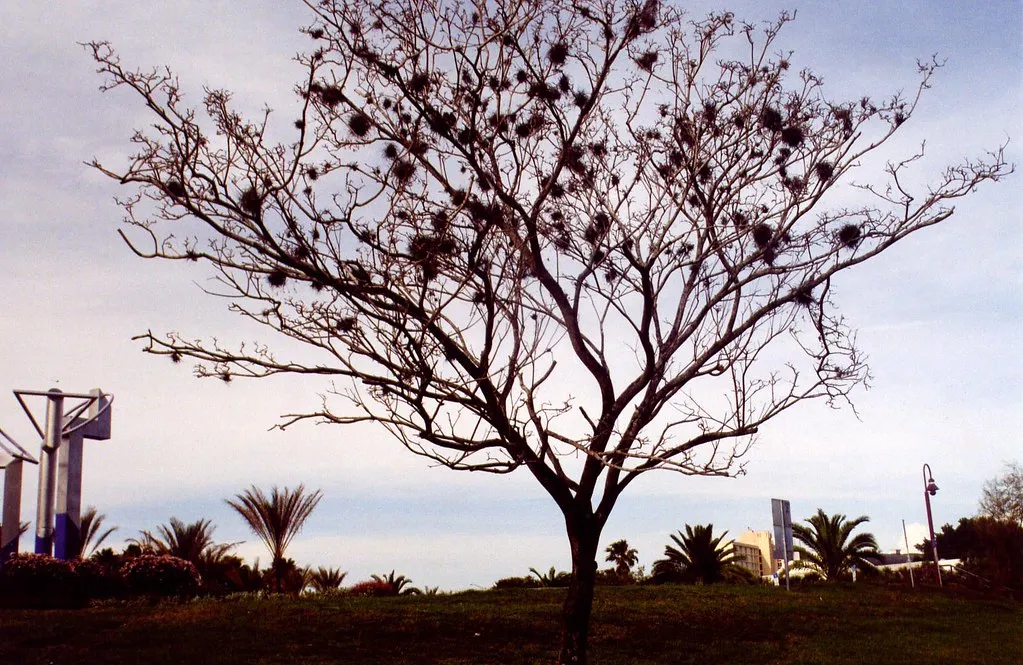
Mistletoe grows high in the canopy of host trees, never touches the ground after germination, and doesn’t compete with your garden plants. The elevation isn’t accidental. Upper canopy branches offer stronger light exposure, which supports the plant’s own photosynthesis alongside its parasitic intake.
In forest openings, or on open-grown trees, the same mistletoes that are limited to upper canopies may occur to ground level. This tells us that the high position is partly determined by light availability rather than strict biological necessity. Where light reaches low, so can mistletoe.
The mistletoe plant is long-lived; most are stationary and therefore experience a gradient of microclimates as they age. High branches also tend to be younger and more actively growing, which means richer vascular flow and more resources available for the parasite to intercept.
How Mistletoe Taps Into the Tree’s Water System
Once in, the mistletoe squeezes its way around the host cells toward the tree’s plumbing, the xylem. The xylem is the tree’s internal pipeline, the tissue responsible for moving water and dissolved minerals upward from the roots. By connecting directly to it, mistletoe bypasses the need for soil entirely.
When host photosynthesis is greatest, the xylem water potential of the host is most negative. To maintain a flux gradient and avoid stomatal closure and wilting, the mistletoe must tolerate a more negative water potential than the host. In practice, this means mistletoe has evolved to maintain a drier internal state than its host, which creates a constant physical gradient pulling water toward itself.
These invading structures can live for many years inside a tree even if the mistletoe plant itself is removed. That detail underscores just how deeply integrated the connection becomes.
The Evolutionary Origins of This Lifestyle
The lifestyle mistletoes enjoy evolved at least five separate times in five different plant families. That’s a striking number. When an ecological strategy evolves independently multiple times, it’s usually a signal that it offers a genuinely strong competitive advantage.
Mistletoes do cluster in one main area of the vast plant family tree, and they all have ancestors that were parasites not on branches, but on roots. So the original parasite lifestyle began underground before the transition to canopy living. At some point in evolutionary history, the high branches became the more rewarding target.
A striking example is the hemiparasitic European mistletoe, Viscum album, which forms a lifelong connection of over 20 years with its host tree, providing physiological supply and mechanical anchorage. Twenty years on a single branch, drawing resources through a structure no wider than a small twig, is a remarkable feat of biological engineering.
What Mistletoe Does for the Ecosystem
Fallen mistletoe leaves release nutrients into the forest floor that would otherwise remain locked within trees, and this generosity ripples through the food chain. This nutrient cycling role is often overlooked when mistletoe is discussed purely as a parasite.
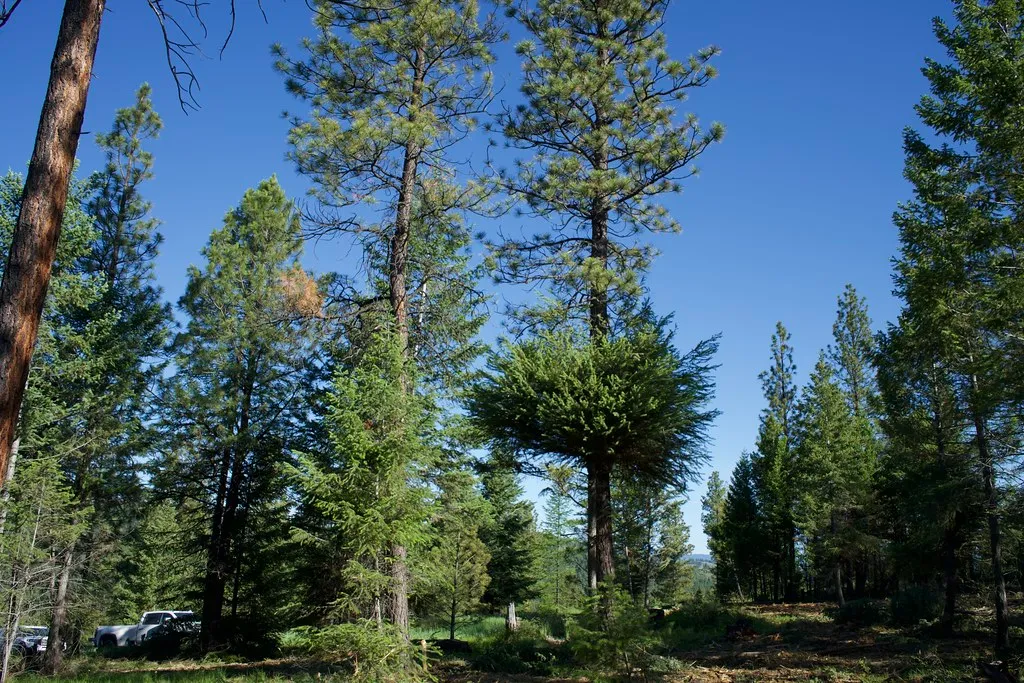
In studies by former USGS scientist Rob Bennetts and others, a high abundance of dwarf mistletoe in a forest means that more kinds and numbers of birds inhabit that forest. Also, since the lifespan of mistletoe-laden trees is considerably shorter than trees where the plant is absent, a higher number of tree snags occupy mistletoe-laden woods. This means that more cavity-nesting birds, with one study documenting at least three times as many, live in forests with abundant mistletoes.
In addition to providing abundant resources and boosting heterogeneity in productivity via nutrient subsidies, these plants depend on a network of other organisms, including pollinators, seed dispersers and host plants. Consequently, mistletoe health and abundance serve as important bioindicators of broader ecosystem health.
Different Species, Same Strategy
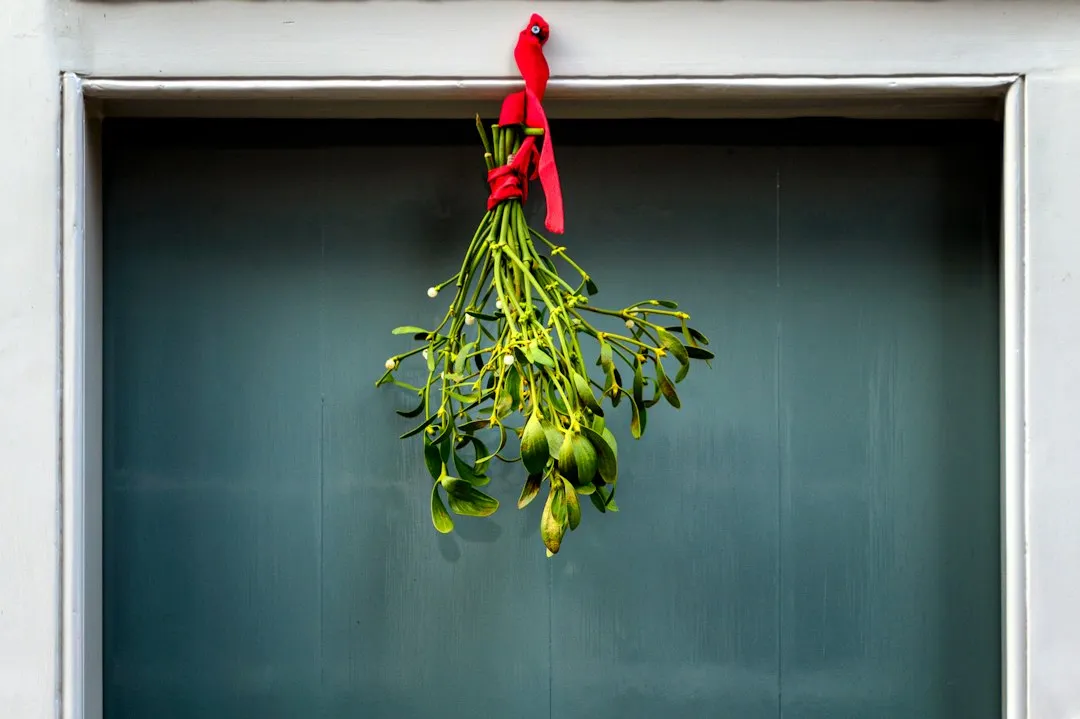
Just two types are native to North America. Twelve species of the American mistletoe can be found distributed largely across the southern half of the U.S., mostly affecting deciduous trees in the East as well as some evergreens in the West. Sixteen species of the leafless dwarf mistletoe infect only trees in the pine family and are mostly found along the West Coast.
Dwarf mistletoe, Arceuthobium, grows only on conifers and takes far more from them, causing dense, twiggy witches’ brooms. These witches’ brooms are the gnarled, dense tanglings of branches often seen in pine trees, a direct result of the parasite disrupting the host’s normal growth hormones.
It’s not uncommon for birds to disperse one mistletoe’s seeds while they feed on the fruits of another mistletoe. Because mistletoes are apt to latch on to any plant they can, some species have adapted to using these secondary mistletoes as a host. In these cases, you can find a mistletoe hanging off a mistletoe hanging off a tree, stacked in a sort of parasitic plant chain. That layered arrangement is about as far from a typical plant’s life as you can get.
The Takeaway
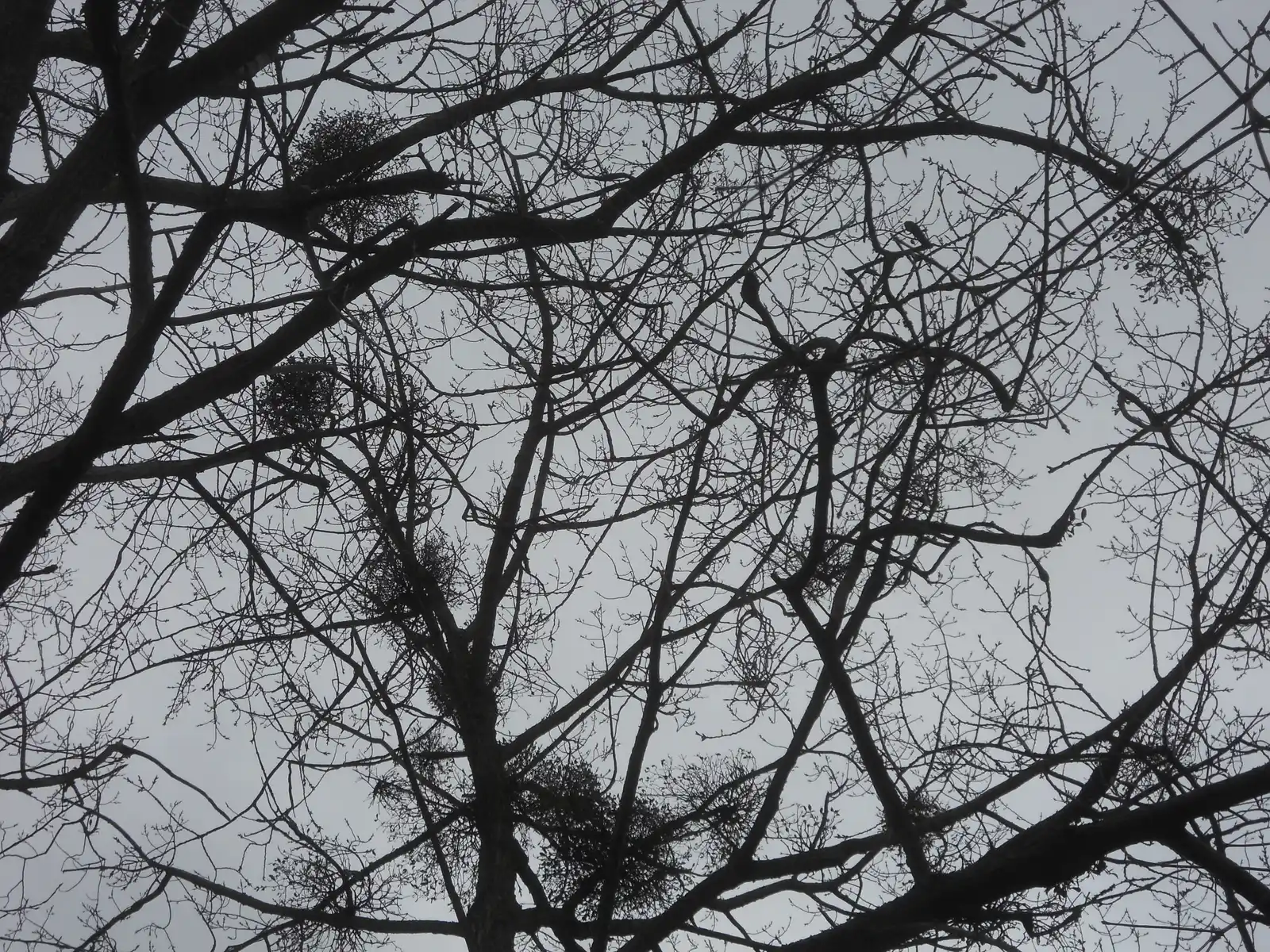
Mistletoe’s seemingly impossible position in the high branches of trees is, in fact, the product of millions of years of precise evolutionary pressure. Every element of its biology, the haustoria, the viscin coating, the bird partnerships, the canopy preference, exists because it solves a specific problem created by living without soil.
It doesn’t need the ground because it found something better: a living, permanent pipeline already doing the work. The tree carries water upward; mistletoe simply intercepts it. That’s not laziness. That’s efficiency refined over geological time.
What looks like a simple holiday decoration is, on closer inspection, one of the more sophisticated survival strategies in the plant world. The high branches aren’t where mistletoe ended up by accident. They’re exactly where it was always heading.
AI Disclaimer: This article was created with the assistance of AI tools and reviewed by a human editor.