

Most people treat a savings account like a safe harbor. Money goes in, nothing bad happens, and that feels like a win. That instinct makes complete sense after a rough financial patch or an anxious stretch of inflation headlines. The problem is that “safe” is a relative word, and in finance, the costs of playing it safe can compound just as reliably as the rewards of not doing so.
The gap between what a savings account returns and what your money could be doing elsewhere is not a dramatic overnight loss. It’s a slow, quiet erosion that only becomes visible years down the road. Understanding how it works is worth your time, even if you’re not planning to overhaul your entire financial life.
The Inflation Problem That Never Really Goes Away

The Bureau of Labor Statistics reported that the Consumer Price Index rose 3.8% over the twelve months ending in April 2026, the highest annual reading since May 2023. That number matters directly to savers. If the APY on your savings account is not as high as the rate of inflation, you’re effectively losing money.
At 3.8%, every $10,000 in cash savings over the past year has lost $380 in real purchasing power. That’s not a market crash. That’s not bad luck. That’s just inflation doing what inflation always does, and a low-yield account doing nothing to stop it.
At a typical savings account earning 0.5% APY, $100,000 loses about $2,500 in purchasing power annually. Over a 30-year retirement, $500,000 in cash at 3% inflation has the purchasing power of just $206,000. Those are not small numbers.
Most Savings Accounts Still Pay Almost Nothing

If you bank with Chase, Bank of America, or Wells Fargo, your default savings account is likely earning 0.01% APY. That’s the same as a checking account. Millions of Americans are parked here without even realizing it. The balance grows, the number looks stable, and the real damage happens silently in the background.
According to a 2025 Bankrate survey, 17% of savers aren’t earning any interest at all on their savings accounts, and another 17% were getting an interest rate of less than 1%. That means roughly a third of American savers are watching their purchasing power shrink each year without any meaningful offset.
Having too much money in savings becomes particularly expensive when that money sits in a low-yield account simply because that’s where you’ve always banked. A $50,000 balance earning 0.10% produces only about $50 in interest over a year. That is not a typo.
Savers Are Staying Put, and Banks Know It

In 2025, U.S. savers showed less willingness to move their money between banks, a notable shift from the deposit flight and rate-chasing behavior seen in prior years. This inertia comes at a significant cost: with deposit growth slowing and consumer mobility declining, banks have little incentive to boost savings rates, potentially leaving less savvy savers earning pennies while inflation erodes their purchasing power.
The Federal Reserve stopped raising U.S. interest rates in 2024 and later began cutting them. Without that pressure, banks have not been compelled to compete aggressively for deposits. The golden window of 5% APY offers that briefly appeared in 2022 and 2023 has largely closed for people who aren’t actively shopping around.
The flat trend suggests that most consumers are not moving their money to take advantage of better rates, and that banks have stopped trying to lure in savers by racing to offer higher yields. Inertia, it turns out, is very profitable for banks and very costly for customers.
The Opportunity Cost Is Larger Than It Looks

The S&P 500 has historically delivered an average annual return of roughly 10% before inflation, meaning every dollar not invested is a dollar denied compounding growth. Over short periods, the difference between a savings account and a stock market index fund feels manageable. Over decades, it becomes staggering.
Comparing a high-yield savings account earning 3% APY against an investment earning 8% annually over 30 years on a $25,000 deposit, the savings account grows to $61,400 while the investment grows to $251,600, a difference of over $190,000. That’s roughly the cost of keeping excess cash in the wrong place for a generation.
Delaying investing by just five years in your 30s can cost over $100,000 in retirement wealth, assuming a 7% annual return on a $500 monthly contribution. Time is the one variable that can’t be bought back.
You’re Probably Keeping More Than You Need

The recommended amount of cash to keep in savings for emergencies is three to six months’ worth of living expenses. That’s the well-established rule. It exists because beyond that threshold, the case for keeping more in cash becomes increasingly hard to justify from a wealth-building standpoint.
If you have more than three to six months of living expenses in savings, you could be missing out on other opportunities. This is especially true for people with stable employment, low debt, and a long investment horizon ahead of them. The safety cushion is legitimate. Everything beyond it deserves a second look.
Someone keeping $150,000 in cash for no specific purpose while retirement remains 20 years away should at least examine the opportunity cost of leaving all of it there. The number feels safe in a savings account. What it could become elsewhere is the part most people never calculate.
High-Interest Debt Makes It Worse

Paying off a 21% APR credit card balance is equivalent to earning a guaranteed, risk-free 21% return, dramatically better than any savings account or average investment return. When you’re carrying expensive debt while simultaneously padding a savings account, the math works against you in two directions at once.
When a financial emergency strikes someone with no savings buffer, the default response is debt, often at 20% or more APR. That’s the scenario a savings buffer protects against, which is exactly why maintaining a reasonable emergency fund still makes sense. The key word is “reasonable.”
The trap is letting debt accumulate on one side of your balance sheet while hoarding low-yield cash on the other. It’s a costly combination that can persist for years before people notice the drag it creates.
FDIC Insurance Has a Real Ceiling

An amount exceeding $250,000 could be considered too much cash to have in a savings account. That’s because $250,000 is the limit for standard deposit insurance coverage per depositor, per FDIC-insured bank, per ownership category. If you keep more than $250,000 in your savings account, any money over that amount won’t be covered in the event that the bank fails.
Most people won’t hit this ceiling. Still, it’s worth knowing that the protection you’re relying on has a hard limit. The amount in excess of $250,000 could be lost. For those with larger balances, diversifying across institutions or account types is more than just a theoretical precaution.
The Tax Drag That Often Gets Ignored
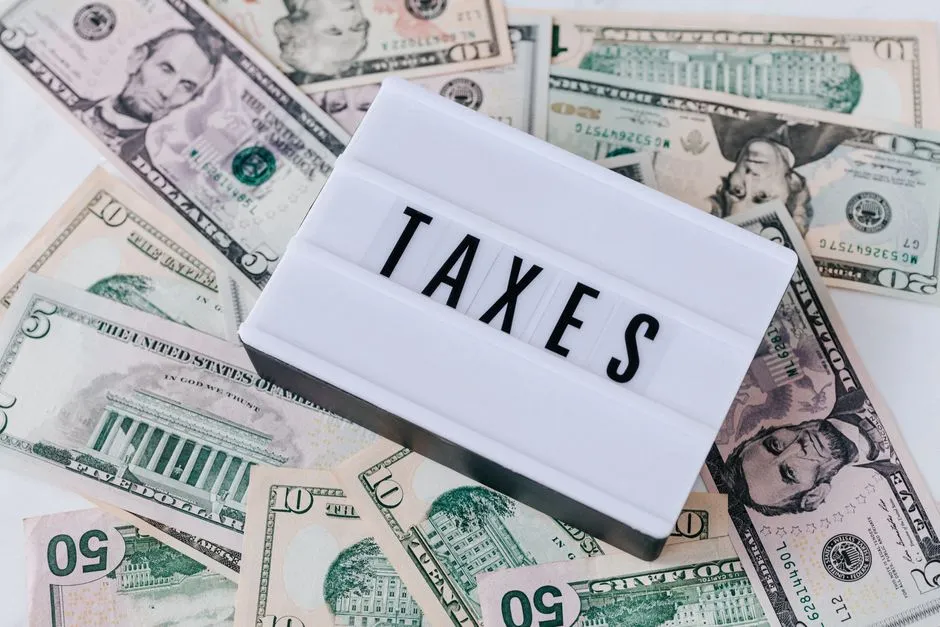
High-yield savings account interest is taxed as income at your marginal rate. At 22%, a 5% high-yield savings account becomes roughly 3.4% after tax. That narrows the already modest return on savings accounts even further when you account for what you actually keep.
By contrast, investments held in tax-advantaged accounts like a 401(k) or Roth IRA compound without being taxed each year. The difference in long-term after-tax outcomes between a savings account and a tax-sheltered investment account is substantial and rarely part of the casual savings conversation.
You can earn more money and cut your future tax bills by investing through a retirement account. That’s a double benefit that a standard savings account simply can’t offer, no matter how competitive its rate becomes.
When Saving Too Much Becomes a Behavioral Pattern

Having $80,000 sitting in a high-yield savings account might sound like a great way to protect yourself against financial emergencies. But personal finance experts point out that keeping that much cash on hand could actually be hurting your long-term wealth. Some people are so focused on feeling financially secure that they’re missing out on years of potential investment growth.
Financial anxiety is real, and the impulse to stockpile liquid cash is often rooted in lived experience, not logic. The feeling of security that a large savings balance provides is genuinely valuable. The question is whether that feeling is worth hundreds of thousands of dollars over a lifetime.
For savers, earning a competitive return isn’t just about seeing your balance grow. It’s about maintaining your money’s purchasing power over time. When your savings account’s annual percentage yield surpasses the rate of inflation, you’re actually growing your wealth rather than watching it slowly erode. That threshold is the baseline, not the goal.
What to Do Instead: Practical Alternatives

Online-only banks tend to offer the best rates on savings, including annual percentage yields of 4% or more as of late 2025. That is significantly higher than the national average of 0.38%, which means it’ll put more money in your account no matter how much you contribute. Simply switching where your savings sit is often the easiest first move.
If you have funds you won’t need within the next five years, you may want to consider moving them out of savings and investing them. That five-year threshold is a useful rule of thumb. Money needed soon belongs in cash. Money meant for the future belongs working harder.
Short-term certificates of deposit and CD ladders offer returns that are both predictable and higher than basic savings. They are also FDIC-insured and can be “laddered,” a strategic savings method where you buy multiple CDs with staggered maturity dates instead of putting all your money into a single CD. It’s a practical middle ground for people not yet ready to go fully into the market.
The Right Balance Still Includes a Savings Account

Think of your emergency fund as an insurance policy. You’re paying a small premium, the difference between high-yield savings account returns and market returns, to protect against a much larger loss, forced liquidation at market lows. That framing is helpful because it reframes the “cost” of keeping cash as a deliberate and rational choice, up to a point.
Stock markets fall most during recessions, exactly when job losses peak. An invested emergency fund may be 30% smaller precisely when you most need it. So the argument is not to eliminate your savings account. The argument is to be intentional about exactly how much sits there and why.
Without a cash buffer, any unexpected expense forces you to sell investments, possibly at the worst time. The historical data is clear: investing without an emergency fund exposes you to sequence-of-returns risk that can cost far more than the opportunity cost of keeping cash in a high-yield savings account. The goal is balance, not an extreme in either direction.
The Takeaway
A savings account is a tool, and like any tool, it works best when used for the right job. Covering emergencies, parking money needed in the near term, and maintaining liquidity are exactly what it’s designed for. Beyond those purposes, every additional dollar left sitting there has a quiet cost attached to it.
The numbers don’t lie. Inflation erodes. Opportunity compounds. The gap between where your money is and where it could be widens slowly, then suddenly. Most people discover this too late to fully course-correct.
The good news is that the fix doesn’t require dramatic action. It requires a clearer view of what your savings are actually for, and a willingness to put the rest of your money somewhere it can genuinely grow.
AI Disclaimer: This article was created with the assistance of AI tools and reviewed by a human editor.