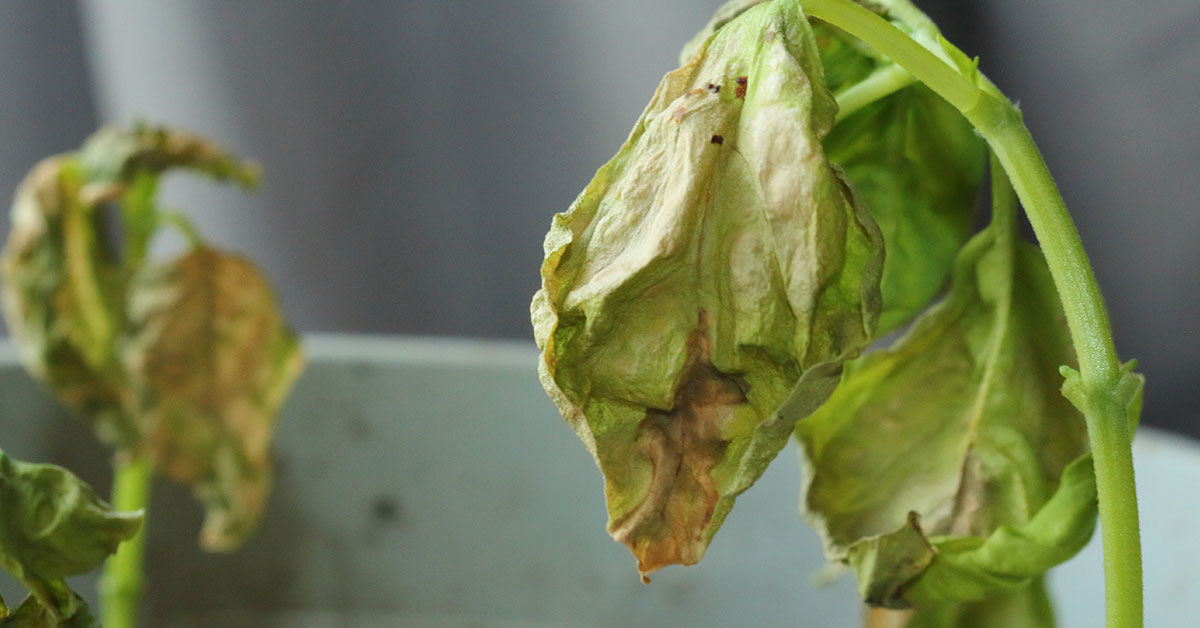

Basil is a popular kitchen herb, known for its distinctive flavor and aroma. Its delicate nature leaves it susceptible to the elements, making a lot of people wonder why is my basil wilting. Unfortunately, basil is prone to wilting, which can be a source of frustration for gardeners and cooks alike. In this article, we will explore the various reasons why basil wilts and provide tips for preventing it from happening. We will also discuss the best ways to revive a wilted basil plant and how to keep it healthy.
Reasons For Wilting Basil
Wilting occurs when the leaves become limp and dry due to a lack of water. This can happen quickly, within a few days of watering, or more slowly over time. Several factors can lead to basil wilting, including too much direct sunlight, too much or too little water, and temperatures that are too hot or too cold. Over-fertilizing can also contribute to wilting as well. As too much fertilizer can prevent the soil from retaining moisture and lead to dry, limp leaves. Additionally, a lack of airflow can be a factor in basil wilting. As it will cause the soil to stay too wet, leading to root rot and wilting.
Overwatering and underwatering are two of the most common issues that can cause your basil to wilt. When overwatered, the soil becomes waterlogged, which can lead to root rot and a lack of oxygen in the soil. This prevents the basil from accessing the nutrients it needs to stay healthy. On the other hand, if the soil is underwatered, the basil doesn’t receive enough moisture and can suffer from wilting and yellowing leaves. To avoid this, make sure to check the soil regularly and water the basil accordingly.
Additional Resource: Why Your Basil Leaves Are Curling
How To Prevent Basil From Wilting
To prevent wilting, it is important to store basil in the refrigerator at all times. When the herb needs to be used, it should be taken out just before use and kept away from direct sunlight and heat. Additionally, basil can be blanched in boiling water for a few seconds and then shocked in ice water to maintain its crispness. Keeping the basil dry and away from moisture is also key in preventing wilting. Finally, basil should be used as quickly as possible after harvesting, as it is a delicate herb and can deteriorate quickly when exposed to the elements.
Common pests that can cause the basil to wilt are aphids, whiteflies, and thrips. These pests can suck the sap from the leaves and stems of the plant, weakening it and causing it to wilt. Diseases that can cause the basil to wilt include gray mold, bacterial leaf spots, and fusarium wilt. Gray mold and bacterial leaf spots can cause the basil leaves to turn yellow, and eventually, the plant will wilt and die. Fusarium wilt is a fungal disease that can cause the basil leaves to turn yellow and eventually wilt and die. To prevent pests and diseases from affecting basil, it is important to properly water and fertilize the plant, remove dead or diseased leaves, and inspect for pests regularly.
Checking The Soil
Basil is an herb that is sensitive to soil conditions and can wilt easily when those conditions are not ideal. Poor soil drainage can cause the soil to become overly wet and waterlogged, leading to root rot and wilting of the plant. Soil that is too dry can also cause basil to wilt, as the roots are not able to absorb enough water for the plant. Additionally, soil that is too heavy or compacted can limit the ability of the roots to breathe and absorb water, leading to wilting. Ensuring the soil is well-draining and not too compacted is key to preventing wilting in basil plants.
The Importance Of Drying Freshly Harvested Herbs
Drying freshly harvested basil is an important step for preserving this flavorful herb. The process of drying basil helps to remove moisture, which slows down the process of spoilage. When basil is dried, its flavor and aroma are intensified. Giving cooks a more potent herb to use in their favorite dishes. Additionally, dried herbs take up less space than fresh herbs. Making it easier to store and use in recipes. Overall, drying freshly harvested basil is an important step for making the herb last longer and for adding more flavor to dishes.