
A Swiss Cartel’s Clever Idea
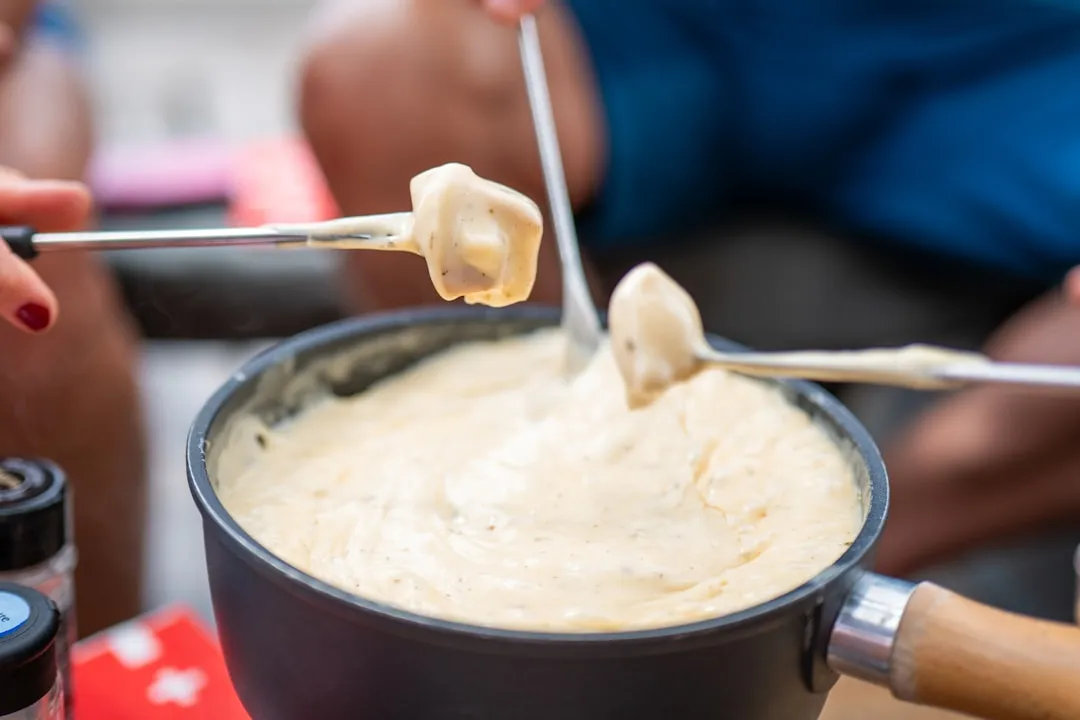
Fondue did not spring up naturally as a beloved folk tradition passed down through generations. It was, in large part, a marketing campaign. As a way to increase cheese consumption, it was promoted as a Swiss national dish by the Swiss Cheese Union in the 1930s. The organization behind it operated as a cartel that served to control cheese production from 1914 to 1999, and fondue turned out to be the perfect vehicle for moving surplus cheese.
The dish itself is much older than the marketing push. The term fondue appears in written sources that predate the first widely recognized recipe from 1699, suggesting that the practice itself existed long before it was formally recorded. What the Swiss Cheese Union added was not the recipe but the ritual, turning a rustic farmhouse habit into a symbol of national identity that eventually spread far beyond the Alps.
Crossing the Atlantic: Fondue Takes Over America
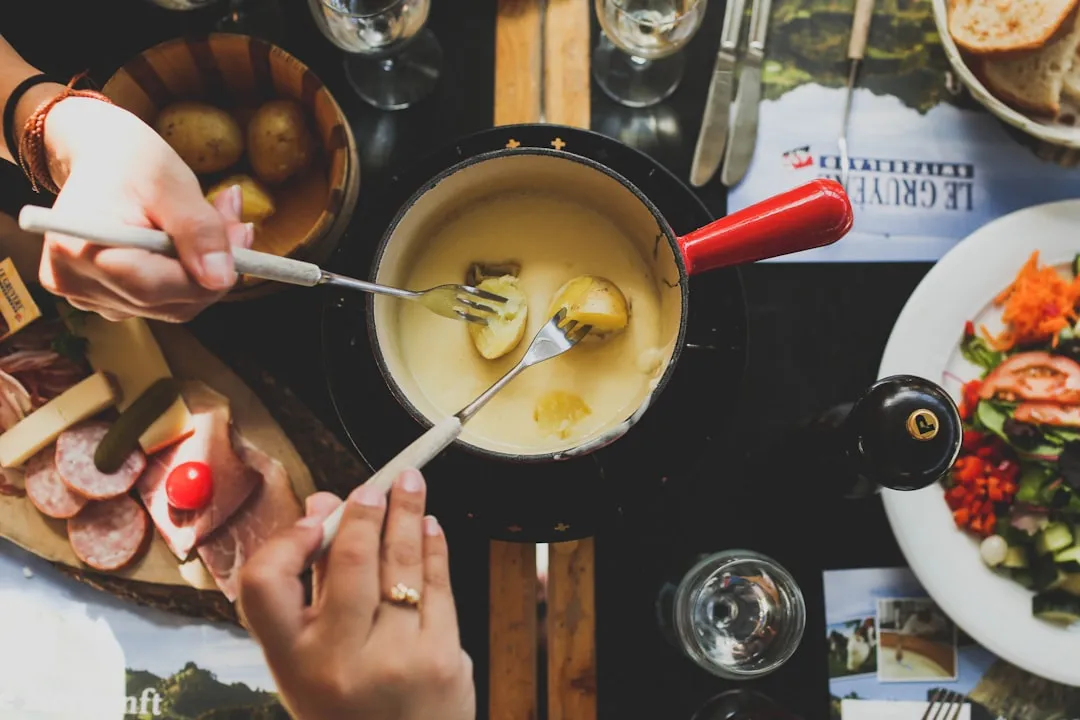
Fondue’s American debut had a specific date and place. The introduction of fondue to America occurred in 1964 at the New York World’s Fair when fondue was featured at the Swiss Pavilion’s Alpine restaurant. That single exhibit set off a chain reaction in home kitchens across the country.
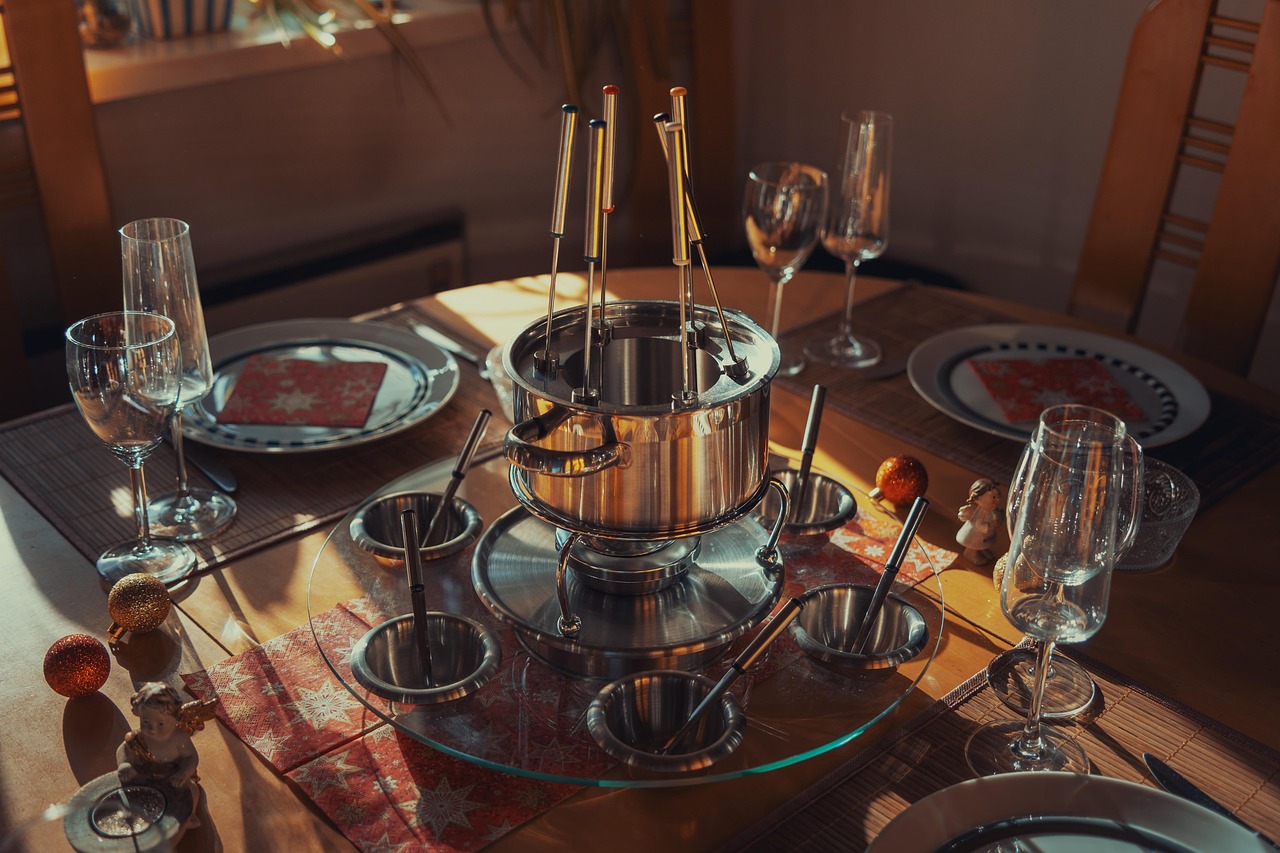
By the following decade, the trend had fully taken hold. When fondue pots were at the height of their popularity in the 1970s, everyone would gather around the table in their house clogs and bell bottoms with skewers ready to dip into melty cheese, smooth chocolate, and even piping hot oil. It was never meant to be a fussy dinner party. Friendly for grazing and a crowd, it was meant to be a way to host at home without the mundane feel of a coursed out dinner and cocktail attire.
The Chemistry of Trust: What Oxytocin Has to Do With Cheese

There is a biological reason those old fondue nights felt warmer than an ordinary dinner. Research published in the journal PLOS ONE has shown that food sharing events trigger higher levels of circulating oxytocin in both primates and humans, with subjects showing higher urinary oxytocin levels after even a single food sharing event compared with other types of social interaction. Oxytocin is not a minor player in human bonding either.
It is the neurochemical most closely associated with trust, attachment, and social bonding, the same hormone released during breastfeeding, physical touch, and moments of deep connection between people. A pot everyone reaches into together, taking turns with long forks, happens to be an unusually efficient way to trigger that response without anyone realizing it.
One Pot, Many Hands: The Oxford Findings on Social Eating
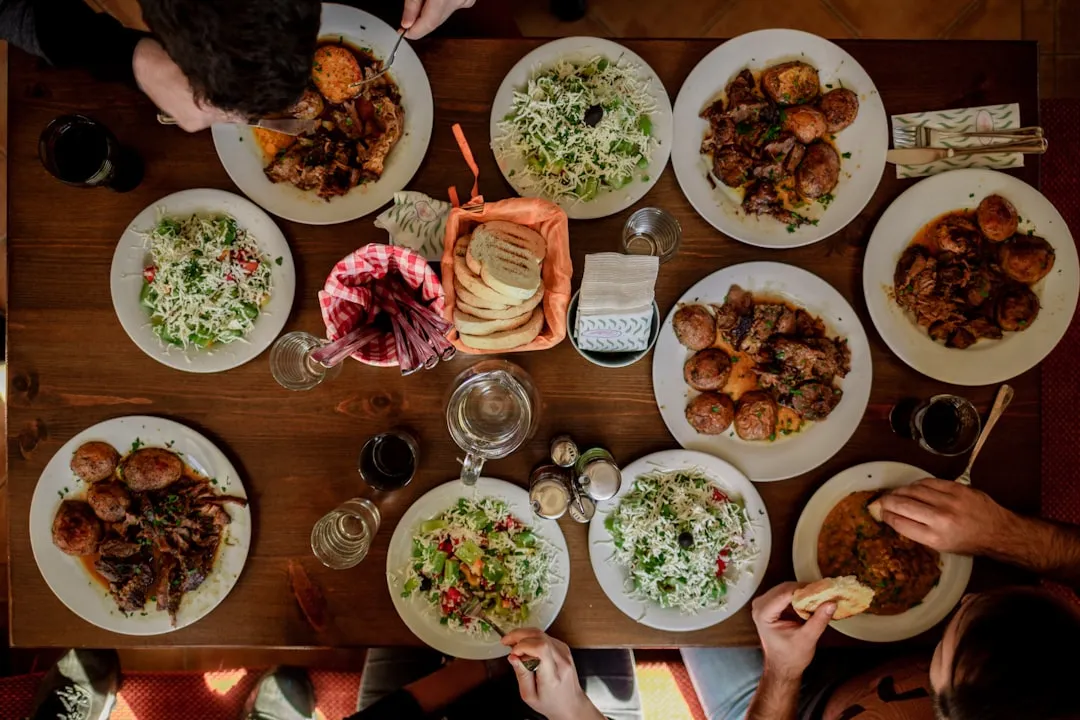
Oxford researchers took a more direct look at what social eating does for wellbeing, and the results lined up with what grandma probably assumed all along. Research from Oxford University shows people who dine socially feel happier and more satisfied with life compared to those eating alone. The study, led by evolutionary psychologist Robin Dunbar, went further than just measuring happiness in general.
The results suggest that communal eating increases social bonding and feelings of wellbeing, and enhances one’s sense of contentedness and embedding within the community. Later work from the same research line found something almost comically specific about what makes a meal really land emotionally. Dunbar’s research found that evening meals resulting in the strongest bonding involved more people, more laughter, more reminiscing, and, perhaps unsurprisingly, alcohol. A fondue table, with its shared pot, extra time, and inevitable dropped bread cubes, checks most of those boxes without trying.
Slowing Down on Purpose
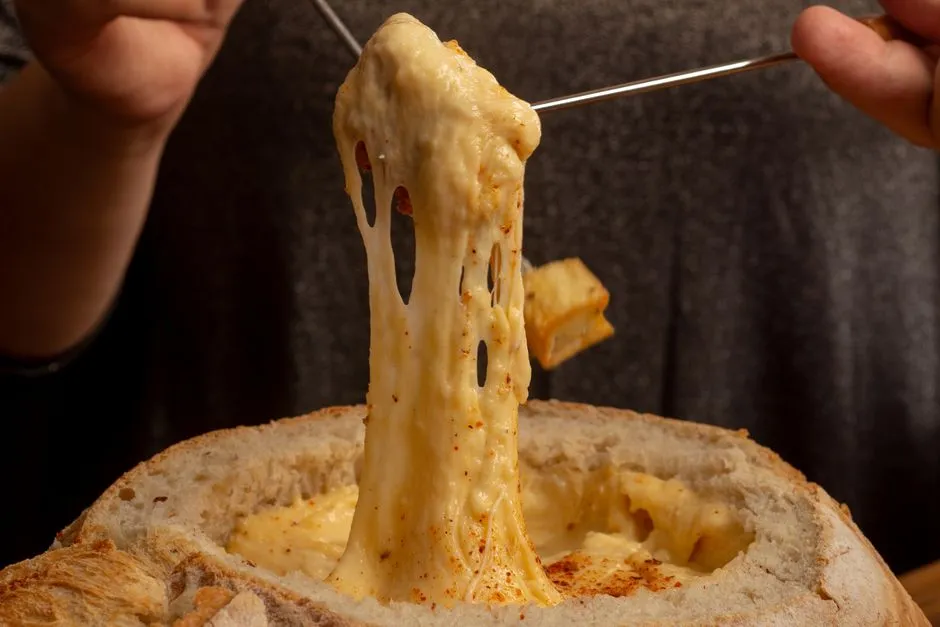
Fondue simply cannot be rushed. Everyone has to wait their turn at the pot, the cheese has to be stirred and monitored, and conversation naturally fills the gaps that would otherwise be silence. Anthropologists actually have a term for this deliberate slowness around shared food. Anthropologists call this phenomenon commensality, the act of eating together to strengthen social bonds.
That slower pace is not incidental to the experience, it is the point. Modern dining culture often prizes speed and efficiency, from grab and go lunches to meal delivery apps that promise food in minutes. Fondue pushes in the opposite direction, forcing people to linger at the table long after the last piece of chocolate covered strawberry has disappeared.
Loneliness Is Real, and So Is the Antidote

None of this matters much if loneliness is not actually a serious problem, but the data suggests it is. U.S. Surgeon General Vivek Murthy placed a spotlight on America’s problem with loneliness when he declared the issue an epidemic in the spring of 2023, explaining that loneliness represents a major public health risk for both individuals and society. The numbers behind that declaration are hard to brush off.
Roughly half of adults in the U.S. reported being lonely in recent years, and loneliness increases the risk of premature death by nearly 30 percent. The physical toll extends further still, since poor social relationships, social isolation, and loneliness can increase the risk of heart disease by 29 percent and stroke by 32 percent. Against that backdrop, a slow evening spent dipping bread into a shared pot with other people looks less like nostalgia and more like preventive medicine.
The Fondue Pot Is Back on the Table
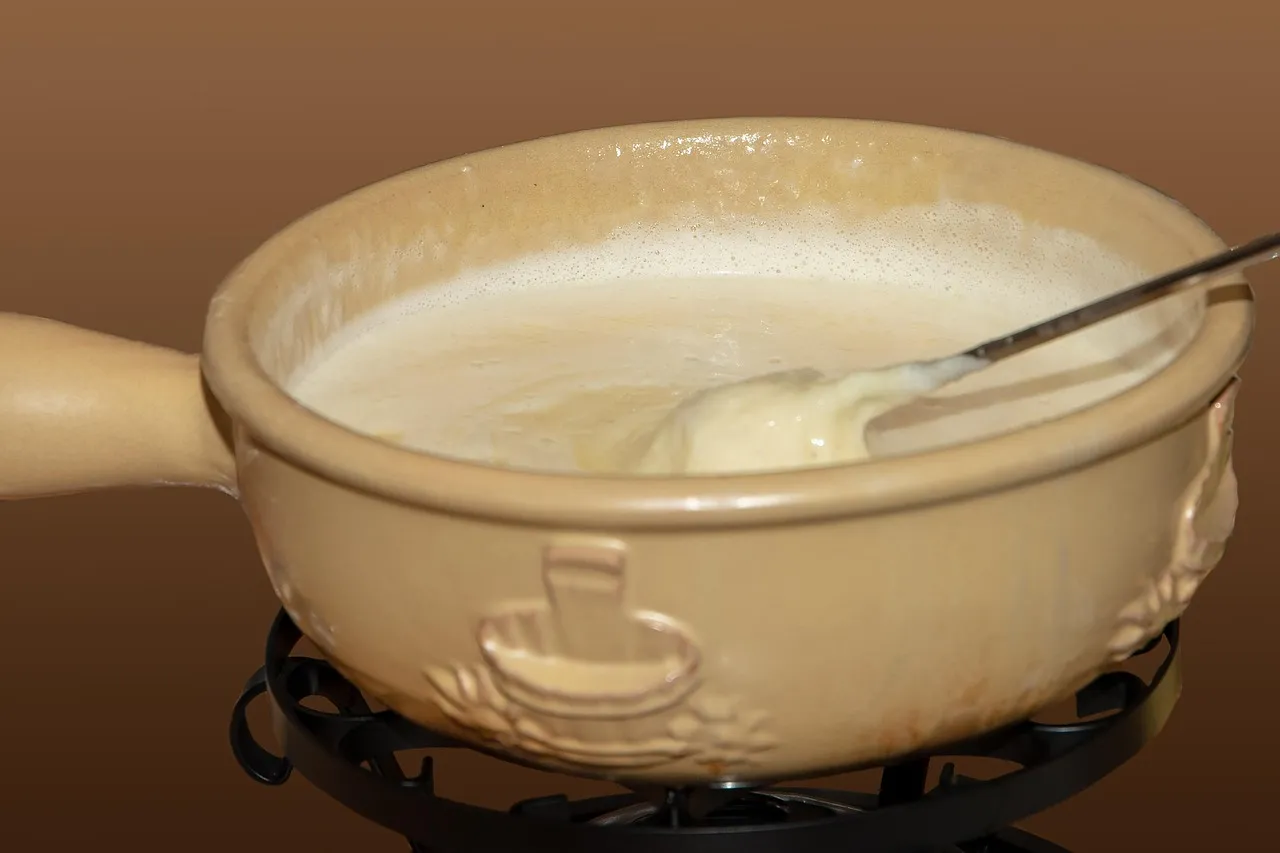
This is not just a sentimental case for reviving an old habit. Fondue is genuinely coming back into fashion right now. As one January 2025 feature put it, the seventies are back, baby, referring specifically to the fondue revival happening in home kitchens. Food publications have taken notice too, with one noting that November marks the official start of National Fun with Fondue Month while February is National Fondue Month, and either way, plenty of people will take any excuse to revive this retro ritual.
Dinner party culture as a whole has been shifting in a direction that favors exactly this kind of meal. 2025 saw a whimsical dinner party comeback, with unique themes, specific cuisines, over the top table decor, and additional activities such as games and crafts. Fondue fits that mood almost perfectly, since hosting at home allows for more conversation between everyone, quality time, and a more casual atmosphere.
Family Meals, Measured
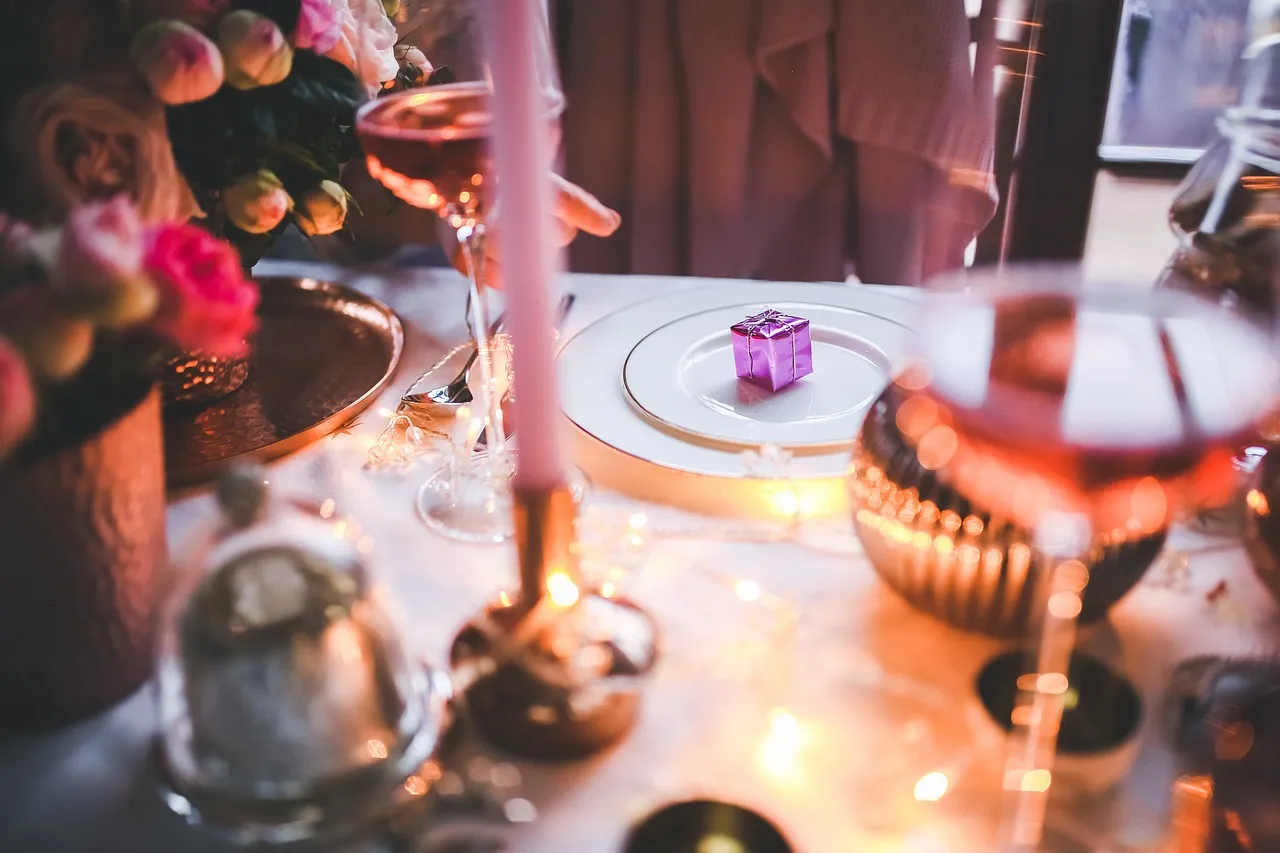
Beyond the retro appeal, there is solid research connecting regular shared meals to family cohesion specifically. Families who eat together at least four times weekly report stronger emotional connections, according to the American Psychological Association. A 2024 study added further weight to that finding.
Published in the journal Family, Systems, and Health in March 2024, research conducted at the University of Minnesota found a strong positive correlation between how often people gather around the table during mealtime and enhanced connectedness, reduced depressive symptoms, and improved mood. A fondue night, which practically demands that phones stay in pockets while everyone tends the pot, fits this pattern especially well. Studies from Common Sense Media show that families who ban screens during mealtimes experience 42 percent more meaningful discussions.
A Practice Older Than Switzerland

Fondue is a distinctly Swiss invention, but the underlying idea of gathering around one dish is far older and shows up across cultures. In Turkey, a raki sofrasi consists of a ritual of small plates, shared laughter, and hours of conversation. Italian families often devote much of Sunday to a leisurely, multi course lunch together, while throughout Greece, meze platters in tavernas encourage groups to break bread communally, forging a sense of kinship at the table.
These traditions, along with fondue, point to something universal rather than culturally specific. Slowing down and sharing one dish seems to be a recurring human solution to the same problem, which is how to stay genuinely connected to the people around us. It makes sense that a Swiss cheese cartel’s marketing gimmick tapped into something that already existed in some form nearly everywhere else.
What Grandma Knew All Along
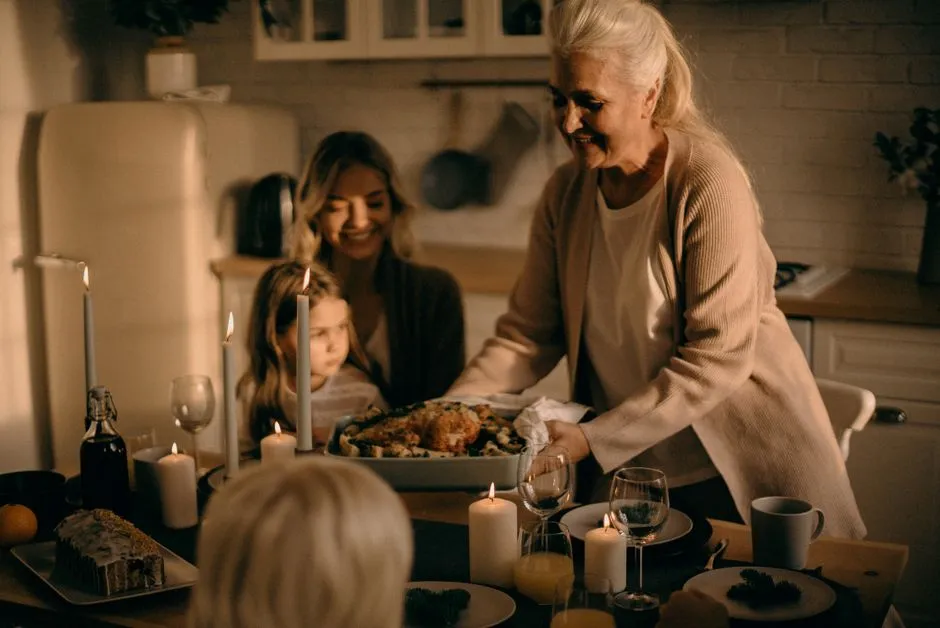
None of this means grandma read a peer reviewed journal before setting up the card table with the fondue pot. She almost certainly just knew, the way people often do, that a slow meal shared from one dish tended to make an evening feel warmer and the conversation flow a little easier. Decades later, researchers studying oxytocin, loneliness, and family wellbeing have essentially confirmed what she was practicing without ever needing the data.
Bringing back the fondue pot does not require chasing a 1970s aesthetic or memorizing a Swiss recipe passed down through generations. It just requires a willingness to slow down, share a pot with a few people, and let the conversation take as long as it needs. Grandma never called it a wellness practice. She just called it dinner.
AI Disclaimer: This article was created with the assistance of AI tools and reviewed by a human editor.