

It Starts With Licking as a Core Canine Behavior

From the moment dogs are born, licking plays a central role in their development. New mothers lick their puppies to clean them, help them start breathing, and stimulate digestion, and puppies lick in return. This early experience shapes licking into one of the most fundamental communication tools a dog has.
As dogs get older, they continue to lick people, things, and other dogs to show affection, to get attention, or as a greeting. In other words, licking isn’t random. It’s a language, and your feet happen to be a very interesting sentence.
Your Feet Are Full of Biological Information

Dogs have an additional sensory organ called the Jacobson’s organ, which connects their nasal cavity to the roof of their mouth. This organ allows them to taste and smell at the same time, enabling them to take in even more information.
Sweaty, stinky feet are full of biological information, such as pheromones. Licking your feet may be a particularly efficient way for your dog to learn about you, as the scent receptors in the nose and mouth are extremely receptive to the signals contained in the sweat and oil your feet produce. From a dog’s perspective, your feet are practically a biography.
The Salt Factor: Why Sweat Matters

The soles of your feet contain a high concentration of eccrine sweat glands. As sweat evaporates, it leaves behind salt and other compounds that many dogs find appealing.
Sweat contains water, salt, proteins, amino acids, and trace amounts of compounds like ammonia and urea. Sodium, in particular, is highly attractive because wild canines historically had limited access to salt. That said, it’s worth noting that while salt receptors in humans extend all the way around the tongue, dogs have two small strips of salt-responding taste buds along the sides of their tongues. From an evolutionary standpoint, extra salt detectors should not be needed, as dogs are carnivores and normally get sufficient sodium from the meat in their diet. The picture is more nuanced than simple salt-craving.
It’s a Sign of Affection and Social Bonding

Dogs are highly social and well-attuned to humans. Anecdotally, licking behavior is disproportionately directed toward people dogs are familiar with. This is a meaningful detail: your dog isn’t licking everyone’s feet, just yours.
Licking feet can be a sign of affection, similar to how humans give hugs or kisses. By licking your feet, a dog is bonding with you as a fellow member of its pack. It may look undignified from your end, but for the dog it’s a genuine social gesture.
Submission and Social Hierarchy
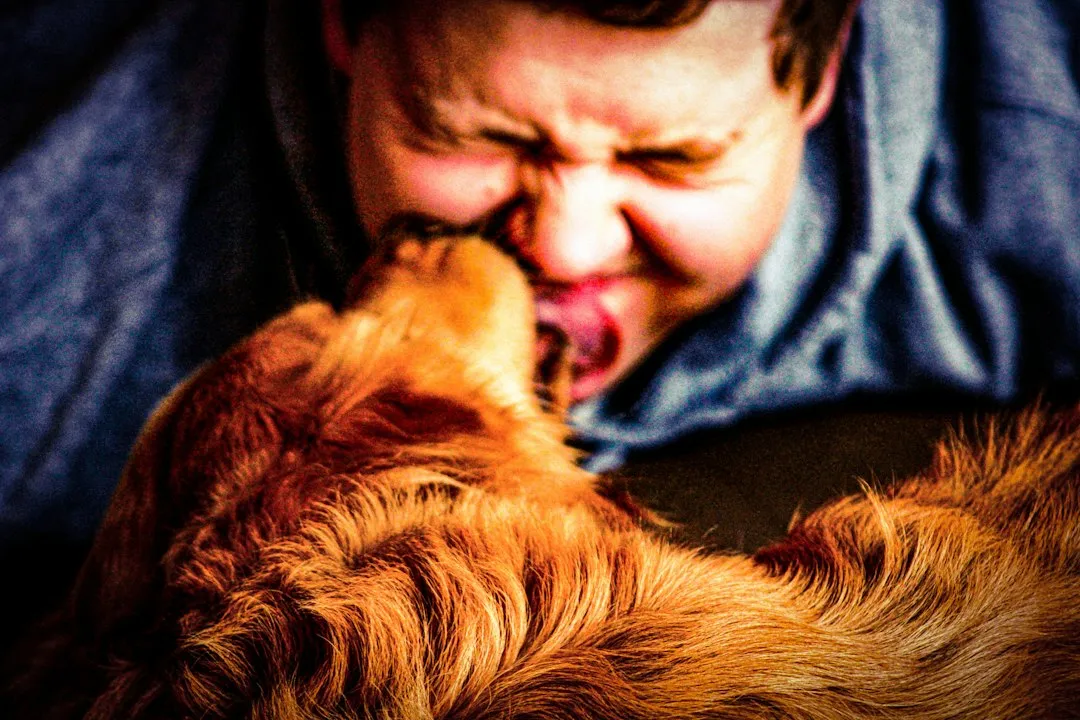
Social hierarchy may be involved in licking behavior. Among dogs, one animal will sometimes briefly lick another in a show of deference and pre-emptive placation. Puppies more often lick older dogs.
With human-dog interactions, too, the gesture could carry an aspect of appeasement and submission, depending on the situation. Licking feet can be a submissive gesture, signaling that the dog acknowledges its owner as the leader. It’s a deeply wired social script, one that has been passed down from wolf pack dynamics into our living rooms.
Attention-Seeking and Learned Behavior

When a dog licks your feet, you likely respond immediately. This can quickly develop into an attention-seeking behavior, especially if the dog thinks it’s a game.
Dogs may also continue the behavior because human reactions, such as laughing, talking, petting, or giving attention, can unintentionally reinforce licking over time. Over time, this positive attention can reinforce the behavior and make a dog more likely to lick your feet whenever the opportunity presents itself. In short, if you laughed the first time, your dog noticed.
Anxiety, Stress, and Self-Soothing

An anxious dog may lick your feet as a coping mechanism to comfort itself, especially if in an unfamiliar situation. Studies suggest that licking triggers the release of endorphins in a dog’s brain, which can promote feelings of calmness and relaxation.
Because licking can trigger the release of endorphins and dopamine, some dogs use it as a self-soothing behavior during stressful experiences. Just like humans might nervously tap their feet or bite their nails, dogs can develop excessive licking as a coping mechanism for stress or anxiety, triggered by separation anxiety, loud noises, changes in their environment, or even boredom.
When It Becomes Compulsive: What the Numbers Show
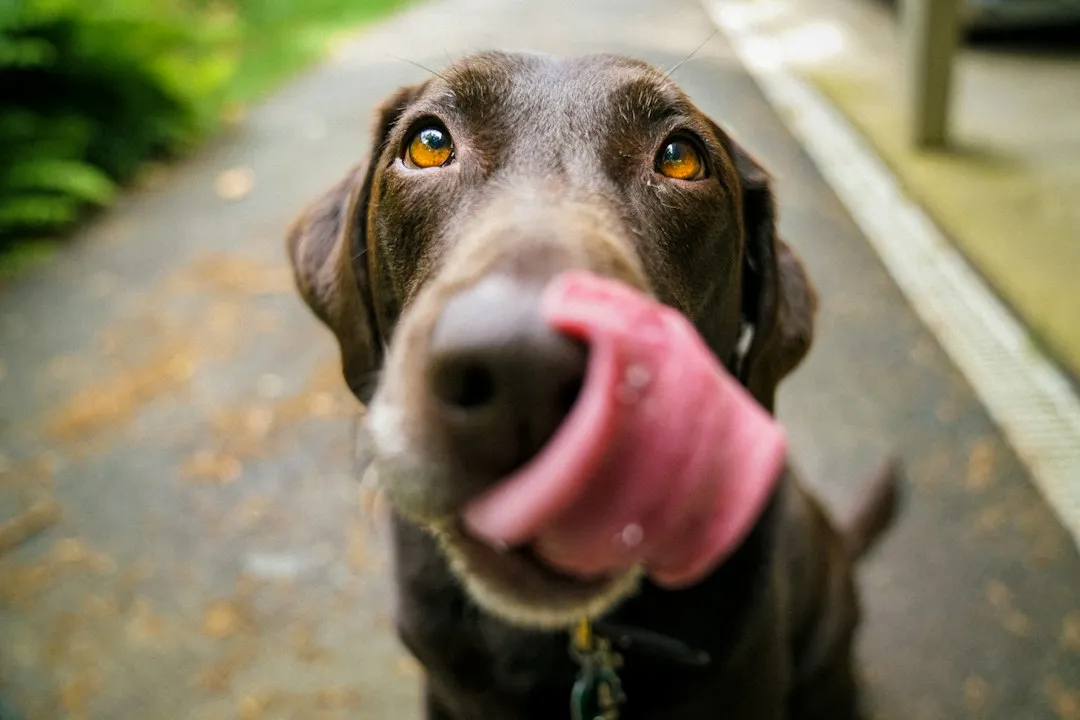
A 2025 survey of 500 dog owners found that roughly 30% reported daily foot licking, with around 7% showing compulsive behavior. Additionally, a 2025 behavioral study found that approximately 12% of dogs develop habitual foot licking by two years of age.
If a dog is persistently and repetitively licking, it may signal a problem. It could be a displacement behavior, which is a normal behavior performed out of context, used by an anxious, scared, or frustrated dog to self-soothe. When a dog licks, the body releases endorphins. The licking feels good, so the dog does more of it, and a feedback loop develops that becomes very difficult to interrupt.
Breed and Individual Personality Play a Role

The behavior of dogs licking feet can vary based on individual personality and breed tendencies, with some breeds being more prone to excessive licking. If your dog is a herding breed and seems to like nipping at your feet as well as licking them, it is likely that the goal is simply to herd you.
Herding breeds such as Border Collies and high-energy dogs are more prone to compulsive licking due to anxiety or understimulation. Knowing your dog’s breed background can help you interpret whether foot licking is casual curiosity or something worth looking into more carefully.
Is It Safe, and When Should You Act?

Toe licking is a common behavior that usually isn’t anything to worry about, as long as your feet are free from toxic substances such as certain nail polishes. Excessive licking, however, may indicate anxiety, compulsive behavior, pain, allergies, or other medical concerns.
Persistent licking can also signal an underlying health issue. If your dog’s licking behavior becomes excessive, compulsive, difficult to interrupt, or appears to be linked to discomfort, a veterinarian should be consulted. Veterinarians recommend that if you need to discourage this behavior, you do so kindly and without shouting at or punishing the dog.
The Takeaway

When your dog makes a beeline for your feet the moment your socks come off, the motivations are almost always layered: part sensory exploration, part social ritual, part habit. It’s a behavior rooted in biology and shaped by the specific relationship you and your dog have built together over time.
Occasional licking is generally harmless and, from your dog’s perspective, is often a genuine expression of connection. Where it tips into a concern is when the behavior becomes relentless or hard to interrupt. In those cases, a conversation with your vet is always the right next step. Until then, your feet, apparently, are one of the more fascinating things in your dog’s world.
AI Disclaimer: This article was created with the assistance of AI tools and reviewed by a human editor.