

Most cat owners know the feeling. You settle in for the night, and within minutes there’s a warm, purring weight pressing firmly . It’s one of those small rituals that feels almost unremarkable until you start wondering what’s really going on. Cats don’t do anything by accident, and their choice of where to sleep is no exception.
The behavior turns out to be a layered mix of instinct, emotion, biology, and trust, backed by a growing body of feline behavior research. Here’s what science and behavioral experts actually say about it.
It Starts with Vulnerability: Why Sleep Location Matters to a Cat
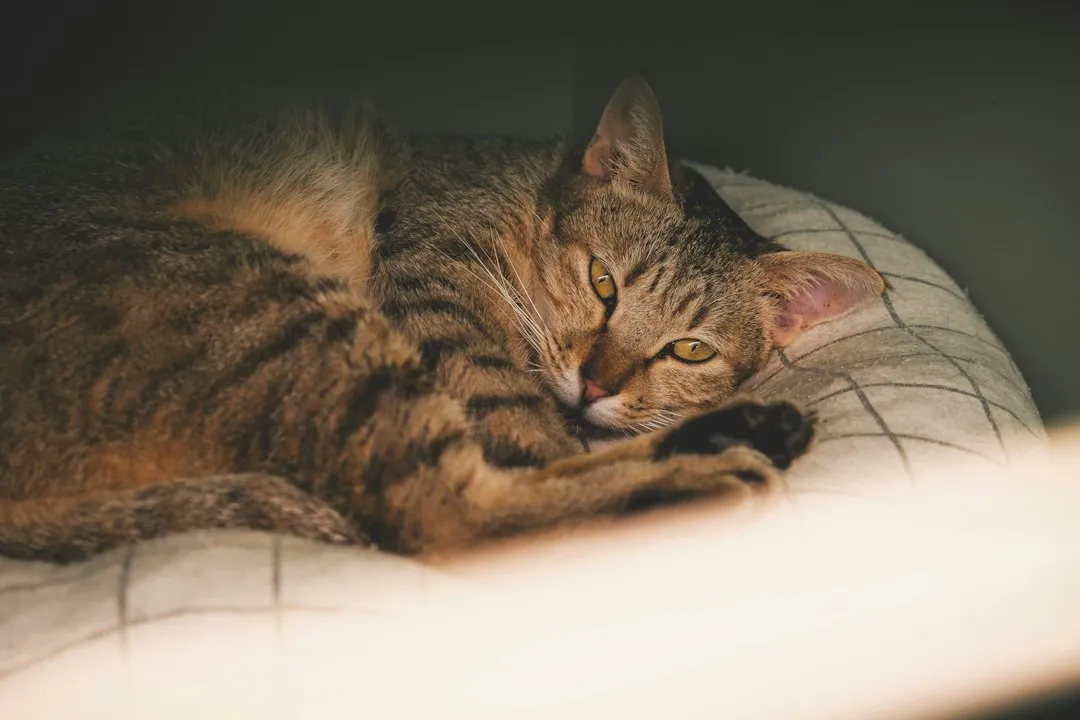
One of the most important reasons a cat chooses where to sleep relates back to its position as prey. Sleep makes a cat vulnerable. That’s not a minor detail. Cats are prey animals as well as predators, and even in a fully domestic setting, that instinct does not fully switch off.
From a biological standpoint, cats are predators and prey, and that dual role shapes their behaviors even in domestic life. In the wild, cats sleep in secure, elevated, or enclosed spaces to avoid threats. Your legs, pressed together on a bed, offer exactly that kind of enclosed, shielded space. It’s a makeshift den.
The Trust Signal You Might Be Overlooking
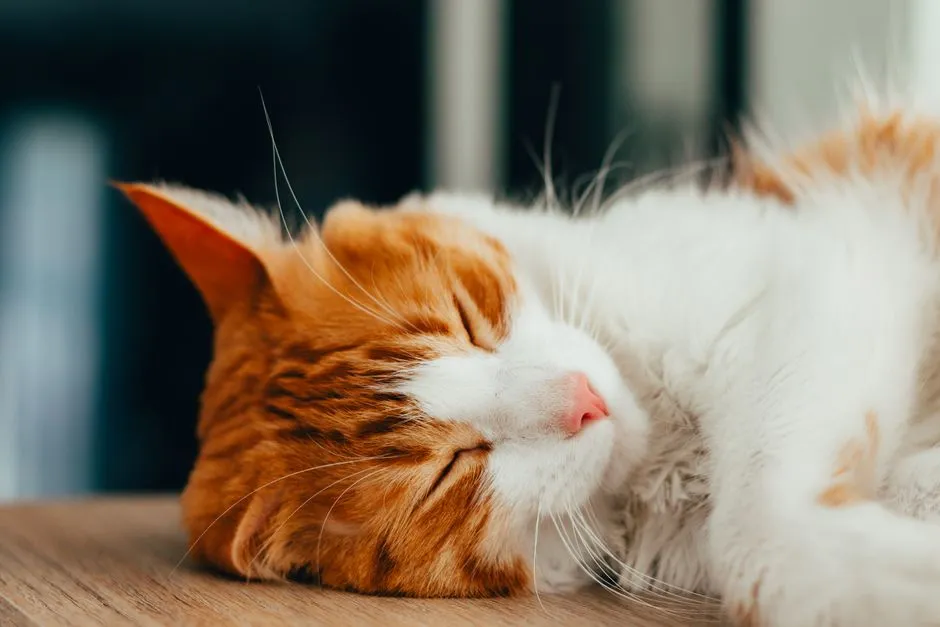
When your cat sleeps with you, it represents their highest expression of trust, as sleep is a cat’s most vulnerable state. This is worth sitting with for a moment. Choosing to sleep on a human is not a neutral act. A cat that does not trust you will not sleep on you, regardless of how warm you are.
Cats who choose to sleep between your legs trust you. If your cat chooses to sleep between your legs, they are showing you that you make them feel secure, and they’re choosing you as a safe space. Animals feel vulnerable when they sleep, and even indoor cats are conscious of their potential status as prey. If your cat sleeps between your legs, they’re saying that you’re their protector.
Warmth Is a Real, Biological Driver

When cats sleep, their body temperature drops by a few degrees, so they look for a warm place to snuggle, as noted in behavioral literature on domestic cats. A curled-up position is common when it’s chilly, but an indoor cat seeking warmth might sprawl out or press against your legs for extra heat.
The spots cats press against, your head, feet, or torso, are where your body releases the most heat. Your legs, particularly under a blanket, create a consistently warm microclimate. For a cat, that’s not just comfort. It’s efficient thermoregulation. In feline behavioral science, this is called social thermoregulation combined with defensive posture release.
The Oxytocin Connection: Bonding Chemistry at Work
Through studying cat hormones such as oxytocin, industry experts have shed light on feline behavior. A study by American neuroscientist Paul Zak revealed that cats experience an increase in oxytocin levels, the hormone associated with bonding and affection, when they interact with their owners. Such hormonal changes are a significant factor in why a cat chooses to sleep with you.
A 2025 study in Applied Animal Behaviour Science measured a significant oxytocin increase in securely attached cats during interaction with their owners. Researchers at South China Agricultural University categorized 30 domestic cats into “secure,” “anxious,” and “avoidant” attachment styles, and the results pointed clearly toward emotionally grounded behavior, not just convenience.
Your Legs Form a Natural Safe Structure

Expert Mandala Hunter-Ishikawa says that if a cat sleeps between your legs, they have found a “soft, warm, hammock-like place to sleep.” Sleeping between your legs is a natural cat hammock that the cat finds to be a particularly safe and comfortable place to be.
When cats seek out a place to catnap, they can do that just about anywhere. However, when they really want to fall into a deep snooze, they seek out a warm and secure location, and to them, there is no place more secure and warm than near the body of their owners. The physical structure of your legs, two parallel shapes with a hollow between them, mimics an enclosed nook. It’s simple geometry that satisfies a deep instinct.
Territorial Marking: You Are Theirs
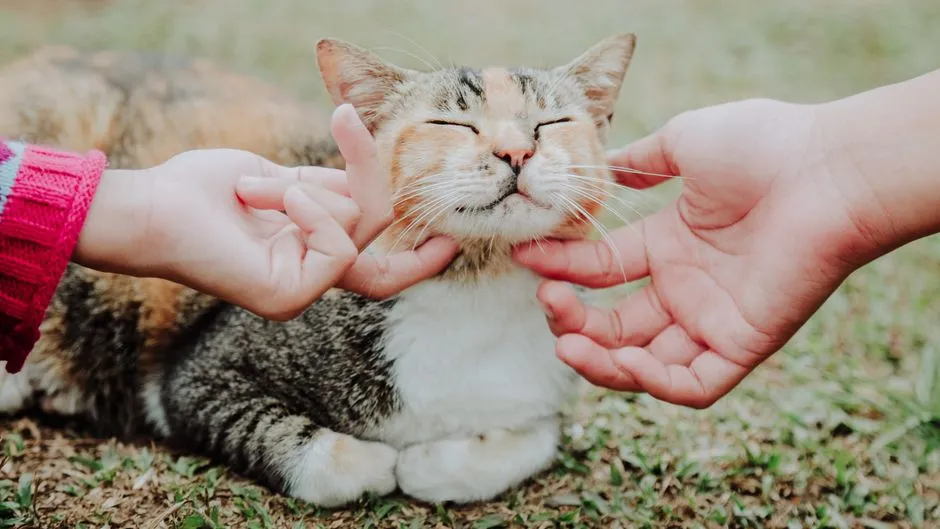
They may look cute and cuddly, but cats can be very territorial animals, releasing pheromones produced by their scent glands to claim their territory. So, when they’re pressed up against you and rubbing their body on yours, they’re actually marking their scent on you.
Cats are very territorial creatures, and you are their territory. Especially if you live in a home with multiple cats, the one that chooses to sleep between your legs is marking that spot as their territory. If you notice them rubbing against your legs or licking them before settling down, they’re definitely marking you as their territory. It’s possessive, yes, but it’s also a sign of deep inclusion in their world.
It’s How Cats Bond: Social Sleeping Has Deep Roots
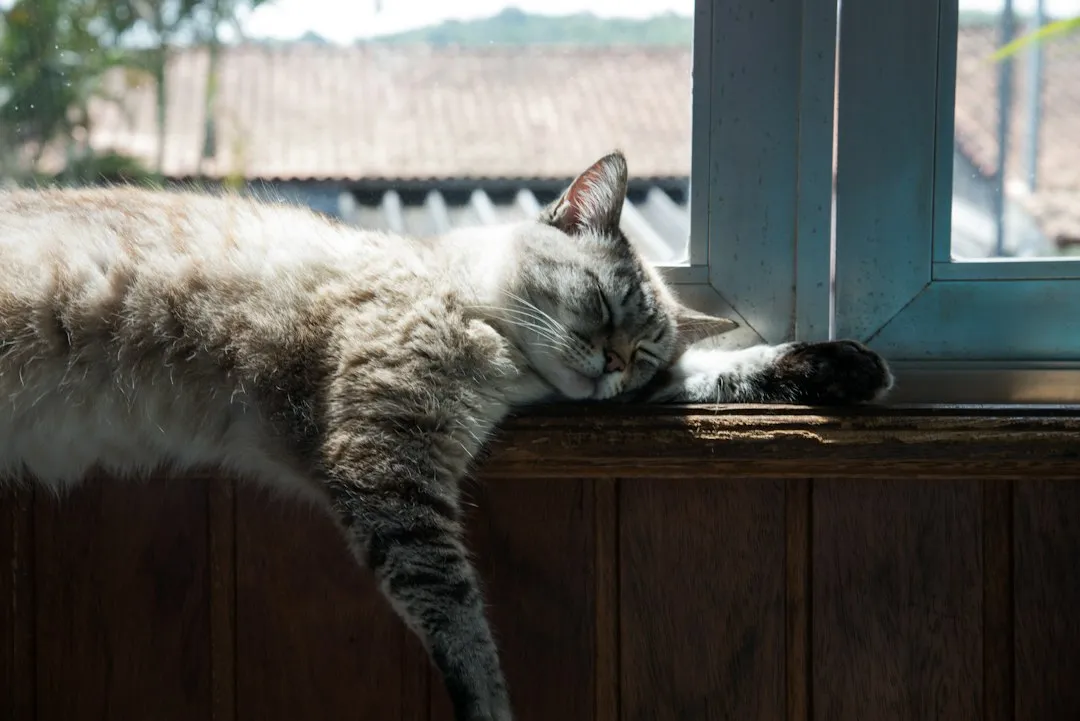
Once cats have bonded with you, they can be incredibly affectionate and enjoy being as close to you as possible, especially when they’re tired. In the same way kittens use each other as pillows, known as pillowing, your cat will take a lot of satisfaction in being pressed up against you.
A phenomenon called neoteny explains why cats continue kneading behavior, high-pitched vocalizations, and dependent sleeping arrangements into adulthood. Adult cats sleeping with their owners are essentially treating humans as surrogate family members. Pressed against your legs at night, they’re not just resting. They’re practicing the same closeness they learned as kittens.
Stress Relief and Anxiety Reduction
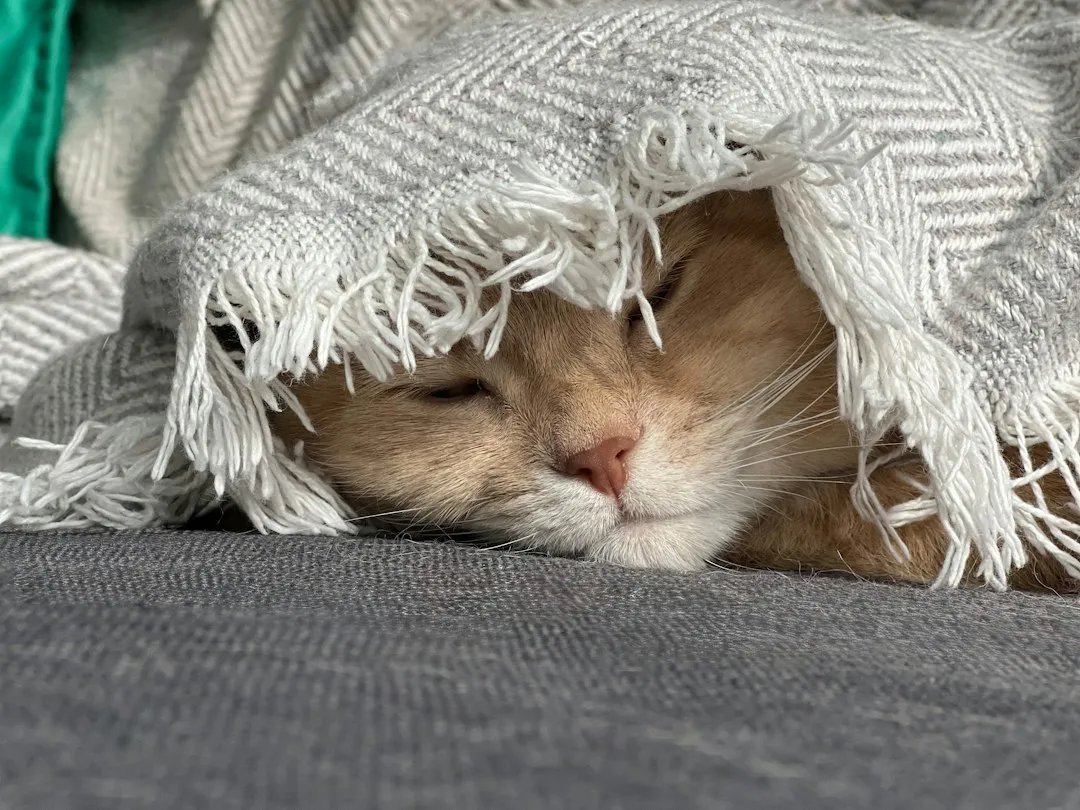
While cats don’t have jobs or seemingly anything to worry about, they can and do feel stress. They’re very good at regulating their own stress, and sleeping between your legs is one way they do that. If the cat is stressed in its environment and feels safe enough to sleep between your legs, it can relieve anxiety.
Cats that co-sleep with owners tend to display lower anxiety markers during the day, according to observations documented in Applied Animal Behaviour Science. Cats who have experienced trauma, rehoming, or environmental instability often demonstrate increased co-sleeping behavior as a method of security-seeking. So if a newly adopted cat starts pressing against you at night, that’s not coincidence. It’s recovery.
Cats Choose Their Favorite Person, and Sleeping Spot, Carefully
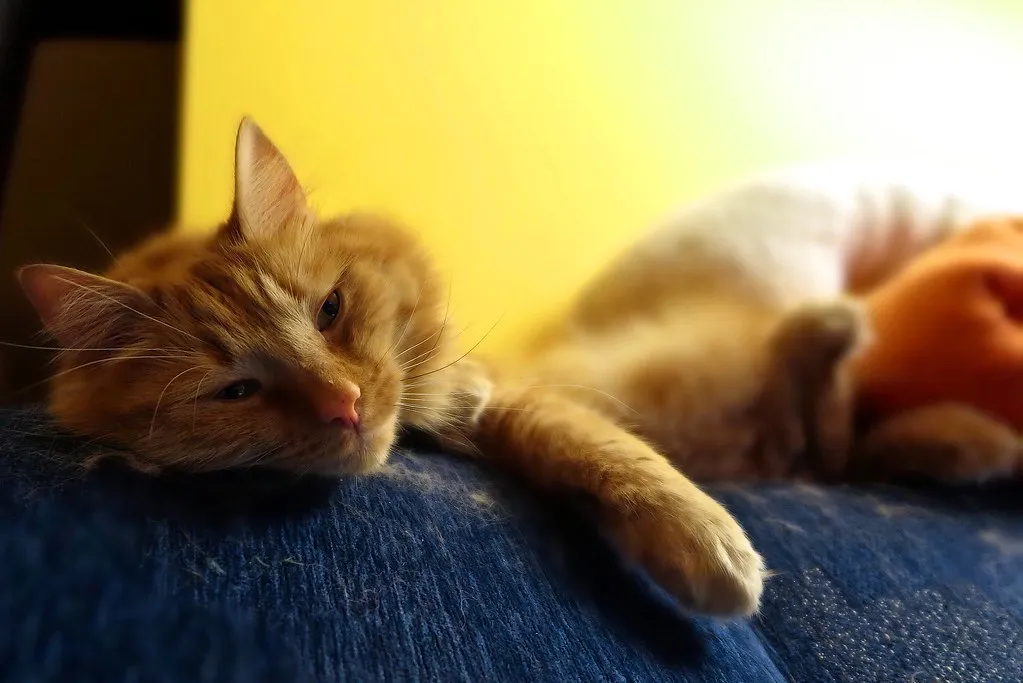
Studies suggest cats do prefer sleeping with the person they feel most bonded to. Factors that influence this choice include who feeds them regularly, who maintains their routine, who speaks to them gently, and whose scent they associate with positive experiences.
According to a 2022 survey by the Pet Insight Project, nearly half of cat owners reported their cat sleeps in the same bed, and over a quarter said their cat chooses one specific family member. Feline researcher Kristyn Vitale’s work has shown that cats use their owners as a “secure base” in unfamiliar environments, just like human infants. When your cat presses against your legs specifically, it means you’ve earned that ranking.
What Research Says About Co-Sleeping and Your Own Sleep
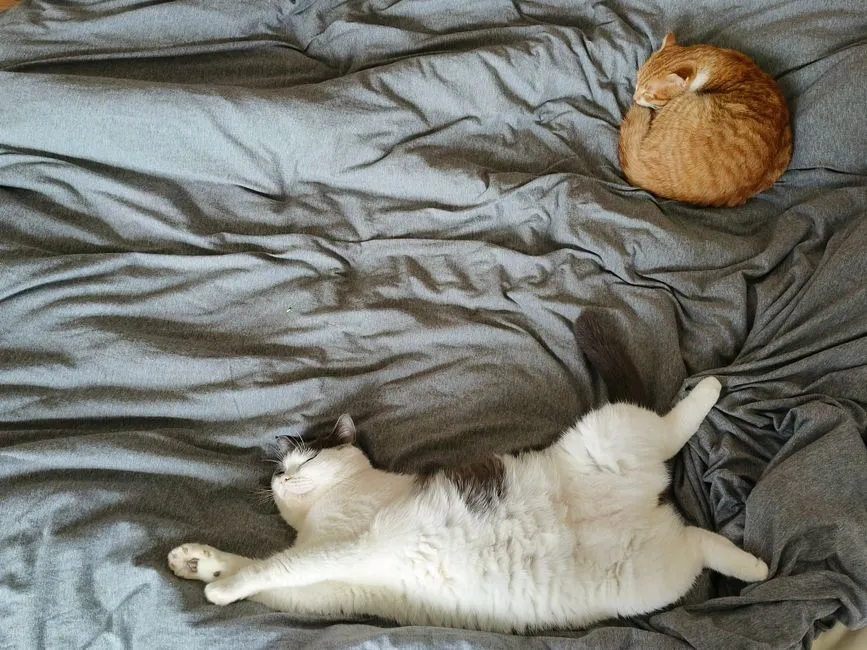
A 2024 study in Scientific Reports found that unlike dogs, cats do not significantly disrupt human sleep quality during co-sleeping. That said, the picture isn’t entirely simple. Another 2021 study found cat ownership was associated with a higher odds ratio of failing to achieve at least seven hours of sleep, but the researchers were unable to conclude whether this means that cats represent a risk factor for reduced sleep quality.
One veterinary behaviorist noted there is “no clear consensus” and that “further research is needed.” Some studies support benefits on sleep while others show an association with poorer sleep quality. For most people, the warmth and calm of a cat pressed against their legs at night probably outweighs the occasional disruption. Research in the Journal of Veterinary Behavior notes that physical proximity during rest is a key indicator of social bonding in domestic cats, even when that proximity is not full-body contact.
A Quiet Kind of Devotion
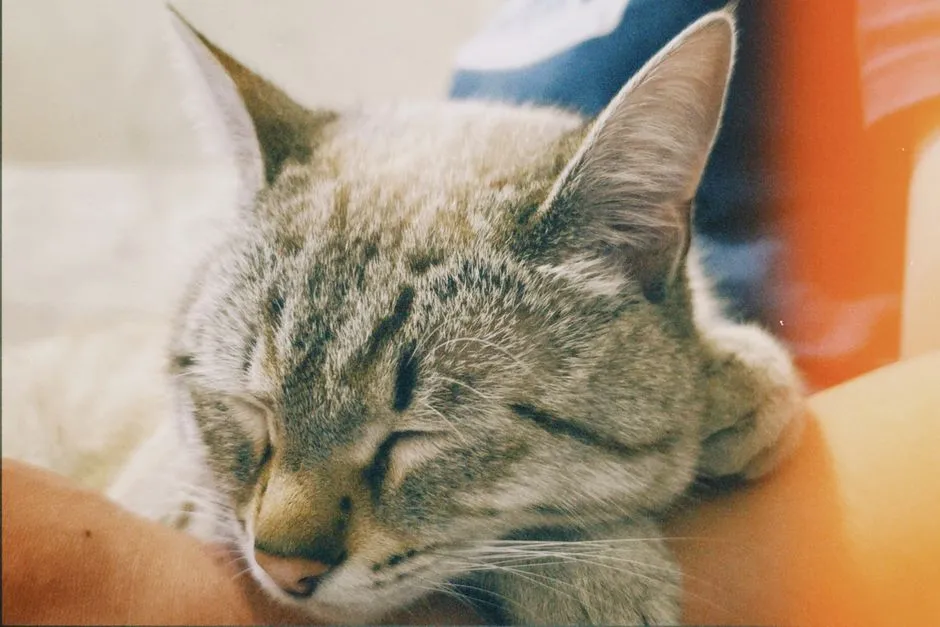
What makes this behavior so interesting is how much it communicates without a single sound. No meow, no gesture. Just a warm body pressing firmly against yours in the dark. That pressure carries trust, instinct, territorial claim, biochemistry, and something that looks very much like affection, all at once.
Cats are often described as aloof, but the nightly ritual of pressing against your legs tells a different story. It’s one of the quietest forms of loyalty in the animal world, and once you understand what’s behind it, it’s hard not to find it genuinely moving.
AI Disclaimer: This article was created with the assistance of AI tools and reviewed by a human editor.