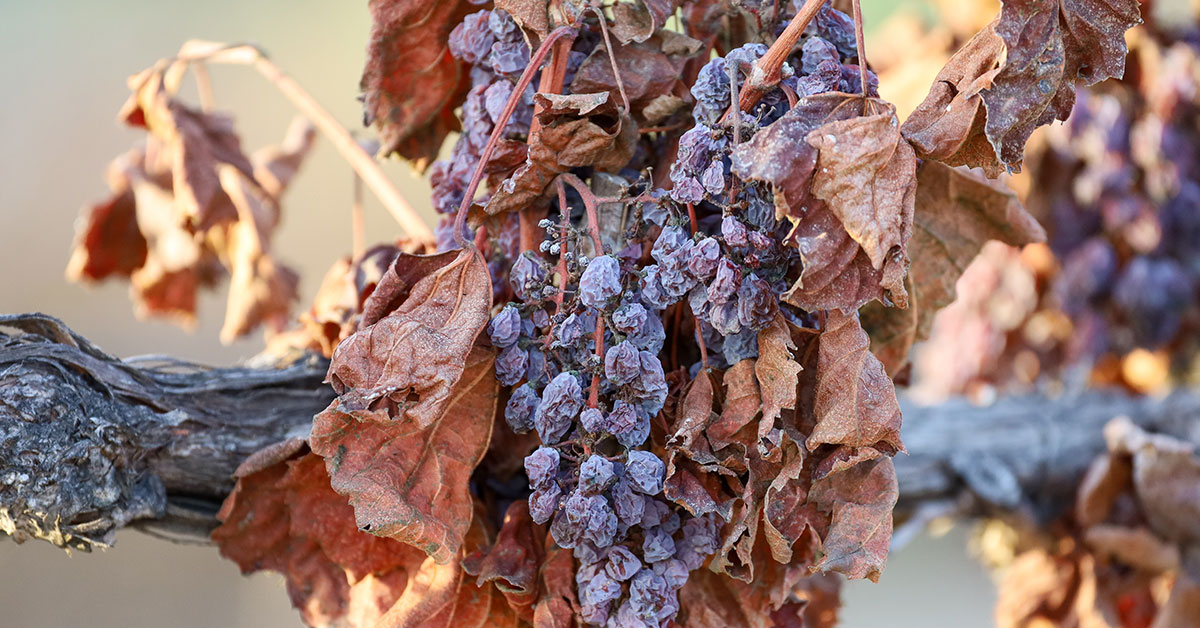

Grape plants are popular backyard fruit-bearing plants that require special care to flourish. One common question I get is: Why are my grape leaves turning brown? One of the most common problems grape growers face is brown leaves. Brown leaves can be caused by several factors, and it is essential to identify the root cause to fix the issue effectively. In this article, we will explore the possible causes of brown leaves on grape plants and how to address them.
Why are my grape leaves turning brown?
There are a few reasons why grape leaves turn brown, from environmental stress to pests to disease. Let’s look at each likely cause and how to resolve it.
Environmental Stress
Grape plants are sensitive to environmental stress. They require adequate sunlight, water, and nutrients to thrive. Lack of these essential requirements can cause the plant’s leaves to turn brown. For instance, if the plant is not receiving enough water, the leaves will start to wilt and eventually turn brown. Inadequate sunlight or too much sun exposure can also cause leaves to turn brown.
Ensure that the grape plant receives sufficient water, sunlight, and nutrients. Water the plant regularly and ensure that the soil is well-draining. Avoid overwatering or underwatering. If the plant is exposed to too much sun, consider providing some shade or moving it to a location with less direct sunlight.
Pests and Diseases
Grape plants are susceptible to several pests and diseases that can cause the leaves to turn brown. Some common pests that attack grape plants include spider mites, leafhoppers, and grape mealybugs. Fungal diseases such as powdery mildew, downy mildew, and black rot can also cause leaves to turn brown.
Inspect the grape plant regularly for signs of pests and diseases. Use organic pest control methods such as neem oil, insecticidal soap, or diatomaceous earth to control pests. For fungal diseases, use fungicides that are safe for the plant and the environment. Also, ensure that the grape plant has adequate air circulation to prevent the development of fungal diseases.
Nutrient Deficiency
Grape plants require several essential nutrients to grow healthy leaves. If the plant lacks any of these nutrients, the leaves will start to turn brown. The most common nutrient deficiencies that cause leaves to turn brown are nitrogen, magnesium, and iron deficiencies.
Apply a balanced fertilizer that contains nitrogen, magnesium, and iron. Ensure that the fertilizer is well-balanced and provides all the essential nutrients required by the grape plant. Follow the manufacturer’s instructions on how to apply the fertilizer.
Over-fertilization
Applying too much fertilizer can also cause the leaves to turn brown. Over-fertilization can lead to a buildup of salt in the soil, which can damage the roots and cause the leaves to turn brown.
Use the correct amount of fertilizer recommended for the grape plant. Avoid applying fertilizer more frequently than recommended. Also, avoid applying fertilizer to the leaves, as this can cause damage.
Brown leaves on grape plants can be caused by several factors, including environmental stress, pests and diseases, nutrient deficiency, and over-fertilization. Identifying the root cause is essential to fix the problem effectively. By following the solutions outlined in this article, you can ensure that your grape plant grows healthy leaves and produces a bountiful harvest.