
Welcome to the world of sweet potatoes, where delicious and nutritious tubers await your green thumb! If you’re residing in Zone 5, you may be wondering when the optimal time is to plant these delectable root vegetables. Zone 5, characterized by its cold winters and moderate growing season, presents a unique challenge for sweet potato enthusiasts. However, fear not, as we are here to guide you through the process. In this article, we will delve into the ideal planting time for sweet potatoes in Zone 5, taking into account the frost dates, soil temperature requirements, and other essential factors to ensure a successful harvest. So, grab your gardening gloves and let’s dig in!
Best varieties of sweet potato to grow in Zone 5
In Zone 5, where the average minimum winter temperature ranges from -20 to -10 degrees Fahrenheit (-28 to -23 degrees Celsius), it can be a bit challenging to grow sweet potatoes. However, there are a few varieties that tend to perform better in colder climates. Here are some sweet potato varieties that are known to grow relatively well in Zone 5:
- Beauregard: This is one of the most popular sweet potato varieties, known for its high yields and good disease resistance. It has a relatively short growing season, which makes it suitable for cooler climates.
- Georgia Jet: This variety is known for its excellent cold tolerance and can handle cooler temperatures better than many other sweet potato varieties. It has a shorter growing season and produces medium-sized, reddish-orange tubers.
- Covington: Covington is a relatively new variety that has gained popularity for its high yields and excellent disease resistance. It performs well in cooler climates and produces uniform, reddish-orange tubers.
- Northern Star: This variety was specifically bred for northern climates and has good cold tolerance. It has a shorter growing season and produces medium-sized, orange-fleshed tubers.
- Orleans: Orleans is another variety that is known for its cold tolerance. It has a slightly longer growing season compared to some other varieties but can still be grown successfully in Zone 5. It produces medium to large, orange-fleshed tubers.
When growing sweet potatoes in Zone 5, it’s important to start them indoors or in a greenhouse to give them a head start before transplanting them outdoors after the last frost date. Additionally, providing them with a warm and sunny location, well-drained soil, and regular watering will help ensure their success.
When to plant sweet potatoes in Zone 5
In Zone 5, the best time to plant sweet potatoes is typically in late spring or early summer, when the soil has warmed up to at least 60°F (15°C). This is usually around late May to early June. Sweet potatoes are warm-season crops and require a long growing season of about 90 to 120 days, so it’s important to give them enough time to mature before the first frost in the fall.
How to grow sweet potatoes
Growing sweet potatoes requires careful planning and attention to detail. Here are the steps and considerations to keep in mind:
- Climate and Soil: Sweet potatoes thrive in warm climates with a long growing season. They require well-drained, loose soil with a pH between 5.8 and 6.2. Ensure that the soil is rich in organic matter and has good fertility.
- Variety Selection: Choose a sweet potato variety suitable for your climate and personal preferences. Some popular varieties include Beauregard, Covington, and Jewel.
- Starting Slips: Sweet potatoes are usually grown from slips, which are small rooted sprouts. You can purchase slips from a nursery or start your own by placing a sweet potato in a jar of water, allowing it to sprout. Once the slips are around 6-8 inches long, carefully remove them from the sweet potato and plant them.
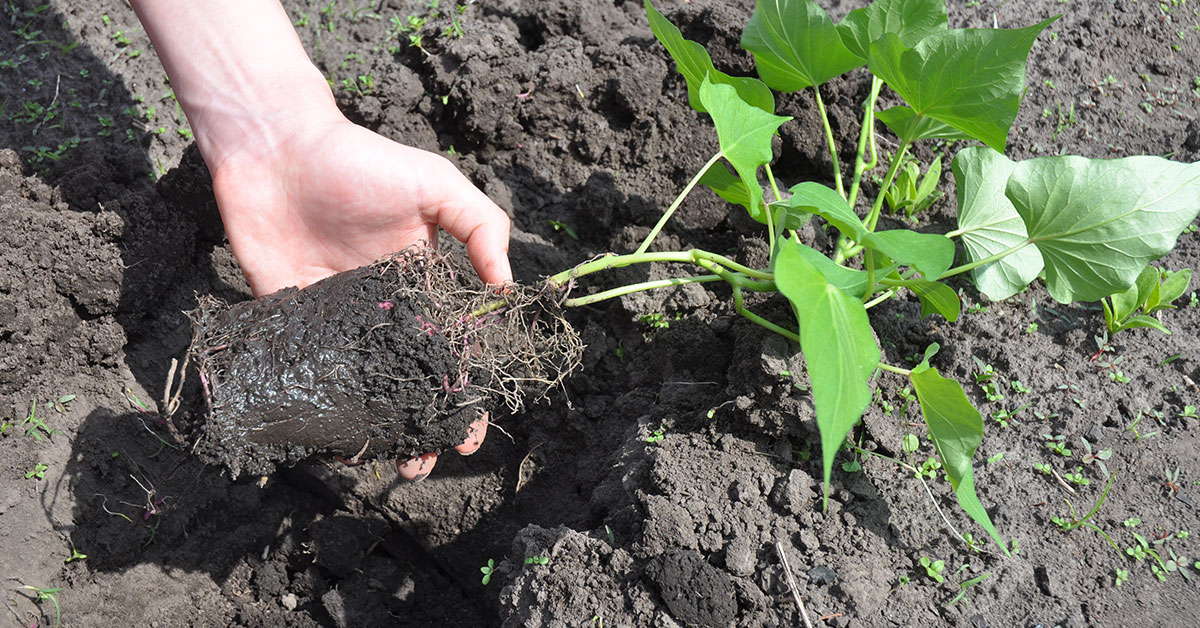
- Planting: Plant the slips in the ground after the last frost date in your area. Space them about 12-18 inches apart in rows that are 3-4 feet apart. Bury the slips up to the leaves, leaving only a few inches above the soil surface.
- Watering: Sweet potatoes require consistent moisture, especially during the first few weeks after planting. Water deeply but avoid overwatering, as it can lead to rotting. Mulching the soil around the plants can help retain moisture.
- Fertilization: Sweet potatoes benefit from regular fertilization. Apply a balanced fertilizer before planting and side-dress with additional fertilizer throughout the growing season. Avoid excessive nitrogen, as it can promote excessive foliage growth at the expense of tuber development.
- Weed Control: Keep the area around the sweet potato plants weed-free. Weeds compete for nutrients and water, which can hinder the growth of sweet potatoes.
- Vine Training: Sweet potato vines can grow vigorously. Train the vines to grow in a specific direction to prevent them from overtaking other plants or areas of the garden.
- Pest and Disease Management: Common pests that affect sweet potatoes include sweet potato weevils, wireworms, and whiteflies. Monitor your plants regularly and take appropriate measures, such as using insecticidal sprays or introducing beneficial insects, to control pests. Diseases like sweet potato scurf and fusarium wilt can also be a concern, so practice crop rotation and maintain good soil health to minimize the risk.
- Harvesting: Sweet potatoes are typically ready to harvest 90-120 days after planting, depending on the variety. Harvest when the leaves start to yellow and die back. Carefully dig up the tubers, being cautious not to damage them. Cure the harvested sweet potatoes in a warm, well-ventilated area for 10-14 days to improve their flavor and storage life.
By following these steps and considering the specific needs of sweet potatoes, you can successfully grow your own delicious harvest.
When to harvest sweet potatoes in Zone 5
In Zone 5, sweet potatoes should be harvested in the late summer or early fall, typically around 100-120 days after planting. The exact timing can vary depending on the specific variety you are growing and the weather conditions in your area. It is important to monitor the plants closely and look for signs of maturity before harvesting. Signs of maturity include yellowing and dying of the vines, as well as the skin of the sweet potatoes becoming firm and tough. Once these signs are observed, you can carefully dig up the sweet potatoes, being careful not to damage them, and allow them to cure for a week or two in a warm, dry location before storing them for long-term use.
Common sweet potato plant problems and fixes
There are a few common problems that can arise when growing sweet potatoes, but fortunately, there are also solutions to address them. Here are some of the most common problems and their fixes:
- Poor soil drainage: Sweet potatoes require well-drained soil to prevent root rot. If your soil doesn’t drain well, you can amend it by adding organic matter such as compost or well-rotted manure to improve drainage.
- Pests: Sweet potatoes can be susceptible to pests like sweet potato weevils, aphids, and whiteflies. To control these pests, you can use organic insecticides or introduce beneficial insects like ladybugs or lacewings to your garden. Regularly inspect your plants for signs of infestation and take appropriate action.
- Diseases: Sweet potatoes can be affected by diseases such as fungal rots, leaf spots, and viruses. To prevent diseases, ensure proper spacing between plants for good air circulation. Avoid overwatering, as excess moisture can encourage fungal growth. If you notice signs of disease, promptly remove and destroy affected plants to prevent further spread.
- Nutrient deficiencies: Sweet potatoes require a balanced supply of nutrients to thrive. Common nutrient deficiencies include nitrogen, phosphorus, and potassium. Regularly test your soil to determine any deficiencies and amend it accordingly with organic fertilizers or compost.
- Improper curing and storage: After harvesting sweet potatoes, they need to be cured and stored properly to prevent rotting. Cure sweet potatoes by placing them in a warm, humid environment (around 85°F/29°C and 85% humidity) for about 10 days. After curing, store them in a cool, dry place with good ventilation to prevent mold or decay.
Remember, prevention is key to avoiding many common problems. Providing optimal growing conditions, practicing good garden hygiene, and monitoring your plants regularly will help ensure a successful sweet potato harvest.