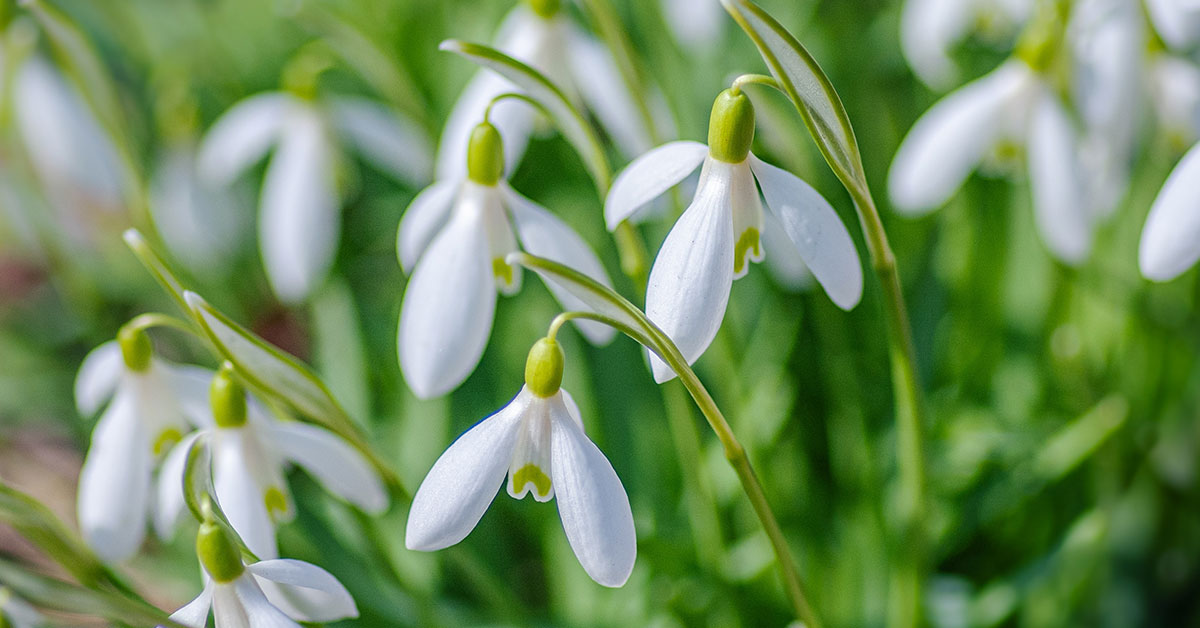

When it comes to the arrival of spring, few flowers are as eagerly anticipated as the delicate and enchanting snowdrops. These dainty white blossoms, known for their ability to pierce through the frosty ground, symbolize hope, renewal, and the imminent end of winter. In this article, we will explore the ideal planting time for snowdrops in the UK, taking into account their natural growth cycle, climatic conditions, and key considerations to help you cultivate a beautiful carpet of snowdrops that will herald the arrival of spring in your outdoor space.
Best varieties of Snowdrops to grow in the UK
There are several good varieties of snowdrops that perform well in the UK. Here are a few popular ones:
- Galanthus nivalis: Also known as the common snowdrop, this is a classic variety that is widely grown in the UK. It has white, bell-shaped flowers with green markings on the inner petals.
- Galanthus elwesii: This variety is larger and more robust than G. nivalis. It has broader leaves and larger flowers, often with a distinct honey scent. It blooms slightly later than G. nivalis.
- Galanthus Atkinsii: This variety is known for its elegant, pure white flowers with green markings. It has larger blooms and taller stems compared to G. nivalis, making it highly sought after by collectors.
- Galanthus woronowii: This species has broad, silver-gray leaves and elegant white flowers with green markings. It tends to bloom earlier than other varieties and can be naturalized in woodlands or shady borders.
- Galanthus plicatus: This variety has distinct pleated leaves and delicate white flowers with green markings. It blooms slightly later than G. nivalis and is particularly well-suited for naturalizing in grassy areas.
These are just a few examples of the many snowdrop varieties available in the UK. Each has its own unique characteristics, so you can choose the ones that appeal to you the most.
When to plant snowdrops in the UK
In the UK, the hardiness zones are determined by the Royal Horticultural Society (RHS) and are divided into 13 zones ranging from H1 to H7, with subcategories denoted by a or b. These zones are used to indicate the average minimum winter temperatures in different regions of the country.
Snowdrops (Galanthus) are lovely little flowers that are often the first to bloom in late winter or early spring. They are known for their delicate white petals and green markings. Snowdrops are generally hardy in the UK and can tolerate cold temperatures.
The best time to plant snowdrops in the UK is during the autumn months, ideally between September and November. This timing allows the bulbs to establish their roots before the cold winter sets in. Planting during this period also gives them ample time to go through the natural cooling process required for proper growth and flowering.
When selecting a location for snowdrops, it is important to consider their preferred growing conditions. Snowdrops thrive in moist, well-draining soil that is rich in organic matter. They prefer partial shade or dappled sunlight, making them an ideal choice for planting under deciduous trees or along woodland edges.
To plant snowdrops, dig a shallow hole or trench, about 2-3 inches deep. Place the bulbs in the hole, pointy end up, and cover them with soil. It’s recommended to plant them in groups or clusters for a more impactful display. Space the bulbs around 2-3 inches apart to allow for natural spreading over time.
After planting, water the area thoroughly to settle the soil and ensure good contact with the bulbs. There is no need to water extensively after this initial watering, as snowdrops prefer a slightly drier soil during their dormant period.
Snowdrops generally do not require much maintenance. However, it is advisable to mulch the area with a layer of organic matter, such as leaf mold or compost, to help retain moisture and suppress weed growth. Mulching also provides insulation for the bulbs during colder months.
In terms of hardiness zones, snowdrops can be successfully grown throughout the UK, as they are well-adapted to the country’s temperate climate. However, they may perform better in areas with milder winters, such as the southern regions (zones H3-H4). In colder regions, such as the Scottish Highlands (zones H6-H7), snowdrops may still grow, but they might bloom slightly later in the spring.
Remember, nature can be unpredictable, and different microclimates within zones can affect plant growth. It’s always best to consult local gardening resources or experienced gardeners in your specific area for more precise advice regarding your garden’s unique conditions.
Other considerations
When growing snowdrops in the UK, there are several other considerations to keep in mind:
- Soil: Snowdrops prefer moist, well-draining soil that is rich in organic matter. They thrive in loamy or sandy soils with a slightly acidic to neutral pH level. If your soil is heavy clay, consider improving drainage by adding compost or grit to the planting area.
- Light requirements: Snowdrops prefer partial shade or dappled sunlight. Avoid planting them in areas with intense, direct sunlight as it may scorch the delicate flowers and foliage.
- Watering: While snowdrops are relatively low-maintenance, they do require consistent moisture, especially during their active growth period in spring. Water them regularly, ensuring the soil remains evenly moist but not waterlogged. During the dormant period in summer, reduce watering to prevent rotting.
- Planting depth: Snowdrop bulbs should be planted about 2-3 inches (5-7.5 cm) deep and spaced approximately 3-4 inches (7.5-10 cm) apart. Planting them too shallow may lead to poor establishment and reduced flower production.
- Mulching: Applying a layer of organic mulch, such as leaf mold or compost, around snowdrop plants can help conserve moisture, suppress weed growth, and enrich the soil. Avoid mulching directly over the bulbs as it may obstruct their emergence in spring.
- Maintenance: Snowdrops benefit from regular division every few years to prevent overcrowding and maintain vigor. Divide clumps after flowering while the foliage is still green. Gently lift the clump, separate the bulbs, and replant them at the appropriate depth. Remove any yellowing or damaged foliage to promote healthy growth.
- Pests and diseases: Snowdrops are generally resistant to most pests and diseases. However, they can occasionally be affected by pests like slugs and snails, which may feed on the foliage and flowers. Consider natural pest control methods or protective measures like copper tape around the planting area.
- Naturalizing: Snowdrops are excellent for naturalizing in woodland areas, under deciduous trees, or in shady borders. They can spread by self-seeding and bulb offsets, forming beautiful carpets of delicate blooms over time.
By considering these factors, you can create optimal growing conditions for snowdrops and enjoy their enchanting beauty in your UK garden.