
Welcome to the world of gardening in Manitoba! If you’re an avid gardener or just starting out, you may be wondering about the best time to plant onions in Manitoba. Manitoba’s climate, with its long, cold winters and short growing season, presents unique challenges for gardeners.
However, with proper planning and timing, you can still enjoy a bountiful harvest of onions. In this article, we will explore the ideal time to plant onions in Manitoba, taking into account the frost dates, soil temperature, and specific onion varieties that thrive in this region.
Whether you’re a seasoned gardener or a beginner, this guide will help you make the most of your onion-growing adventure in Manitoba.
Best onions to grow in Manitoba
In Manitoba, some good varieties of onions that are well-suited for growing include:
- Yellow Sweet Spanish: This variety produces large, sweet-tasting onions that are excellent for cooking and storing.
- Red Wing: Known for its deep red color and mild flavor, Red Wing onions are great for fresh eating or grilling.
- Copra: Copra onions are known for their excellent storage qualities. They have a pungent flavor and are ideal for cooking and long-term storage.
- Walla Walla: Although originally from Washington state, Walla Walla onions can also be successfully grown in Manitoba. They have a mild and sweet flavor, making them perfect for salads and fresh eating.
- Ruby Ring: This variety produces medium-sized red onions with a sweet and mild flavor. They are great for slicing and using in salads or sandwiches.
- Stuttgarter: Stuttgarter onions are a popular variety in Manitoba due to their adaptability to different growing conditions. They have a mild flavor and can be used for both fresh eating and cooking.
It’s important to note that onion varieties can vary in their adaptability to specific growing conditions and climates, so it’s always a good idea to consult with local nurseries or experienced gardeners in your area for the best varieties for Manitoba’s specific climate and soil conditions.
When to plant Onions in Manitoba
In Manitoba, the hardiness zones range from 2a to 4b. The southern part of the province, including Winnipeg, falls under zone 3a, while the northern regions are predominantly in zone 2a. These hardiness zones indicate the average minimum winter temperature, which helps gardeners determine which plants can withstand the local climate.
When it comes to planting onions in Manitoba, the best time to do so depends on the specific type of onion you are growing. Onions can be classified into two main categories: long-day onions and short-day onions.
Long-day onions, which require 14-16 hours of daylight to form bulbs, are typically planted in early spring. In Manitoba, this means planting them as soon as the ground is workable, which is usually around late April to early May. Long-day onion varieties that are suitable for Manitoba include ‘Copra,’ ‘Yellow Globe,’ and ‘Red Wing.’
On the other hand, short-day onions, which require 10-12 hours of daylight to form bulbs, are planted in late summer for a fall harvest. These onions are not typically grown in Manitoba due to the short growing season and cooler temperatures. However, if you have a greenhouse or a protected growing environment, you can attempt to grow short-day onions by starting seeds indoors during spring and transplanting them to the garden in late May or early June.
It’s important to note that onions prefer well-draining soil with a pH level between 6.0 and 7.0. They should be planted in a location that receives full sun for most of the day. Regular watering and fertilizing will promote healthy growth and bulb development.
By considering the hardiness zones and planting timelines specific to Manitoba, you can ensure a successful onion harvest in your garden.
When to harvest Onions in Manitoba
The optimal time to harvest onions in Manitoba is typically in late summer or early fall, around August to September. This is when the onion bulbs have reached their full size and the tops of the plants start to naturally dry and turn yellow. It is important to monitor the plants closely during this time and harvest them when the majority of the tops have fallen over and dried out. This indicates that the onions have finished their growth and are ready to be harvested.
Other considerations
When growing onions in Manitoba, there are a few additional considerations to keep in mind:
- Timing: Onions are a cool-season crop and should be planted as soon as the ground can be worked in the spring. In Manitoba, this is typically around mid to late April. Make sure to check the local frost dates and plant accordingly.
- Varieties: Choose onion varieties that are well-suited for Manitoba’s climate. Some recommended varieties for Manitoba include ‘Copra,’ ‘Stuttgarter,’ ‘Yellow Sweet Spanish,’ and ‘Walla Walla.’
- Soil preparation: Onions prefer well-drained soil with a pH level between 6.0 and 7.5. Before planting, amend the soil with organic matter such as compost to improve its fertility and drainage.
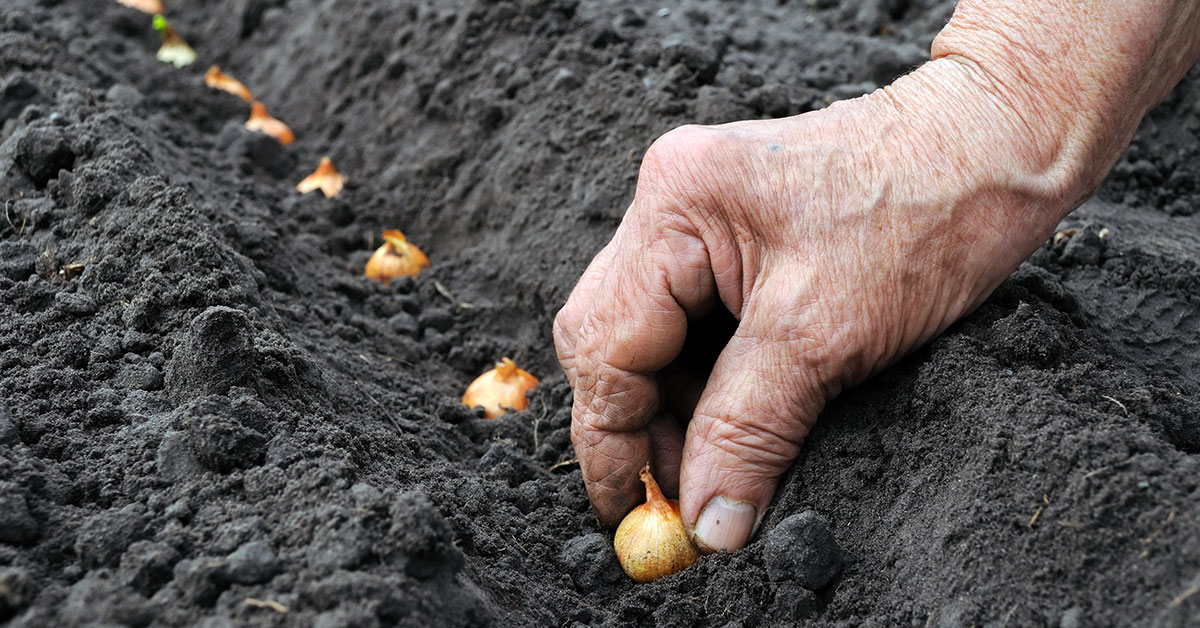
- Planting depth and spacing: Plant onion sets or transplants about 1 inch deep, with the neck of the bulb level with the soil surface. Space the sets or transplants about 4-6 inches apart, allowing enough room for the bulbs to develop.
- Mulching: Apply a layer of organic mulch around the onion plants to help conserve moisture, suppress weed growth, and maintain a more consistent soil temperature.
- Watering: Onions have shallow root systems, so consistent watering is essential. Keep the soil evenly moist, especially during dry periods. Avoid overwatering, as it can lead to root rot.
- Fertilization: Onions have moderate nutrient requirements. Prior to planting, incorporate a balanced fertilizer into the soil according to the package instructions. Side-dress with nitrogen-rich fertilizer once or twice during the growing season to promote leaf development.
- Weed control: Regularly weed the onion bed to prevent competition for nutrients and water. Be careful not to disturb the shallow onion roots while weeding.
- Pest and disease management: Keep an eye out for common onion pests such as onion maggots and thrips. Consider using row covers to protect young plants from these pests. Diseases like onion downy mildew and onion white rot can also be problematic. Rotate onion crops annually and practice good sanitation to minimize the risk of disease.
- Harvesting: Onions are ready for harvest when the tops start to yellow and fall over. Carefully lift the bulbs from the soil and let them cure in a well-ventilated, dry area for a few weeks before storing.
By considering these factors, you can increase your chances of successfully growing onions in Manitoba.