
Are you an Ontario gardener looking to add some delicious garlic to your homegrown pantry? Well, you’re in luck! Garlic is a versatile and flavorful addition to any garden, and Ontario’s climate provides the perfect conditions for a successful garlic crop. But when is the best time to plant garlic in this region? In this article, we will explore the ideal planting time for garlic in Ontario, taking into account the climate, soil conditions, and other factors that contribute to a bountiful harvest.
Whether you’re a seasoned gardener or a beginner, this guide will ensure that you plant your garlic at the optimal time to maximize your chances of success. So, grab your gardening gloves and let’s dive into the world of garlic planting in Ontario!
Best garlic varieties to grow in Ontario
There are several good varieties of garlic that grow well in Ontario. Some popular varieties include:
- Music Garlic: This variety produces large bulbs with a mild and sweet flavor. It is known for its easy-to-peel cloves and stores well.
- German Red Garlic: This hardneck variety is known for its rich and robust flavor. It has beautiful reddish-purple streaks on its bulb wrappers and typically produces larger cloves.
- Romanian Red Garlic: Another hardneck variety, Romanian Red Garlic has a strong and spicy flavor. It is known for its ability to tolerate cold temperatures, making it suitable for Ontario’s climate.
- Chesnok Red Garlic: This variety is a purple-striped hardneck garlic with a strong and rich flavor. It is known for its excellent storage qualities and is often used in cooking due to its complex taste.
- Italian Purple Garlic: This softneck variety produces smaller bulbs with a milder flavor. It is easy to grow and adapts well to different growing conditions.
Remember to choose garlic varieties that are suited for your specific growing conditions and preferences. It is always a good idea to check with local nurseries or agricultural extension offices for recommendations based on your specific location in Ontario.
When to plant Garlic in Ontario
Ontario is divided into various hardiness zones, which are determined by the average annual extreme minimum temperature. These zones provide valuable information for gardeners to determine which plants are suitable for their specific region. Here is an overview of Ontario’s hardiness zones and the best time to plant garlic in each of them:
- Zone 0a: This zone covers a small portion of Northwestern Ontario, including areas around Thunder Bay. The extreme minimum temperature ranges from -45°C to -42.8°C (-49°F to -45°F). In this zone, it is recommended to plant garlic in late August to early September.
- Zone 0b: This zone also covers parts of Northwestern Ontario, including areas around Kenora. The extreme minimum temperature ranges from -42.8°C to -40°C (-45°F to -40°F). Plant garlic in late August to early September.
- Zone 1a: This zone covers a larger portion of Northwestern Ontario, including areas around Dryden and Fort Frances. The extreme minimum temperature ranges from -40°C to -37.2°C (-40°F to -35°F). Plant garlic in late August to early September.
- Zone 1b: This zone covers areas in Northern Ontario, including communities like Timmins and Sudbury. The extreme minimum temperature ranges from -37.2°C to -34.4°C (-35°F to -30°F). Plant garlic in late August to early September.
- Zone 2a: This zone covers parts of Northern Ontario, including areas around North Bay and Parry Sound. The extreme minimum temperature ranges from -34.4°C to -31.7°C (-30°F to -25°F). Plant garlic in late August to early September.
- Zone 2b: This zone covers a significant portion of Southern Ontario, including cities like Toronto, Hamilton, and London. The extreme minimum temperature ranges from -31.7°C to -28.9°C (-25°F to -20°F). Plant garlic in late September to early October.
- Zone 3a: This zone covers areas in Southern Ontario, including cities like Windsor and Niagara Falls. The extreme minimum temperature ranges from -28.9°C to -26.1°C (-20°F to -15°F). Plant garlic in late September to early October.
- Zone 3b: This zone covers the southernmost parts of Ontario, including areas around Point Pelee. The extreme minimum temperature ranges from -26.1°C to -23.3°C (-15°F to -10°F). Plant garlic in late September to early October.
It is important to note that these are general guidelines, and local weather conditions can vary. It is always a good idea to monitor your specific area’s weather patterns and consult with local gardeners or agricultural extension offices for more precise information about planting garlic in your region.
When to harvest Garlic in Ontario
The optimal time to harvest garlic in Ontario is typically in mid to late summer, around July or August. This is when the garlic bulbs have fully formed and the foliage begins to turn yellow and die back. It’s important to harvest garlic before the foliage completely dries out to ensure the best quality and flavor. Keep an eye on the plants and wait for about two-thirds of the foliage to turn yellow before harvesting.
Other considerations
When growing garlic in Ontario, there are several other considerations to keep in mind. Here are a few:
- Climate and Timing: Garlic prefers cool temperatures and requires a period of cold dormancy to grow properly. In Ontario, it is best to plant garlic cloves in the fall, around late September to early October, so they can establish roots before winter sets in.
- Soil Preparation: Garlic requires well-drained soil with good organic matter content. Before planting, amend the soil with compost or well-rotted manure to improve fertility and drainage. Avoid waterlogged or heavy clay soils, as they can lead to root rot.
- Site Selection: Choose a sunny location for planting garlic, as it thrives in full sun. Ensure that the area has good air circulation to prevent disease development, as garlic is susceptible to fungal diseases.
- Sourcing Quality Bulbs: Select high-quality garlic bulbs for planting. Look for disease-free bulbs with firm cloves. Avoid using garlic from grocery stores, as they are often treated with chemicals to prevent sprouting.
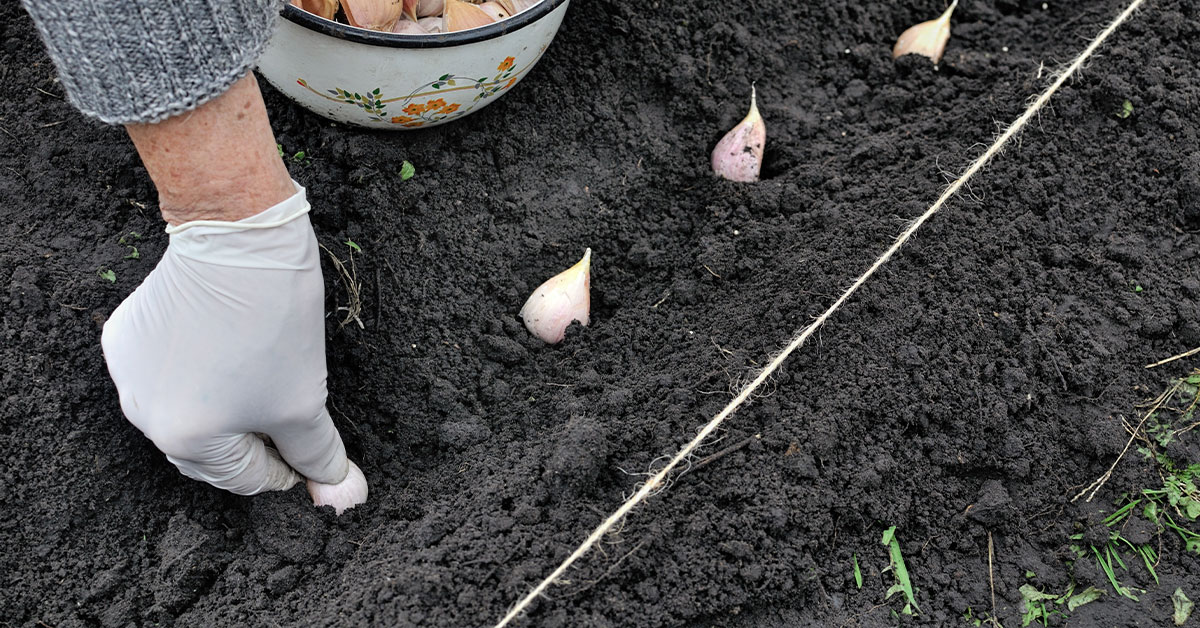
- Planting Depth and Spacing: Plant individual garlic cloves with the pointed end up, around 2-3 inches deep and spaced 4-6 inches apart. Space rows about 12-18 inches apart. Proper spacing allows bulbs to develop fully.
- Mulching: Apply a layer of mulch, such as straw or dried leaves, around the garlic plants after planting. Mulching helps conserve soil moisture, suppresses weed growth, and protects the bulbs from extreme temperature fluctuations during winter.
- Watering: Garlic requires consistent moisture, particularly during its early growth stages and bulb formation. Water regularly, aiming for about 1 inch of water per week. Avoid overwatering, as garlic is susceptible to root rot in waterlogged conditions.
- Fertilization: Garlic benefits from a balanced fertilizer application in early spring, just as it starts growing. Use a slow-release organic fertilizer or compost to supply nutrients gradually throughout the growing season.
- Pest and Disease Management: Keep an eye out for common garlic pests such as onion thrips, nematodes, and bulb mites. Monitor plants regularly and apply organic pest control methods if necessary. Proper crop rotation and maintaining good sanitation practices can also help prevent diseases like white rot or rust.
- Harvesting and Curing: Harvest garlic bulbs when the lower leaves turn yellow and start to dry. Carefully dig up the bulbs, avoiding bruising or damaging them. Allow the bulbs to cure in a dry, well-ventilated area with low humidity for about 2-3 weeks before storing.
Remember to always refer to specific garlic varieties and their recommended growing guidelines, as some may have specific requirements or considerations.