

There’s something quietly revealing about a book left facedown on a nightstand, spine cracked just past the halfway point, a receipt or old boarding pass standing in as a bookmark. It isn’t quite an accusation. It’s more like a question mark left in your own handwriting.
Most people have at least one. Some have a small stack. The half-finished book has become almost a universal domestic object, sitting somewhere between intention and reality. What it actually says about the person who left it there is more layered, and more interesting, than simple guilt would suggest.
The Numbers Behind the Nightstand

According to a YouGov survey released at the end of 2025, roughly four in ten Americans read no books at all that year, while another roughly a quarter read just one to four books. A further roughly one in eight managed five to nine books. These figures have remained fairly consistent across three consecutive years of tracking.
The median American read two books in 2025. The average, however, was eight, a number pulled upward by a small group of very committed readers. That gap between median and average tells a story on its own: a relatively small portion of the population is carrying much of the reading load.
The top four percent of Americans who say they read fifty or more books account for roughly half of all books read across the country. Which means the half-finished book on most nightstands is not an exception. It’s closer to the statistical norm.
Why the Middle of a Book Is the Hardest Part

You begin a book feeling excited. The opening chapters pull you in, and you picture yourself finishing quickly. But after a few days something changes. The pace slows. You stop reaching for it. Days become weeks, and the bookmark hasn’t moved at all.
Most people assume the problem is the book itself. The reason is often more psychological. Factors like attention span, motivation, and mental fatigue all influence how engaged we stay with a book. A slow middle section in a novel does not help, but it rarely deserves full blame.
The most common reason people abandon books is that the book fails to connect with them emotionally. Many people expect a book to provide a meaningful, emotional experience that resonates with them. When that resonance never quite arrives, the book simply gets set down and not picked back up.
What Cognitive Science Says About Interrupted Reading

The issue behind many abandoned books isn’t desire. It’s what researchers describe as cognitive fragmentation. Our brains are increasingly shaped by habits and technologies that prize skimming over depth, and speed over immersion.
Studies show it can take the brain up to twenty minutes to fully re-engage after an interruption. You may sit down with a book, but your brain is still in a fragmented state. Reading becomes a struggle not because the book is hard, but because your cognitive rhythm is misaligned with the task.
Apps and notifications train the brain to seek novelty. Every scroll and tap is a micro-reward. Over time, the reward system adapts to this pace, making slower, more immersive tasks feel unrewarding. This is not a character flaw. It’s a measurable neurological shift.
The Guilt Attached to an Unfinished Book

Another hidden block is psychological: the pressure to finish. When reading feels like a chore, it triggers the same emotional response as unfinished to-do lists or neglected inboxes. The book stops being pleasure and starts feeling like obligation.
According to Self-Determination Theory, developed by University of Rochester psychologists Richard Ryan and Edward Deci, intrinsic motivation is the engine that runs on itself. It doesn’t need external fuel. You do the thing because doing the thing is the thing.
Research summarized by Medical News Today suggests that leaning too hard on extrinsic rewards can erode intrinsic drive over time, and can undermine learning and retention when the reward is the main reason someone is showing up. Finishing a book you aren’t enjoying, purely so you can say you finished it, is extrinsic motivation at its most counterproductive.
It Might Actually Signal a Curious Mind

When you read because you’re curious rather than because you feel obligated, you actually retain more of what you read and enjoy the process more, even if you don’t make it to the final page. That’s a meaningful reversal of the standard assumption.
If you’ve spent years feeling guilty about a growing pile of unfinished books, the research suggests giving yourself a break. Your mind isn’t broken. It’s busy doing what it does best: exploring, connecting, and seeking out new ideas.
People who start many books and finish few of them often show high openness to experience, one of the core dimensions in personality psychology. Openness to experience is one of the Big Five personality traits that psychologists use to describe human personality, and people who score high in this area tend to be imaginative, curious, and drawn to variety. A chaotic nightstand might actually be a map of a restless, searching intellect.
The Nightstand Book as a Sleep Aid

A study conducted by the University of Sussex raised participants’ stress levels and then attempted to reduce them. Cognitive neuropsychologist Dr. David Lewis found that reading worked best, reducing stress levels by roughly two thirds. It outperformed listening to music, drinking tea or coffee, and taking a walk.
It took just six minutes for participants’ heart rates to slow and stress levels to be reduced. Six minutes. That alone reframes the half-finished book sitting on the nightstand. Even without finishing it, reaching for it each night may be doing genuine work.
Research suggests that people who read before bed generally sleep better, wake up less often, and sleep for longer than people who go to bed without reading. So the book that never gets finished is still, quietly, earning its place in the room.
What Genre the Abandoned Book Belongs To Often Matters
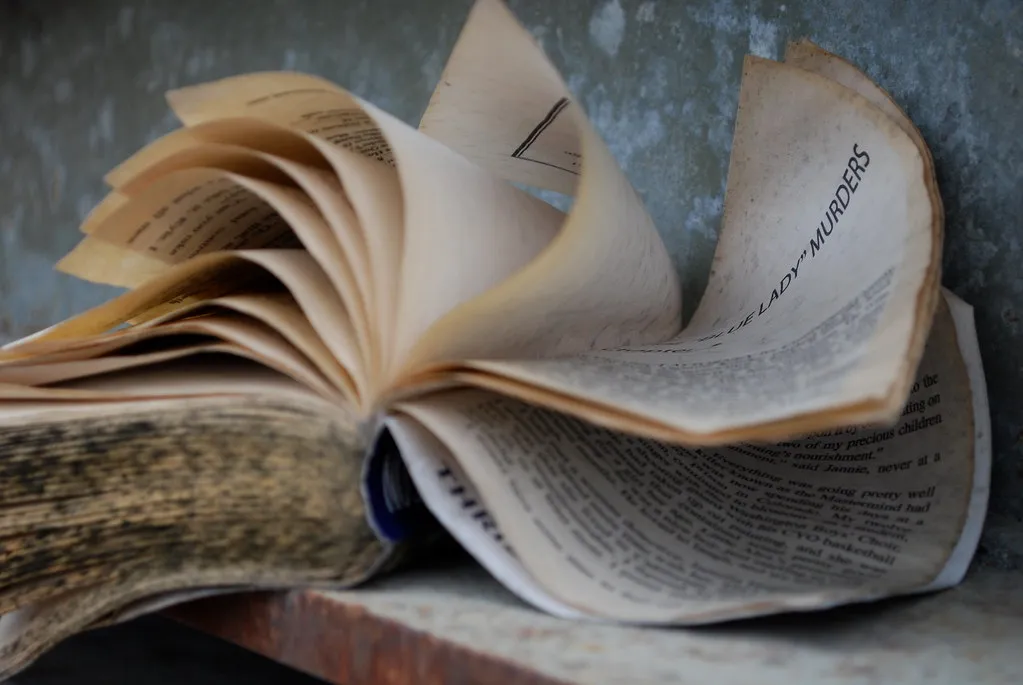
Difficulty finishing certain books may reflect how modern habits have shaped expectations around speed and immediate rewards. Sometimes, patience creates a deeper reading experience. Dense nonfiction, translated literature, and long narrative histories tend to be the genres most commonly left unfinished.
Fiction that builds slowly, with few plot hooks in the early chapters, suffers the same fate. Emotional investment plays a significant role in why we can’t put certain books down. When we strongly relate to a character’s experience or feel emotionally invested in the story, it becomes challenging to detach. We’re driven to find out what happens next.
The abandoned self-help book is its own category. Readers often stop once they’ve absorbed the core idea, even if they’re only a third of the way through. This isn’t failure. It might be efficiency. The book delivered what was needed, and the mind moved on.
The Social Life of the Half-Read Book

There is a quiet social dimension to the books people leave visible. A half-finished novel on a nightstand is a small signal, a piece of personal identity on display. Guests notice. Partners notice. The book you’re visibly in the middle of communicates something about the kind of person you consider yourself to be, or aspire to be.
Research consistently shows that roughly four out of five Americans say reading is a useful way to learn about the world, and about three quarters say it’s relaxing. The aspiration to read is near-universal. The execution, as the data shows, is considerably more uneven.
The book you’re reading is also a conversation starter in a way that a phone screen never is. Leaving a book face-up on the nightstand invites a kind of low-key intimacy. It’s a window into your current preoccupations, opened just enough to let some light in.
What the Long-Term Research on Reading Tells Us

A landmark 2016 study published in Social Science and Medicine reported that book readers live on average twenty-three months longer than non-book readers. Whether you finish every book you start or not, maintaining a reading habit appears to carry genuine biological benefit.
Reading can also reduce the risk of developing degenerative diseases like Alzheimer’s. A study found that people who engage their brains in cognitive exercises like reading, solving puzzles, or playing chess are roughly two and a half times less likely to develop the illness. This is likely tied to the fact that keeping the brain active seems to be a key factor in staving off cognitive decline.
A 2024 study in Psychological Medicine analyzed the reading habits of more than ten thousand U.S. adults and found consistent associations between reading and reduced stress, anxiety, and depression. The half-finished book is, in this sense, still doing something right. It’s keeping the brain in the game, even when the game slows down at page 147.
When Not Finishing Is the Right Call

The ability to abandon a book, a plan, or an obligation that no longer earns its keep isn’t a lapse in character. It’s a recalibration of what the remaining hours are actually for, and the psychology behind it is clearer than the culture lets on.
Reading should never feel like punishment. If a book isn’t doing it for you, put it down. Pick up another one. The goal isn’t to finish books. The goal is to keep the spark alive. That’s not a low standard. It’s an honest one.
The books we put down aren’t always failures of will. Sometimes a book arrives at the wrong moment in a person’s life, and the right move is to let it wait. Some readers return to a half-finished book a year later and can’t put it down. The nightstand is patient. The book isn’t going anywhere.
The Quiet Honesty of It

A half-finished book on a nightstand is not an indictment. It’s evidence of something attempted. It shows that someone, at the end of a long day, reached for something more demanding than a scroll or a stream, even if they didn’t always make it past chapter nine.
The broader reading data paints a picture of a culture where the aspiration to read remains strong but sustained attention is genuinely hard to come by. Most Americans who did read books only finished a handful, while a minority were plowing through the pages. The unfinished book is not the outlier. It’s the experience most people are actually having.
That weathered bookmark, that cracked spine, that slightly dog-eared page 83 – they’re not signs of laziness. They’re evidence of a life busy enough to make stillness difficult, and curious enough to keep trying anyway. The half-finished book says more generous things than its owner usually gives it credit for.
AI Disclaimer: This article was created with the assistance of AI tools and reviewed by a human editor.