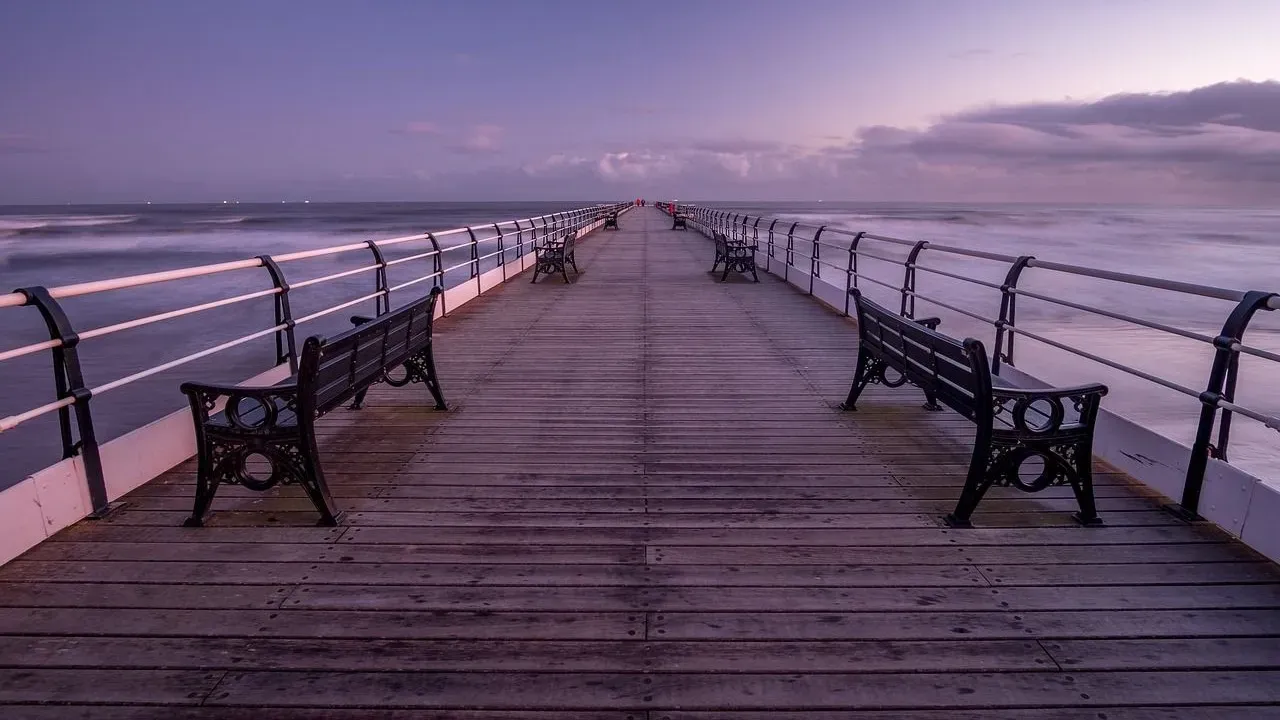

The end of Pacifica Pier, a fishing landmark on the San Mateo County coast, fell into the Pacific on Wednesday as a large wave struck during some of the year’s highest tides. ([1])The collapse was recorded on camera, and the footage has spread quickly among people following the storm across the Bay Area.
A landmark already out of service
The Pacifica Municipal Pier was built in 1973 and stretches about 1,140 feet in an L shape. ([2])For decades it drew anglers and crabbers, but the aging structure had taken repeated storm damage over the years. Its status had already changed before this week. The pier had been closed since earlier in 2026, after its entrance cracked and began to break apart, a problem that led to the demolition of a beloved cafe. ([3])
City officials had been working for months to stabilize the site, so Wednesday’s failure is a serious setback. ([4])The pier remains shut down indefinitely.
Waves that arrived larger than forecast
Reports from the morning describe a coastline hit by conditions that went beyond expectations. The Bay Area’s highest November tides on record coincided with ocean swells far larger than forecast, according to one regional account. ([5])The combination flooded neighborhoods, closed roads and beaches, and triggered evacuation warnings from Stinson Beach to Pacifica.
Several details from the scene stood out:
- Water pushed over the parking lot at Pacifica State Beach and onto portions of Highway 1 before 9 a.m.
- Streets in the Sharp Park neighborhood, just south of the pier, flooded more than a block inland.
- Waves overwhelmed seawalls and roads, while the tide in the bay ran a few inches below forecast.
- Video from storm watcher Colin McCarthy showed the entire end of the pier tipping backward into the water.
The pattern points to the open coast, not the bay, as the main source of trouble. Atmospheric pressure over the state held bay levels down, yet the swell still hit the shoreline hard.
What a king tide actually is
The phrase sounds dramatic, but it describes a regular event. A king tide is a popular, non-scientific term for exceptionally high tides. ([6])Tides rise and fall as the gravitational pull of the moon and sun shifts through their orbits, and the highest of these cycles produce the tides people call king tides.
The alignment is not unusual in itself. King tides typically occur when the sun, moon and Earth are nearly aligned, and their gravitational pull adds together. ([7])In California, the state’s coastal agency notes that king tides are not related to climate change, yet they often run one to two feet above average high tides. ([8])
The danger comes when a large tide meets large waves. Because king tides bring unusually high water levels, they can cause local tidal flooding, and strong winds and storms can make that flooding worse. ([9])That is what made this week’s conditions so hazardous for a structure that was already weakened.
Records, reactions and what comes next
San Francisco’s water level rose above 8 feet on Tuesday, a November record, and Wednesday’s high tides were expected to set another. ([10])Forecasters also linked the elevated ocean levels to a strong El Niño and an ongoing marine heat wave along the California coast, according to federal reporting. ([2])
The region has little time to recover before the next round arrives. Forecasters expected another wave of king tides as the wet weather moved out in time for a dry Thanksgiving Day. ([10])Coastal communities should expect more flooding in the days ahead, and officials have urged caution near the water.
The pier’s fall is a vivid reminder of how quickly a familiar coastal landmark can change. Crews and residents in Pacifica now face the task of assessing what remains and what the next high tide will bring.
AI Disclaimer: This article was created with the assistance of AI tools and reviewed by a human editor.