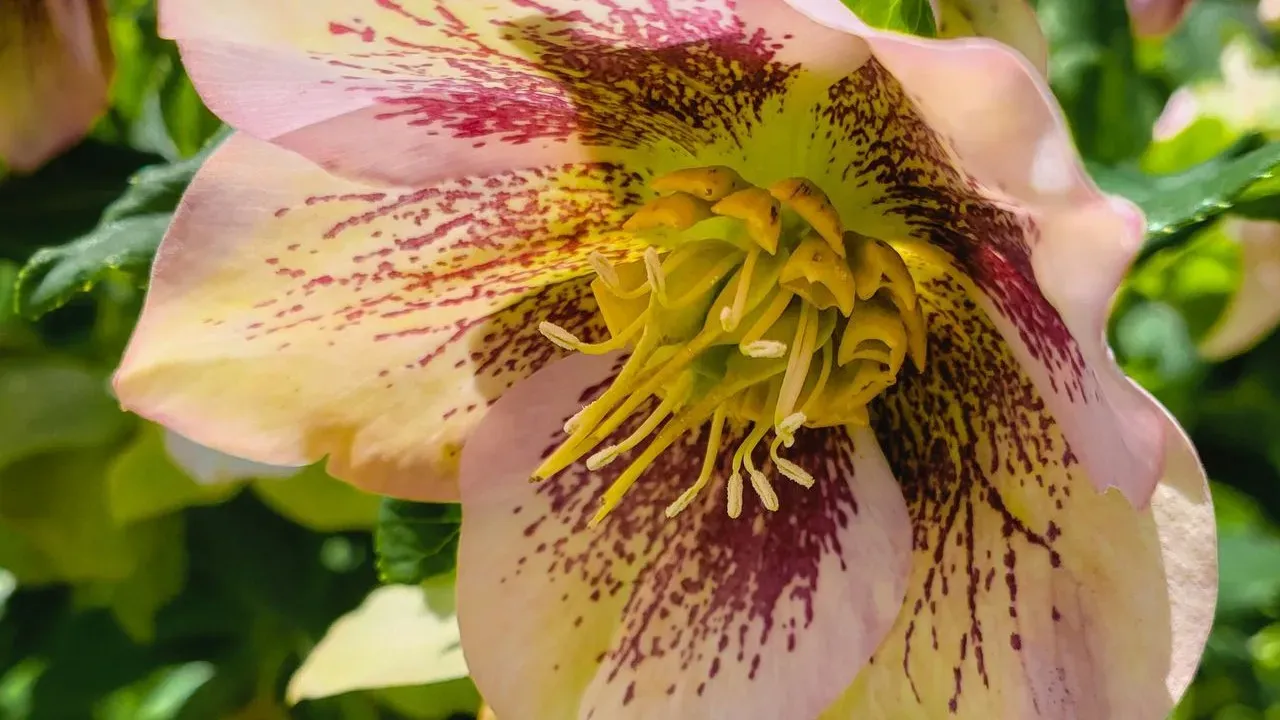

Late winter is often the bleakest stretch in the garden, when beds look bare and most perennials have not yet stirred. Hellebores can fill that gap with nodding blossoms in a range of colors, and they can be grown from seed. Starting them now is a patient project, but it can bring color to a garden that has little else to offer ([1]).
Expect a long wait before the first sprouts
Hellebore seed rarely rewards impatience. Germination can be slow, and in extreme cases it may take up to 18 months ([2]). Some gardeners find this uneven pace frustrating, since a dormant-looking pot can hide living seed for a long time.
Seed that has been stored dry can make the wait even harder. Fresh seed holds moisture and contains a developing embryo, and once it dries out in storage, the embryo often fails to recover ([3]). A packet bought mid-winter from a rack is therefore a weaker starting point than seed collected directly from a plant.
Timing and sowing choices that matter
Gardeners who save their own seed should aim to sow it while it is still fresh. Most hellebores produce seed ready for harvest in mid to late summer, though some hybrids do not set viable seed at all. Seed that has been pre-chilled in a refrigerator for four to six weeks before sowing can speed up the process ([2]).
Sowing depth is equally important. Seed is typically scattered over the surface of a moist, fine mix, then covered only lightly with compost, sand or grit. Seedlings generally need space to mature, and crowding can lead to moisture problems.
Quick checklist before sowing
- Use fresh seed whenever possible and avoid dried packet seed.
- Consider a short cold period in a refrigerator to encourage germination.
- Sow on the surface and cover very thinly.
- Keep moisture steady, never soggy or dry.
Keeping moisture in balance
Water is where many seed-starting efforts go wrong. Hellebore roots are vulnerable to waterlogging, which can damage the root system and, in severe cases, kill the plant ([2]). Still, the seed bed should not be allowed to dry out. Regular light watering through the growing season is widely recommended, along with outdoor placement in conditions similar to where the seedlings will eventually grow ([4]).
Once seedlings are large enough to handle, they can be moved into individual pots. Hellebores are generally suited to USDA hardiness zones 3 through 9, so local climate will shape how and when plants move into the ground ([4]).
Setting expectations for the first flowers
Flowers do not arrive quickly. Sources differ on how long seed-grown plants take to bloom. One guide notes that a plant grown from seed typically needs two to three years of growth before its first flower opens ([3]). Another suggests waiting three to four years for blooms on young plants ([5]). Growers should plan for the longer end of that range.
The reward is a plant that can return for years. Hellebores are long-lived perennials, so a bed started from seed today can provide color through many future winters and springs. For gardeners who want something blooming when the rest of the landscape is still resting, that patience may be worth the effort.
AI Disclaimer: This article was created with the assistance of AI tools and reviewed by a human editor.