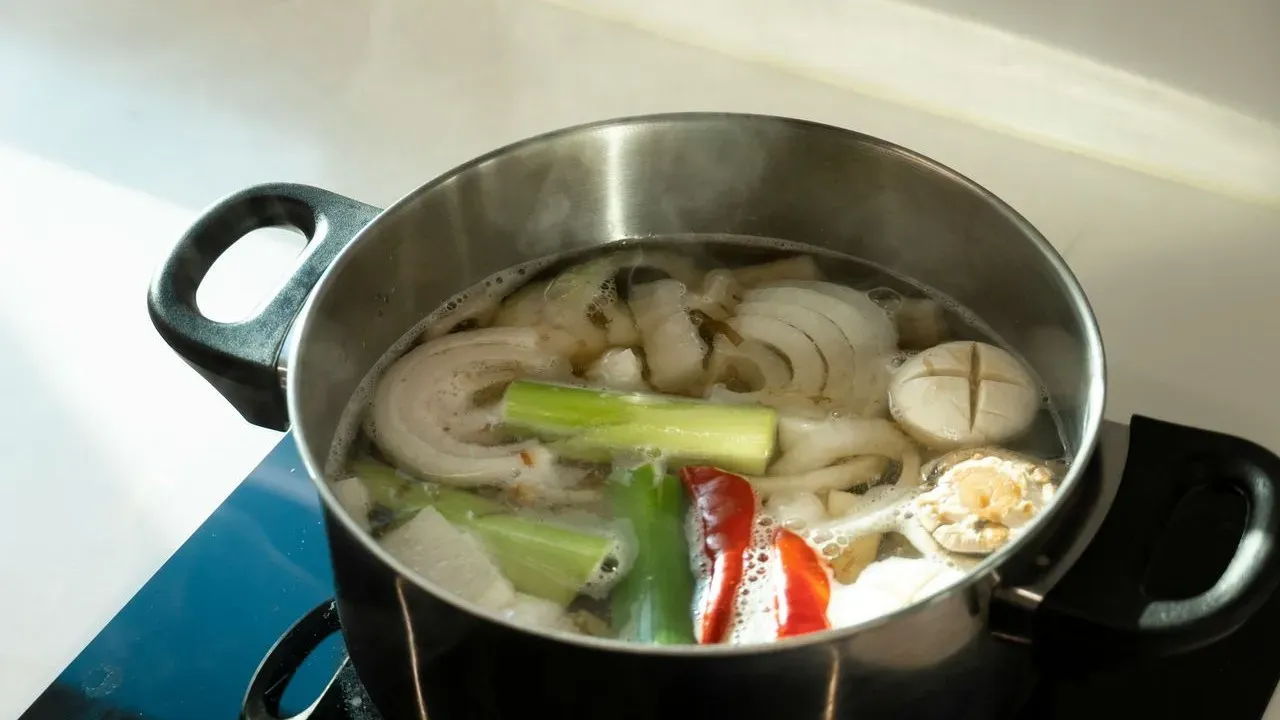

Many home cooks keep a carton of vegetable broth on the pantry shelf for months without issue, only to pause after opening it for a quick soup or stew. The question of refrigeration hinges on whether the product is shelf-stable, already labeled for cold storage, or made from scratch at home. Guidance from food safety authorities and manufacturers clarifies the differences and helps prevent waste or risk. ([1])
Identifying Shelf-Stable Versus Refrigerated Broth
Most vegetable broth sold in cartons or cans on ordinary pantry shelves uses aseptic packaging that keeps the product commercially sterile until opened. These items carry labels directing refrigeration only after opening and can remain at room temperature beforehand. In contrast, any package marked “Keep Refrigerated” or “Keep Frozen” requires cold storage from the start, regardless of where it sits in the store.
Store placement alone does not settle the matter. Reading the label provides the clearest direction, and when uncertainty remains, keeping the item cold while confirming details with the manufacturer offers a safe approach. Concentrates, pastes, and bouillon cubes follow their own separate instructions.
Storage After Opening Store-Bought Broth
Once opened, vegetable broth becomes perishable and must move promptly into the refrigerator at 40°F or below. Manufacturers often specify use within 4 to 14 days, though a conservative default of 3 to 4 days applies when no time appears on the package. Prompt return to the fridge after each use helps maintain quality and safety.
Opened broth may remain in its original can according to general guidance, yet transferring it to a clean glass or plastic container often preserves flavor better. Writing the opening date on the container makes tracking simple. Leaving opened broth at room temperature beyond two hours, or one hour when temperatures exceed 90°F, means it should be discarded.
Quick Storage Reference
- Unopened shelf-stable: Cool, dry pantry away from heat sources.
- Opened store-bought: Refrigerate immediately; follow label or use within 3–4 days.
- Homemade: Cool rapidly in shallow containers; refrigerate within 2 hours.
- Vegetable scraps: Freeze in labeled bags rather than refrigerating long-term.
Handling Homemade Broth and Vegetable Scraps
Broth simmered from vegetable trimmings requires the same prompt cooling and refrigeration as opened commercial products. Large batches benefit from division into smaller containers so they reach safe temperatures quickly, and hot liquid can go straight into the refrigerator without first cooling on the counter. Extension services recommend 3 to 4 days of refrigerated storage for homemade versions.
Scraps collected for future broth belong in the freezer from the outset rather than the refrigerator. Labeling freezer bags with the date keeps the process organized over several weeks. Moldy or slimy scraps should never enter the pot.
Recognizing When Broth Should Be Discarded
Visible mold, a sour or off odor, bulging packages, or leaks signal that the broth is no longer safe. Swollen or damaged cartons and cans warrant immediate disposal, as do any items left out longer than the two-hour limit. A best-by date that has passed on an unopened, intact package affects quality more than safety, yet any sign of compromise overrides that distinction.
Tasting is never a reliable test. Appearance and smell can miss harmful bacteria, so relying on time since opening and proper storage remains the soundest practice. When in doubt, err on the side of caution and start fresh.
AI Disclaimer: This article was created with the assistance of AI tools and reviewed by a human editor.