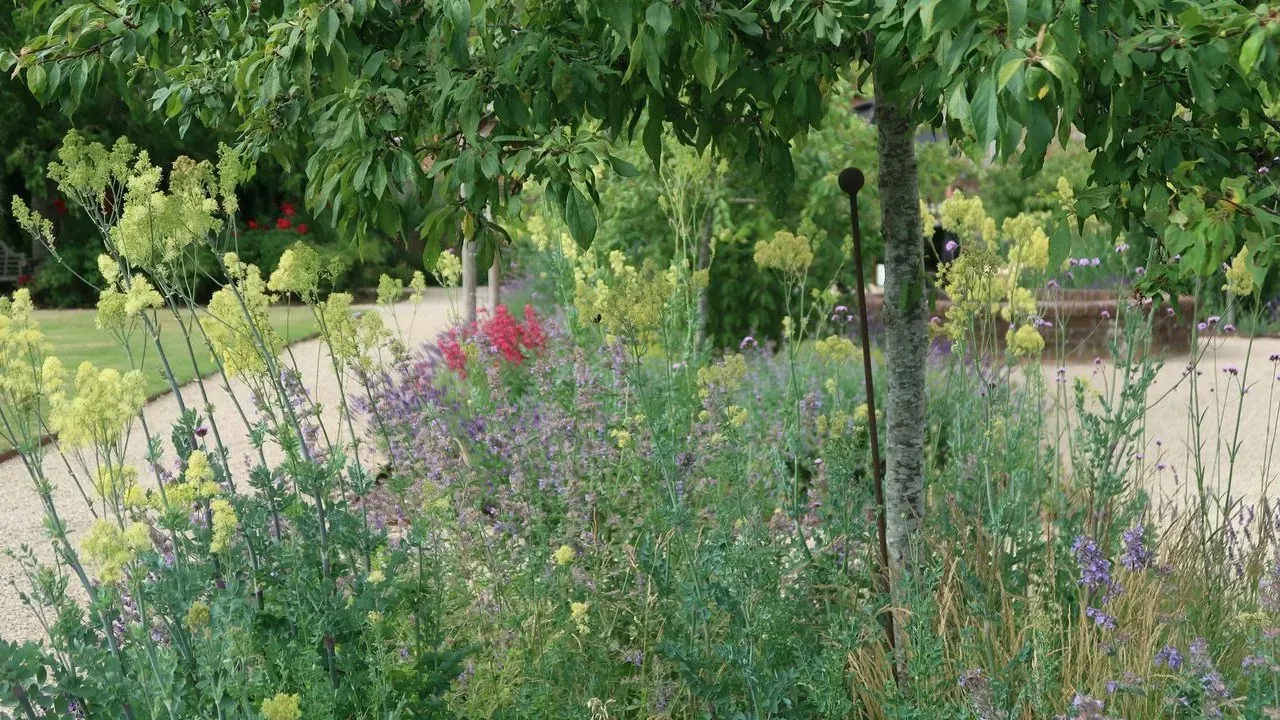

Hartford, Wisconsin – A narrow side yard once served mainly as a functional walkway between house and fence. Low-growing plants have since softened its edges and created a calmer setting that still accommodates family keepsakes and accents chosen for color and character. The result shows how even constrained outdoor spaces can support both practical movement and quiet enjoyment.
A Space Once Defined by Limits
The side yard presented typical residential constraints: limited width, foot traffic needs, and exposure to varying light and soil conditions common in southeastern Wisconsin. Rather than fight those realities with high-maintenance beds or heavy structures, the approach centered on plants that stay low and spread steadily. This choice preserved clear passage while gradually filling gaps with living texture.
Over time the plantings created a more cohesive look without blocking access or requiring constant trimming. The design left open areas where personal items could remain visible and accessible. Color came mainly from foliage rather than seasonal flowers, giving the area interest across multiple months.
Plants That Work Quietly in the Background
Ground-cover selections were made for their ability to knit together the soil surface and tolerate the narrow corridor’s conditions. Once established, they reduced the need for weeding and helped moderate moisture levels in the root zone. The low profile meant the plants did not compete visually with the taller elements placed among them.
Foliage variation supplied the main source of color and pattern. Different leaf shapes and tones created subtle contrasts that changed with the light throughout the day. Because the plants remain compact, they continue to allow room for movement and for the placement of meaningful objects without crowding.
Room for Memory and Small Surprises
Family mementos found a natural home within the planting. Items that might have seemed out of place in a more formal border gained context among the living ground layer. Their presence turned the side yard into a place that reflected personal history rather than a purely decorative display.
Playful accents added light touches without overwhelming the restrained planting scheme. These elements were chosen to complement the foliage colors and to reward closer inspection during a walk through the space. The overall effect is one of quiet discovery rather than bold statement.
A Model for Similar Residential Settings
The Hartford garden illustrates how a side yard can shift from a purely utilitarian strip to a more integrated part of the landscape. By prioritizing low-growing plants that knit the ground together, the owners maintained access while gaining seasonal interest and reduced upkeep. The approach leaves space for the objects that make a garden personal.
Homeowners facing comparable narrow passages may find the same principles useful: select plants for their spreading habit and foliage interest, keep taller or more prominent features limited, and allow room for meaningful items to remain visible. The result is a space that serves daily needs while offering a sense of care and continuity.
AI Disclaimer: This article was created with the assistance of AI tools and reviewed by a human editor.