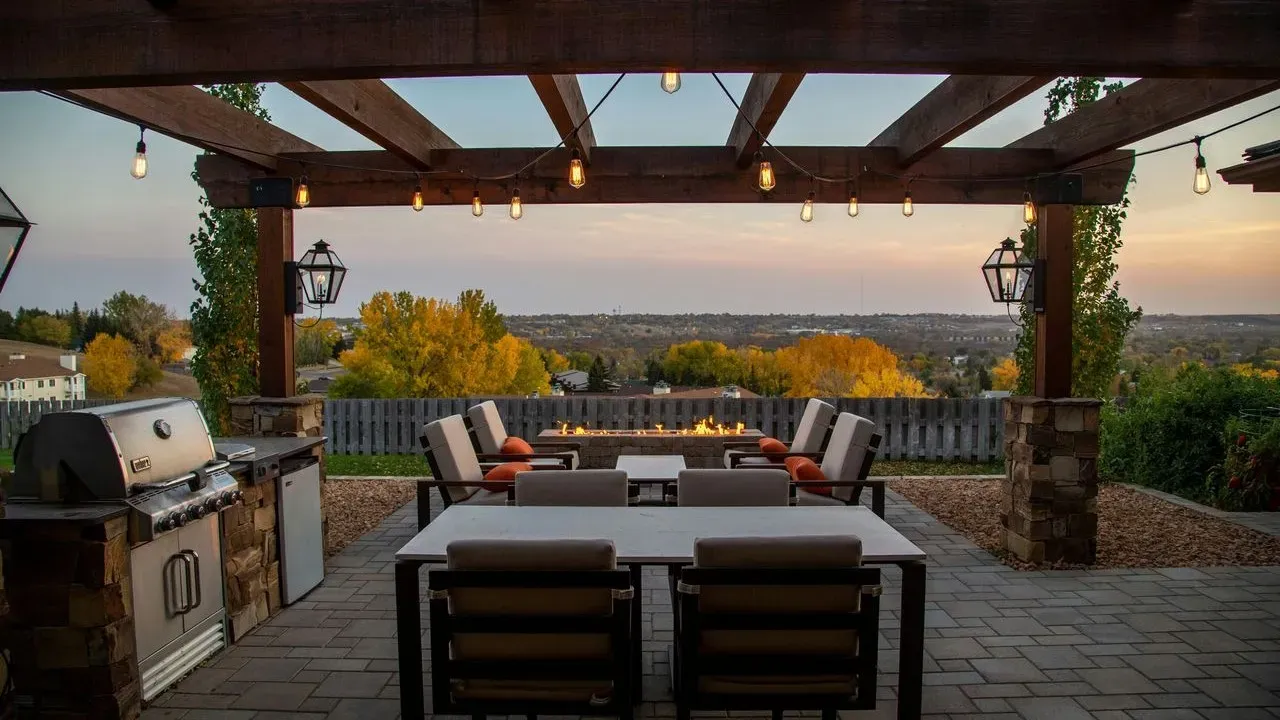

Many homeowners pour time and money into their outdoor spaces during the warm months, only to watch those same areas sit empty once temperatures drop. The result is an underused investment that feels more like a seasonal luxury than a true extension of the home. With targeted changes to shelter, warmth, and upkeep, however, a backyard can stay functional and welcoming from early spring through late winter.
Divide the Space Into Comfort Zones
Temperature swings make year-round use difficult without deliberate planning. A single heat source rarely covers every need, so dividing the yard into distinct thermal areas helps. A covered patio or pergola with adjustable roof panels provides shade in summer and protection from rain or snow later in the year.
Fire features anchor cooler evenings. A built-in masonry fire pit or linear gas fire table draws people outdoors even when the air turns crisp. Infrared heaters mounted overhead add targeted warmth without bulky portable units. Together these elements create pockets where comfort lasts well beyond the first frost.
Reduce Maintenance Through Automation
Seasonal chores quickly erode the appeal of an outdoor retreat. Leaves, debris, and colder water conditions make pool care especially demanding in fall. Cordless robotic cleaners handle floor and wall scrubbing on their own, eliminating the need to manage hoses or cords in chilly weather.
Subsurface irrigation keeps lawns and plantings evenly watered without daily attention. An energy-efficient heat pump can extend swimming days or simply maintain clear water for visual appeal during winter gatherings. The goal is a space that stays ready for use without constant weekend labor.
Layer Textiles and Seating for Cooler Months
Summer furniture often prioritizes breathability over insulation. Deeper seating with thick cushions holds warmth better than slim metal chairs and encourages longer stays around a fire. Performance fabrics such as Sunbrella resist mildew and fading through damp springs and strong sun alike.
Swap lightweight pillows for heavier knits, faux fur, and wool throws stored in weatherproof benches nearby. These simple changes turn the same seating area into a cozy spot for November evenings or early spring afternoons without requiring an entirely new set of furnishings.
Build a Flexible Outdoor Kitchen
Standard grills work well for quick summer meals but struggle in wind or cold. A more versatile station includes a high-output gas grill or ceramic cooker that maintains steady heat even in freezing conditions. Infrared side burners handle warming drinks or sauces without repeated trips indoors.
Stainless steel cabinets protect tools and dry goods from moisture and pests year-round. Placing the entire setup near the house entrance avoids long walks across icy surfaces. Wind protection and sealed storage keep cooking practical from October into February.
Core upgrades that extend usability include adjustable shelter, reliable heat sources, automated cleaning, layered seating, and protected cooking areas.
These adjustments remove the artificial deadline that ends outdoor living each September. The backyard becomes a consistent part of daily life rather than a space reserved for a few months of sunshine. Homeowners who plan for flexibility gain more opportunities to relax outside regardless of the calendar.
AI Disclaimer: This article was created with the assistance of AI tools and reviewed by a human editor.