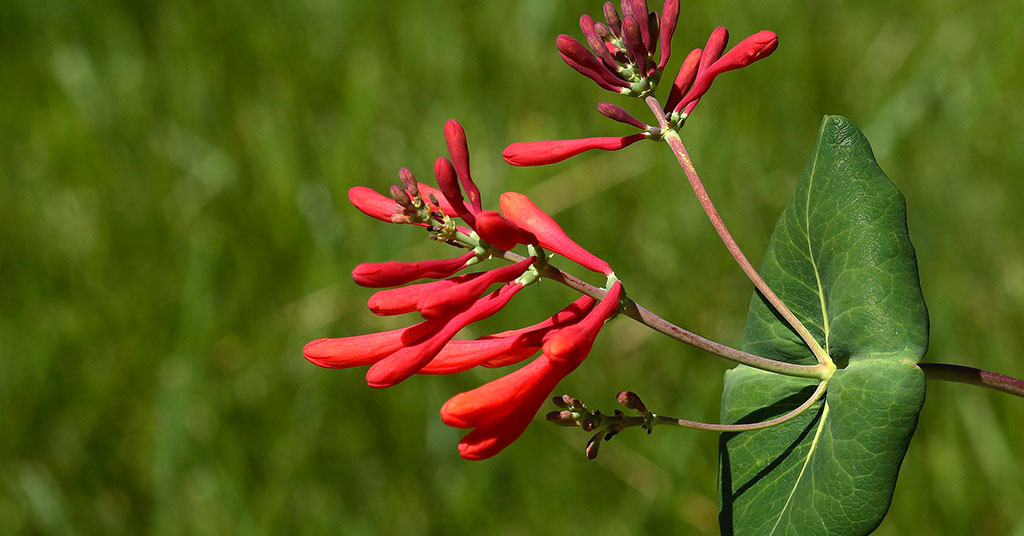

One of the all-time favorite vines is the native trumpet honeysuckle, also known as coral honeysuckle. Its splash of color attracts humans and many pollinators. The tubular flowers are a magnet for bees and birds, especially the beloved hummingbirds who come for the nectar. Thus, if you want to attract hummers, it is a great choice.
The trumpet honeysuckle has scarlet-orange flowers with yellow centers. Though not fragrant, the trumpet-shaped flowers of the plant are long blooming, one of the longest bloomers. Sometimes people grow it as a shrub, but it works better as a vine. One way you can identify the plant is the way that the stem intersects the leaves.
What Is Trumpet Honeysuckle?
Trumpet honeysuckle is native to the eastern US, mostly in the southern states. It is a vigorous vine, though not as aggressive as a few varieties of the plant. It produces bright red clusters of flowers in spring.
- Latin Name: Lonicera Sempervirens
- Other names: Coral honeysuckle, scarlet honeysuckle, trumpet flower.
- Native to: Eastern and the southeastern US
- Invasiveness: No
- Sun: Part shade to full sun.
- Water: Drought tolerant. Thrives in well-drained soil.
- Soil: Acid soil, moist and well-drained soil. Grows in a wide soil range – loamy, sandy, and clayey soil.
- Hardiness zone: Zone 4-9
- When to plant: Fall is the ideal time to plant seeds.
- Spacing: 5 to 10 feet apart.
- Plant height: 8 to 20 feet tall. Width 3 to 6 feet.
- Bloom period: Clusters of yellow, orange, and red flowers appear from June to September.
- Time to maturity: If grown from seed, it can take 10 years for it to be old enough to bloom.
- Container Friendly: Grows well in containers that hold at least 15 gallons
- Fertilizer: No supplemental fertilization is required.
- Drought Tolerance: Clay soil, Dry sites, Occasional drought.
- Deer resistant: Generally resistant, but attack young shoots.
- Pest resistant: No serious pest or disease problems, but leaf spots and powdery mildew may occur.
How To Grow Trumpet Honeysuckle
Growing trumpet honeysuckle vine is fairly easy. With proper pruning and adequate care, its invasiveness nature can be controlled. This easily grown vine thrives in both sun and partial shade. It grows well in nice, well-draining soil and easily adapts to any variety of soil.
The plant is a vigorous grower and only requires water and regular pruning, which should be done in either spring or fall. Deadheading trumpet vine flower pods prevent the plant from reseeding in unwanted areas.
Growing Trumpet Honeysuckle In Containers
You should try to keep this plant away from homes and prevent damage from creeping roots. So containment is a concern. Growing it in large 5 – 15 gallon containers prevents its roots from spreading.
Be sure to choose containers that have good drainage holes. Fill it with a soil mix that is well-draining and place it in a sunny or partially shady location. When the plant fills the pot, use a larger pot and add fresh soil.
When To Start Trumpet Honeysuckle Seeds
Layering is a common way to propagate trumpet honeysuckle vines. It should be done in early spring when the shoots are flexible and dormant.
Another easy way is by leaf bud cuttings. For this, you need to cut above a pair of leaves and then make a second cut about halfway between leaf joints. Place the cutting in well-drained soil in a warm place with plenty of warmth and water.
Once the cutting takes root, take them out without exposing them to frost.
When To Plant Trumpet Honeysuckle
Early spring to early fall is the ideal time frame during which you can plant a trumpet honeysuckle vine. Ideally, spring gives you the best start to the season as vines turn dormant in winter. So the earlier, the better. Your vine will mature early and start flowering sooner.
How To Collect Trumpet Honeysuckle Seeds
Trumpet honeysuckle produces seeds within small, leathery berries that grow new plants. Planting is simple, but the seeds need pre-treatment before they sprout. Crush berries and pick apart the flat brown seeds. Rinse in cool water and dry before planting.
Wrap the seeds in a ball of damp sphagnum moss and place it inside a zipper bag with holes to release excess moisture. Refrigerate for two months.
Wildlife Attracted By Trumpet Honeysuckle
The trumpet honeysuckle is prized for attracting butterflies and ruby-throated hummingbirds. The bright red fruit attracts birds and attracts goldfinches, American robins, purple finches, hermit thrushes, and quail.
The plant is a larval host for the snowberry clearwing moth and the spring-azure butterfly, and also attracts all varieties of bees.
Common Problems
Some common problem faced by the trumpet honeysuckle is a lack of sunlight and inappropriate pruning. Poor fertilization, pests, and diseases all prevent the flower from blooming.
Thin, weak, old, wilted, and infected branches and aphid infestation are other issues that prevent the plant from propagating.