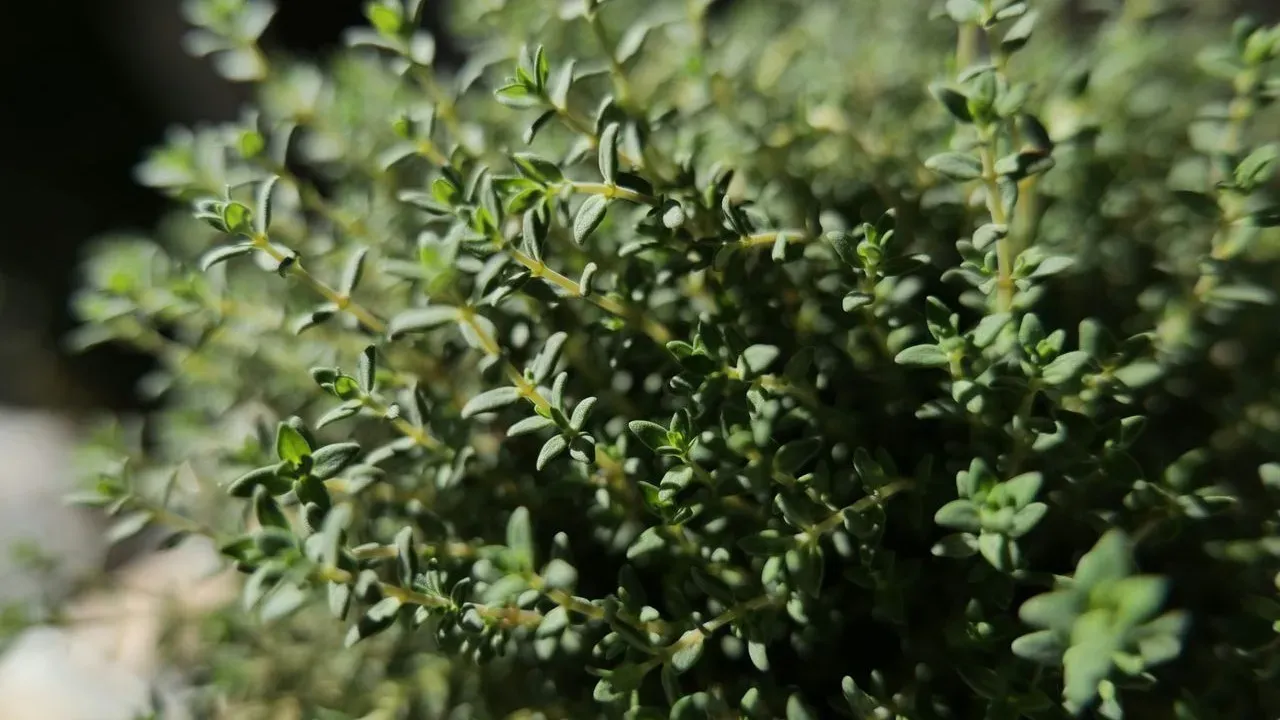

Thyme stands out among garden herbs for its ability to endure challenging conditions while delivering both culinary flavor and medicinal compounds. This woody perennial, native to parts of Europe, North Africa, and Asia, belongs to the mint family and has long been valued for its aromatic leaves and antiseptic properties. Gardeners appreciate its compact size and low demands, which make it suitable even for those with limited time or less-than-ideal soil.
Characteristics That Support Easy Success
Thyme forms a short, bushy shrub reaching 6 to 12 inches in height, with narrow, lance-shaped leaves that release a strong fragrance when touched. Its clusters of small white or purplish flowers appear at the branch tips and attract bees along with other pollinators. The plant contains thymol, a phenol known for its antiseptic qualities, which adds to its practical value beyond the kitchen.
Hardy in USDA zones 5 through 9, thyme tolerates full sun and well-drained, loamy soil without requiring constant attention. It can handle higher elevations and overwinters in colder areas when given a protective mulch layer. The key limitation remains excess moisture or heavy weed competition, both of which the plant resists poorly.
Establishing Plants With Simple Methods
Propagation works through direct seeding, cuttings, root divisions, or purchased transplants. Many growers start seeds early in spring within plugs, then move the established seedlings into the field once they show steady growth. Because thyme does not compete strongly against weeds, clean beds and mulch layers help reduce pressure from unwanted plants.
Spacing recommendations call for 12 inches between individual plants arranged in triple rows, with 14 inches separating the rows inside each bed. Companion planting next to other low-growing perennials such as oregano, sage, or lavender often succeeds, as these species share similar needs and do not overwhelm one another. The resulting mix also supports pollinator health, potentially contributing antimicrobial benefits to nearby hives.
Harvesting at Peak Quality
Harvest timing centers on late summer, when flowering begins and volatile oil concentrations reach their highest point. This stage marks the plant’s growth peak for the season. Mechanical equipment struggles with the low, woody stems, so hand harvesting with sharp pruners proves more practical and less damaging than attempts to cut with field knives.
Workers leave 2 to 3 inches of stem intact after cutting to allow regrowth and improve overwintering chances. The process stays straightforward once the timing aligns with the plant’s natural cycle, preserving both flavor compounds and medicinal strength.
Drying Steps That Protect Aroma and Color
Proper drying requires temperatures between 100 and 120 degrees Fahrenheit while keeping the material out of direct light. These conditions help retain delicate aromatic oils and maintain the herb’s vibrant appearance along with its active compounds. Under favorable airflow, the process typically completes within a couple of days.
Once stems feel crisp, leaves separate easily from the woody parts. Passing the dried stalks over quarter-inch stainless steel mesh allows clean separation of leaves from stems, yielding a ready-to-use product. Stored correctly, the dried thyme retains its qualities for extended periods without further intervention.
Thyme continues to earn its place in gardens through consistent performance and multiple uses, from seasoning meals to supporting pollinator health. Its straightforward requirements and reliable returns make it a practical choice for both new and experienced growers.
AI Disclaimer: This article was created with the assistance of AI tools and reviewed by a human editor.