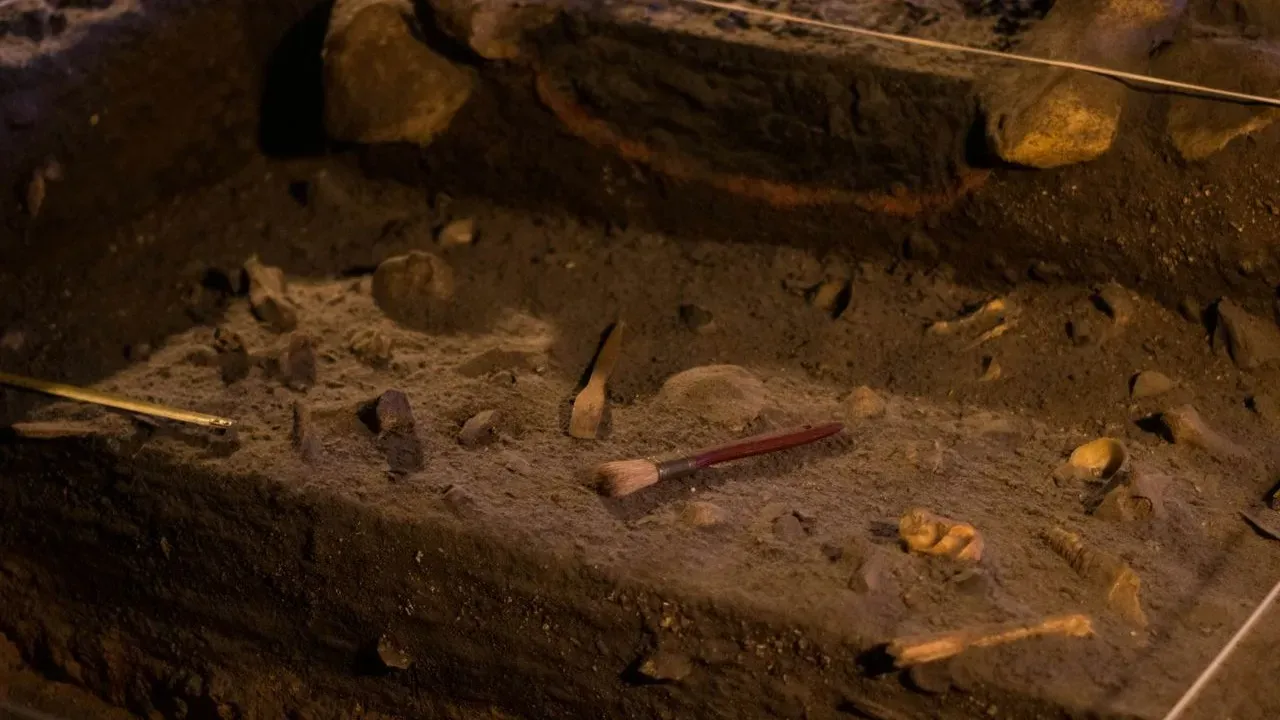

Oceanside, California – Construction crews working on a city infrastructure project uncovered fossilized bones this month that paleontologists have linked to a possible prehistoric thunder beast. The find occurred roughly 12 feet underground during routine excavation work. Officials have kept the precise location private to protect the site and ensure public safety.
Excavation Process and Initial Response
Paleontologist Joseph El Adli was monitoring the project when the bones surfaced. He quickly secured the area and directed a team that spent seven days carefully freeing the specimens from layers of hardened mudstone and sandstone. The bones were then encased in a plaster jacket for transport to a laboratory. ([1])
The city described the effort as necessary to preserve fragile material that included limb bones, ribs, and numerous fragments. Workers followed standard protocols for fossil recovery during development projects in the region.
Geological Context and Age
The fossils come from Member C of the Santiago Formation, a sedimentary rock layer in northwestern San Diego County. This formation dates to the Eocene Epoch and corresponds to the Uintan North American Land Mammal Age. Paleontologists estimate the remains are between 40 million and 45 million years old.
At that time, the area featured ancient floodplains where large hoofed mammals once lived. The discovery adds to the record of Eocene life preserved in Southern California rock layers.
Possible Species and Future Analysis
Based on bone size and shape, researchers have narrowed the possibilities to a Titanotheres, commonly called a thunder beast, or an Amynodon, sometimes referred to as a swamp rhino. Both were sizable mammals that inhabited the region during the Eocene.
Further preparation and study in the lab will help confirm the exact identity. City officials noted that the specimens will eventually enter a museum collection for public display and additional scientific examination.
Handling of Construction-Site Finds
Such discoveries are not uncommon when development occurs in fossil-rich zones, yet each requires careful coordination between contractors and specialists. The Oceanside project followed established procedures that prioritize scientific recovery alongside infrastructure progress.
Officials emphasized that the bones will contribute to broader understanding of prehistoric ecosystems once fully analyzed. The city continues to support the paleontological work while advancing the original infrastructure plans.
AI Disclaimer: This article was created with the assistance of AI tools and reviewed by a human editor.