
Stepping into the garden should be a joy, but when invasive species take over, it can quickly turn into a frustrating battle against nature’s unruly intruders. As an avid gardener who’s seen both the beauty of native blooms and the havoc wreaked by non-native plants, I’m here to share an eye-opening guide on 11 non-native plants that are notorious for choking local ecosystems. In this article, I’ll detail where these plants are originally from, how they aggressively spread, and why they disrupt the natural balance by outcompeting native species. I truly understand how disheartening it is to nurture a garden only to see it overrun by species that do more harm than good!
I know how much care and passion you invest in your garden, and it’s such a bummer when invasive plants take over, stifling the local flora and affecting wildlife habitats. Each section below dives into two detailed paragraphs about one of these invasive species, offering insights into their native origins, aggressive behaviors, and the subtle ways they attract or deter local critters. Let’s explore these uninvited guests in a randomized order—arming you with the knowledge to keep your garden safe and balanced!
Japanese Knotweed

Japanese Knotweed (Fallopia japonica) hails from East Asia, yet in many parts of the world, its aggressive growth has turned it into one of the most problematic invasive plants. With its bamboo-like stems and dense thickets, it rapidly spreads along waterways and disturbed soils, crowding out native species and altering habitats. In my experience, its unchecked growth not only suffocates beneficial native plants but also disrupts the local ecosystem by denying shelter and nesting spaces to indigenous insects and birds!
This unwelcome guest is notorious for its resilience—able to regrow from even small fragments left behind during removal. While it might look appealing with its bright green shoots in early spring, Japanese Knotweed quickly reveals its destructive nature by undermining soil stability and damaging infrastructure. It’s a true cautionary tale for gardeners, and learning to identify and properly manage this plant is essential to protecting the natural balance of our landscapes!
Kudzu
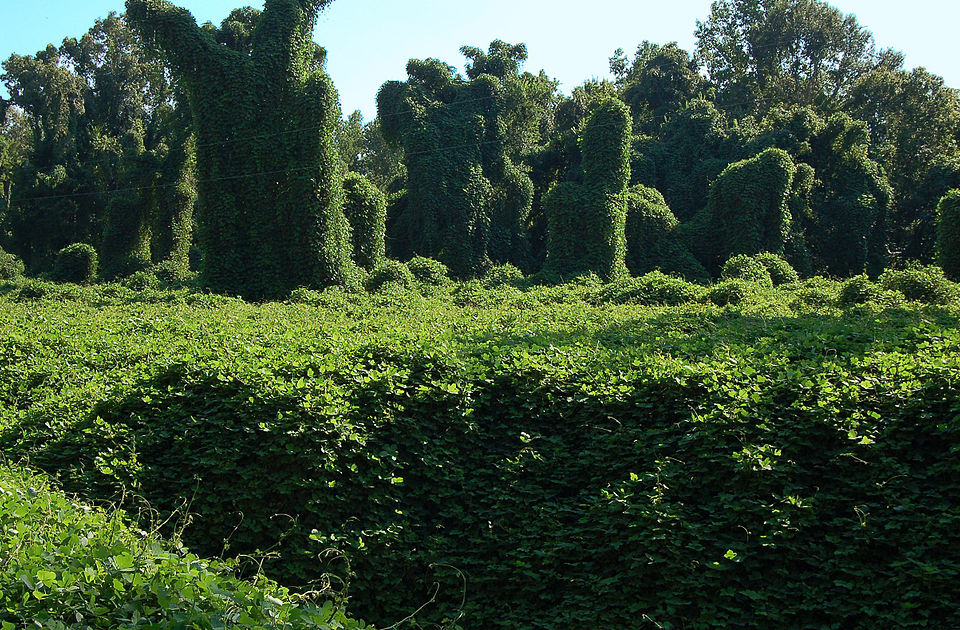
Kudzu (Pueraria montana var. lobata) is a vine native to East Asia that was introduced to North America for erosion control, only to become a symbol of invasive overgrowth. Its rapid growth rate—often described as “the vine that ate the South”—allows it to smother trees, shrubs, and entire landscapes, leaving little room for native plants to thrive. I’ve seen how this aggressive climber can quickly overtake a garden, creating an impenetrable green blanket that eliminates vital sunlight and disrupts nesting sites for local birds and insects!
In addition to its voracious appetite for space, kudzu’s extensive root system makes it exceptionally difficult to eradicate once established. While some might appreciate its lush foliage at a glance, the reality is that kudzu can destroy the delicate balance of local ecosystems. It’s a vivid reminder of how introducing non-native species without careful consideration can lead to unintended and far-reaching environmental consequences!
Russian Olive

Russian Olive (Elaeagnus angustifolia) is native to parts of Eurasia and North Africa but has been widely introduced to many areas as an ornamental and windbreak tree. Despite its seemingly attractive silvery leaves and clusters of small fruits, this tree has a dark side: it forms dense thickets that choke out native vegetation and limit habitat for local wildlife. I’ve witnessed how these clumps can reduce the biodiversity in riparian zones, ultimately undermining the natural resilience of the ecosystem!
One of the most troubling aspects of Russian Olive is its ability to alter soil chemistry, making it difficult for native plants to re-establish themselves. While the fruits might seem enticing to certain birds, the overall impact on local flora and fauna is negative, as it displaces native species that have evolved over centuries to thrive in these environments. It’s a stark example of how a non-native species, though initially introduced with good intentions, can wreak havoc on the natural order!
Tree of Heaven

The Tree of Heaven (Ailanthus altissima) originates from China and was brought to various regions for its rapid growth and ornamental appeal. However, this fast-growing tree quickly became a nuisance in many urban and rural settings, spreading its seeds far and wide and outcompeting native vegetation. Its ability to colonize disturbed areas means that it often takes root in places where other plants struggle to survive, creating a monoculture that leaves little room for indigenous species to flourish!
Beyond its rapid spread, the Tree of Heaven releases chemicals into the soil that inhibit the growth of neighboring plants—a phenomenon known as allelopathy. This biochemical warfare further ensures that local ecosystems suffer as native flora is suppressed, leading to a loss of biodiversity. For gardeners and nature lovers alike, the Tree of Heaven serves as a reminder of the unintended consequences that can arise from introducing non-native species into delicate environments!
Brazilian Pepper Tree
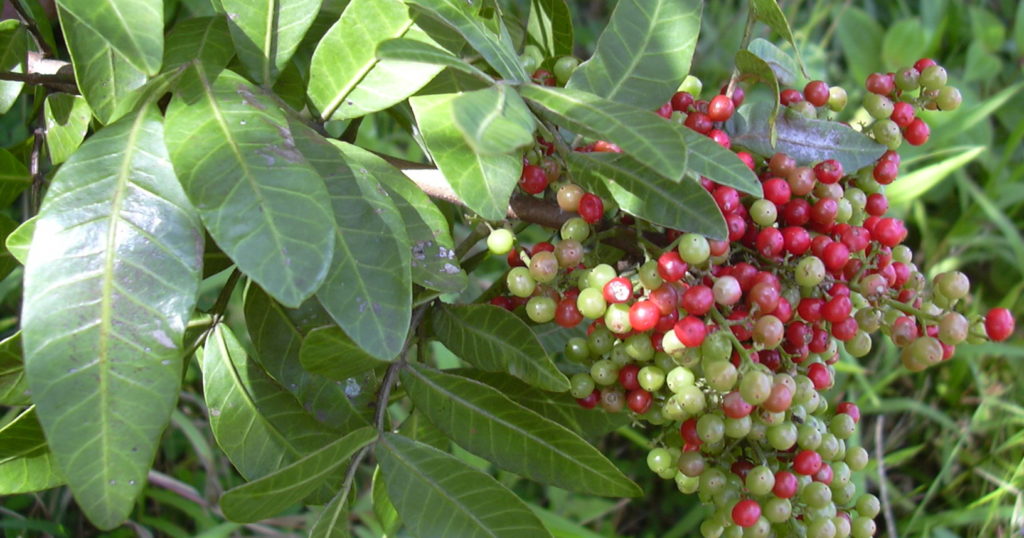
Brazilian Pepper Tree (Schinus terebinthifolius) is native to South America but has become a notorious invader in parts of the United States, particularly in Florida. Its lush, evergreen foliage and clusters of red berries might appear attractive at first glance, yet this plant aggressively displaces native vegetation, choking out understory plants and altering natural habitats. I’ve seen firsthand how it quickly transforms a diverse landscape into a monotonous stand of Brazilian Pepper, depriving local wildlife of essential food and nesting opportunities!
The invasive nature of the Brazilian Pepper Tree is compounded by its ability to produce a high volume of seeds, which are easily spread by birds and other animals. Despite its ornamental appeal, this tree’s rapid spread and adaptability make it a significant threat to local ecosystems. It’s an excellent example of why careful consideration must be taken before introducing non-native species into an area—what begins as a pretty addition can soon evolve into an ecological nightmare!
Autumn Olive

Autumn Olive (Elaeagnus umbellata) originally comes from Asia but has become widespread in North America due to its hardiness and prolific fruiting. Although its bright red berries and silvery leaves might add a splash of color to the landscape, this shrub is infamous for its aggressive growth and ability to outcompete native plants. In my garden, I’ve observed how Autumn Olive forms dense thickets that limit sunlight and space for indigenous species, ultimately reducing local biodiversity and altering natural habitats!
What makes Autumn Olive particularly problematic is its capacity to fix nitrogen, which can change soil composition and give it an advantage over native vegetation not adapted to such conditions. While its berries may attract birds and other wildlife, the overall impact is a homogenized landscape where native species struggle to survive. This dual-edged nature serves as a caution to all gardeners: the allure of vibrant colors can sometimes mask a plant’s potential to disrupt and dominate the ecosystem!
Himalayan Blackberry

Himalayan Blackberry (Rubus armeniacus) is native to the cool, temperate regions of Europe and Asia, but when introduced elsewhere, it often becomes a rampant invader. With its thorny, arching canes and prolific berry production, it forms impenetrable brambles that overwhelm local vegetation and make it nearly impossible for native species to compete. I’ve encountered these unruly vines in many gardens, where their aggressive spread not only chokes out biodiversity but also interferes with natural nesting sites for ground-nesting birds and small mammals!
Despite its tempting, juicy berries that attract various animals, the Himalayan Blackberry’s invasive nature is well documented. It can quickly dominate an area, creating a dense mat of growth that suppresses the natural regeneration of indigenous plants. For anyone passionate about preserving local ecosystems, it’s crucial to understand that this plant, though seemingly innocuous, can have profoundly negative consequences on the environment!
Water Hyacinth
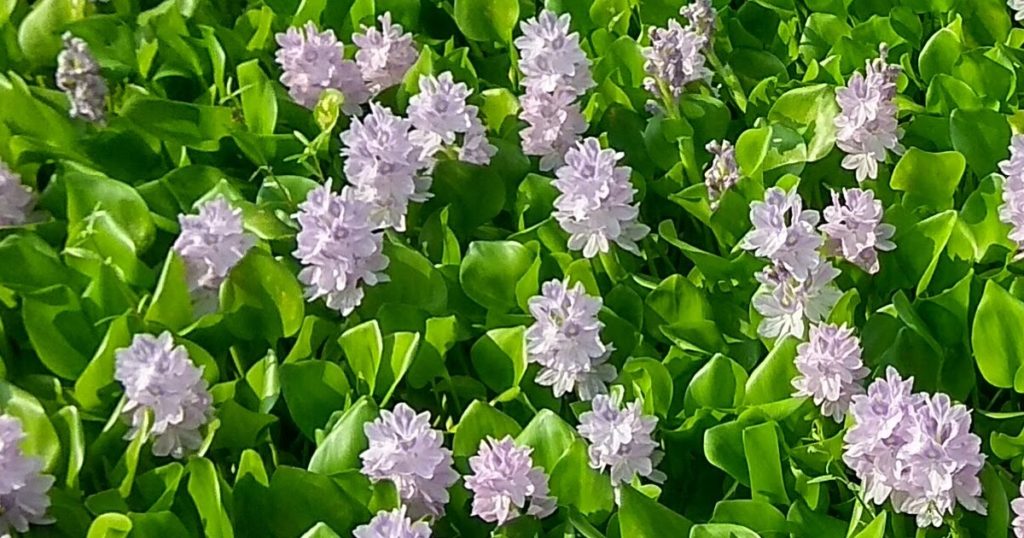
Water Hyacinth (Eichhornia crassipes) is a striking aquatic plant native to the Amazon Basin, yet its beauty belies its destructive potential. Floating effortlessly on the surface of lakes and rivers, it forms thick mats that block sunlight and reduce oxygen levels in the water, severely impacting aquatic life. I’ve seen firsthand how these rapidly spreading clumps can choke waterways, disrupt the habitats of fish and amphibians, and even hinder water-based recreation!
Its ability to reproduce rapidly makes Water Hyacinth one of the most troublesome invasive species in aquatic ecosystems. While it might seem delightful with its vibrant purple flowers, its presence can lead to a cascade of ecological problems—ranging from reduced biodiversity to increased management costs. For any gardener or nature enthusiast, understanding the challenges posed by Water Hyacinth is essential to preserving the integrity of our local water systems!
English Ivy

English Ivy (Hedera helix) is native to parts of Europe and Western Asia, yet when introduced into non-native environments, it often becomes a relentless invader. This evergreen climber can rapidly overtake trees, shrubs, and even entire walls, creating dense mats that block sunlight and inhibit the growth of native flora. In my experience, while English Ivy might initially seem like a charming addition to a garden, its unchecked spread ultimately transforms landscapes into monotonous, impenetrable thickets that leave little room for local species!
The invasive nature of English Ivy is further exacerbated by its ability to attract certain insects that prefer the dense cover it creates, inadvertently promoting a cycle of ecological imbalance. Although its dark green leaves and versatile growth habit have earned it popularity in some circles, the ecological cost is high. For gardeners who care deeply about preserving native biodiversity, it’s vital to recognize that English Ivy’s appeal is far outweighed by its capacity to choke out local ecosystems!
Purple Loosestrife
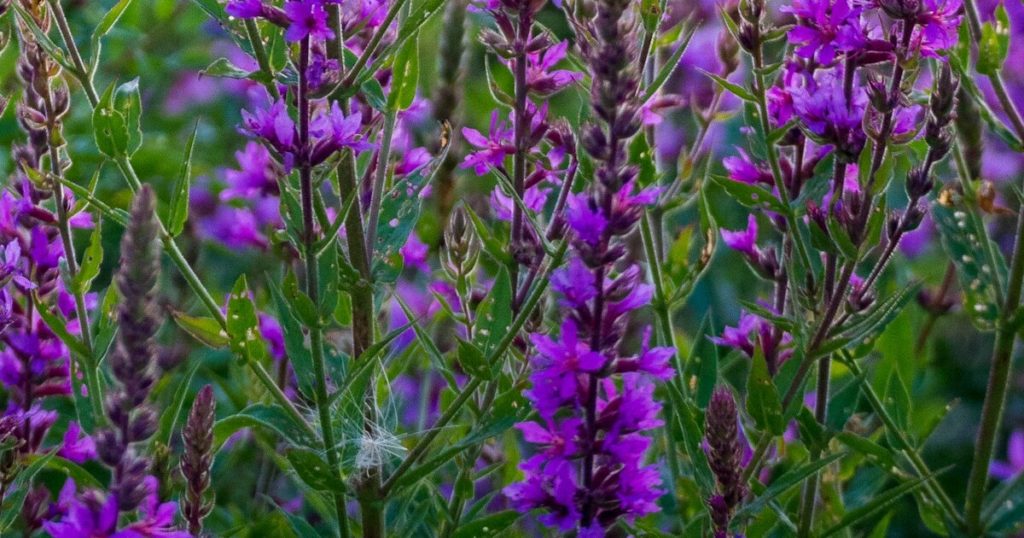
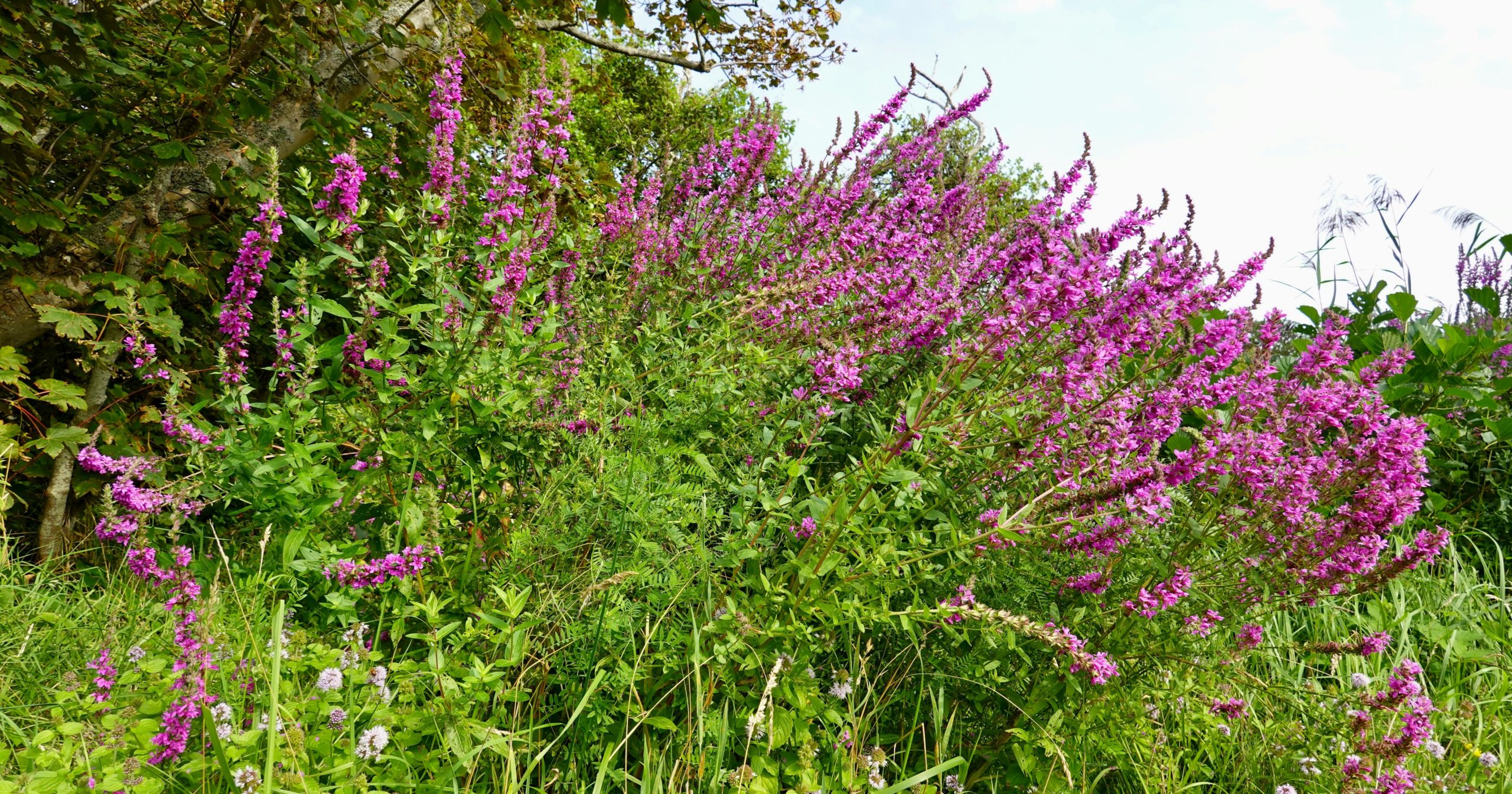
Purple Loosestrife (Lythrum salicaria) is native to Europe and Asia, yet in many regions of North America it has become a notorious invader of wetlands and riparian zones. With its tall spikes of vivid purple flowers, it might initially appear as an attractive addition to the landscape. However, its rapid growth and prolific seed production allow it to dominate wetlands, pushing out native plants and disrupting the intricate balance of local ecosystems. I’ve witnessed how entire swaths of natural habitat can be overtaken by this plant, leaving behind a monoculture that offers little to local wildlife!
The ecological impact of Purple Loosestrife is significant—it not only alters plant communities but also affects the fauna that depend on native vegetation for food and shelter. While the blossoms attract a variety of pollinators, the loss of native species means that beneficial insects and birds lose their traditional nesting and foraging grounds. It’s a striking example of how an ornamental plant can evolve into an environmental threat when it is introduced into an ecosystem that isn’t equipped to control its spread!
Giant Hogweed

Giant Hogweed (Heracleum mantegazzianum) is an imposing plant native to the Caucasus region, yet it has earned a fearsome reputation in many non-native areas due to its aggressive growth and potential health hazards. This towering perennial can quickly dominate an area with its expansive leaves and large, umbrella-like clusters of white flowers, outcompeting native plants and disrupting local biodiversity. I’ve seen how its robust growth creates a dense canopy that blocks sunlight, hindering the development of undergrowth and even affecting the nesting opportunities for native birds and small mammals!
Beyond its invasive nature, Giant Hogweed poses serious risks to human and animal health with its toxic sap, which can cause severe skin burns and blindness if exposed to sunlight. While its size and dramatic appearance might make it an impressive sight, the dangers and ecological harm it inflicts far outweigh any aesthetic appeal. For gardeners and nature enthusiasts alike, recognizing and preventing the spread of Giant Hogweed is essential to safeguarding both local ecosystems and public safety!