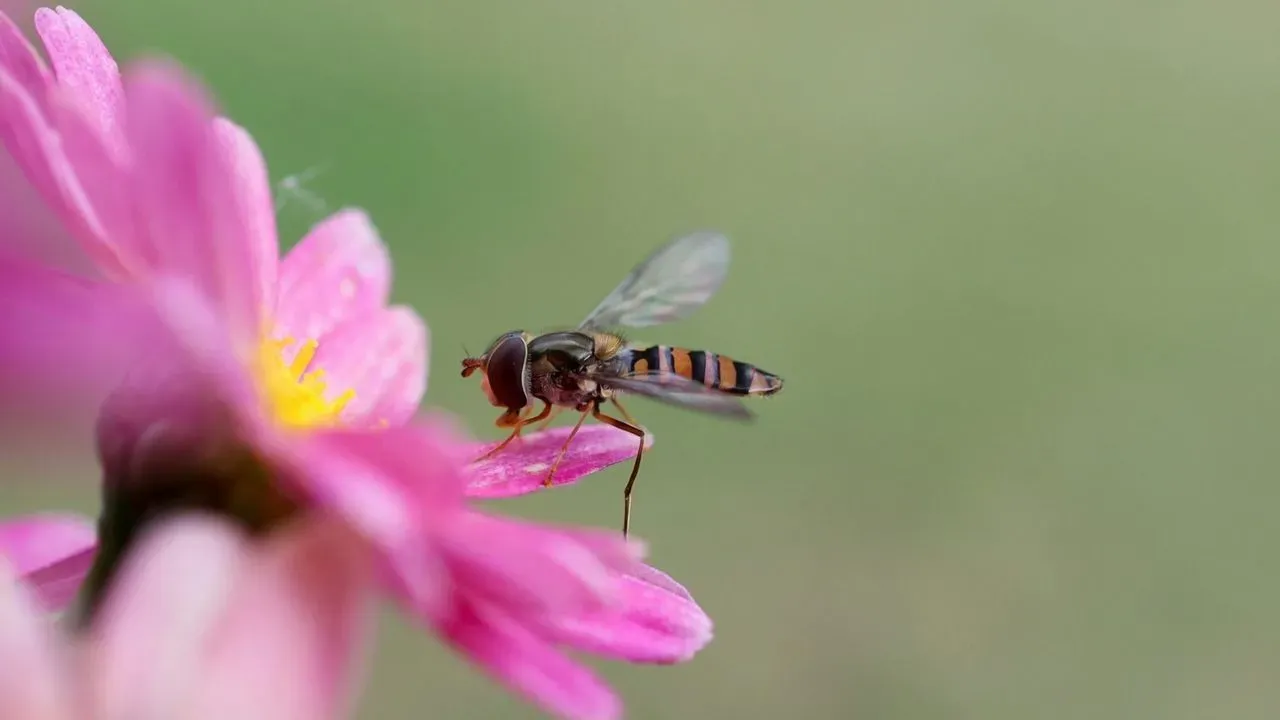

Gardeners often scan their plants for signs of trouble and overlook one of the most effective natural controls already at work. Hoverflies, also known as syrphid or flower flies, resemble wasps or bees in their adult form yet pose no threat to people. Their larvae, however, rank among the most efficient aphid predators in low-desert and many other garden settings. This combination of camouflage and appetite makes them valuable allies that deserve closer attention.
A Larva That Devours Hundreds of Pests
The life cycle begins when a female hoverfly deposits a tiny egg among an aphid colony. The egg is easy to miss, roughly the size of a grain of rice and often placed near leaf veins. Within days it hatches into a larva that starts feeding immediately. One larva can consume up to thirty aphids daily and finish more than four hundred before pupating.
Early on the larva blends with the aphids themselves. As it grows it becomes larger than its prey yet remains well camouflaged on the plant. Unlike caterpillars, which chew leaves and stems, hoverfly larvae focus exclusively on soft-bodied insects. Their tapered shape, thicker in the middle and narrowing toward the head, and their slug-like movement help distinguish them from plant-eating larvae.
Adult Hoverflies and Their Protective Disguise
Once the larva completes feeding it finds a sheltered spot on a stem or leaf and forms a protective pupal case. Over roughly a week the insect transforms inside this casing. The adult that emerges looks strikingly like a wasp or bee, complete with yellow and black markings.
This resemblance is an example of Batesian mimicry. By imitating insects that sting, hoverflies reduce the chance that predators such as crab spiders will target them. The strategy works even though hoverflies cannot sting or bite. In warm regions they can complete multiple generations each year, sustaining pressure on aphid populations through milder winters.
Pollination Benefits That Extend Beyond Pest Control
Adult hoverflies spend much of their time visiting flowers for nectar. Researchers rank them among the most effective pollinators after bees, partly because they remain active when bees are less likely to forage. Their presence therefore supports both pest reduction and plant reproduction in the same garden space.
Different hoverfly species fill additional roles. Some larvae develop in soil or water and help break down organic matter, while others target additional soft-bodied insects. All species share the trait of being beneficial rather than harmful to garden ecosystems.
Simple Steps to Support Hoverflies
Encouraging hoverflies requires little extra effort beyond providing nectar sources. Daisies, yarrow, zinnias, and asters consistently draw adults to gardens. Maintaining some aphid presence early in the season also gives larvae the food they need to establish populations.
Regular observation helps gardeners recognize the eggs, larvae, and pupae before they are mistaken for problems. Once identified, these stages reveal an ongoing natural process that reduces the need for other interventions. The result is a more balanced garden where beneficial insects handle much of the pest management themselves.
AI Disclaimer: This article was created with the assistance of AI tools and reviewed by a human editor.