

Early Is Not the Same as Polite

Most of us are conditioned to believe that arriving early signals respect and enthusiasm. Etiquette instructor Sydney Dunn notes that “we’re conditioned to think early equals polite – and most of the time, that’s true.” The trouble is, someone’s home is not an office, a flight, or a concert hall. Different settings carry entirely different rules.
In most cases, arriving early to a party is considered rude, though the topic isn’t black and white and involves a lot of nuance. The social calculus shifts depending entirely on the context of the gathering. What counts as considerate in one situation can count as an imposition in another.
The Host Is Always Mid-Process

Etiquette expert Diane Gottsman, author of “Modern Etiquette for a Better Life” and founder of The Protocol School of Texas, explains that it is impolite to arrive early to a party because the host is taking care of last-minute details – “this might also include running around in a robe and hair rollers,” adding unnecessary stress on top of what the host is already managing.
Skilled hosts tend to use those final minutes to change outfits, freshen up, plate food, prep drinks, turn on music, and light candles, according to Jodi R.R. Smith, president of Mannersmith Etiquette Consulting. Those minutes aren’t buffer time. They’re essential.
According to party planning data, roughly two thirds of hosts report stress levels higher than their guests. Walking into that stress prematurely, without warning, doesn’t help anyone.
The Unwritten Window: What “On Time” Actually Means

A widely shared etiquette guideline holds that “on time” generally means within five minutes of the invitation time – not fifteen minutes early and definitely not thirty minutes late. That five-minute window is not arbitrary. It’s wide enough for traffic variation but narrow enough to respect the host’s schedule.
For a home gathering, arriving five to ten minutes late is often considered perfectly acceptable – and honestly, probably preferred. For a house party specifically, a few minutes late is the polite choice. The social sweet spot, in short, sits slightly after the stated start time rather than before it.
If You Arrive Early, Stay in Your Car

Although early arrival may feel like it reflects enthusiasm and good time management, it can unintentionally place the host in an uncomfortable position. Indicating that you are sitting outside may cause stress and anxiety for the host, making it the considerate choice to stay out of sight when waiting in your vehicle.
This is one of the least-discussed but most genuinely useful social habits a guest can develop. Drive around the block. Sit in the parking lot. Scroll your phone. Whatever you need to do, protect those last few minutes of the host’s preparation time. It costs you nothing and means a great deal to them.
Context Always Changes the Rules

Whether it’s better to arrive early or late genuinely depends on the type of event and venue. For weddings, early is the only acceptable answer. For events at bars or restaurants, on time is the right time. For a house party, a few minutes late is the polite choice.
For a job interview or rehearsal, arriving five to ten minutes early is appropriate. For a meeting or a social outing at a restaurant, on time is the mark. For a party at someone’s home, five to ten minutes after the announced start time is the accepted norm. The underlying principle is always the same: consider who is absorbing the disruption of your timing.
Generational Gaps Around Punctuality Are Real

According to 2024 research conducted by Meeting Canary, nearly half of Gen Z respondents said arriving five to ten minutes late is considered on-time, whereas only about one in five Baby Boomers shared that view. This gap matters because it means two guests at the same party can genuinely operate with different mental clocks.
Neither generation is wrong in an absolute sense. They’re operating from different socialized norms. What this does mean is that hosts and guests increasingly need to read each other’s expectations rather than assume a universal standard applies. Good communication before the event helps more than any timing rule on its own.
Cultural Background Shapes the Expectation Entirely

Punctuality varies significantly across cultures, and in some, showing up early is seen as overly eager or even rude, prompting the unspoken question of why you would arrive before the party even started. There is no single global clock when it comes to social gatherings.
In Argentina, time in social settings is fluid. In cities like Buenos Aires, punctuality is so relaxed that some describe arriving late as still being early. Dinners rarely begin before nine in the evening, and invitations are often treated as loose guidelines – arriving thirty minutes late is considered completely normal.
In Britain, arriving early for medical appointments and formal events such as weddings is encouraged, but turning up early or unannounced to someone’s home can be considered quite rude. In countries such as Switzerland and Japan, punctuality is vital, and arriving late to events is considered disrespectful. The rule shifts with the cultural frame.
What It Says About You as a Guest

In the view of etiquette professionals, the people who show up early are often those who have never hosted an event themselves. People who throw parties would be the last to ever arrive early at someone else’s. Hosting teaches empathy for hosts in a way that simply being a frequent guest rarely does.
Guests who arrive too early put hosts in the position of having to entertain them while still putting the finishing touches on the event or even getting dressed for it. It creates an awkward power imbalance that most guests don’t intend and most hosts don’t forget.
The Text Message Buffer

Being on time shows respect for the host’s effort and schedule. If something unexpected comes up, a quick, polite text is perfectly acceptable. A late arrival without notice, however, can feel inconsiderate. The same logic applies in reverse: if you know you’re running early, a heads-up text gives the host the chance to tell you to wait or to wave you in, rather than answering the door mid-chaos.
That two-second text is one of the simplest and most genuinely kind things a guest can do. It transfers control back to the host, which is where it belongs on their own turf. It also prevents the silent tension that comes from a doorbell ringing fifteen minutes too soon.
The Right Mindset: It’s Not About You
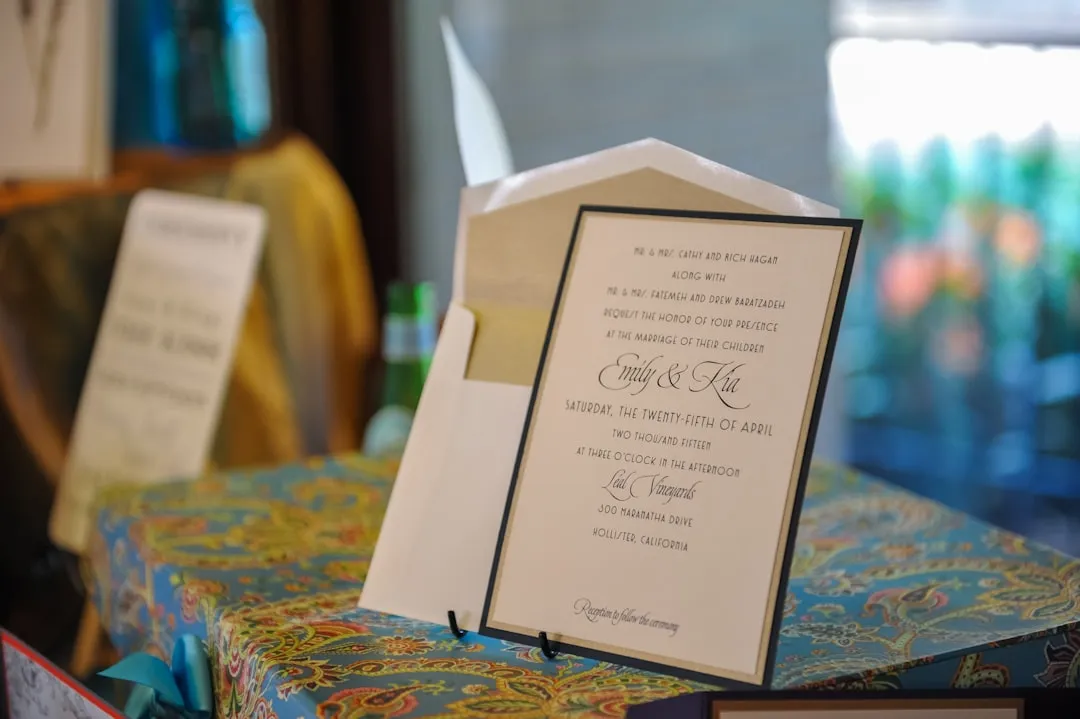
Arrival etiquette isn’t about yourself – it’s about the host of the gathering, the consideration given to their planning, and the courtesy extended to everyone else by allowing the evening to flow as intended. That reframing is useful. Your arrival time is not a personal expression. It’s a social gesture aimed at another person.
If someone invites you to a dinner they’re hosting for a specific time, making it a habit to arrive on time is the respectful baseline. It is disrespectful of the host’s time to make them wait, but it can equally disrupt plans if you arrive too early. Both extremes create friction. The goal is to slip in smoothly, right where the host expected you.
The Takeaway

Showing up early to a friend’s house is one of those things that feels harmless right up until you’ve been on the other side of the door in an apron with your hair undone. The rule isn’t about rigid timekeeping for its own sake. It’s about recognizing that a host’s home in the final minutes before a gathering is a private, working space – not yet a party.
Giving your host those last few minutes is a small, quiet act of consideration. It costs nothing, it requires only a little self-awareness about timing, and it makes you exactly the kind of guest people genuinely look forward to seeing again.
AI Disclaimer: This article was created with the assistance of AI tools and reviewed by a human editor.