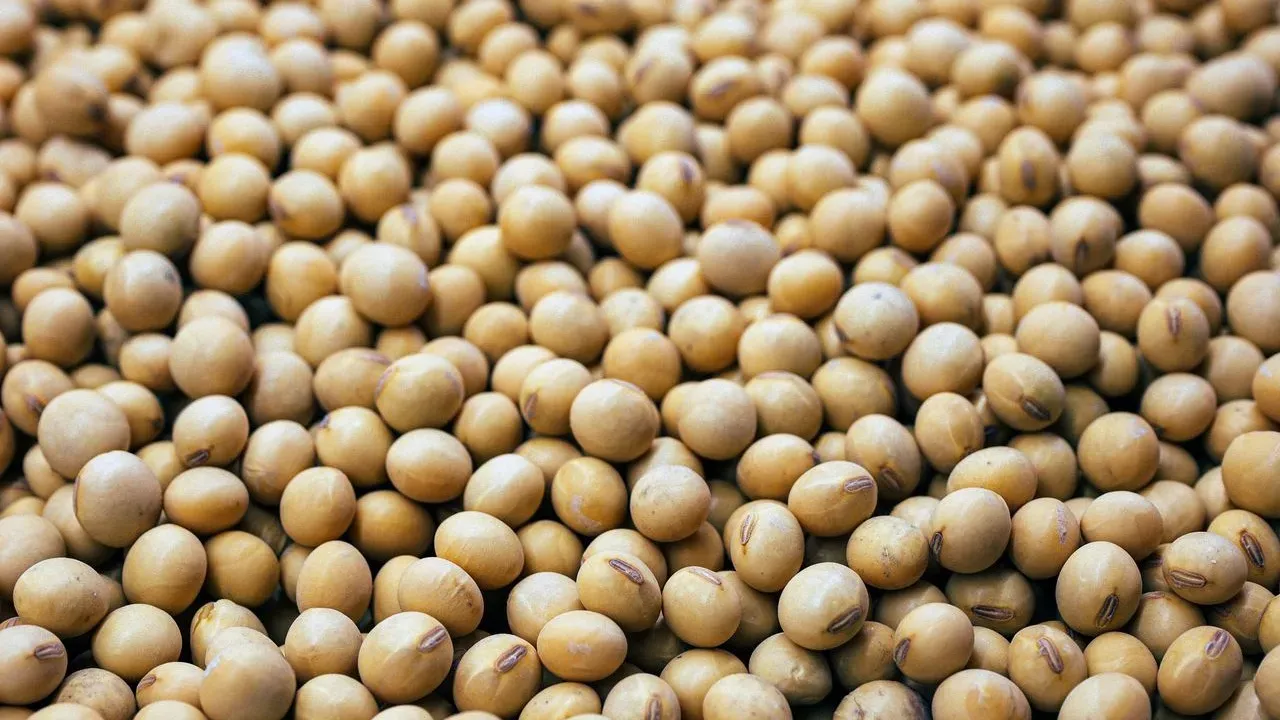

U.S. farmers are on track for a record soybean harvest of 4.52 billion bushels in 2026, according to U.S. Department of Agriculture projections. That volume translates into roughly 800 pounds of soybeans per American when measured by weight. Most people never notice the crop on their plates, yet soybean derivatives now appear in salad dressings, baked goods, infant formula, snacks, and countless other everyday items. ([1])
Arrival and Early Cultivation in North America
Chinese farmers had cultivated soybeans for thousands of years before the crop reached the United States. An English sailor brought a small quantity to Savannah, Georgia, in 1764, and local officials tested the plants the following spring. The effort produced limited results and faded after the sailor’s death. Interest revived around 1900 when U.S. Department of Agriculture explorers collected dozens of varieties from China. Researchers evaluated the plants for yield, maturity, and adaptability, then distributed promising strains to experiment stations across the country. For decades, growers raised soybeans mainly as livestock feed and forage rather than human food.
Industrial Processing and Henry Ford’s Push
Mechanical and later chemical crushing methods separated soybeans into protein-rich meal and oil during the early twentieth century. The oil found uses in margarine, paint, and soap, while the meal supported expanding livestock operations. This dual-product model made large-scale production economically attractive. Automaker Henry Ford embraced the crop with particular intensity. His company planted hundreds of varieties on Michigan acreage and incorporated soybean oil into paints and meal into molded plastic components. By the mid-1930s, each Ford vehicle contained roughly one bushel of soybeans in its manufacture. Ford also hosted a soybean-focused luncheon for journalists in 1934, though the experimental dishes received mixed reviews.
Expansion Through Processed Foods
World War II cut off imported fats and oils, prompting greater reliance on domestic soybean oil. After the war, surging livestock demand absorbed the protein meal, leaving processors with abundant, inexpensive oil to market. Food manufacturers adopted the neutral-flavored oil for shortening, margarine, frying, and packaged products. Federal data illustrate the shift: per-person butter consumption fell sharply between 1942 and 1972 while margarine use rose. By 2008, soybean oil accounted for about 80 percent of the edible oils Americans consumed each year. The ingredient entered products through emulsifiers such as soy lecithin and protein additives in cereals and energy bars. Common soybean-derived components now include:
- Oil in salad dressings, mayonnaise, and fried foods
- Lecithin in chocolate and baked goods
- Protein in breakfast cereals, soups, and bars
Current Role in Energy and Trade
Recent federal renewable-fuel rules have directed more soybean oil toward biodiesel and aviation fuel. The same versatility that once supplied food processors now supports transportation mandates. Livestock feed, industrial materials, and energy production continue to drive demand. The crop’s adaptability across food, agriculture, and energy sectors explains its steady growth. Americans consume large quantities of soy without ever eating whole beans, a pattern shaped by processing technology, policy decisions, and market forces rather than direct consumer preference for the plant itself.
AI Disclaimer: This article was created with the assistance of AI tools and reviewed by a human editor.