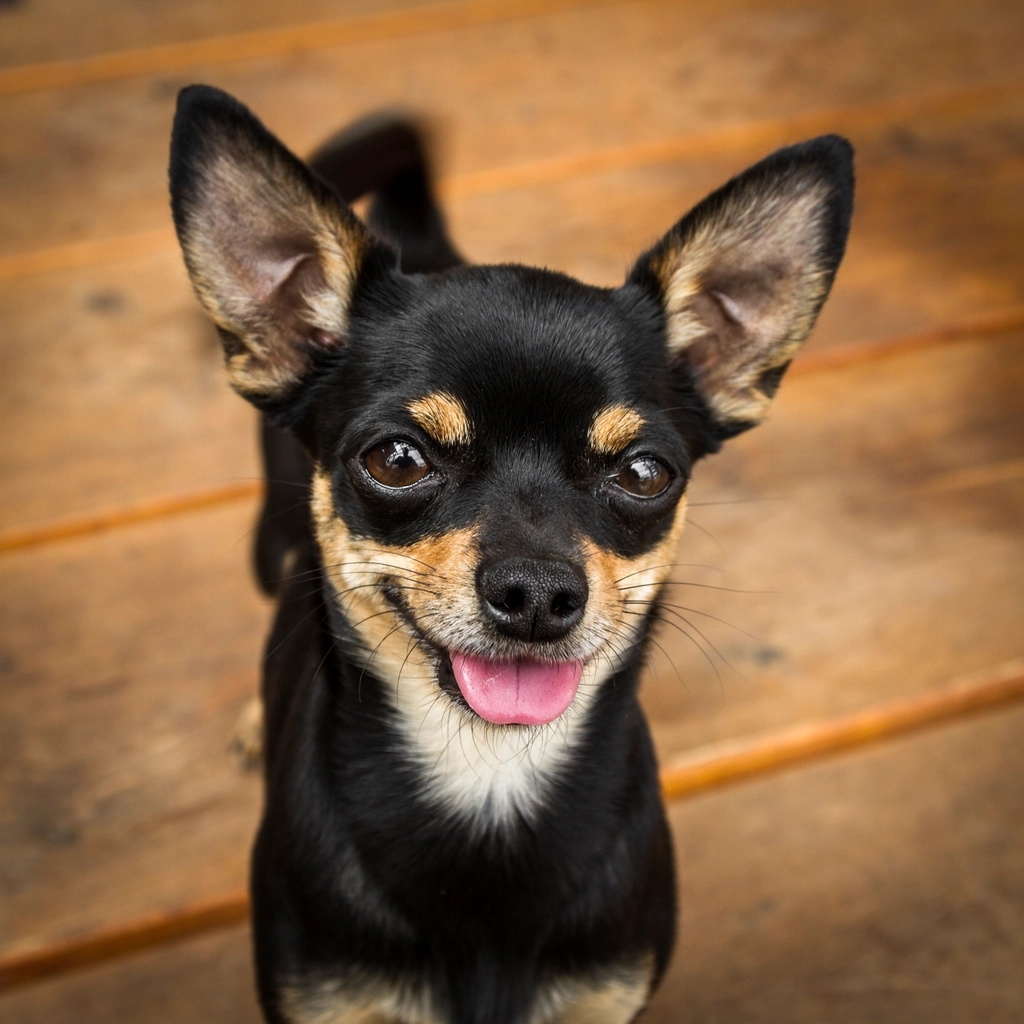

What the Submissive Grin Actually Is
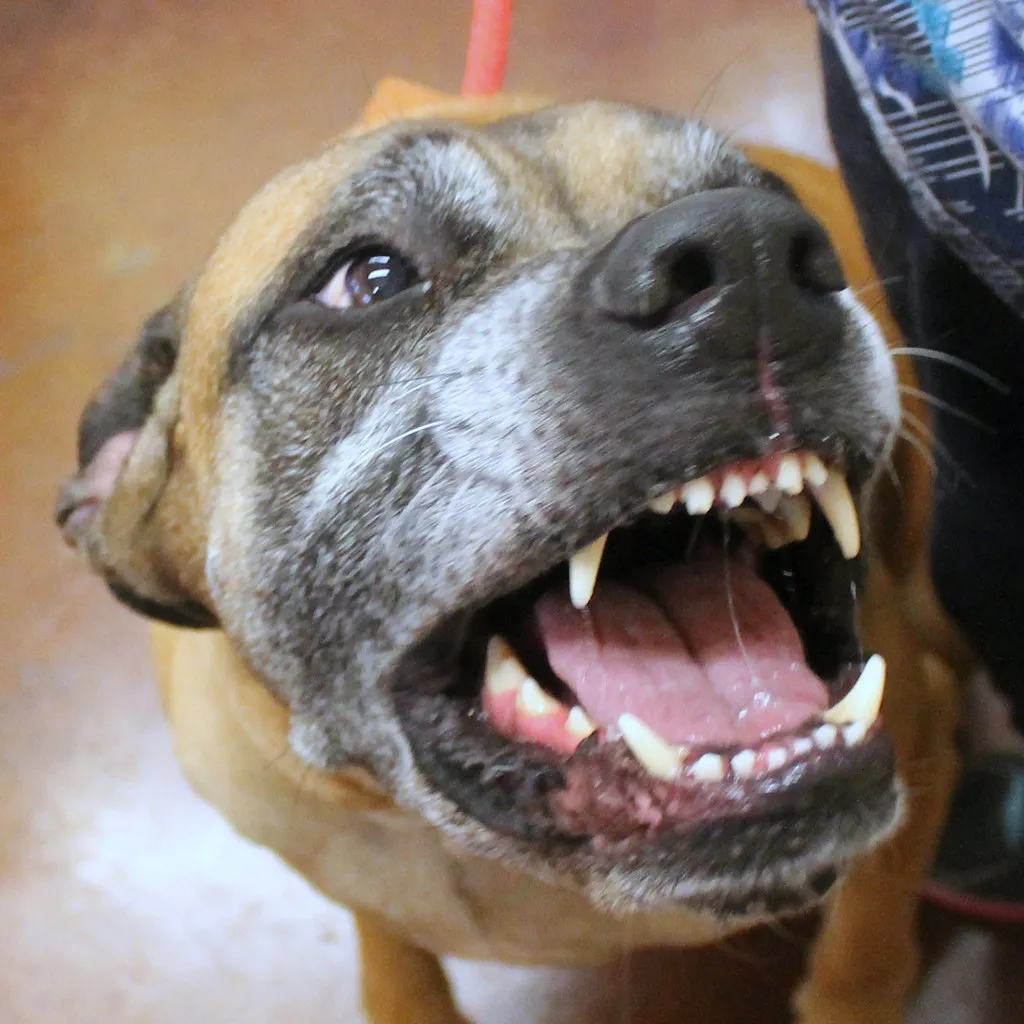
When a dog pulls back their lips and shows their teeth, it can be interpreted as an aggressive sign. It’s actually submissive grinning, a gesture dogs use to display to others that they are not a threat. The name fits: the expression is less about teeth and more about what comes with them.
Dogs that bare their teeth in a happy moment are almost always performing what behaviorists call a submissive grin, a social signal that looks alarmingly like aggression but communicates the opposite. The dog is pulling its lips back to expose its front teeth while the rest of its body stays loose, wiggly, and relaxed.
It’s not usually aggression, but rather a display of appeasement and deference aimed at diffusing potential conflict and demonstrating subordinate status. The submissive grin is sometimes called a “nervous grin” or “appeasement grin.”
Where This Behavior Comes From
Dogs, being descended from wolves, retain a hierarchical social structure. Within a pack, maintaining peace and order is crucial for survival. Appeasement behaviors, like the submissive grin, serve to reduce tension and prevent aggression within the group.
Many animal communication signals started out as something else entirely. Protective reflexes, stress responses, and autonomic reactions can evolve over time into deliberate social signals. Baring teeth likely began as a purely defensive or aggressive gesture, but in social species like dogs and wolves, a modified version of it became useful for defusing tension.
Puppies exhibit many appeasement behaviors toward adult wolves. These include licking the muzzle, lowering their body, averting their gaze, and emitting soft whimpers and a somewhat “grinning” facial expression. These actions clearly communicate: I am not a threat; I am subordinate; please do not harm me.
How It Looks Up Close
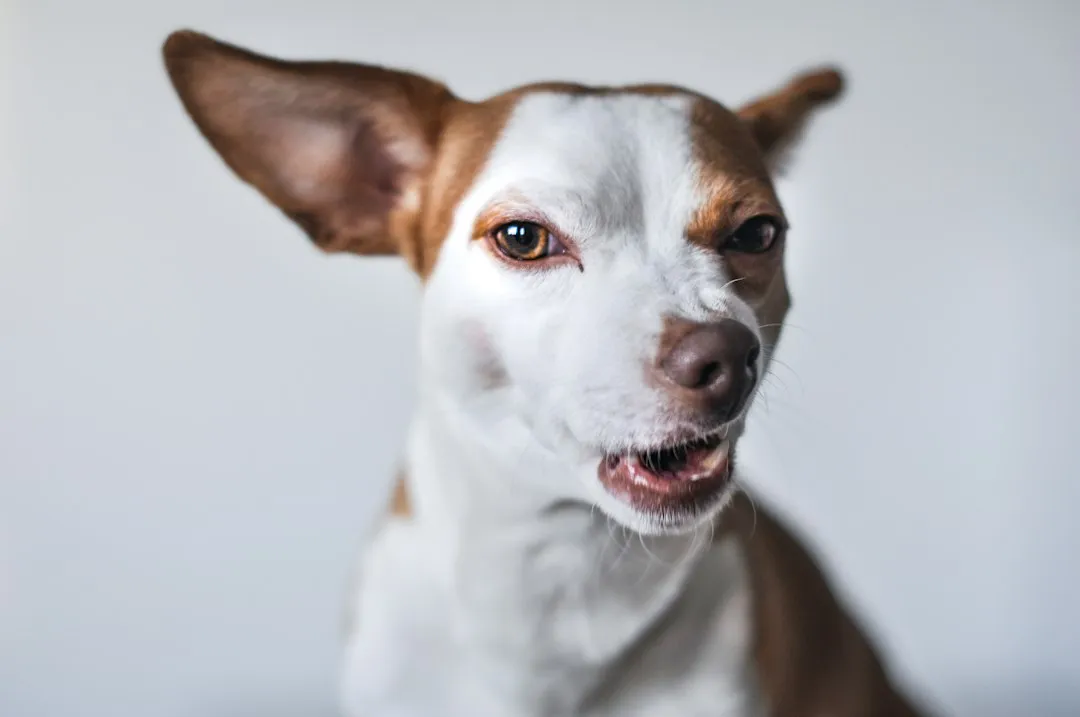
A submissive grin is where a dog raises the front of their lips, wrinkling their nose, and showing their front teeth. It’s the front incisors that do most of the work here, not the side canines or the back molars. That detail actually matters quite a bit.
The key markers include front teeth only, with lips pulled back horizontally, soft squinty or blinking eyes, a low wiggly body and a sweeping low wag, and the behavior is often paired with sneezing, head ducking, or a gentle approach.
A submissive grin comes with loose muscles, blinking eyes, curved posture, and often full-body wiggling. That wiggle is hard to fake, and it’s usually the clearest giveaway that nothing threatening is happening.
How It Differs from a Real Snarl
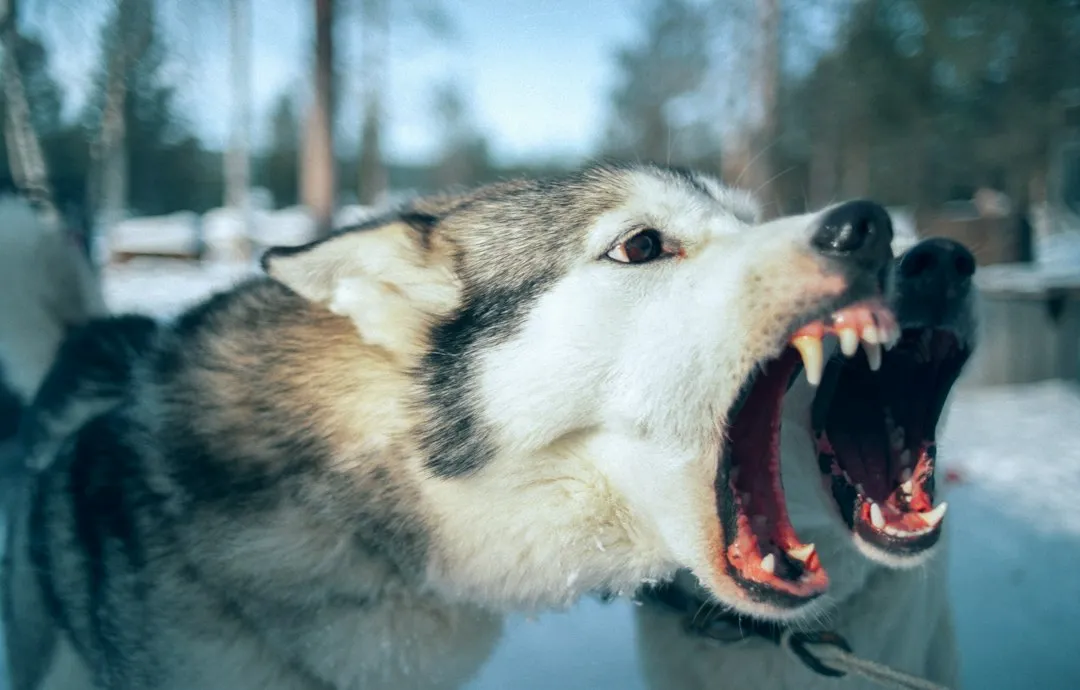
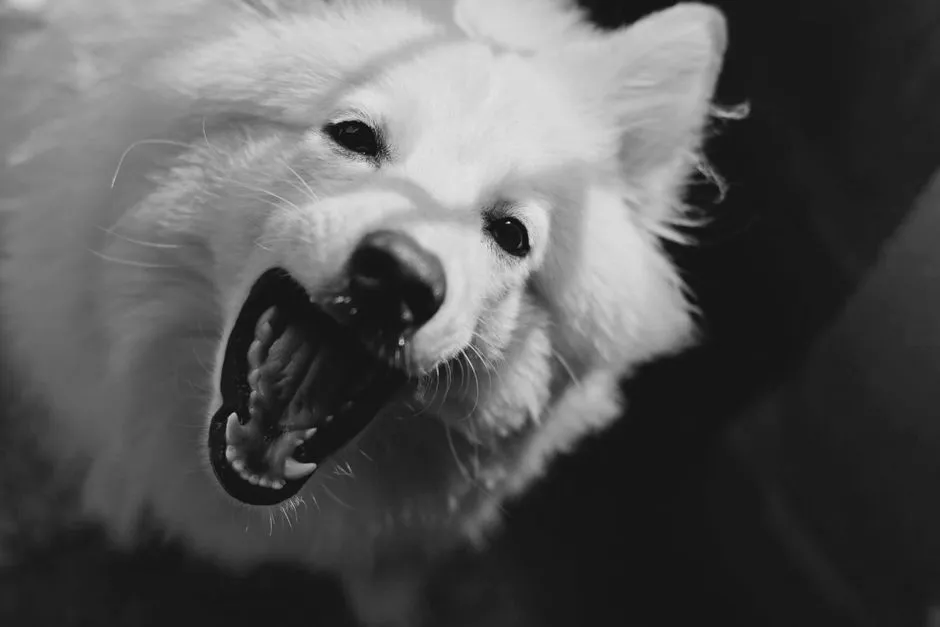
Unlike the horizontal grin, a snarl lifts the upper lip vertically and bunches it into a C shape, exposing the canines and often the gums. The muzzle wrinkles into visible ridges, the eyes harden into a fixed stare, and the body goes stiff and still. Hackles may rise along the shoulders or back, and a low growl frequently comes with it.
The eyes go hard and fixed, sometimes showing the whites in what’s called “whale eye.” The body stiffens, leans forward, and the dog seems to grow taller. Everything about a true snarl says “back off,” while everything about a submissive grin says the opposite.
The best way to tell the difference between a submissive smile and an aggressive snarl is by looking at the rest of the dog’s body. Submissive grins are often accompanied by squinted eyes, a low wagging tail, submissive urination, curving the body, or exposing the belly. An aggressive snarl is often paired with a stiff, rigid body, a hard glassy stare, and a low growling.
When Dogs Are Most Likely to Show It
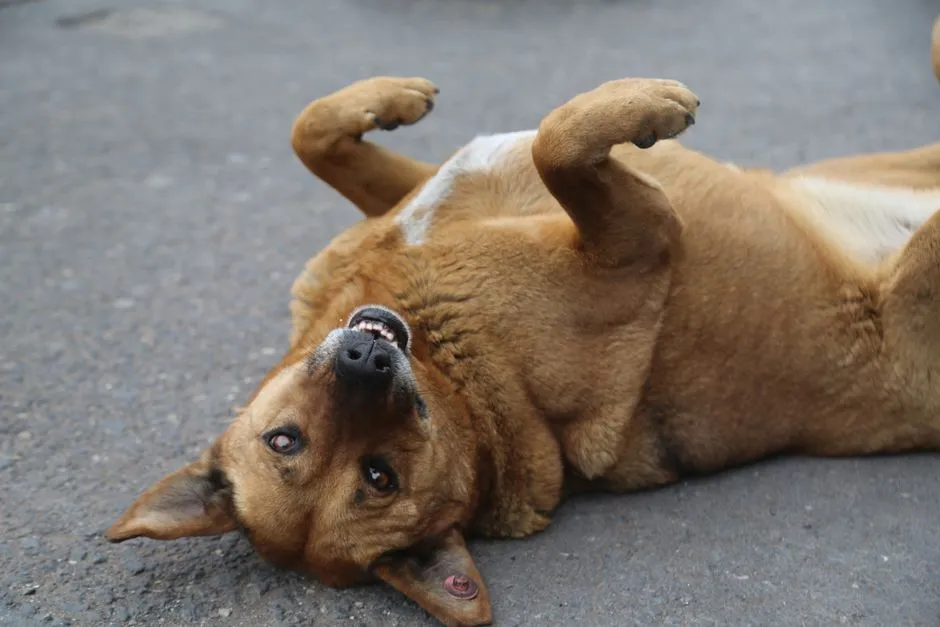
You’ll typically see submissive grinning during greetings with familiar humans, when a dog anticipates mild social pressure, after being startled or corrected, and in naturally soft-tempered dogs.
In addition to being a friendly, non-threatening signal, it can also be linked to excitement, stress, or a lack of confidence. Dogs may grin when greeting new people, during play, or when they feel unsure about a situation and want to defuse tension.
Some dogs exhibit a submissive grin when overly excited, as a way to manage their emotions and show they’re not challenging anyone. An anxious dog may also grin when encountering unfamiliar individuals as a way to signal non-threat.
Which Dogs Tend to Do It Most
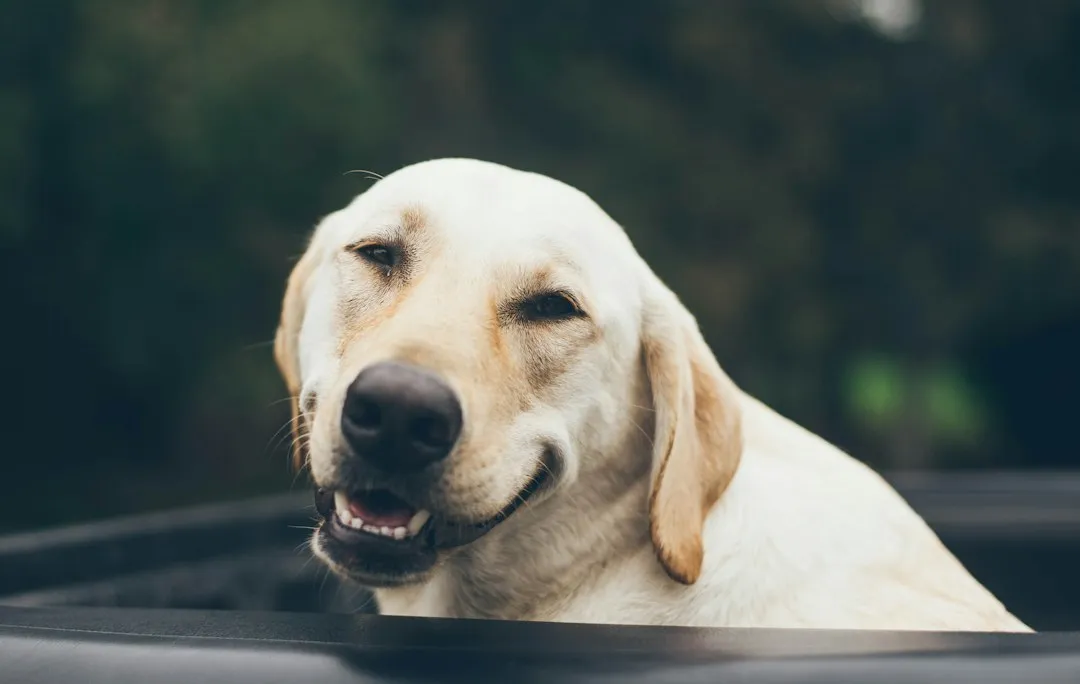
All breeds have individuals within that breed who will display a submissive grin, just like all breeds have individuals that perform submissive urination or any other canine behavior. It’s genuinely an individual trait more than a breed rule.
Dogs that appear to “smile” most often are those with facial anatomy, expressive musculature, and social temperament that make a relaxed, open-mouthed grin frequent and readable. Breeds commonly reported by owners and behaviorists as “smilers” include Labrador Retrievers and Golden Retrievers, whose open relaxed mouths and eager-to-please temperament produce frequent smiles in social contexts, as well as Border Collies and Australian Cattle Dogs, which have high social intelligence and facial expressiveness.
While any dog can exhibit a submissive grin, it seems to be more prevalent in some breeds known for their sensitivity or submissive nature. These may include Beagles, Shiba Inus, and some herding breeds. However, individual temperament is more important than breed predisposition.
The Role of Learning and Reinforcement
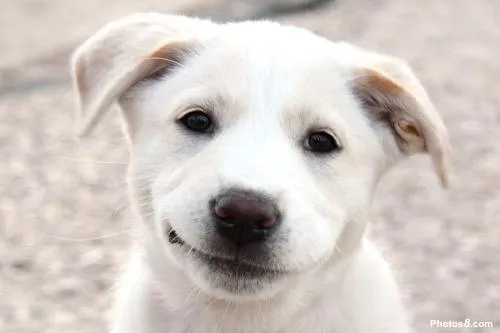
Experts believe that dogs learn to “smile” through mimicking and positive reinforcement. Dogs have learned through human interaction that smiling is an inherently positive trait, and they have therefore learned to mimic such behavior.
Research shows how well dogs can understand humans, and they may even mimic our behavior to be more like us. Dogs notice humans smile when happy, and they will often mirror our facial expressions to appease us and indicate they are also happy. A dog will pull back their lips and lift their brows to smile, and they may even wag their tail to complete the gesture.
The submissive grin is often an inherited trait, passed down from generations of naturally appeasing dogs. Some breeds and individual dogs are simply more prone to it than others. In addition to being a friendly signal, it can also be linked to excitement, stress, or a lack of confidence.
What Happens When People Misread It
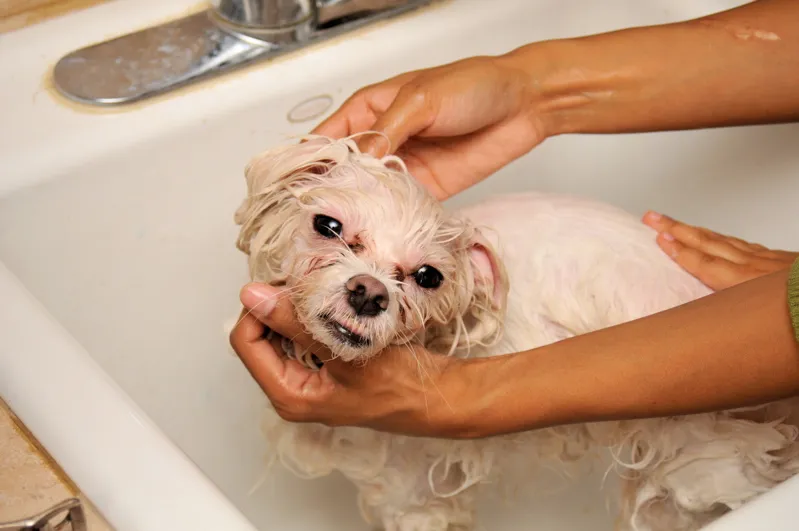
The submissive grin is arguably one of the most misinterpreted dog behaviors, primarily because it bears a superficial resemblance to a human smile, which is generally associated with happiness and friendliness. The resemblance is close enough to fool even experienced dog owners.
Confusing the two costs people bites. Some owners punish a grinning dog for looking aggressive, which teaches an anxious-but-friendly dog that greeting people gets it in trouble. That outcome is the exact opposite of what the grin was trying to achieve.
Perhaps the most detrimental misunderstanding is when a dog grins during a scolding and the owner thinks it doesn’t care. When a dog grins during a scolding, it’s a plea for the scolding to stop. It’s saying: “I understand you’re unhappy with me, and I’m trying to appease you.”
How to Respond When Your Dog Does It
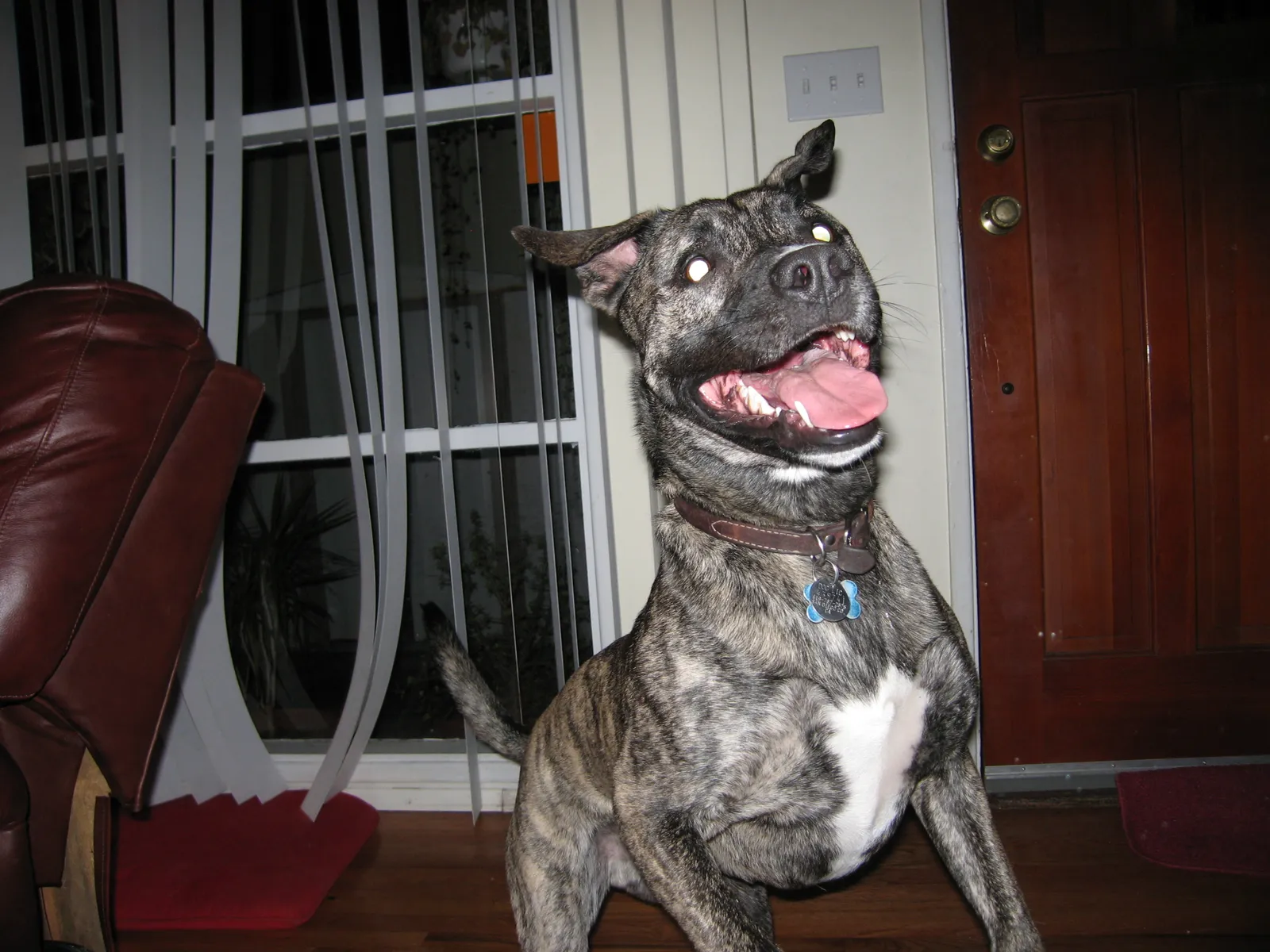
A submissive grin is usually a friendly gesture, so if a dog approaches you while exhibiting this behavior, it’s usually an invitation to interact. Meeting a dog who is grinning like this with calm, relaxed energy is the right move.
When a dog is showing their teeth like this, it’s important to take note of their body language. A submissive grin is a way for a dog to communicate that they’re not a threat and want to be friendly – it’s a gesture of deference to another person or dog.
Punishing a dog for grinning will only increase their anxiety and worsen the problem. Instead, acknowledge the greeting calmly, give the dog a moment to settle, and reward relaxed behavior. Responding with patience tends to make grinning dogs even more confident over time.
What Science Still Debates About Dog Smiling
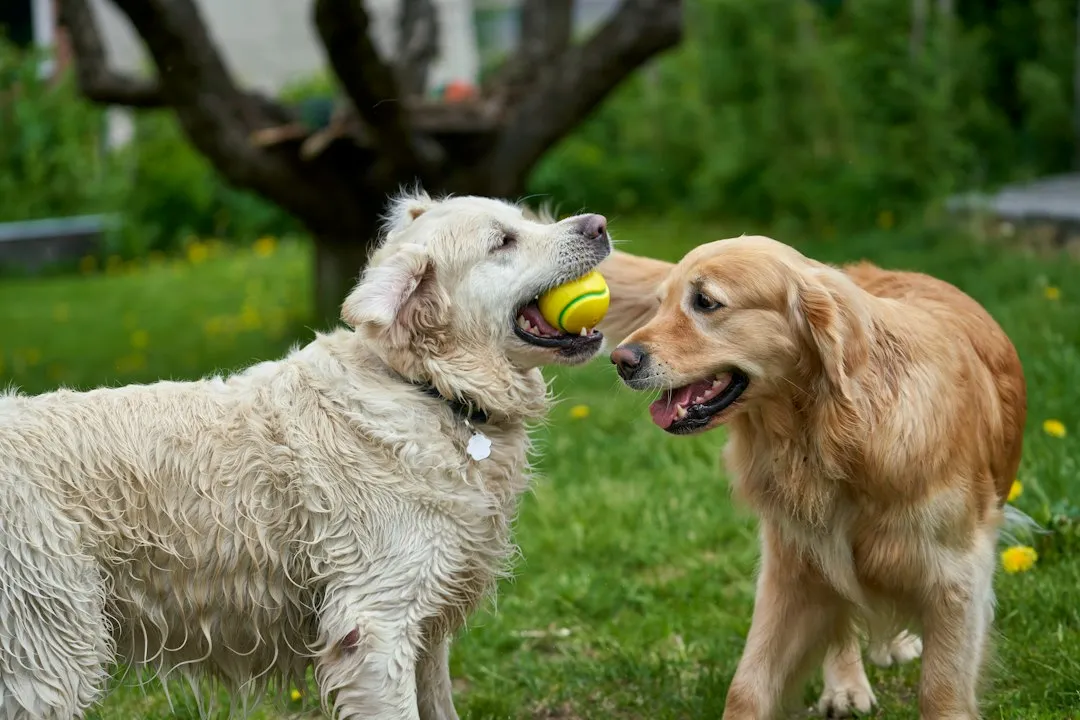
Cátia Correia Caeiro, a senior researcher at Leipzig University in Germany who studies cognitive capacities of different species, says she believes the equivalent of a human smile doesn’t really translate into dogs. The question of whether dogs truly “smile” in an emotional sense remains genuinely open.
Nicholas Dodman, a professor emeritus at Tufts University and the chief scientific officer at the Center for Canine Behavior Studies, says there are at least three facial expressions that could be interpreted as a smile on dogs: a submissive grin, an aggressive expression, and a play face.
Whether a dog is actually smiling is largely up for debate. It is dependent on our understanding of dog behavior and whether humans are projecting the concept of human body language onto dogs in an attempt to translate a dog’s reaction. What isn’t in debate, though, is the communicative intent behind the submissive grin. It’s real, consistent, and well-documented.
Reading the Whole Picture
Behaviorists categorize the submissive grin as an appeasement signal. By communicating a lack of aggressive intent, the grinning dog reduces the chance that the other party, whether another dog or a person, will respond with hostility.
Some dogs may grin when feeling a little anxious or uncertain. Understanding this subtle part of canine communication can help prevent unnecessary fear and misinterpretation. Once you’ve seen a true submissive grin a few times and matched it with the right body language, you tend to recognize it instantly. It’s one of those things dogs do that actually becomes endearing once you know what it means, proof that what looks like a threat can sometimes be the warmest greeting a dog knows how to give.
AI Disclaimer: This article was created with the assistance of AI tools and reviewed by a human editor.