

Most people glance at their tongue only when a doctor asks them to say “aah.” It’s one of those overlooked moments in a routine checkup that passes without much thought. Yet that brief inspection carries real diagnostic weight, and researchers are now showing just how much information that small muscle can give away.
Clinicians note that the tongue can provide vital clues about overall health and serve as an early indicator of certain diseases or deficiencies, with healthcare providers examining its color, size, and texture to assist in making a diagnosis. What follows is a close look at ten specific tongue colors and what the current evidence says they may mean.
1. Pink: The Baseline Everyone Should Know

A light pink, moist, and slightly bumpy tongue is considered the hallmark of good health, reflecting proper hydration, a balanced diet, and good oral hygiene. Researchers have confirmed that a healthy tongue usually appears pink with a thin white film.
Healthy tongues can range in color from pale pink to reddish-pink, and extreme variations from this normal color palette may be an early warning sign of certain diseases, vitamin deficiencies, or infections. Knowing what “normal” looks like for you personally is the starting point for catching anything unusual early.
2. White: More Than Just Poor Hygiene

A whitish tongue could indicate a fungal infection, an inflammatory condition, or a potentially precancerous condition. More specifically, a white tongue can point to oral thrush, which is a yeast infection, leukoplakia caused by smoking or irritation, or a buildup of bacteria or food particles.
A white tongue in particular can indicate anemia, according to findings from the University of South Australia’s tongue-color AI research team. This is a detail that surprises many people. White patches that persist or cause pain are worth reporting to a doctor rather than brushing off as a hygiene issue.
3. Bright Red: A Signal Worth Taking Seriously

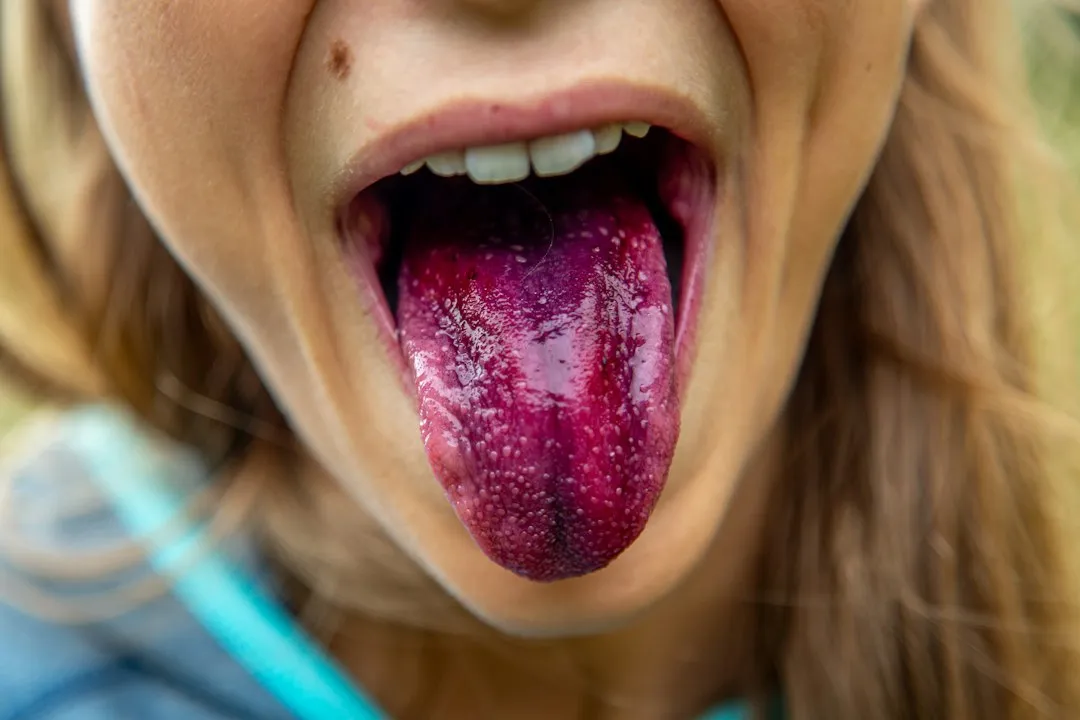
A red tongue may indicate a vitamin deficiency, particularly vitamin B12 or folic acid deficiency, and may also be a sign of infections or inflammatory conditions such as scarlet fever, Kawasaki disease, or geographic tongue. Healthcare providers sometimes refer to a red tongue as a “strawberry tongue.”
COVID-19 intensity can also influence overall tongue color, with faint pink seen in mild cases, crimson in moderate infections, and deep red in serious cases, according to a 2024 study published in the journal Technologies. That progression from pink to deep red tied to disease severity is one of the more striking recent findings in this space.
4. Yellow: Bacteria, Dry Mouth, and Lifestyle Habits

A yellow tongue often results from bacterial buildup, dry mouth, or keratin accumulation, and may also stem from smoking or consuming foods with yellow pigments like turmeric. It’s one of the more common and generally less alarming color changes, but it shouldn’t be dismissed entirely.
Research from a 2024 machine-learning study also found that diabetes patients often have a bluish-yellow tongue coating. So when a yellowish tint sits alongside other unexplained symptoms, checking blood sugar levels may be a reasonable next step in consultation with a doctor.
5. Purple or Blue: A Circulation Red Flag

A blue tongue may indicate cyanosis, which is a lack of oxygen in the blood. Causes can include blood disorders, blood vessel disease, a lack of oxygen from the lungs, and kidney disease. This is one of the tongue colors that warrants prompt medical attention rather than a wait-and-see approach.
A purple or bluish tongue may suggest poor blood circulation, low oxygen levels, or heart or lung conditions, and if the tint doesn’t fade quickly, a healthcare provider should be consulted immediately. Research also links purple or blue tongue coloration to cardiovascular diseases, blood circulation problems, and cyanosis, with the color tied to oxygen deprivation or poor circulation.
6. Pale or Washed-Out Pink: Anemia and Nutrient Gaps
A pale, almost whitish-pink tongue may indicate anemia, nutrient deficiencies, chronic illness, or poor blood circulation, and if it’s accompanied by fatigue, dizziness, or brittle nails, a medical evaluation is recommended. These accompanying symptoms matter as much as the visual cue itself.
Iron deficiency anemia is a common cause of this pallor. A smooth tongue free of bumps or papillae may also be a sign of vitamin B12 or iron deficiency, and if the tongue feels unusually smooth alongside tiredness or weakness, a blood test to check for vitamin or mineral deficiencies is worth pursuing.
7. Gray: An Overlooked Indicator of Skin Conditions

A gray hue on the tongue may indicate eczema. This connection might not seem obvious, since eczema is primarily associated with the skin, but the body’s inflammatory responses can show up in the mouth too. A 2017 study involving 200 people with eczema found that roughly two in five participants had a gray or pale tongue.
Gray is a tongue color that rarely comes up in mainstream health conversations, which is precisely why it’s easy to miss. Persistent grayness, particularly if combined with skin flare-ups or known inflammatory conditions, gives clinicians useful context they’d otherwise have to seek through more invasive means.
8. Black or Dark Brown: Dramatic-Looking but Often Benign

A condition known as “black hairy tongue” looks dramatic but is usually harmless, caused by overgrowth of papillae, smoking, coffee or dark tea, poor oral hygiene, or certain medications including antibiotics, and the tongue may look brown, black, or dark green with a hairy texture.
Improving oral hygiene and reducing staining habits usually clears the condition in a few weeks. The emergence of a black or brown tongue may also result from lifestyle factors like smoking, certain medications, or underlying conditions like HIV. So while the appearance is alarming, context and duration help doctors determine whether further investigation is needed.
9. Geographic Tongue Patterns: The Nutrient Connection
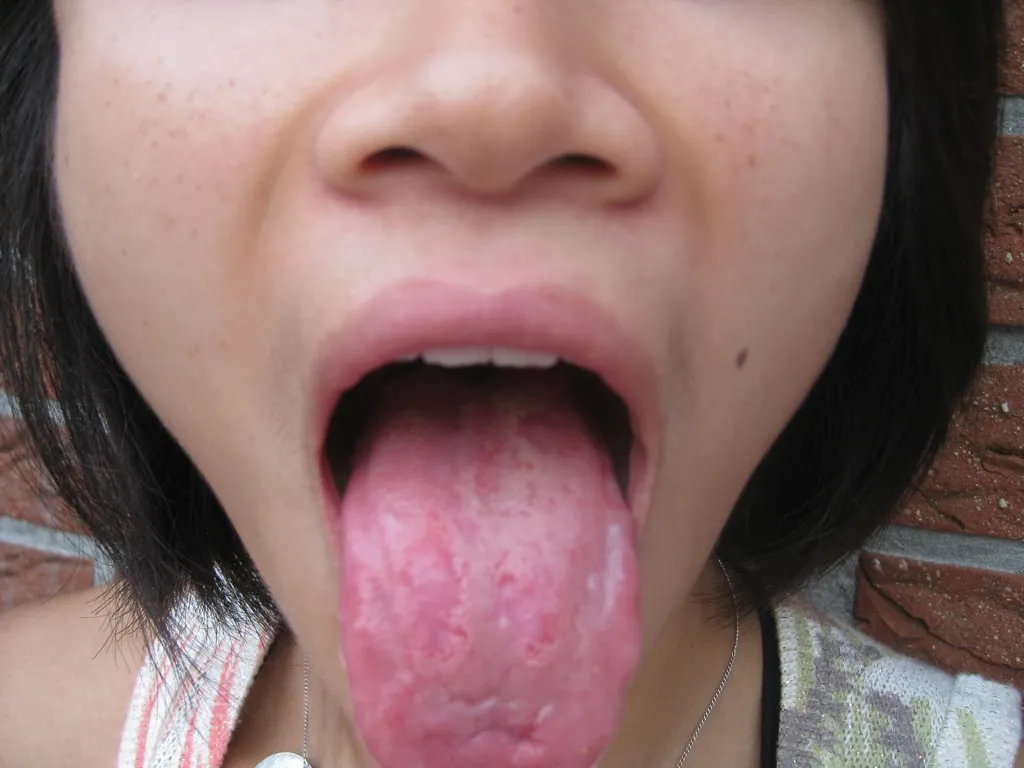
Geographic tongue is a chronic inflammatory condition marked by areas of irregular tissue that develop on the top or sides of the tongue, typically appearing as patches of smooth, reddish tissue surrounded by a light-colored border, with the appearance suggesting landforms on a map. Experts estimate roughly three percent of all people worldwide have geographic tongue.
A 2025 study published in Dentistry 3000 found that average serum levels of vitamin B12 and folic acid were significantly decreased in patients with geographic tongue compared to healthy controls, with a considerable proportion falling below the normal reference range, suggesting a possible involvement of hematinic deficiencies in the underlying condition. The study’s findings indicate that addressing these nutritional gaps could be beneficial in the clinical approach to managing geographic tongue, particularly in patients presenting with symptoms.
AI and the Future of Tongue Diagnosis
Engineering researchers from Middle Technical University and the University of South Australia used over five thousand tongue images to train machine learning algorithms to detect tongue color. The authors of a 2024 study in Technologies used machine-learning models to classify tongue colors and predict several associated conditions, including diabetes, asthma, COVID, and anemia, with a testing accuracy of nearly 97 percent.
The proposed imaging system can diagnose diabetes, stroke, anemia, asthma, liver and gallbladder conditions, COVID-19, and a range of vascular and gastrointestinal issues. For thousands of years, traditional Chinese medicine practitioners have checked patients’ tongues as part of a full examination, and now researchers are working to adapt this ancient diagnostic approach to today’s AI-based technology. The idea of a non-invasive, camera-based health screen is no longer theoretical.
What This Means for Your Daily Routine

Checking your tongue can be quickly done while brushing your teeth. While some changes are harmless or temporary, such as staining from food, persistent discoloration or unusual textures may indicate dehydration, nutrient deficiencies, or infections, and monitoring regularly can help detect health concerns early.
Seeing a doctor about changes in tongue color, shape, or size that last longer than a few days is a reasonable precaution. Doctors say maintaining a healthy tongue color means eating a balanced diet, not using tobacco products, drinking plenty of water, and visiting a dentist regularly. None of that is complicated advice, but it’s grounded in what the evidence actually shows.
The tongue is easy to check and impossible to fake. Whether it’s technology or a trained clinician doing the looking, what it reveals often matches what’s quietly happening elsewhere in the body. That thirty-second mirror check might turn out to be more useful than it looks.
AI Disclaimer: This article was created with the assistance of AI tools and reviewed by a human editor.