

The Dark Streak That Demands Attention Before Anything Else
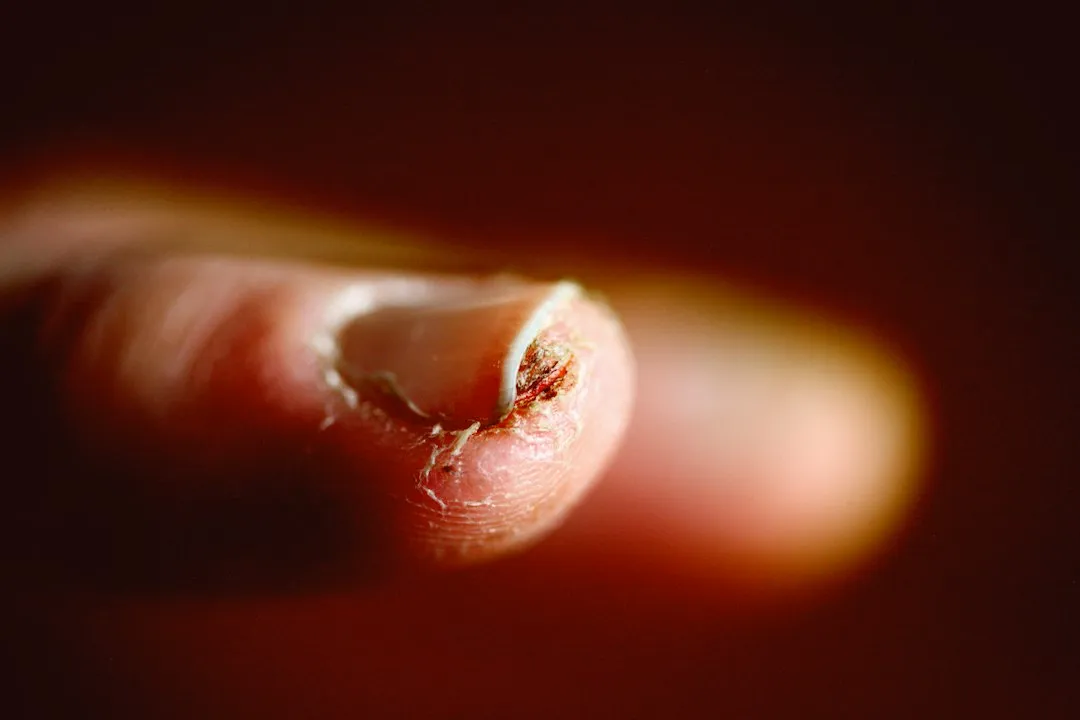
Subungual melanoma is rare but serious, and one of its most recognizable warning signs is a dark vertical stripe called longitudinal melanonychia, sometimes accompanied by irregular borders or pigment spreading onto the surrounding cuticle or skin. This spreading onto the skin, known as Hutchinson’s Sign, is the red-flag feature that separates a bruise from a surgical priority.
A persistent dark streak that appears without injury could be a sign of subungual melanoma, a rare but serious form of skin cancer that develops under the nail. Any black toenail that appears without a clear cause, doesn’t grow out, or has irregular borders should be evaluated by a podiatrist. Painting over it essentially erases the very visual clue a doctor needs to make an early assessment.
Yellow Toenails: The Most Common Warning Hiding in Plain Sight

Yellow is the most common toenail color change. Yellow toenails that feel thick, crumbly, or distorted represent one of the most common nail problems podiatrists treat. Onychomycosis accounts for roughly half of all nail disorders and is the most common nail disease in adults.
The prevalence of onychomycosis is estimated at around four percent globally, with a disproportionate burden among special populations. Management of this chronic, slow-progressive condition is complicated by long treatment durations, often more than a year, and a high risk of recurrence running between roughly one in five and one in four cases.
Yellow toenails can also occur in patients with serious pulmonary disease, lymphedema, lung disease, chronic bronchitis, diabetes, and liver disorders. Covering them with polish hides the clues and allows the underlying condition to keep progressing undetected.
Black Toenails Without an Injury: A Different Kind of Concern

Blood trapped beneath the nail after a knock or repeated shoe pressure can look dark red, purple, or black. Most black toenails caused by trauma resolve on their own as the nail grows out. However, a podiatrist should be seen if the black area doesn’t move as the nail grows, there was no injury to explain it, the discoloration has irregular borders or multiple colors, or there is a streak of dark pigment running from the nail base to the tip.
If nails become darker without any noticeable injury, it could also be a symptom of B-12 deficiency, anemia, bacterial infection, or in rare cases even cancer. A new, unexplained dark mark or changing stripe should be examined, even without pain. That’s exactly what nail polish prevents a doctor from seeing.
Green Toenails: The Bacterial Signal People Often Dismiss

A Pseudomonas infection is a bacterial infection that causes a very noticeable change in color, turning toenails a very noticeable shade of green. A green toenail often signals a bacterial infection, generally linked to prolonged exposure to moisture.
Green discoloration looks unusual enough that most people want to hide it immediately. That’s understandable. Still, covering it with polish traps moisture under the nail, which is precisely the environment bacterial infections need to thrive. Persistent or worsening discoloration that spreads, involves multiple nails, or does not improve with self-care warrants medical attention, especially when pain, swelling, redness, or discharge develops around the nail, suggesting an active infection that may require prescription treatment.
White Toenails: Harmless Spots or Something Systemic

A pattern called Terry’s nails shows over roughly four fifths of the nail surface as white and opaque, with only a thin pink or brown band at the tip. It has been linked to liver disease, kidney disease, and certain metabolic conditions. Uniform white nails covering most of the nail plate deserve a medical conversation.
When white nails happen in older adults, they may be a sign of serious illnesses such as hepatic cirrhosis, chronic renal failure, congestive heart failure, chronic hypoalbuminemia, diabetes mellitus, and Hodgkin’s lymphoma. White nails aren’t necessarily a health issue, and a white spot at the base of the nail is usually not serious. However, a white mark at the tip could indicate a developing toenail fungus or signal that the nail is separating from the nail bed.
Blue or Purple Toenails: When Circulation Is the Real Problem

Blue, purple, or red nail discoloration points toward problems with blood circulation, oxygen levels, or tiny blood vessels beneath the nail bed. Unlike fungal or bacterial conditions that create yellow or green nails, these color changes often reflect how well oxygen-rich blood reaches the extremities, or indicate bleeding under the nail surface.
Poor circulation in the feet may be due to certain lung conditions like COPD or heavy smoking, which reduce oxygen in the blood. Blue toenails may also result from narrowing arteries and restricted blood flow caused by peripheral arterial disease or other heart conditions. A blue toenail painted over with dark polish can go unnoticed for a long time, allowing the underlying vascular problem to worsen silently.
Nail Separation from the Bed: The One Change You Really Cannot Hide

When the nail lifts away from the nail bed, it may appear white or discolored. Psoriasis affects skin cells and can often result in changes to the nails, including discoloration, nail thickening, nail crumbling, or the nail pulling away from the nail bed.
Applying nail polish to a nail that has already begun separating is one of the riskier cosmetic choices a person can make. The gap between the nail and bed creates a warm, dark, enclosed space. When nail discoloration appears alongside swelling, numbness, or skin changes, it may reflect a broader medical issue rather than an isolated nail problem, particularly when a nail turns black without a clear injury or when the person has diabetes or circulation issues.
Diabetes Makes Every Toenail Change More Urgent

People living with diabetes often experience poor foot health due to related circulation issues. Lack of blood flow to the lower extremities makes fungal infections and toenail discoloration more common. Poor circulation sometimes causes toenails to thicken, yellow, or develop a dull, discolored appearance. Reduced blood flow slows nail cell turnover and weakens the body’s ability to fight off infection, which makes people with diabetes particularly susceptible to fungal toenail infections and slow-healing nail damage.
For people with reduced sensation or circulation, nail color may be the only warning sign, because pain may not appear even when infection or tissue damage is present. In that context, nail polish is not a neutral choice. It removes the one visible indicator left.
Red Streaks Under the Nail: Splinter Hemorrhages You Should Not Overlook

Red streaks under the nail are associated with capillary bleeding, with trauma and vasculitis listed as the most common causes. Splinter hemorrhages look like thin dark lines running lengthwise beneath the nail, and while they can result from something as simple as hitting the toe, they can also indicate a more serious inflammatory or vascular condition when they appear without a clear injury.
Specific red flags that require prompt evaluation include a nail that turns black without a clear injury and situations where the patient has diabetes or a weakened immune system. A nail that develops a dark streak or begins crumbling at the edges is not simply a cosmetic inconvenience. Dark nail polish applied on top of red streaks makes it nearly impossible for a clinician to evaluate the pattern properly.
When Nail Polish Itself Is the Problem

Nail discoloration happens for dozens of reasons. Some causes are minor, like residue from dark nail polish. Others signal infections that need treatment or, in rare cases, underlying health conditions that affect the entire body. Prolonged use of dark polish can stain the nail plate itself, creating a yellowish or brownish tint that mimics fungal infection. This adds a layer of confusion when a patient finally does visit a podiatrist.
The challenge is knowing which changes you can monitor at home and which ones require professional evaluation. The simplest rule most podiatrists offer is this: if the discoloration was already there before the polish went on, or if you noticed it only when removing polish, do not paint over it again until a specialist has had a look.
The Takeaway

Toenail color changes are among the most visible and most commonly dismissed signals the body sends about overall health. A nail that turns yellow, thickens overnight, develops a dark streak, or begins crumbling at the edges is not simply a cosmetic inconvenience. It is a clinical indicator that something beneath the surface has changed and, in many cases, is actively progressing.
It is always advised to have a medical professional examine any nail changes to rule out any underlying health conditions. The toenail is a small structure, but the information it carries can be disproportionately significant. Nail polish has its place, but not over a warning sign that your body is working hard to show you.
AI Disclaimer: This article was created with the assistance of AI tools and reviewed by a human editor.