

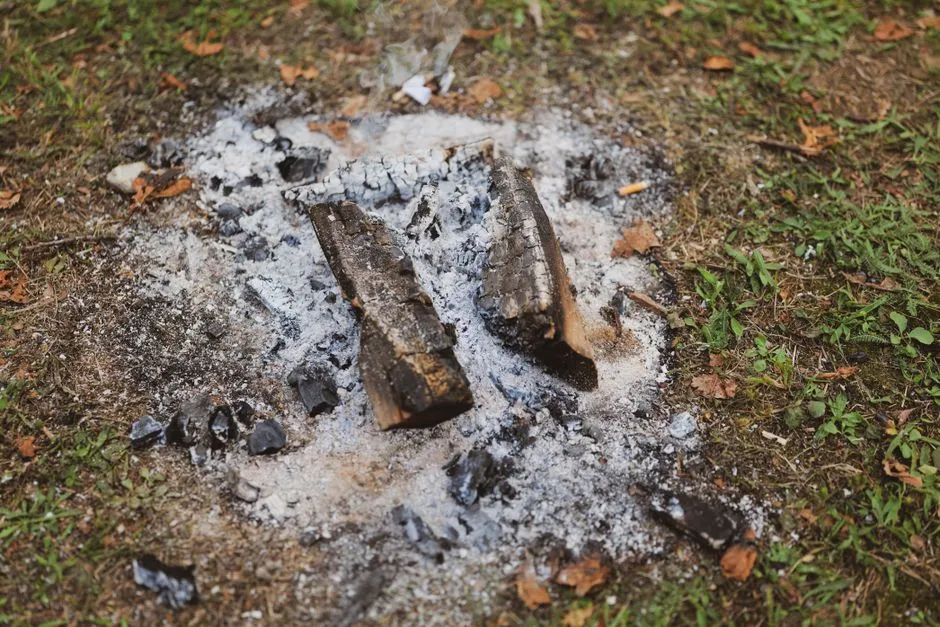
Most people sweep up fireplace ash and toss it into the trash without a second thought. It seems like the logical thing to do – it’s a byproduct, a leftover, something spent. What’s less obvious is that this gray powder sitting in your firebox is quietly packed with minerals your garden soil may genuinely be craving.
The idea of recycling wood ash into the garden is not a quirky folk remedy. It is grounded in real soil science, backed by university extension services, and has been practiced by farmers for centuries. The catch is that it works best when you know how, when, and where to use it.
What Wood Ash Is Actually Made Of
When wood burns, nitrogen and sulfur escape as gases. What gets left behind are calcium, potassium, magnesium, and trace elements such as boron, copper, molybdenum, and zinc – many of which are essential to plant life.
In general, the principal nutrients in wood ashes break down to roughly potash at three to eight percent, phosphate at one to two percent, calcium at twenty to twenty-five percent, and magnesium at two percent. In terms of a commercial fertilizer label, a bag of wood ashes would read 0-1-3, meaning zero nitrogen, one percent phosphate, and three percent potash.
As a rule, hardwood species produce three times more ash and five times more nutrients than softwood species. So if you’ve been burning oak or hickory logs through the winter, you’re sitting on a particularly rich source of garden minerals.
The Calcium Connection: Wood Ash as a Natural Liming Agent
The largest component of wood ash, at roughly twenty-five percent by weight, is calcium carbonate – a common liming material that increases soil alkalinity. Wood ash has a very fine particle size, so it reacts rapidly and completely in the soil. Although small amounts of nutrients are applied with wood ash, the main effect is that of a liming agent.
Wood ash is more soluble and reactive than ground limestone, and brings about a change in soil pH more quickly than lime. For gardeners who need to correct acidic soil but don’t want to wait months for limestone to take effect, this speed is a real practical advantage.
Most wood ashes have an acid-neutralizing equivalent of about forty-five to fifty percent of calcium carbonate. In other words, it takes about twice as much wood ash as calcium carbonate to change the soil acidity by the same amount. For example, if soil test results indicate you need five pounds of limestone per one hundred square feet of garden area, you’ll need about ten pounds of wood ashes to make the same change.
The Potassium Benefit Your Plants Will Notice

Potassium is vital for plant health, regulating water uptake and supporting enzyme activation. Wood ash also contains calcium, which is essential for cell wall strength and growth, and smaller amounts of magnesium, phosphorus, and trace minerals that support overall plant nutrition.
Wood ash potassium is in a form that is very water soluble, making it immediately available for plants to use. Because of this high solubility, potassium is quickly lost if the ash is stored where it can be rained on. Rainwater essentially washes away the potassium, so it’s important to store ashes in a dry area.
Potassium also helps plants deal with cold weather and helps them endure droughts by preventing loss of water from the plant. That’s a meaningful edge in gardens where dry spells and temperature swings are common.
How Quickly Wood Ash Changes Your Soil
Wood ash is highly reactive in soil and alters several physio-chemical properties. The addition of wood ash leads to an increase in soil pH and pore water electrical conductivity, and increased concentrations of elements such as potassium, sulfur, boron, sodium, calcium, magnesium, silicon, iron, and phosphorus.
Research has found that the use of wood ash increased soil pH over a short time, with the highest dose having the strongest effect, and increased the abundance of nutrients, which in turn increased microbiological activity.
Wood ashes work so quickly to raise soil pH that there is a danger the soil pH can quickly get too high and cause other problems for your plants. This is why starting small and monitoring results is always the smarter approach.
How Much to Apply and When
If you’ve decided to add wood ash to your garden, it’s important to apply based on the nutrient needs of the soil, which is why a soil test is helpful. Typically, it’s recommended to apply no more than twenty pounds of wood ash to a garden of one thousand square feet – which amounts to approximately one five-gallon bucket. After applying the ash to the top of the soil, mix it into the top two to four inches using a rototiller, spade, or rake.
It’s best applied in the fall or winter to allow nutrients to integrate into the soil before spring planting. Timing matters because you want those minerals working their way into the root zone well before seeds go in the ground.
Because wood ash particles are very fine and can easily be blown by the wind, avoid making applications when it is windy. Whenever possible, apply wood ash to moist soil. Where feasible, work the ash into the soil using a rototiller, spade, or rake in early spring.
A Natural Pest Deterrent Hiding in Your Ash Bucket
Beyond nutrients and pH adjustment, wood ash serves as an effective natural pest control. When sprinkled around plants, it acts as a desiccant to deter soft-bodied pests like slugs and snails. Wood ash contains salt, which dries up some of the slime these creatures secrete.
Wood ash is a natural and effective insect repellent that can improve soil structure, aeration, and drainage, leading to healthier root systems. It can also be used as a natural pest deterrent by drawing water from invertebrates’ bodies, such as ants and crawling insects.
After rain or irrigation, be sure to renew the barrier because moist and damp ash loses its deterring effect. It’s a simple but perishable solution, so consistency matters during wet seasons.
Using Wood Ash in Your Compost Pile

Sprinkling small amounts of wood ash into your compost pile can boost its nutrient content and help neutralize acidity, promoting a balanced decomposition process.
Only sprinkle a thin veil of ashes between layers of plant material and rake it in with a cultivator or firm rake. Be careful not to put too much. If you overload it, the pack of ashes will react with moisture and will form an impenetrable film that hinders proper air circulation within the compost.
Wood ashes can also help with odors that sometimes happen in a compost pile as it’s breaking down organic matter. That’s a quiet bonus many gardeners don’t think to mention.
Which Plants Love It – and Which Ones to Avoid

Plants like garlic, chives, leeks, lettuces, asparagus, and stone-fruit trees can benefit from a dressing of wood ash, as it provides them with additional nutrients and helps regulate their soil pH levels.
Blueberries, rhododendrons, and azaleas are prime examples of plants that will be harmed by wood ash. Applying wood ash around your potato crop can boost the pH too much for their preference. More crucially, a higher, more alkaline soil pH greatly raises the probability of a common potato disease known as potato scab. Rough, corky, scabby patches on the surface of the potato tubers are caused by this bacterial illness, rendering them unappealing.
Using wood ash near acid-loving plants may actually be detrimental and contribute to problems with chlorosis. In addition, many vegetables and other landscape plants prefer slightly acidic soils, so wood ash should be used judiciously when growing these plants.
The Source of the Wood Matters More Than You Think
If you’re unsure about what was actually burned, don’t use the ashes. You want ashes from just untreated wood – no charcoal or briquettes, no plastic or styrofoam, no fake wood from the fireplace, no treated or painted wood.
Wood ash can also contain compounds detrimental to agricultural crops and the entire chain of production. Negative characteristics are directly dependent on the wood origin and the combustion technology used. Among the possibly harmful components within ash are heavy metals without any known biological function, including cadmium, lead, chromium, and arsenic.
If wood ash is used at recommended rates, concentrations of heavy metals should be low enough not to pose a threat to plants, or to animals or humans who eat plants grown in treated areas. The key is clean, untreated hardwood and measured application.
Always Test Your Soil First
The only reliable way to determine whether your garden needs lime – and therefore wood ash – is with a soil test from a certified laboratory. Skipping this step is how well-meaning gardeners end up with soil that’s too alkaline to grow much of anything well.
The downside of applying too much wood ash to a garden with an already high pH is that your garden plants will begin to suffer from nutrient deficiencies. Your soil may not actually be deficient in those nutrients, but at higher pH levels, the nutrients become unavailable to plants.
It is recommended that garden soil be tested every two to three years to determine current nutrient levels and to make nutrient adjustments accordingly. That kind of routine check removes a lot of guesswork and protects your investment in time and effort.
Conclusion: A Free Resource Worth Using Wisely
Most gardeners spend money on lime, potassium supplements, and pest control products without realizing the ash sitting in their fireplace can handle several of those jobs at once. The science is clear: wood ash from clean, untreated wood is a legitimate, well-documented soil amendment that has been used productively for generations.
The surprises, though, are in the details. Its speed of action outpaces commercial lime. Its potassium is immediately plant-available. It can double as a slug barrier. It can even help balance a compost pile. None of that gets printed on a bag or advertised on a garden center shelf.
Use it with a soil test in hand, apply it in moderation, and keep it away from acid-loving plants and seedlings. Done right, what comes out of your fireplace this winter could quietly become one of the more useful things you put into your garden come spring.
AI Disclaimer: This article was created with the assistance of AI tools and reviewed by a human editor.